
Winter dressing is less about piling on layers and more about choosing materials that work with the season instead of against it. Leather sits right at that intersection—where function meets attitude. It shields like armor, moves like second skin, and elevates even the simplest outfit into something deliberate.
From a rider’s perspective, leather isn’t just fashion—it’s protection, structure, and resilience. And from a recovery trainer’s lens, it’s about balance: regulating warmth, allowing movement, and preventing the bulk that slows you down.
This guide walks you through leather outfit ideas for winter that don’t just look good in photos but actually work in real life. You’ll find combinations that handle cold commutes, social evenings, and everything in between—without sacrificing comfort or personal style.
Why Leather Works Perfectly in Winter
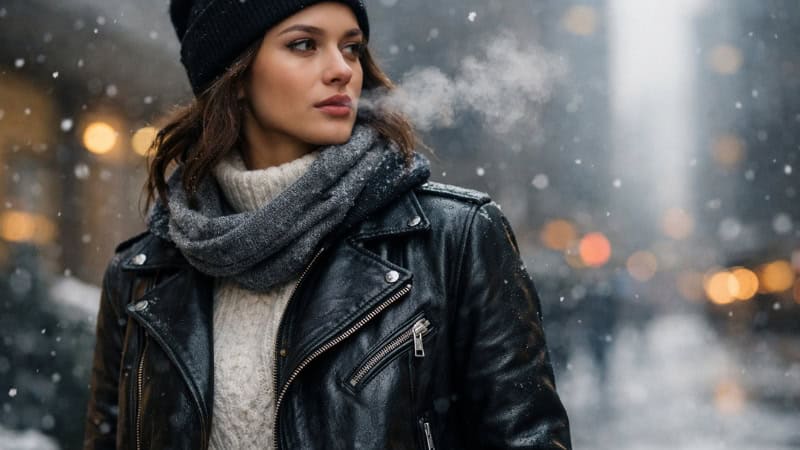
Leather isn’t just aesthetic—it behaves like a performance material in winter conditions. When temperatures drop, the right fabric acts as both a barrier and a regulator.
Thermal Efficiency & Natural Insulation
Leather naturally traps heat without suffocating the body. Unlike synthetic-heavy layers that overheat you indoors, leather creates a steady microclimate—similar to how a rider’s jacket protects against wind while allowing breathability. This balance is why winter leather outfits feel comfortable across changing environments.
Wind Resistance & Structural Protection
Cold wind cuts deeper than low temperature, and leather blocks it like a shield. Think of it as the outer shell in a recovery routine—it absorbs impact so the inner layers don’t take the hit. Whether it’s a leather jacket or a trench, it prevents that sharp chill from penetrating your core.
Durability Meets Investment Value
Leather isn’t seasonal—it’s cyclical. With proper care, it evolves rather than degrades. A well-aged leather jacket carries character the way a seasoned athlete carries experience—marks that tell a story rather than flaws to hide.
Faux Leather vs Genuine Leather in Cold Weather
Faux leather has improved significantly, offering affordability and ethical appeal. However, genuine leather still outperforms in insulation, longevity, and adaptability—especially in harsher winter conditions.
Essential Leather Pieces for Winter Wardrobe
Before styling outfits, you need the right foundation—like building strength before endurance. These are the core leather pieces that define a functional winter wardrobe.
Leather Jackets: The Core Layer
A leather jacket is your primary shield. From biker styles to shearling-lined options, it adapts to both casual and structured outfits. The shearling leather jacket, in particular, acts like built-in insulation—ideal for colder climates.
If you’re considering one:
- A high-quality option like the Levi’s Faux Leather Sherpa Lined Jacket balances warmth and affordability, making it a strong entry point.
Leather Bottoms: Controlled Edge
Leather pants and skirts bring structure to softer winter textures like wool and knitwear. They act like resistance bands in a training routine—adding tension that sharpens the overall look.
Leather pants paired with oversized knits create contrast, while skirts with tights maintain warmth without losing mobility.
Leather Boots: Ground Control
Footwear anchors everything. Chelsea boots, combat boots, and knee-high leather boots don’t just complete outfits—they dictate them.
A reliable option:
- Dr. Martens Combat Boots (Amazon)—known for durability and grip, ideal for winter streets.
Statement Leather Pieces: Elevated Outerwear
Leather trench coats and longline coats bring drama and protection. They’re less about layering and more about commanding presence—like stepping into the arena fully prepared.
These pieces work best when the rest of the outfit is simplified, allowing the leather to carry visual weight.
Best Leather Outfit Ideas for Winter – Part 1
This is where theory meets movement. Think of these outfits as drills—each one designed for a different environment, pace, and purpose.
Casual Everyday Leather Outfits
Daily outfits need to move with you—commutes, errands, quick stops. Leather helps maintain structure even when everything else is relaxed.
Relaxed Utility Look
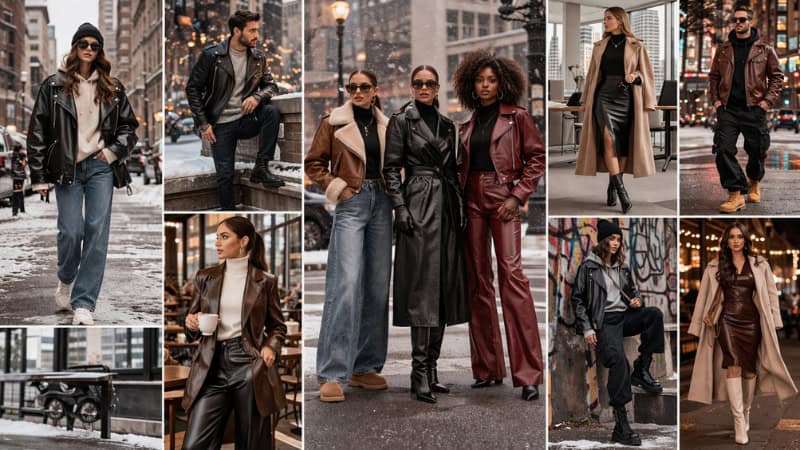
A leather jacket layered over a hoodie, paired with straight-leg jeans and sneakers, creates a balance between comfort and control. The hoodie softens leather’s rigidity, while the jacket sharpens the silhouette.
This combination works because it mirrors recovery training—soft layers underneath, protective structure outside.
Knit + Leather Balance
Pairing leather pants with an oversized wool sweater creates a tension between texture and structure. The softness of knitwear offsets the leather’s firmness, preventing the outfit from feeling too aggressive.
If you’re building this look:
- A piece like The Drop Women’s Faux Leather Pants (Amazon) offers a sleek fit without compromising flexibility.
Smart-Casual / Office Looks
Office wear in winter often leans too safe. Leather introduces personality without breaking formality.
Structured Elegance
A leather skirt with a fitted turtleneck and tailored blazer creates a layered hierarchy—each piece supporting the other. The leather adds edge, while the blazer restores professionalism.
This is similar to controlled strength training—power, but with discipline.
Refined Minimal Power
Leather trousers paired with a wool coat and neutral knit deliver a clean, executive look. Stick to earthy or monochrome tones to maintain sophistication.
Edgy Street Style Looks
This is where leather returns to its roots—bold, expressive, and slightly rebellious.
Monochrome Impact
An all-black outfit featuring a leather jacket, black jeans, and combat boots creates a streamlined silhouette. The key here is variation in texture—matte leather, denim, and cotton.
It’s like a high-intensity sprint—direct, powerful, no wasted motion.
Layered Street Armor
Combine a leather jacket with a longline hoodie, cargo pants, and chunky boots. This look thrives on layering depth and urban influence.
Minimalist & Neutral Looks
Not all leather needs to shout. Sometimes it just needs to exist quietly but confidently.
Tonal Dressing
A beige or brown leather jacket paired with cream knitwear and tailored trousers creates a cohesive, calming palette. These tones reflect winter landscapes—muted, grounded, intentional.
Soft Contrast Styling
Light leather pieces combined with wool and cashmere prevent harsh contrasts. This approach feels like recovery mode—controlled, balanced, and sustainable.
Best Leather Outfit Ideas for Winter – Part 2
The shift from day to night in winter is abrupt—light fades early, and temperatures drop more sharply. Your outfit needs to transition just as smoothly, without feeling like a complete reset.
Dressy / Night-Out Leather Looks
Evening wear with leather isn’t about loudness—it’s about controlled intensity. The right combination feels like stepping onto a dimly lit street with purpose.
Sleek Night Silhouette
A leather dress paired with knee-high boots and a wool coat creates a streamlined vertical line. The boots extend the silhouette, while the coat adds warmth without breaking continuity.
This outfit behaves like a well-executed cooldown—fluid, composed, and intentional after the intensity of the day.
If you’re building this look:
- A versatile option like The Drop Women’s Faux Leather Shirt Dress (Amazon) works across both semi-formal and night settings.
Power Layered Evenings
A leather blazer over a silk or satin top, paired with tailored trousers and heels, blends structure with softness. The contrast here is key—leather holds the frame, while lighter fabrics add movement.
It’s similar to balancing strength and mobility in training—you don’t sacrifice one for the other.
How to Layer Leather for Cold Weather
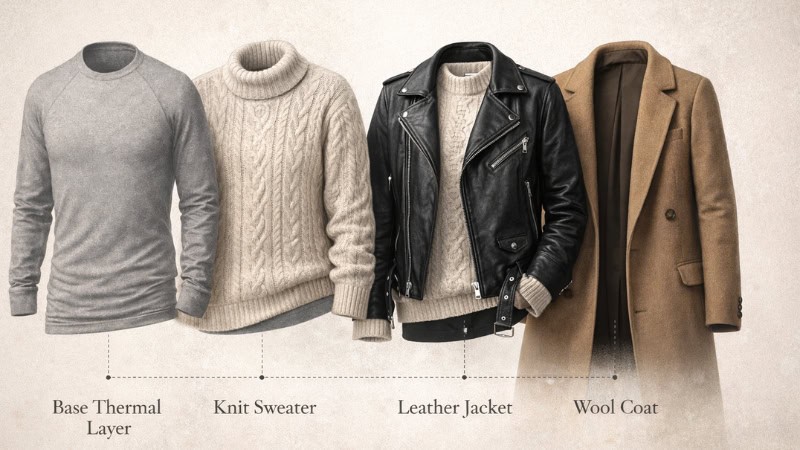
Layering leather is less about stacking pieces and more about orchestrating them. Each layer should serve a purpose—warmth, mobility, or structure—without competing for attention.
Base Layer: Heat Without Bulk
Start with thermal or breathable base layers. These act like your core stability work—quiet but essential. A thin thermal top under leather prevents cold penetration without adding unnecessary volume.
Mid Layer: Texture & Insulation
Introduce knitwear—wool sweaters, cashmere pullovers, or fleece-lined pieces. These create insulation pockets while softening leather’s rigid edges.
A good mid-layer should feel like controlled resistance—present, but never restrictive.
Outer Layer: Strategic Protection
In harsher conditions, layering a wool coat over a leather jacket might seem counterintuitive, but it works. The leather blocks wind, while the coat adds insulation.
This dual-layer approach mirrors protective gear—one layer absorbs impact, the other stabilizes.
Balance of Proportions
Avoid stacking heavy pieces on every layer. If your leather piece is bulky, keep inner layers slim. If the leather is fitted, allow room for thicker knits underneath.
Layering is rhythm—not chaos.
Best Color Combinations for Winter Leather Outfits
Color in winter is often misunderstood. It’s not about brightness—it’s about depth, contrast, and harmony.
Monochrome Precision
All-black outfits are timeless, but the magic lies in texture variation. Combine matte leather with wool, cotton, or denim to avoid visual flatness.
Think of it as shadow work—subtle differences that create dimension.
Earth-Tone Cohesion
Brown, tan, and beige leather pieces pair seamlessly with cream and off-white layers. These combinations reflect natural winter palettes—grounded and calm.
A brown leather jacket with beige knitwear and neutral trousers feels effortless yet refined.
Strategic Color Accents
Deep tones like burgundy, forest green, or navy work beautifully with leather. They add richness without overpowering the outfit.
This is like controlled intensity in training—you push just enough to feel the difference, not enough to lose balance.
Leather Outfit Ideas by Gender
Leather doesn’t belong to a single aesthetic—it adapts based on how it’s worn. The key difference lies in structure, layering, and intent.
Women’s Leather Outfit Ideas
Women’s winter leather outfits often thrive on contrast—soft versus structured, fluid versus defined.
Structured Feminine Balance
A leather skirt with tights, ankle boots, and a long wool coat blends warmth with elegance. The tights act as insulation, while the coat elongates the frame.
Effortless Street Fusion
Pairing leather pants with an oversized sweater and sneakers creates a relaxed yet intentional look. It’s the kind of outfit that moves easily through a full day—errands, meetings, and casual evenings.
For versatility:
- Spanx Faux Leather Leggings are widely favored for comfort and stretch without losing structure.
Men’s Leather Outfit Ideas
Men’s styling leans more toward structure and simplicity—clean lines, minimal layering complications.
Classic Rider Energy
A leather jacket, dark denim, boots, and a knit sweater create a timeless winter uniform. It’s functional, durable, and visually grounded.
This is the equivalent of foundational strength training—reliable and repeatable.
Elevated Casual Layers
A leather jacket layered over a hoodie, paired with tailored trousers and sneakers, blends streetwear with refinement. The mix of casual and structured elements keeps the outfit dynamic.
If you’re investing:
- FLAVOR Men Brown Leather Motorcycle Jacket offers a classic silhouette with winter-ready lining.
Faux Leather vs Real Leather: What to Choose in Winter
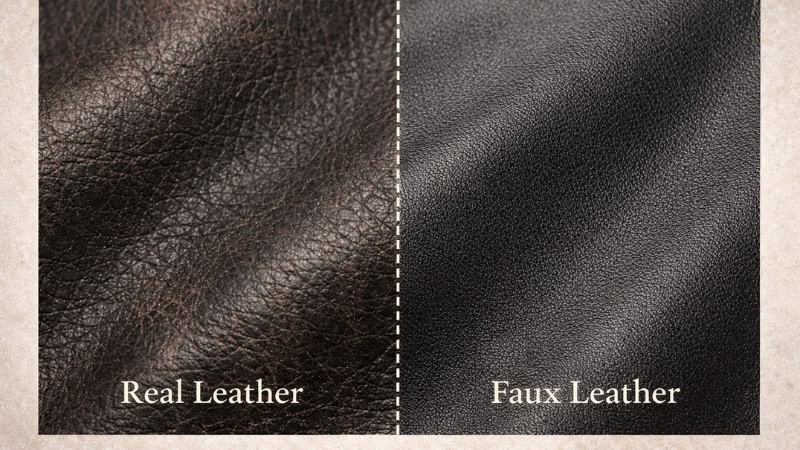
Choosing between faux and real leather isn’t just about aesthetics—it’s about performance, longevity, and how the material behaves under winter stress.
Performance in Cold Conditions
Genuine leather adapts to temperature changes more naturally. It retains warmth without becoming stiff, almost like a seasoned rider who adjusts instinctively to the terrain. In contrast, faux leather can feel colder initially and may lose flexibility in extreme temperatures.
Cost vs Longevity Trade-Off
Faux leather is accessible and budget-friendly, making it a good entry point. But genuine leather, when maintained properly, becomes an investment piece—aging with character rather than deteriorating.
This mirrors the recovery training dichotomy: short-term convenience versus long-term resilience.
Sustainability & Ethical Considerations
Faux leather is often chosen for ethical reasons, but it’s worth noting that not all faux options are environmentally friendly due to synthetic production processes. Meanwhile, high-quality real leather lasts longer, reducing the need for replacements.
Practical Recommendation
If you need something versatile for occasional wear, faux leather is a good option. But for consistent winter use, durability, and insulation, genuine leather remains the stronger performer.
Common Mistakes to Avoid When Styling Leather
Leather can elevate an outfit—or overpower it. The difference lies in control and awareness.
Overloading Texture & Weight
Wearing multiple heavy leather pieces without balance creates visual and physical bulk. It’s like overtraining—too much intensity without recovery leads to imbalance.
Instead, let one leather piece lead while others support.
Ignoring Proportions
A bulky leather jacket paired with wide pants can distort your silhouette. Balance volume with structure—if one piece is oversized, keep the rest streamlined.
Lack of Texture Contrast
Leather paired only with similar rigid fabrics flattens the outfit. Introduce softness—knits, wool, or cotton—to create depth and movement.
Choosing Style Over Function
Wearing thin leather in harsh winter without layering is a common mistake. Style should never compromise warmth—because discomfort always shows.
Care Tips for Leather in Winter
Leather, like any high-performance gear, demands maintenance—especially in winter conditions where moisture and cold can take a toll.
Moisture Protection & Conditioning
Snow and humidity can dry out leather over time. Applying a leather conditioner helps maintain flexibility and prevents cracking.
A reliable option:
- Leather Honey Leather Conditioner —widely trusted for restoring softness and durability.
Proper Storage Practices
Avoid leaving leather in damp or tightly packed spaces. Hang jackets on wide hangers to maintain shape, and store them in breathable garment bags.
Think of this as recovery between sessions—your gear needs rest to perform again.
Cleaning Without Damage
Use a damp cloth for surface cleaning and avoid harsh chemicals. For deeper cleaning, professional care is recommended.
Seasonal Rotation
Don’t overuse a single leather piece daily. Rotating between items extends their lifespan and keeps them looking fresh.
FAQs: Leather Outfit Ideas for Winter
What are the best leather outfit ideas for winter?
The best leather outfit ideas for winter combine structured leather pieces with warm layers. Popular options include a leather jacket with a hoodie and jeans, leather pants with oversized knitwear, or a leather skirt with tights and boots for balanced warmth and style.
Is leather warm enough for winter?
Yes, leather is warm enough for winter because it offers natural insulation and strong wind resistance. When layered with sweaters or thermal wear, it effectively retains body heat, making it suitable for most cold-weather conditions.
How do you style leather outfits in winter without making them look bulky?
To avoid bulk, style leather outfits using balanced layering and fitted proportions. Pair one structured leather piece with slimmer or softer layers like knits, and avoid stacking multiple heavy items to maintain a clean, streamlined silhouette.
What should you wear under a leather jacket in winter?
Under a leather jacket, wear thermal base layers, turtlenecks, or wool sweaters to retain heat. These layers provide insulation without adding excess bulk, making them ideal for maintaining both comfort and mobility in winter.
What is better for winter: faux leather or real leather?
Real leather is generally better for winter due to its superior warmth, flexibility, and durability. Faux leather is more affordable and ethical, but it may feel colder and less breathable, especially in colder weather.
How do you layer leather outfits for very cold weather?
Layer leather outfits using a three-step system: thermal base layer, insulating mid-layer (like wool or fleece), and leather as the outer shell. In extreme cold, add a wool coat over leather for extra protection and heat retention.
How do you take care of leather clothing in winter?
To care for leather in winter, keep it dry, condition it regularly, and store it properly. Use leather conditioners to prevent cracking, avoid prolonged exposure to moisture, and hang items on wide hangers to maintain shape and durability.
Mastering Winter Style with Leather: Where Function Meets Identity
Winter dressing isn’t just about staying warm—it’s about moving through the cold with intention and confidence. Leather becomes more than a material here; it becomes your outer layer of control, adapting to movement, weather, and mood without losing its edge.
When you learn to balance structure with softness and layering with mobility, leather stops feeling heavy and becomes a second skin. That’s when winter style shifts—from something you manage to something you command.
