
Whether you’re a concealed carry veteran, a custom holster maker, or someone who’s tired of their cheap nylon holster squeaking at the range—you’re here because you care about quality. And when it comes to gun holsters, leather isn’t just tradition. It’s performance, protection, and pure style.
Let’s break down everything you need to know about choosing, maintaining, and loving the leather behind your holster. From leather types to fitting techniques, we’ll walk through every step like a seasoned gunslinger at the bench.
Recommended Read: Bonded Leather vs. Faux Leather: A Comprehensive Comparison
Understanding Leather Types & Construction
Before we jump into picking the perfect holster, it’s important to know what kind of leather you’re dealing with. Not all leather is created equal—some are tough as nails, while others are best left for wallets and handbags. Understanding these differences gives you the edge when deciding on a piece that’s meant to protect both your firearm and your safety.
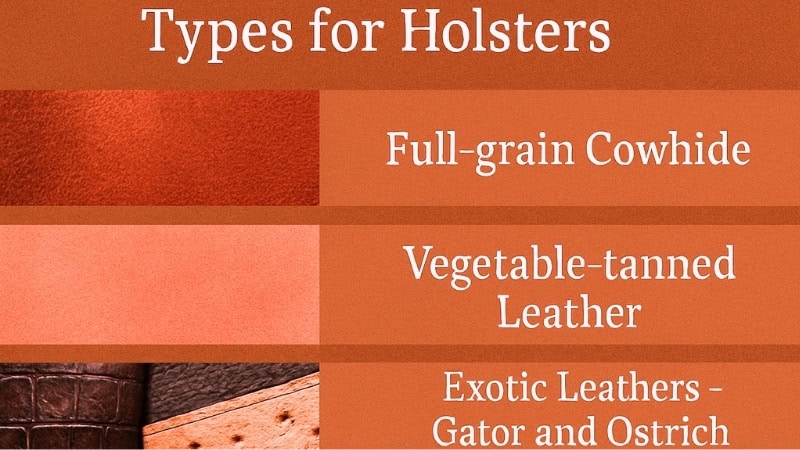
Most Common Leather Types for Holsters:
- Full-grain cowhide: This is the gold standard. It retains the entire grain layer, offering exceptional strength, longevity, and a beautiful patina that forms over time. Ideal for holsters due to its balance between rigidity and flexibility.
- Vegetable-tanned leather: Tanned using plant-based tannins, this leather is stiff at first but softens and molds beautifully with use. It takes impressions well, making it perfect for forming to specific firearm shapes.
- Exotic hides (gator, ostrich): These are primarily for aesthetic appeal. They’re often used as overlays and backed with full-grain cowhide to maintain structural integrity.
Recommended Read: Chicken Leather: An Exotic Leather Type
Why Leather Selection Matters:
- Retention and safety: The right leather will grip your firearm just enough to keep it secure but still allow for a smooth draw.
- Durability: Full-grain leather won’t stretch or break down prematurely. It resists cracking and abrasion.
- Comfort: Properly tanned leather breathes well, conforms over time, and doesn’t dig into your side like rigid plastic might.
Also, leather cut matters. Belly cuts may be cheaper, but they’re stretchy and inconsistent. Stick to shoulder cuts or back bends for the best combination of strength and workability.
Choosing the Right Leather for Your Needs
Not every holster has to be battle-ready, but they all need to serve a purpose. Whether you’re carrying daily or dressing up your rig for a Western shootout, the leather you choose should match your lifestyle. Knowing the scenarios helps narrow down what’s truly necessary versus what’s just eye candy.
Match Leather to Your Purpose:
- Daily Carry: Use full-grain vegetable-tanned cowhide with a thickness of 8–10 oz (around 3.2–4 mm). It maintains shape, molds beautifully to your firearm, and won’t collapse under pressure.
- Open Carry or Western Style: These holsters often showcase detailed tooling or basketweave patterns. Veg-tanned leather from the shoulder is ideal here, as it holds decorative stamping and stitching well.
- Collector or Display Pieces: Exotic hides like elephant, stingray, or crocodile can add a stunning flair. But always layer them over a structural leather like cowhide to keep functionality intact.
Real-world Advice:
Many seasoned users recommend investing in one plain, ultra-reliable cowhide holster rather than multiple lower-end options. Quality craftsmanship shines over time, and good leather only gets better with age.
Why Holsters Need Firm Leather
The firmness of a holster isn’t just about how it feels—it directly impacts your safety and effectiveness. Soft leather may seem more comfortable, but it’s prone to collapsing, shifting, and even exposing the trigger. Holsters should maintain their shape and integrity at all times, especially during high-stress scenarios.
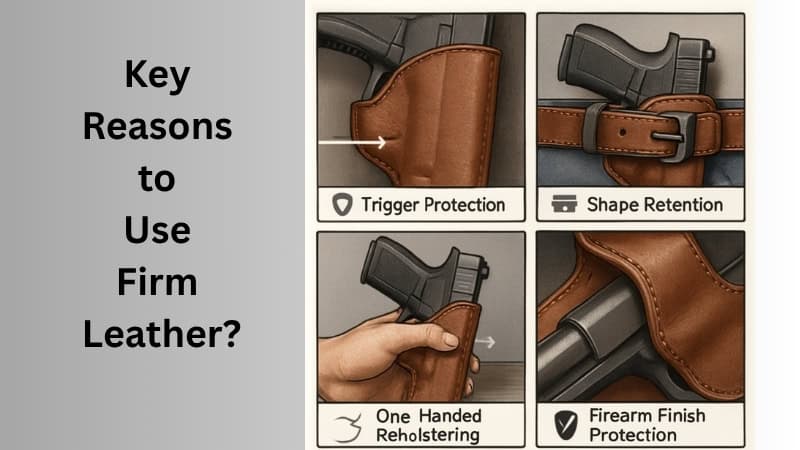
Key Reasons to Use Firm Leather:
- Trigger Protection: A rigid holster ensures your trigger stays covered at all times, minimizing accidental discharge risk.
- Shape Retention: It won’t deform with pressure from belts or body movement. Reholstering becomes safer and easier.
- One-Handed Reholstering: A firm holster keeps its mouth open, allowing you to reholster without needing your second hand.
- Firearm Finish Protection: Firm leather reduces unnecessary movement and friction inside the holster, keeping your gun’s surface smooth and unmarred.
So while it may take a little breaking in, firm leather is the safest choice when your firearm is riding against your body.
Dig Deeper: How to Treat the Inside of a Leather Holster for Maximum Longevity and Performance
How to Clean Your Leather Holster the Right Way
A dirty or neglected holster doesn’t just look bad—it can damage your firearm and weaken the leather itself. Dust, sweat, and oils slowly degrade leather’s structure if left unchecked. Routine care keeps your holster ready for the draw.
Daily Maintenance Checklist:
- Wipe it down: Use a soft, dry cloth to remove surface dust and moisture.
- Inspect for buildup: Look for signs of salt rings or sweat stains, especially after carrying in hot weather.
- Proper storage: Avoid tossing it in a glove box or damp drawer. Store in a cool, dry place.
Recommended Read: Best Way to Clean Leather: The Ultimate Leather Cleaning Guide
Deep Cleaning Steps (every 3–6 months):
- Mix lukewarm water with a few drops of glycerin-based saddle soap.
- Dip a clean cloth or soft brush, wring it out, and gently scrub the leather.
- Use another cloth to wipe off excess moisture.
- Let the holster air dry away from sunlight or heat sources.
If it ever gets soaked, never use a hairdryer or oven. Stuff it with paper to hold its shape and allow it to dry naturally over 24–48 hours.
Should You Condition Your Leather Holster?
Conditioning leather is tricky. Too much and you soften the structure, too little and it may dry and crack. But unlike boots or jackets, holsters need to stay firm to do their job right.
Conditioning Guidelines:
- Skip oils: Neatsfoot and mink oil can over-soften and darken leather excessively.
- Use wax-based products: Light applications of beeswax or a hard leather balm can restore moisture without compromising form.
- Frequency: Only condition when the leather feels dry, stiff, or cracked—generally once or twice a year.
Hot Tip: Your skin’s natural oils will slowly break in and condition the holster through daily carry. Sometimes, nature does the job better than any product.
Wet Fitting: Making Leather Mold Like a Glove
If your holster feels like it’s fighting your draw or pinching your gun, it probably needs to be wet fitted. Wet fitting allows leather to contour precisely to your specific firearm, creating a snug but comfortable fit. It’s a tried-and-true technique every holster maker knows by heart.
Step-by-Step Wet Fitting Process:
- Submerge the holster in lukewarm water for about 30 seconds until pliable.
- Wrap your unloaded firearm in plastic (like a sandwich bag or Saran Wrap) to protect it from moisture.
- Insert the wrapped gun into the damp holster.
- Gently press around the contours—trigger guard, ejection port, slide—to create definition.
- Leave it to dry for 24–36 hours in a cool, shaded area.
Once dry, remove the firearm and test the fit. It should be snug but not sticky. Repeat the process if needed, but avoid over-wetting.
Common Leather Holster Problems and Fixes
Even top-tier leather can run into issues if neglected. Thankfully, most problems are easy to identify and solve with a little care and common sense. Here’s how to handle the most frequent frustrations holster owners face.
Troubleshooting Tips:
- Holster Too Tight? Do a wet fit or insert a plastic-wrapped firearm and leave it overnight to gently stretch.
- Too Loose? Could be over-conditioned. Let it air dry for a few days to stiffen slightly. If it’s still too loose, rewet and mold again.
- Verdigris (green buildup on brass parts): This is a copper oxidation. Clean gently with a vinegar-water solution and buff with a soft cloth.
- Dry or Cracked Leather? Apply a tiny amount of leather balm or non-toxic leather conditioners with a soft cloth. Let it soak in overnight and reevaluate before applying more.
Bottom Line: Leather needs moderation. Too much moisture, oil, or friction can degrade it. Keep it simple and steady.
Storage Tips for Long Holster Life
You wouldn’t throw your firearm into a damp bag, so why do that to its holster? Leather is sensitive to how and where it’s stored. Proper storage preserves its structure, finish, and function over the long haul.
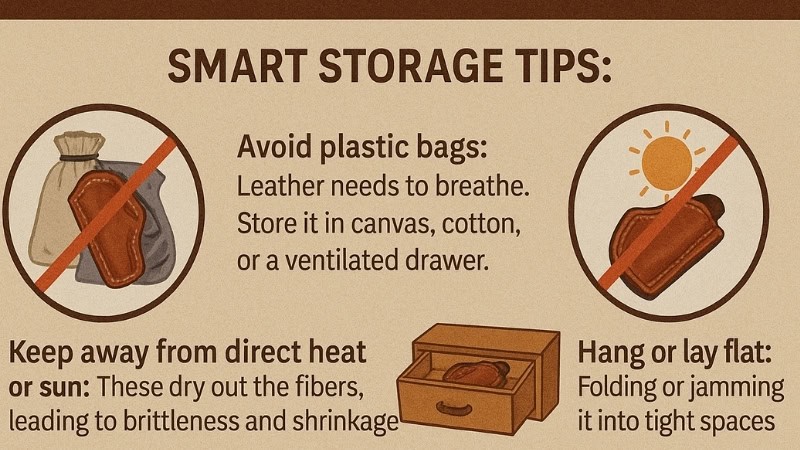
Smart Storage Tips:
- Avoid plastic bags: Leather needs to breathe. Store it in canvas, cotton, or a ventilated drawer.
- Keep away from direct heat or sun: These dry out the fibers, leading to brittleness and shrinkage.
- Hang or lay flat: Folding or jamming it into tight spaces deforms the shape and weakens stress points.
Check it every few months, especially if it’s in long-term storage. Small efforts go a long way.
FAQs: Leather for Gun Holsters
- What type of leather is best for gun holsters?
The best leather for gun holsters is full-grain vegetable-tanned cowhide. It’s durable, stiff enough to retain shape, and molds well to your firearm after wet forming. Unlike softer leathers, this type maintains structural integrity over time, making it ideal for both open and concealed carry. - Can you use suede for gun holsters?
Suede is not ideal for external holsters—it lacks structure and protection. However, it’s sometimes used as a liner in dual-layer holsters for added softness. Suede liners prevent scratching on polished gun finishes, which is great if you own a high-end piece. But on its own, suede won’t hold up to rugged use. - What thickness of leather is ideal for a holster?
Most quality leather holsters are made from 7 to 9 oz leather, roughly 1/8 inch thick. This thickness offers the right balance of rigidity, retention, and comfort. Too thin, and the holster collapses; too thick, and it becomes bulky or difficult to mold. - Does leather retention improve over time?
Yes, leather holsters form to your gun through a process called break-in. The more you carry and draw your firearm, the more personalized the retention becomes. It feels tight at first but relaxes into a secure snap-fit feel. - How long does a leather gun holster last?
With proper care, a quality leather holster can last 10–20 years or more. Regular cleaning, light conditioning, and avoiding water exposure will extend its lifespan. Many users report decades of daily use with minimal wear. It all depends on usage, environment, and how well you maintain it. - How do you maintain a leather holster?
Clean it occasionally with a damp cloth and use a leather conditioner sparingly. Avoid soaking it, storing it in humid places, or over-oiling, which can weaken the fibers. Regular checks for stretching, cracks, or seam separation are smart. A well-maintained holster stays safe and reliable for the long haul. - Is exotic leather good for holsters?
Exotic leathers like ostrich, elephant, or stingray are often used for aesthetic appeal, but they’re typically layered over a full-grain base. They’re eye-catching and can last long, but may lack structure alone. Always ensure the exotic skin is backed by durable cowhide if you’re planning on everyday use. Otherwise, they’re better suited for showpieces or light carry.
Trust Your Leather to Mold to Your Gun
A well-made leather holster is more than a carrying tool. It becomes part of your routine, your identity, and your sense of readiness. When properly selected and cared for, it offers a lifetime of dependable performance and timeless character.
Leather holsters may take time to break in and maintain—but that’s the beauty of it. They mold not just to your gun, but to your story.
