
Cracked leather is a common issue on sofas, car seats, jackets, and furniture, and leather crack repair kits are often marketed as a fast, affordable solution. The core question most users have is straightforward – do leather crack repair kits actually work, or do they only mask damage temporarily?
These kits claim to repair cracks, restore appearance, and extend the usable life of leather without professional repair. In reality, their effectiveness varies significantly depending on leather type, crack depth, preparation quality, and expectations.
This article explains what leather crack repair kits are, how they work, when they succeed, when they fail, and how durable the results really are, using practical, experience-backed evaluation rather than promotional claims.
What Are Leather Crack Repair Kits and How Do They Work?
Leather crack repair kits are DIY leather restoration products designed to fill, seal, and visually reduce cracks in damaged leather surfaces. Most kits focus on cosmetic repair, not structural leather restoration.
These kits work by applying a flexible compound that fills surface cracks and bonds to the leather’s top layer. Once cured and colored, the repaired area blends with the surrounding leather but does not restore the original fiber strength.
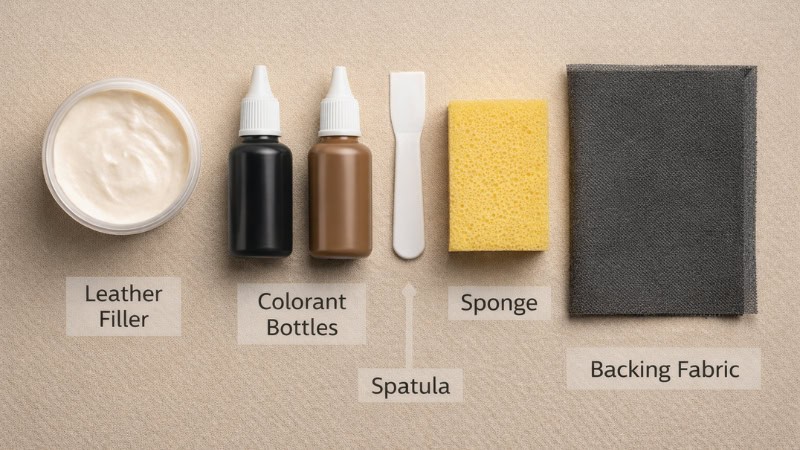
Core components found in most leather crack repair kits
- Leather filler or flexible compound
A paste-like material designed to remain slightly elastic after drying, allowing limited movement. - Colorant or dye
Used to match the repaired area to the original leather color. - Backing fabric or mesh (optional)
Added under wider cracks to support filler and reduce splitting. - Sealant or finish
Protects the repair and reduces surface wear.
Why leather cracks in the first place
- Loss of natural oils and moisture
- UV exposure and heat
- Repeated flexing and friction
- Lack of conditioning and maintenance
Repair kits address the symptom (visible cracking), not the cause (fiber degradation).
Do Leather Crack Repair Kits Actually Work?
Yes—leather crack repair kits can work, but only under specific conditions. They are effective for surface-level cracking and cosmetic improvement, not for deep or structural leather damage.
Their success depends on three main factors:
- Crack depth
Shallow cracks respond well; deep cracks do not. - Leather type
Coated and pigmented leathers repair more predictably than natural or aniline leather. - Repair expectations
Visual improvement is realistic; permanent restoration is not.
What leather crack repair kits can do
- Reduce the appearance of fine cracks
- Smooth rough or split surfaces
- Improve color uniformity
What they cannot do
- Restore weakened leather fibers
- Stop cracks from reappearing under stress
- Permanently fix brittle or dry-rotted leather
When Leather Crack Repair Kits Work Best
Leather crack repair kits work best when damage is cosmetic rather than structural. In these cases, the leather still retains flexibility, and cracks are confined to the surface coating.
Conditions where results are most reliable
- Hairline or shallow surface cracks
- Leather that remains soft and pliable
- Damage limited to small or moderate areas
- Low-to-moderate friction zones
Leather types with higher repair success
- Pigmented leather with protective coatings
- Semi-aniline leather
- Most automotive seating leather
In these scenarios, repair kits can significantly improve appearance and slow further cracking, though they do not restore original leather strength.
When Leather Crack Repair Kits Fail or Fall Short
Leather crack repair kits perform poorly when the leather’s internal fiber structure is already degraded. Once leather loses elasticity, surface repairs cannot compensate for mechanical weakness.
Situations with low success rates
- Deep cracks that extend into fibrous layers
- Stiff, brittle, or dry-rotted leather
- Peeling, flaking, or delaminating surfaces
- High-stress areas that flex constantly
Primary reasons repairs fail
- Fillers cannot flex at the same rate as damaged leather
- Adhesion weakens under repeated movement
- Cracks propagate beyond the repaired area
In these cases, repairs often crack again shortly after use.
Types of Leather Crack Repair Kits Explained
Leather crack repair kits vary in design and intended function. Each type addresses a different form of damage rather than offering a universal solution.
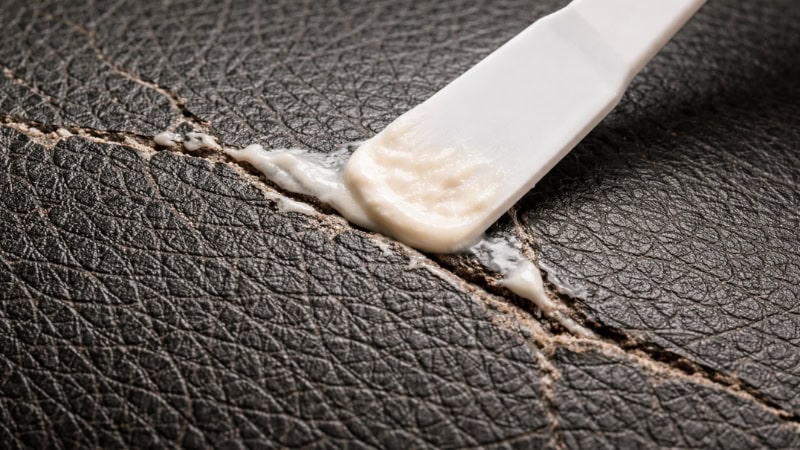
Leather Filler–Based Repair Kits
These kits use flexible compounds to level cracks and smooth damaged surfaces.
- Effective for shallow surface cracking
- Provide noticeable cosmetic improvement
- Limited durability in flex-heavy areas
- Texture matching can be challenging
Liquid Leather Repair Kits
Liquid leather products use thinner compounds designed to seep into fine cracks.
- Best suited for hairline cracking
- Minimal surface buildup
- Less effective for wider gaps
- Shorter lifespan under stress
Patch and Backing Fabric Kits
Patch-based kits reinforce cracked areas from beneath the surface.
- Improve structural stability
- Reduce crack expansion
- Repairs may remain visible
- Most suitable for low-visibility zones
Choosing the correct kit type is critical to repair success.
Here’s the rewritten version with all bullet points converted into clean, scannable short paragraphs, while preserving semantic depth, entity signals, and AI-extractable clarity.
How Long Do Leather Crack Repairs Last?
The lifespan of leather crack repairs is influenced more by how and where the leather is used than by the repair compound itself. Environmental exposure and daily wear play a larger role in durability than the specific kit used.
On light-use areas, such as decorative furniture panels or rarely used seats, repairs can remain visually intact for several months and, in some cases, up to a year. These areas experience minimal flexing, which reduces stress on the repaired surface.
For moderate-use seating, including regularly used sofas or car seats, repairs typically last a few months. Frequent sitting and movement gradually weaken the bond between the repair material and the leather.
In high-flex areas like seat bolsters, armrests, or fold points, leather crack repairs usually provide only short-term improvement. Constant bending and pressure often cause cracks to reappear relatively quickly.
Repair longevity is further reduced by heat and UV exposure, which dry out leather and harden repair compounds over time. Repeated friction or compression accelerates wear, while poor surface preparation prevents proper adhesion. A lack of ongoing conditioning allows leather to dry out again, increasing the likelihood of recurring cracks.
For these reasons, leather crack repairs should be understood as maintenance-level interventions rather than permanent solutions.
DIY Leather Crack Repair Kits vs Professional Repair Results
DIY leather crack repair kits and professional leather repair services address different levels of leather damage and durability expectations. Understanding where each approach fits helps set realistic outcomes and avoid repair failure.
Difference in Finish Quality and Appearance
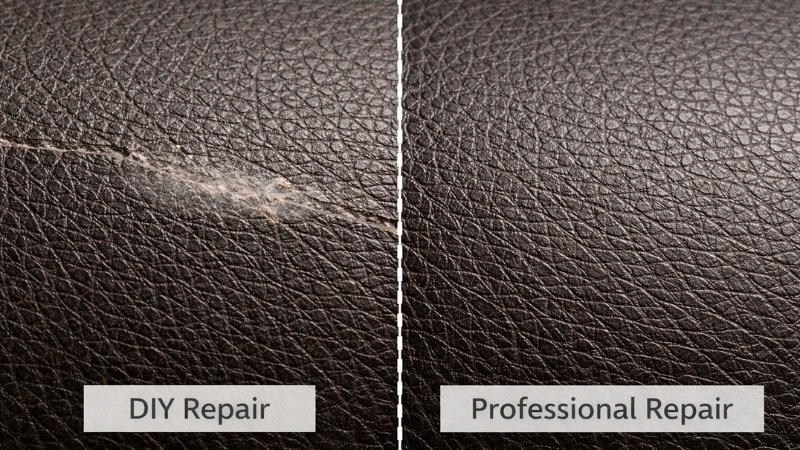
Professional leather repair typically delivers more consistent texture and color integration. Technicians can recreate grain patterns and blend pigments so repaired areas align closely with the surrounding leather, making repairs less noticeable.
DIY leather crack repair kits focus on surface filling and color approximation. While they can reduce visible cracks, texture mismatches and slight color variation are more common, especially on heavily worn leather.
Structural Reinforcement and Repair Depth
Professional repair methods allow for structural reinforcement of weakened leather. Backing materials, layered fillers, and flexible coatings can stabilize damaged areas and slow further cracking.
DIY kits do not restore internal leather fibers. They treat visible damage only, which limits their effectiveness when leather has lost strength or elasticity.
Durability and Longevity of Results
Professional repairs generally last longer because they address both surface appearance and underlying weakness. When maintained properly, these repairs withstand repeated use better than DIY solutions.
DIY leather crack repair kits provide shorter-term improvement. Repaired areas often crack again under friction or flexing, particularly in seating and high-movement zones.
Risk of Application Errors
DIY repairs carry a higher risk of user error. Overfilling cracks, uneven sanding, improper curing, or poor color matching can create stiff patches or visible repair lines that are difficult to correct.
Professional repair minimizes these risks through experience, specialized tools, and controlled application techniques.
When Each Option Is Appropriate
DIY leather crack repair kits are suitable for minor surface cracks and cosmetic correction on otherwise healthy leather. Professional leather repair is required when damage involves deep cracking, fiber breakdown, or structural weakness.
Common Mistakes That Cause Leather Repair Kits to Fail
Many leather repair failures stem from improper application rather than product quality.
Frequent mistakes
- Inadequate cleaning or degreasing
- Applying filler too thickly
- Insufficient drying or curing time
- Skipping leather conditioning after repair
These issues reduce flexibility, adhesion, and overall durability of the repair.
Are Leather Crack Repair Kits Worth Using?
Leather crack repair kits are worth using only when their limitations are clearly understood.
They are appropriate when
- Cracks are shallow and localized
- Leather remains flexible
- Cosmetic improvement is the primary goal
They are less effective when
- Damage is structural or widespread
- Leather is brittle or peeling
- Long-term durability is required
Their value lies in extending appearance and usability, not restoring original leather integrity.
Frequently Asked Questions About Leather Crack Repair Kits
Do leather crack repair kits work on car seats?
Yes, leather crack repair kits can work on car seats, particularly on coated or pigmented automotive leather with surface-level cracking. Because car seats experience frequent movement and pressure, repairs are usually cosmetic and temporary. Results last longer on low-stress areas than on heavily flexed seat bolsters.
Can cracked leather be permanently repaired?
Cracked leather cannot be permanently repaired once the leather fibers themselves have deteriorated. Repair kits can fill cracks, smooth the surface, and improve appearance, but they do not restore lost elasticity or structural strength. Over time, cracks often return, especially without proper conditioning.
Is liquid leather better than leather filler for crack repair?
Liquid leather works better for fine, hairline cracks because it penetrates narrow openings and creates a thin, flexible seal. Leather filler is more effective for wider surface cracks, as it can build up material and level uneven areas. Neither option is suitable for deep or structural damage.
Can cracked leather be repaired without replacing it?
Minor and moderate cracking can often be improved without replacing the leather, particularly when damage is limited to the surface coating. However, when cracks are deep, widespread, or accompanied by peeling, replacement or professional restoration may be the only durable solution.
Will repaired leather crack again over time?
Yes, repaired leather commonly cracks again if the underlying causes—such as dryness, heat exposure, or friction—are not addressed. Regular conditioning and reduced stress on the repaired area can slow recurrence but cannot eliminate it entirely.
Do leather crack repair kits work on all types of leather?
Leather crack repair kits do not work equally well on all leather types. They perform best on pigmented and coated leather, while results on aniline or natural leather are less predictable due to higher absorbency and visible texture differences.
Can leather crack repair kits damage leather if used incorrectly?
Yes, improper use can worsen the appearance of leather. Overfilling cracks, poor color matching, or inadequate surface preparation can lead to stiff patches, visible repair lines, or uneven texture that is difficult to correct later.
Wrap Up
Leather crack repair kits can be effective within defined limits. They work best for surface-level cracking on flexible, coated leather and provide measurable cosmetic improvement.
They do not repair weakened leather fibers, prevent future cracking under stress, or deliver permanent restoration. Understanding these constraints is essential to achieving satisfactory results.
Used correctly and in suitable conditions, leather crack repair kits function as short-to-medium-term maintenance tools rather than complete repair solutions.
