
No, alcohol is not generally safe for leather. Rubbing alcohol (isopropyl alcohol or ethanol) can strip natural oils from leather, causing dryness, cracking, discoloration, and long-term damage. While it may work for spot stain removal in rare cases, it should never be used as a regular leather cleaner.
Leather is a natural material made from animal hide. It contains essential oils that keep it flexible and durable. Alcohol acts as a solvent, breaking down oils and weakening leather fibers. The result? Stiffness, fading, and sometimes irreversible damage.
However, not all leather reacts the same way. Full-grain leather, suede, nubuck, bonded leather, and faux leather each respond differently to alcohol exposure.
Before using rubbing alcohol to clean leather furniture, shoes, car seats, or bags, it’s important to understand the risks, safer alternatives, and how to fix alcohol damage if it occurs.
Let’s break it down.
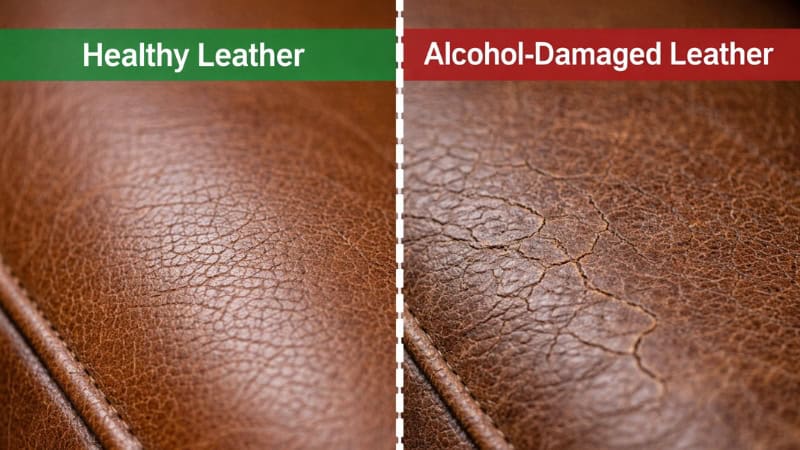
What Happens When Alcohol Touches Leather?
When alcohol touches leather, it immediately begins dissolving surface oils. Isopropyl alcohol and ethanol are powerful solvents designed to break down grease and disinfect surfaces. Unfortunately, leather depends on natural oils to maintain flexibility and structural integrity.
Leather fibers are made of tightly woven collagen. These fibers rely on moisture and oils to stay soft and resilient. When alcohol strips those oils away, the leather begins to dry out. Over time, this leads to:
- Surface dullness
- Color fading
- Stiff or rough texture
- Fine cracks that expand with use
Finished leather (like many leather couches or car seats) has a protective coating that may slow damage slightly. However, repeated alcohol exposure can still penetrate and weaken the material.
Unfinished leather, suede, and nubuck are far more vulnerable. These porous materials absorb alcohol quickly, increasing the risk of permanent discoloration and texture damage.
In short, alcohol disrupts the moisture balance of leather. Unlike water—which evaporates without aggressively dissolving oils—alcohol actively removes protective lipids. That’s why even a single heavy application can leave leather feeling dry or brittle.
Understanding this chemical interaction explains why leather care professionals strongly discourage alcohol-based cleaning methods.
Is Rubbing Alcohol Safe for Leather?
Rubbing alcohol is not considered safe for leather in most situations. While it can remove certain stains or disinfect surfaces, it poses a significant risk of drying and damaging leather fibers.
Most rubbing alcohol contains 70% isopropyl alcohol, a concentration strong enough to dissolve oils and evaporate quickly. That rapid evaporation is part of the problem—it leaves leather dehydrated before the material can rebalance moisture.
Some people use rubbing alcohol to disinfect leather couches, sanitize leather shoes, or clean car seats. During high-concern periods like the COVID-19 pandemic, alcohol wipes were commonly used. However, leather manufacturers and upholstery experts generally recommend alcohol-free disinfectants instead.
Occasional, carefully diluted spot treatment may be acceptable for removing ink stains. Even then, it should be:
- Diluted properly
- Tested on a hidden area first
- Followed immediately with a quality leather conditioner
Repeated use of rubbing alcohol can accelerate cracking, fading, and stiffness. Over time, the leather loses elasticity and becomes more prone to permanent damage.
If preserving the lifespan of your leather furniture or accessories is the goal, rubbing alcohol should not be your first cleaning choice.
Can You Use Alcohol to Clean Leather?
Technically, you can use alcohol to clean leather—but that doesn’t mean you should.
There’s an important difference between cleaning and disinfecting leather. Cleaning removes dirt and grime. Disinfecting kills bacteria and viruses. Alcohol is effective for disinfecting, but it’s overly aggressive for routine leather cleaning.
People often turn to alcohol for specific problems, including:
- Removing ink stains from leather
- Eliminating mold or mildew spots
- Getting rid of odors
- Sanitizing frequently touched leather surfaces
While alcohol may lift certain stains temporarily, it also strips essential oils from the surface. This creates a trade-off: stain removal at the cost of long-term durability.
Professional leather cleaners use pH-balanced formulas specifically designed for leather fibers. These products clean without disrupting the material’s moisture balance.
If alcohol must be used for emergency stain removal, it should be lightly applied with a cotton swab—never soaked—and followed by conditioning to restore lost oils.
As a general rule, alcohol should not be used as an all-purpose leather cleaner. The short-term convenience rarely outweighs the long-term damage.
Does Alcohol Ruin Leather Permanently?
Alcohol can ruin leather permanently—but the extent of damage depends on exposure, leather type, and aftercare.
Light, diluted alcohol used once for spot treatment may cause temporary dryness that can be corrected with conditioning. However, repeated or heavy application can lead to deep fiber damage that is difficult to reverse.
There are two levels of alcohol damage:
Surface-level damage:
- Slight dullness
- Mild stiffness
- Minor fading
- Dry feel
This type of damage can often be improved with high-quality leather conditioner or leather balm that replenishes lost oils.
Deep fiber damage:
- Visible cracks
- Peeling or flaking
- Severe discoloration
- Hardened texture
When alcohol penetrates deeply, it weakens collagen fibers. Once cracks form, conditioning can soften the area but cannot fully restore structural integrity.
Suede and nubuck are especially prone to permanent discoloration after alcohol exposure. Finished leather may resist immediate damage, but repeated use will eventually degrade its protective coating.
If leather feels brittle or shows fine cracking after alcohol use, immediate rehydration treatment improves recovery chances. Waiting too long increases the likelihood of irreversible deterioration.
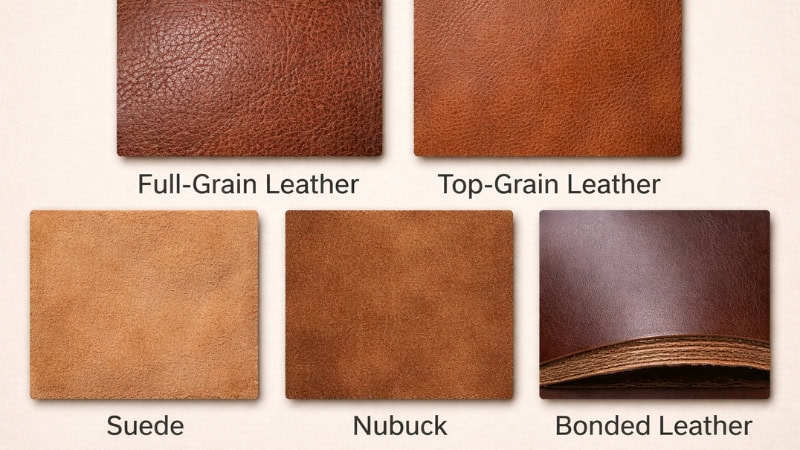
Leather Types and Alcohol Sensitivity
Not all leather reacts the same way to alcohol. Understanding leather types helps determine risk levels.
Full-grain leather
The highest-quality leather, made from the outermost layer of hide. It retains natural pores and grain patterns. Because it contains rich natural oils, alcohol can strip its protective surface and cause noticeable dryness or fading. Damage is often repairable if treated quickly.
Top-grain leather
Slightly sanded and coated for a smoother finish. Its protective layer offers limited resistance to alcohol, but repeated exposure can break down the coating and expose the fibers underneath.
Genuine leather
Lower-grade leather made from remaining hide layers. It tends to be thinner and more chemically processed. Alcohol can accelerate peeling or surface cracking.
Suede and nubuck
Highly porous and unfinished. These materials absorb alcohol rapidly, increasing the risk of dark spots, texture stiffening, and permanent staining. Alcohol is strongly discouraged for these leather types.
Bonded leather
Made from leather scraps combined with adhesives and synthetic materials. Alcohol can weaken adhesives and cause surface flaking.
Faux leather (PU or PVC leather)
Not real leather. Alcohol generally does less structural damage but may still dull the finish or cause surface discoloration over time.
The more natural and porous the leather, the more sensitive it is to alcohol exposure. Always identify your leather type before attempting any cleaning method.
When (If Ever) Is Alcohol Safe on Leather?
Alcohol is rarely safe on leather—but there are limited emergency situations where controlled use may be acceptable.
Examples include:
- Fresh ink stain removal
- Immediate mold spot treatment
- Sanitizing a small, high-touch area
In these cases, alcohol should never be applied directly or heavily. Instead:
- Dilute isopropyl alcohol with water (at least 1:1 ratio).
- Dip a cotton swab lightly—do not soak.
- Gently dab the affected area.
- Stop immediately if color transfer appears.
- Apply leather conditioner once dry.
Spot testing is mandatory. Always test on a hidden seam or underside first and wait 24 hours to observe any reaction.
Even in emergency use, alcohol should be considered a last resort—not a routine cleaning solution.
If safer alternatives such as pH-balanced leather cleaner or mild soap are available, they are almost always preferable.
Controlled, minimal exposure reduces risk—but it does not eliminate it.
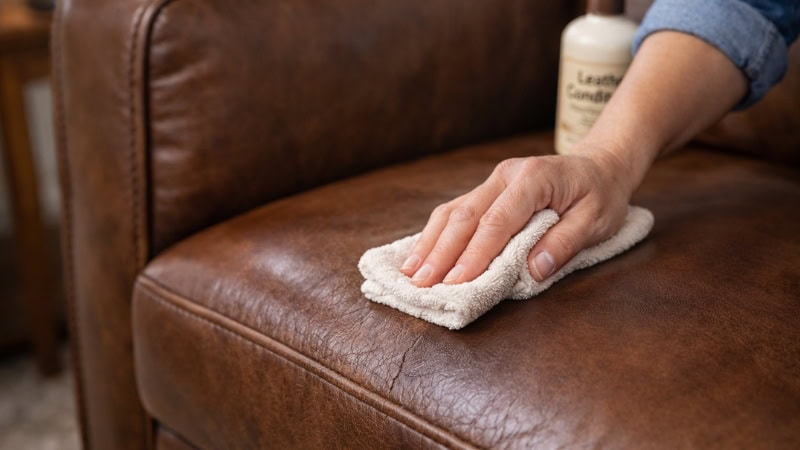
How to Fix Leather Damaged by Alcohol
If alcohol has dried or damaged your leather, quick action improves the chances of recovery.
Step 1: Assess the Damage
Look for stiffness, dullness, fading, or cracking. Surface dryness is easier to repair than structural cracking.
Step 2: Clean Gently
Wipe the area with a damp microfiber cloth to remove residue. Avoid additional harsh chemicals.
Step 3: Rehydrate with Leather Conditioner
Apply a high-quality leather conditioner designed for your specific leather type. Use small amounts and massage it in with a soft cloth. Let it absorb fully before buffing.
Conditioners replenish lost oils and improve flexibility. Multiple light applications may be needed over several days.
Step 4: Use Leather Balm or Cream
If fading occurred, a pigmented leather balm may help restore color.
Step 5: Consider a Leather Repair Kit
For cracks or peeling, repair kits containing filler compounds and colorants may improve appearance.
Step 6: Professional Restoration
Severe damage—deep cracks, heavy discoloration, or flaking—may require professional leather restoration services.
The key is moisture restoration. Leather that is rehydrated early often regains much of its softness. However, once fibers break down completely, full structural repair is rarely possible.
Prevention remains easier and more cost-effective than restoration.
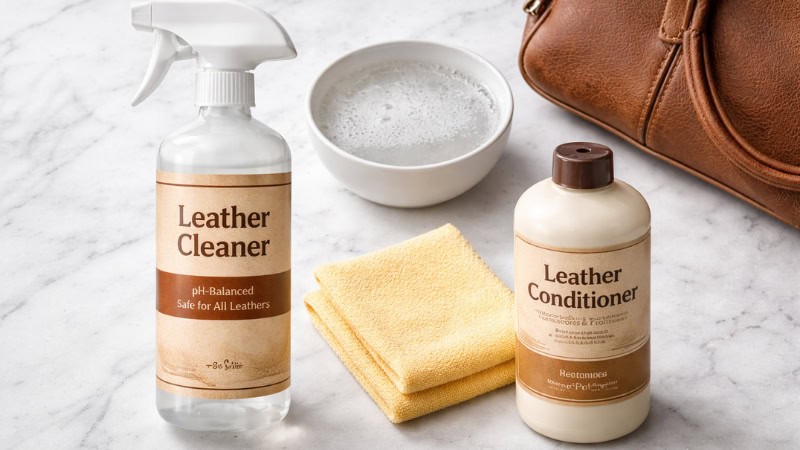
Best Alternatives to Alcohol for Cleaning Leather
If alcohol isn’t safe for leather, what should you use instead? The safest approach is using products specifically designed to clean leather without stripping natural oils.
- Mild Soap and Water
A few drops of gentle dish soap mixed with warm water can remove surface dirt. Dampen (don’t soak) a microfiber cloth and wipe lightly. Always dry immediately. - pH-Balanced Leather Cleaner
Commercial leather cleaners are formulated to maintain the material’s moisture balance. These products clean effectively without damaging collagen fibers or protective finishes. - Diluted White Vinegar Solution
For mold or odor issues, a light vinegar-and-water mix (1:1 ratio) can be safer than alcohol. Use sparingly and condition afterward. - Leather Conditioner Routine
Conditioning every 3–6 months prevents dryness and cracking, reducing the need for aggressive cleaning methods.
When cleaning leather furniture, shoes, handbags, or car seats, the goal is preservation—not harsh sanitation. Using alcohol-free, leather-safe products extends lifespan and maintains appearance.
Choosing the right cleaner protects both the structure and value of your leather items.
How to Safely Disinfect Leather Without Damaging It
Disinfecting leather requires a balanced approach. You want to reduce germs without weakening the material.
First, check manufacturer guidelines. Many leather furniture and car seat brands provide approved disinfecting recommendations.
Safer disinfecting methods include:
- Using alcohol-free disinfectant wipes labeled safe for leather
- Applying a diluted mild soap solution
- Using specialized leather disinfectant sprays
Always avoid soaking the surface. Excess moisture can penetrate seams and padding, leading to mold growth or structural damage.
After disinfecting:
- Wipe away residue with a clean damp cloth.
- Dry thoroughly using a soft towel.
- Apply a leather conditioner to restore moisture.
High-touch leather surfaces—like armrests or steering wheels—may require occasional disinfecting. However, overuse of harsh products accelerates wear.
The safest long-term strategy is regular cleaning combined with periodic conditioning. Proper care maintains hygiene while protecting flexibility, color, and durability.
Disinfection should protect your health—not compromise your leather.
Expert Tips for Long-Term Leather Care
Maintaining leather properly reduces the temptation to use harsh cleaners like alcohol.
Condition Regularly: Apply a quality leather conditioner every 3–6 months to replenish oils and prevent cracking.
Avoid Heat and Direct Sunlight: Excess heat dries leather quickly, leading to stiffness and fading.
Clean Spills Immediately: Blot liquids gently—never rub aggressively.
Use the Right Products: Avoid bleach, ammonia, acetone, and alcohol-based cleaners.
Store Properly: Keep leather goods in cool, dry environments. Use breathable dust bags for handbags and shoes.
Test Before Applying Anything New: Always perform a spot test on an inconspicuous area.
Leather is durable—but only when properly maintained. Consistent care extends its lifespan, preserves its natural texture, and protects your investment.
FAQs – Is Alcohol Safe for Leather?
Can you use hand sanitizer on leather?
Hand sanitizer contains alcohol and can dry out leather quickly. Repeated use may cause cracking or fading. If accidental contact occurs, wipe it off immediately and apply leather conditioner to restore moisture.
Does vodka damage leather?
Yes. Vodka contains ethanol, which acts as a solvent. Even though it’s less concentrated than rubbing alcohol, it can still strip natural oils and weaken leather fibers over time.
Can alcohol remove ink from leather?
Alcohol can sometimes lift fresh ink stains, but it carries risk. It should only be used as a diluted spot treatment, followed by conditioning. For valuable items, professional cleaning is safer.
Will alcohol lighten leather color?
Yes. Alcohol can cause discoloration or fading by dissolving dyes and protective finishes. Suede and nubuck are especially vulnerable to color changes.
How do you fix dried leather?
Apply a high-quality leather conditioner in thin layers, allowing absorption between applications. For severe dryness or cracking, use leather balm or consult a professional restoration service.
Final Verdict – Should You Use Alcohol on Leather?
Alcohol is not safe for leather in most situations. While it may remove certain stains or disinfect surfaces temporarily, it strips essential oils, weakens fibers, and increases the risk of cracking and discoloration.
Occasional diluted spot treatment may be acceptable in emergencies—but it should never replace proper leather cleaners.
If you want your leather furniture, shoes, bags, or car seats to last for years, prioritize pH-balanced cleaning products and routine conditioning instead.
Leather is an investment. Protecting its natural structure preserves both appearance and durability.
When in doubt, skip the alcohol—and choose a leather-safe alternative.
