
Protecting leather in dry climates requires more than occasional cleaning — it demands consistent moisture management, proper conditioning, and environmental control. In arid regions where humidity levels drop below 30%, leather loses its natural oils faster, leading to cracking, stiffness, fading, and structural weakening.
Whether you own leather furniture, boots, car seats, jackets, or handbags, dry air accelerates moisture evaporation from the leather’s collagen fibers. Over time, this causes brittleness and surface damage that can become irreversible if neglected.
The good news? Leather damage in dry climates is largely preventable. With the right conditioning routine, humidity control, UV protection, and storage techniques, you can significantly extend the lifespan of your leather goods.
This expert guide explains exactly why dry weather harms leather — and provides a step-by-step strategy to keep it soft, supple, and protected year-round.
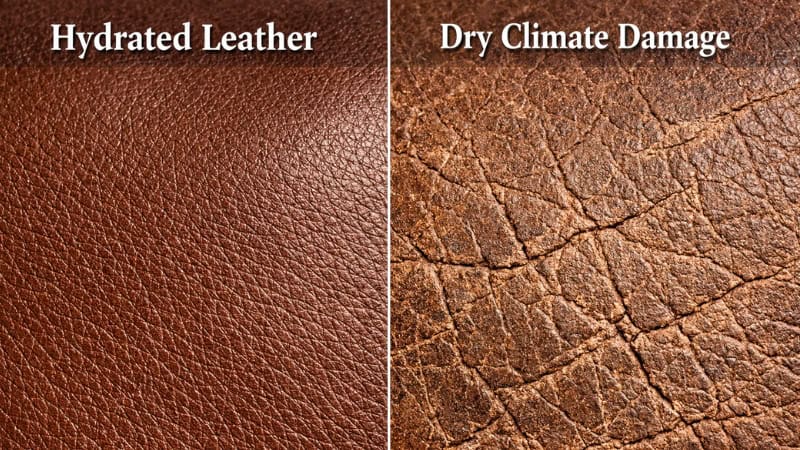
What Happens to Leather in Dry Climates?
Leather deteriorates in dry climates because low humidity pulls moisture and natural oils from its collagen fiber structure. As water content evaporates, leather becomes stiff, brittle, and prone to cracking.
When exposed to prolonged dry air:
- Natural lubricating oils evaporate
- Collagen fibers shrink and tighten
- Surface flexibility decreases
- Micro-cracks begin forming
- Color fading accelerates
- UV exposure increases oxidation
Leather is a porous, organic material. Unlike synthetic upholstery, it relies on balanced moisture levels to maintain elasticity. In arid environments such as desert regions or high-altitude climates, the evaporation rate increases dramatically. Indoor heating systems during winter can make conditions even drier than outdoor air.
Without regular leather conditioning and humidity management, this dehydration cycle weakens the structural integrity of the material. Eventually, small surface cracks turn into deep fissures that require costly repair — or full replacement.
Understanding this moisture-loss mechanism is the first step in protecting leather in dry weather.
Why Dry Climates Damage Leather – Scientific Breakdown
The Role of Humidity in Leather Preservation
Leather performs best within a relative humidity range of 40% to 55%. When humidity drops below 30%, moisture begins evaporating from the leather’s internal fiber network. This disrupts the balance between water content and natural oils.
Leather is composed primarily of collagen fibers woven together in a dense structure. These fibers require lubrication to remain flexible. In low-humidity environments, the absence of ambient moisture increases the rate of evaporation from within the material itself. As fibers lose hydration, they contract and stiffen.
This contraction reduces elasticity and makes the leather less resistant to stress. Normal use — sitting, bending, walking — then places strain on dried fibers, leading to cracks.
Maintaining indoor humidity with a humidifier and monitoring levels with a hygrometer are critical steps in leather preservation in dry climates.
How Heat and UV Exposure Accelerate Leather Drying
Dry climates often include intense sunlight and high temperatures. Heat accelerates the evaporation of moisture from leather surfaces. At the same time, ultraviolet (UV) radiation breaks down chemical bonds within leather finishes.
UV exposure causes oxidation, which weakens surface coatings and contributes to fading. Dark-colored leather is especially vulnerable to visible discoloration.
Repeated heating and cooling cycles also cause expansion and contraction. This movement stresses dried collagen fibers, further increasing the likelihood of cracking.
Leather furniture near windows, car seats in desert heat, and boots left in direct sunlight are all at higher risk. Even indoor HVAC systems can worsen dryness by circulating warm, low-humidity air.
Protecting leather from both heat and UV radiation is essential in arid environments.
Types of Leather Most Vulnerable in Dry Climates
Not all leather reacts the same way to dry weather.
- Full-grain leather: Highly durable but still prone to drying without conditioning.
- Top-grain leather: Slightly more processed, but still sensitive to moisture loss.
- Aniline leather: Most vulnerable due to minimal protective coating.
- Vegetable-tanned leather: More reactive to humidity changes than chrome-tanned leather.
- Suede and nubuck: Dry out quickly because of their open, textured surface.
Aniline and vegetable-tanned leather require especially careful maintenance in desert climates. Their natural finishes allow faster moisture evaporation compared to pigmented or sealed leather.
Early Warning Signs Your Leather Is Drying Out
Recognizing early symptoms of leather dehydration can prevent permanent damage.
1. Surface Dullness
Healthy leather has a subtle sheen. When natural oils evaporate, the surface begins to look matte, faded, or chalky. This is often the first visible warning sign.
2. Stiff or Rigid Texture
If leather feels harder than usual or resists bending, internal fibers may be losing flexibility. Stiffness is a strong indicator that conditioning is overdue.
3. Fine Hairline Cracks
Small surface cracks — especially near seams or high-flex areas — signal structural stress. These micro-cracks can deepen quickly in dry climates.
4. Lightened or Uneven Color
Dry leather may appear lighter in high-contact areas. Oxidation and UV exposure can cause uneven fading.
5. Audible Creaking
When leather emits squeaking or creaking sounds during movement, it often indicates dryness and reduced lubrication between fibers.
6. Shrinkage or Tightness
Leather exposed to prolonged dryness may shrink slightly, pulling at stitching or creating tension across panels.
Addressing these warning signs early — through conditioning and humidity control — prevents costly restoration later.
Excellent. Continuing with the core protection strategy section.
Step-by-Step: How to Protect Leather in Dry Climates
Protecting leather in dry climates requires a proactive, structured routine. Unlike humid regions where excess moisture can be a concern, arid environments demand consistent hydration, UV protection, and environmental control.
Below is a professional-grade leather care system designed specifically for low-humidity conditions.
Step 1: Clean Leather Properly Before Conditioning
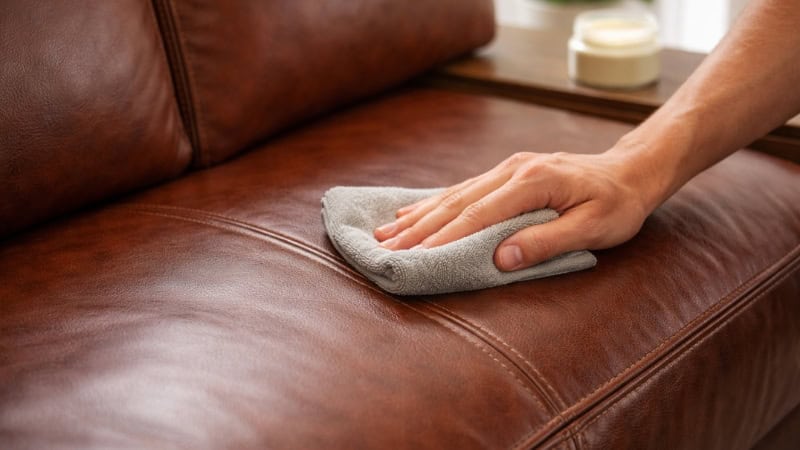
Before applying any leather conditioner, the surface must be clean. Dirt, body oils, and airborne dust particles — especially common in desert climates — can clog pores and interfere with proper absorption.
Use a pH-balanced leather cleaner formulated specifically for finished leather. Avoid alcohol-based products, household detergents, vinegar solutions, or harsh soaps, as they strip natural oils and accelerate drying.
Proper cleaning method:
- Dust the surface with a dry microfiber cloth.
- Apply a small amount of leather cleaner to a soft cloth (not directly onto the leather).
- Gently wipe in circular motions.
- Allow the leather to air dry completely before conditioning.
Never oversaturate leather with water. Excess moisture can cause uneven drying and stiffness once evaporated.
In dry climates, light cleaning every 1–2 months prevents buildup without overexposing leather to moisture loss.
Cleaning prepares the collagen fibers to absorb conditioning agents more effectively — which is critical in low-humidity environments.
Step 2: Apply High-Quality Leather Conditioner – Deep Conditioning
Conditioning is the single most important step in protecting leather in dry weather.
Leather conditioner replenishes lost oils, restores flexibility, and reduces the risk of cracking. In arid regions, conditioning should be performed every 2–4 months, depending on exposure.
Choosing the Right Conditioner
Look for products containing:
- Lanolin
- Beeswax
- Neatsfoot oil
- Mink oil (for boots and rugged leather)
- Natural oil-based emulsions
Avoid silicone-heavy or petroleum-based formulas. These may create surface shine but do not properly nourish internal fibers.
Proper Application Technique
- Ensure leather is clean and dry.
- Apply a small amount of conditioner to a soft cloth.
- Work in thin layers using circular motions.
- Focus on high-flex areas.
- Allow absorption for at least 20–30 minutes.
- Buff lightly with a dry cloth.
Over-application can clog pores and weaken structural integrity. Thin, even layers are more effective than heavy saturation.
Seasonal Adjustment
In extremely dry summers or heated winter interiors, increase conditioning frequency. Monitor texture changes to determine need.
Proper conditioning restores lubrication between collagen fibers, helping leather remain supple even when surrounding air lacks humidity.
Step 3: Maintain Indoor Humidity Levels
Environmental control is often overlooked but essential in dry climate leather maintenance.
Leather performs best at 40%–55% relative humidity. When indoor air drops below 30%, moisture evaporation accelerates.
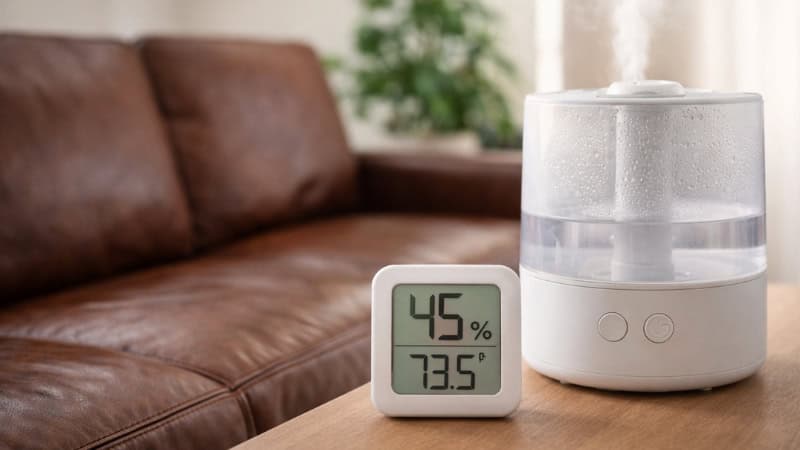
How to Control Humidity
- Use a room humidifier during winter or in desert regions.
- Monitor levels with a digital hygrometer.
- Avoid placing leather items near heating vents, fireplaces, or air conditioners.
- Position furniture away from direct airflow sources.
For whole-home protection, a central humidifier connected to HVAC systems provides consistent regulation.
Why Humidity Matters
Leather is hygroscopic, meaning it absorbs and releases moisture depending on surrounding air conditions. In balanced humidity, moisture exchange stabilizes. In arid conditions, leather continuously loses moisture without replenishment.
Maintaining humidity slows internal fiber contraction and extends the lifespan of leather furniture, car interiors, jackets, and boots.
Even premium full-grain leather deteriorates without environmental stability.
Humidity control is especially important in desert climates such as Arizona, Nevada, or Middle Eastern regions where year-round dryness persists.
Step 4: Protect Leather from Heat and UV Exposure
Heat and ultraviolet radiation intensify leather dehydration.
Direct sunlight not only raises surface temperature but also breaks down protective finishes through oxidation. This leads to fading, brittleness, and premature aging.
Preventive Measures
- Keep leather furniture away from direct window sunlight.
- Use UV-filtering window films.
- Rotate cushions periodically for even exposure.
- Apply leather protectant sprays with UV inhibitors (for car seats and outdoor leather).
- Avoid leaving leather goods inside parked cars in desert heat.
In vehicles, temperatures can exceed 140°F (60°C), causing rapid moisture loss and surface cracking.
Consistent UV protection preserves pigment stability and reduces oxidation damage.
For leather boots or jackets, avoid prolonged sun drying. Always allow items to dry naturally in shaded, ventilated areas.
Heat management works alongside conditioning to preserve leather integrity in dry climates.
Step 5: Store Leather Correctly in Dry Climates
Improper storage can undo months of careful conditioning.
Best Storage Practices
- Store leather in breathable cotton dust bags.
- Avoid plastic wrapping — it traps uneven moisture.
- Keep items in cool, shaded areas.
- Maintain stable humidity in storage spaces.
- Use cedar shoe trees for boots and dress shoes to maintain shape.
- Stuff bags with acid-free paper to prevent collapse.
Never store leather in attics, garages, or sheds in desert climates. These spaces often experience extreme temperature fluctuations and low humidity.
For seasonal storage (jackets or boots), condition leather lightly before storing and check every 2–3 months.
Proper storage prevents fiber shrinkage, stiffness, and mold imbalance from humidity swings.
Summary of the Protection Routine
To protect leather in dry climates:
- Clean gently with pH-balanced products.
- Condition every 2–4 months.
- Maintain 40–55% humidity.
- Shield from heat and UV exposure.
- Store properly in breathable conditions.
Consistency — not intensity — preserves leather longevity.
Continuing with the next section.
Best Leather Conditioners for Dry Climates
Choosing the right leather conditioner is critical when protecting leather in dry climates. Not all products provide deep fiber nourishment. Some only improve surface shine without restoring internal flexibility.
In low-humidity environments, you need conditioners that replenish natural oils, improve elasticity, and reduce moisture evaporation.
Below is a breakdown of the most effective conditioner types.
1. Natural Oil-Based Conditioners
Oil-based conditioners penetrate deeply into leather fibers, restoring lubrication between collagen strands. They are particularly effective for full-grain leather, boots, saddles, and work gear exposed to harsh climates.
Common ingredients include:
- Neatsfoot oil
- Mink oil
- Lanolin
- Natural plant oils
These products soften stiff leather and help prevent cracking. However, over-application may darken lighter leather. Always apply thin, controlled layers.
Oil-based formulas are ideal for rugged leather items in desert climates.
2. Wax-Based Leather Balms
Wax-based conditioners typically contain beeswax combined with oils. They create a protective barrier that slows moisture evaporation while still allowing breathability.
Best for:
- Leather furniture
- Bags
- Jackets
- Car interiors
Beeswax helps repel dust and minor surface moisture while maintaining flexibility. These are excellent for maintaining conditioned leather between deep treatments.
3. Cream Emulsion Conditioners
Cream-based leather conditioners balance oil and water components in a stable emulsion. They absorb evenly and are less likely to darken leather.
These are often recommended for:
- Aniline leather
- Semi-aniline leather
- High-end furniture
Cream conditioners are safer for delicate finishes and provide controlled hydration without oversaturation.
4. Ingredients to Avoid in Dry Climates
Certain products can harm leather long-term:
- Silicone-heavy polishes (surface shine only)
- Petroleum jelly
- Mineral oil
- Household oils like olive or coconut oil
These substances may clog pores, create buildup, or degrade structural integrity over time.
When selecting a leather conditioner for dry weather, prioritize fiber nourishment over cosmetic shine. Proper formulation ensures long-term durability, not just short-term softness.
Continuing with the next section.
Leather Care by Item Type in Dry Climates
Different leather items face different stress levels in arid environments. Exposure, usage frequency, and environmental conditions determine how aggressively dryness affects each item.
Below is a targeted leather care approach based on item type.
Protecting Leather Furniture in Desert Climates
Leather sofas and chairs are constantly exposed to indoor heating, air conditioning, and sunlight through windows. In dry climates, indoor humidity often drops below safe levels year-round.
- Maintain 40–55% indoor humidity.
- Condition every 3 months (more often in desert regions).
- Keep furniture away from direct sunlight.
- Rotate cushions to ensure even wear.
- Dust regularly to prevent pore blockage.
Aniline leather furniture is especially vulnerable because it lacks heavy surface coatings. Pigmented leather offers more resistance but still requires conditioning.
Consistent environmental control is more important than aggressive product use when protecting leather upholstery in dry climates.
Caring for Leather Boots and Shoes in Dry Weather
Boots and shoes face extreme dehydration in arid regions due to ground heat, dust, and sun exposure.
Protective steps include:
- Clean after use to remove desert dust.
- Condition every 1–2 months.
- Use cedar shoe trees to retain shape and absorb internal moisture.
- Avoid sun-drying after cleaning.
Oil-based conditioners work well for work boots and outdoor footwear. Dress shoes benefit from cream-based conditioners to preserve finish.
Without conditioning, leather footwear becomes stiff, leading to creasing and cracking at flex points.
Maintaining Leather Bags and Jackets
Leather jackets and handbags experience flexing, friction, and UV exposure. Dry air can cause surface dullness and stiffness, particularly in vegetable-tanned leather.
For protection:
- Condition lightly every 3–4 months.
- Store in breathable garment bags.
- Avoid wire hangers that distort shape.
- Keep away from heat sources.
Jackets should never be stored in plastic covers. Bags should be stuffed with acid-free paper to maintain structure.
Light, consistent maintenance prevents fiber stress and surface cracking.
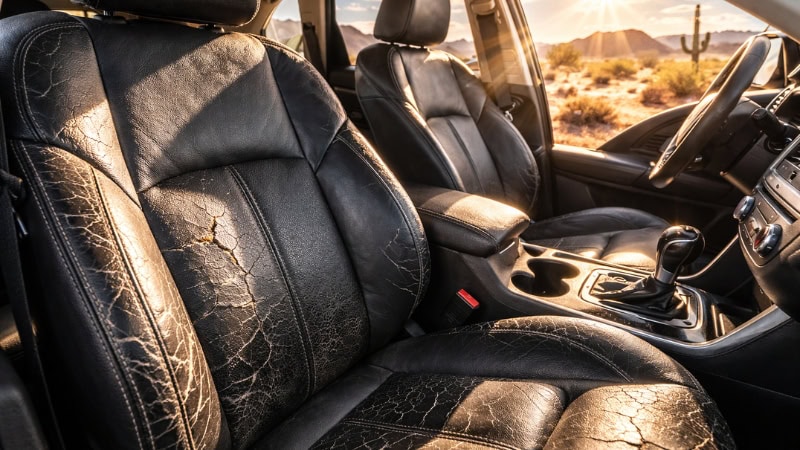
Protecting Car Leather Seats in Arid Regions
Vehicle interiors experience the harshest conditions in dry climates. Parked cars in desert heat can exceed 140°F (60°C), rapidly evaporating moisture from leather seats.
To prevent cracking:
- Use windshield sunshades.
- Park in shaded areas whenever possible.
- Apply UV-protectant leather conditioners every 2–3 months.
- Avoid harsh interior cleaners containing alcohol.
Car leather dries faster than indoor furniture due to temperature spikes. Routine conditioning is essential to prevent fading and brittleness.
Proper care extends vehicle interior lifespan significantly.
Common Mistakes to Avoid When Protecting Leather in Dry Climates
Even well-intentioned leather care can cause long-term damage if done incorrectly. In dry climates, small mistakes accelerate dehydration and fiber breakdown.
Below are the most common errors to avoid.
1. Over-Conditioning
More product does not mean better protection. Excessive conditioning can clog leather pores, soften fibers too much, and weaken structural integrity. Over time, this leads to stretching and loss of shape.
Apply thin layers and allow proper absorption instead of heavy saturation.
2. Using Household Oils – Olive Oil, Coconut Oil, Vegetable Oil
DIY remedies are popular online but risky. Household oils are not formulated for leather’s collagen structure. They can oxidize, turn rancid, attract dust, and cause uneven darkening.
Professional leather conditioners are chemically balanced for long-term fiber stability.
3. Ignoring Indoor Humidity Levels
Many people focus only on conditioners while neglecting environmental control. Without maintaining 40–55% humidity, leather continues losing moisture between treatments.
Humidity regulation is just as important as conditioning in arid climates.
4. Cleaning with Alcohol or Harsh Chemicals
Alcohol-based cleaners strip natural oils and accelerate drying. Household detergents can break down protective finishes.
Always use pH-balanced leather cleaners designed specifically for leather care.
5. Storing Leather in Garages or Attics
Extreme temperature swings in garages and attics create repeated expansion and contraction. Combined with low humidity, this leads to stiffness and cracking.
Store leather in stable, climate-controlled environments.
6. Confusing “Hydrating” with “Oiling”
Leather does not absorb water like skin. Applying water does not rehydrate it properly. Leather requires oil-based conditioning to restore lubrication between fibers.
Understanding the difference prevents long-term structural damage.
Avoiding these mistakes dramatically improves leather longevity in dry climates.
Can Cracked Leather Be Repaired?
Cracked leather can sometimes be repaired — but the success depends on the depth of the damage and how early intervention begins. In dry climates, cracks usually develop after prolonged moisture loss and neglected conditioning.
Understanding the difference between surface dryness and structural cracking is essential before attempting restoration.
Repairing Minor Surface Cracks
Surface-level cracks and dryness are often reversible with proper treatment.
If the leather shows:
- Fine hairline cracks
- Dull appearance
- Mild stiffness
You can often restore flexibility by:
- Cleaning gently with a pH-balanced leather cleaner.
- Applying a high-quality conditioner in thin layers.
- Allowing full absorption before buffing.
For small cosmetic cracks, leather filler compounds designed for finished leather can smooth the surface before conditioning.
In many cases, what appears to be cracking is actually severe dryness. Replenishing oils restores elasticity and reduces visibility of fine lines.
Early action significantly improves outcomes.
Repairing Deep Structural Cracks
Deep cracks that penetrate through the surface coating into the fiber structure are more difficult to repair. These often occur when leather has been exposed to extreme dryness and UV radiation for extended periods.
For severe damage:
- Leather repair kits containing fillers and color-matching compounds may provide temporary cosmetic improvement.
- Professional leather restoration services can re-dye and refinish surfaces.
- In some cases, panel replacement is the only durable solution.
It is important to set realistic expectations. Once collagen fibers split deeply, full structural restoration is rarely possible.
If cracking extends across large areas or stitching is pulling due to shrinkage, replacement may be more cost-effective than repeated repair attempts.
Prevention remains far more effective than restoration — especially in arid climates where dryness accelerates deterioration.
Continuing with the conditioning frequency section.
How Often Should You Condition Leather in Dry Climates?
Conditioning frequency depends largely on climate severity, indoor humidity levels, and how often the leather item is used. In dry climates, leather requires more frequent maintenance than in humid regions.
Below is a general guideline:
| Climate Type | Recommended Conditioning Frequency |
| Humid (55%+ humidity) | Every 6–12 months |
| Moderate (40–50% humidity) | Every 4–6 months |
| Dry / Arid (Below 35%) | Every 2–4 months |
In desert climates such as Arizona, Nevada, or parts of the Middle East, conditioning every 2–3 months is often necessary — especially for frequently used items like sofas, boots, and car seats.
High-use areas may require spot conditioning between full treatments.
The best indicator is texture. If leather feels stiff, looks dull, or shows early cracking, conditioning is overdue.
Consistency is more effective than waiting for visible damage. Preventative conditioning maintains lubrication within collagen fibers and dramatically reduces the risk of structural cracking.
Does Dry Climate Affect Different Leather Finishes and Tanning Methods?
Yes — dry climates affect various leather finishes and tanning methods differently. The level of surface protection, porosity, and fiber treatment determines how quickly moisture evaporates and how vulnerable the leather is to cracking.
Understanding these differences helps you adjust your leather care routine accordingly.
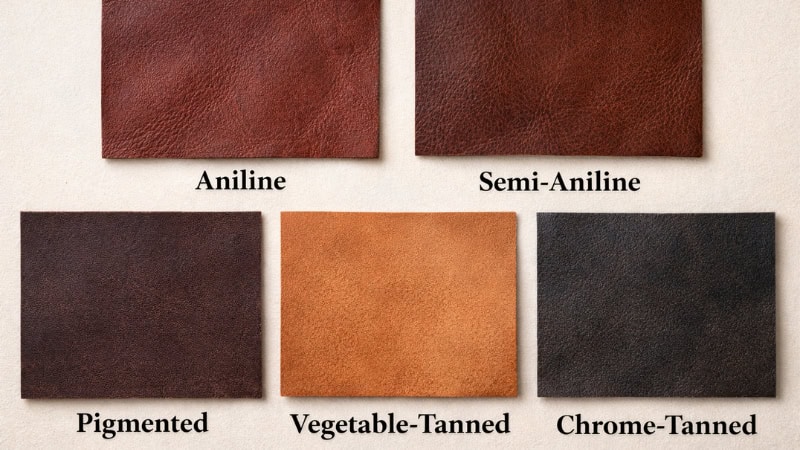
Aniline Leather
Aniline leather is dyed with soluble dyes and has little to no protective surface coating. Because of its natural finish and open pores, it is highly breathable — but also highly vulnerable to dryness.
In arid climates, aniline leather loses moisture rapidly. It requires more frequent conditioning and strict humidity control. Surface cracking and fading occur faster if neglected.
Semi-Aniline Leather
Semi-aniline leather includes a light protective coating that improves stain resistance while maintaining a natural appearance.
It is slightly more resistant to moisture loss than pure aniline leather but still requires regular conditioning in dry climates. UV exposure can still cause fading over time.
Pigmented (Protected) Leather
Pigmented leather has a polymer-based surface coating that provides increased durability and moisture resistance.
While more resilient in dry weather, the underlying collagen fibers can still dehydrate. Conditioning is still necessary — though often less frequently than with aniline leather.
Vegetable-Tanned Leather
Vegetable-tanned leather uses plant-based tannins and tends to be more responsive to environmental conditions. It can stiffen quickly in low humidity and darken with oil-based conditioners.
This type requires careful, consistent conditioning in arid climates.
Chrome-Tanned Leather
Chrome-tanned leather is generally more stable and flexible in varying humidity levels. It resists shrinkage better than vegetable-tanned leather but still benefits from routine conditioning.
In summary, the less protective coating a leather finish has, the more vulnerable it is in dry climates. Adjust maintenance frequency based on leather type to prevent premature damage.
Continuing with the professional insight section.
Professional Insight: How Leather Artisans Protect Leather in Arid Regions
Leather artisans, saddlemakers, and restoration professionals who work in desert climates understand one key principle: prevention is always easier than repair.
In arid regions such as Arizona, New Mexico, Nevada, and parts of the Middle East, experienced leatherworkers prioritize environmental control and light, frequent conditioning over heavy treatments.
Many saddlemakers recommend:
- Applying thin conditioner layers multiple times per year rather than one heavy annual treatment.
- Storing leather in climate-controlled rooms, never in barns or garages exposed to heat swings.
- Allowing leather to “rest” after conditioning so oils can distribute evenly within the fiber structure.
Traditional saddle care often includes lanolin-based conditioners because they penetrate deeply without clogging pores. Artisans also emphasize brushing off desert dust regularly, as fine particles can dry out leather surfaces over time.
A common professional rule is simple: If leather feels dry to the touch, it’s already overdue for conditioning.
Leather experts also warn against relying solely on shine as a sign of health. Properly nourished leather feels supple and flexible — not greasy or overly glossy.
This experience-based approach reinforces a core truth: consistent maintenance preserves leather far more effectively than reactive restoration.
Expert Leather Care Checklist for Dry Climates
Use this quick-reference checklist to protect leather in dry climates and prevent cracking, fading, and stiffness.
✔ Maintain indoor humidity between 40%–55% using a humidifier.
✔ Monitor humidity levels with a digital hygrometer.
✔ Clean leather with a pH-balanced leather cleaner — avoid alcohol or harsh chemicals.
✔ Condition leather every 2–4 months in arid environments.
✔ Apply conditioner in thin, even layers — never oversaturate.
✔ Keep leather away from direct sunlight and heating vents.
✔ Use UV-protectant products for car seats and sun-exposed furniture.
✔ Store leather in breathable cotton covers — never plastic.
✔ Use cedar shoe trees for boots and structured support for bags.
✔ Address stiffness or dullness immediately before cracks form.
Consistency is the foundation of leather preservation. Small, routine actions dramatically extend the lifespan of leather furniture, footwear, jackets, and car interiors in dry climates.
Frequently Asked Questions About Protecting Leather in Dry Climates
Is dry air bad for leather?
Yes, dry air is one of the biggest threats to leather. Low humidity pulls moisture and natural oils from the collagen fibers that give leather flexibility. When humidity drops below 30%, leather begins to stiffen and lose elasticity. Over time, this leads to surface cracking, fading, and structural weakening. Maintaining indoor humidity between 40% and 55% significantly reduces this risk and preserves leather durability.
What humidity level is best for leather storage?
The ideal humidity level for leather storage is between 40% and 55% relative humidity. Below 30%, moisture evaporates too quickly from the leather’s fiber structure. Above 60%, excess humidity can encourage mold growth. Using a hygrometer to monitor levels and a humidifier in dry climates helps maintain balance and prevent cracking.
How do you moisturize leather naturally?
Leather should not be moisturized with water. Instead, it requires oil-based conditioners designed for leather care. Products containing lanolin, beeswax, or neatsfoot oil help restore lubrication within collagen fibers. Applying thin layers every 2–4 months in dry climates keeps leather supple without oversaturating the surface.
Can coconut oil damage leather?
Yes, coconut oil can damage leather over time. While it may temporarily soften the surface, it is not chemically formulated for leather’s structure. Coconut oil can oxidize, become rancid, darken leather unevenly, and attract dust. Professional leather conditioners are safer and more stable for long-term maintenance.
Does heat ruin leather?
Excessive heat accelerates moisture evaporation and weakens leather finishes. High temperatures — especially inside parked cars — can cause rapid drying, fading, and cracking. UV radiation also contributes to oxidation and color loss. Protecting leather from direct sunlight and extreme heat is essential in dry climates.
Why does leather crack in desert climates?
Leather cracks in desert climates because low humidity removes essential moisture from collagen fibers. As fibers dry out, they shrink and lose flexibility. When pressure is applied — such as sitting on a sofa or bending a shoe — the stiffened fibers split, forming cracks. Regular conditioning and humidity control prevent this structural damage.
How do you fix stiff leather?
Stiff leather can often be restored if cracking has not progressed deeply. Clean the surface gently, then apply a high-quality conditioner in thin layers. Allow proper absorption and lightly buff the surface. Repeating this process over several days may gradually restore flexibility. Severely stiff leather with deep cracks may require professional restoration.
How often should you condition leather in Arizona or other dry states?
In extremely dry states like Arizona, Nevada, or desert regions globally, conditioning every 2–3 months is recommended. Car seats, boots, and frequently used furniture may require even more frequent care. Monitoring texture and appearance is key — if leather feels dry or dull, conditioning is needed.
Can a humidifier prevent leather damage?
Yes, a humidifier is one of the most effective tools for protecting leather in dry climates. By maintaining indoor humidity between 40% and 55%, you slow moisture evaporation from leather fibers. This reduces stiffness, cracking, and shrinkage. Environmental control complements conditioning and extends leather lifespan significantly.
Is vegetable-tanned leather more sensitive to dryness?
Yes, vegetable-tanned leather is generally more responsive to environmental changes than chrome-tanned leather. It can stiffen quickly in low humidity and darken when conditioned. Because it has fewer chemical stabilizers, it requires consistent maintenance in dry climates to prevent brittleness and cracking.
Long-Term Leather Preservation Strategy for Dry Climates
Protecting leather in dry climates is ultimately about balance — maintaining moisture, preventing UV damage, and conditioning consistently before visible deterioration begins. Leather is a natural material built from collagen fibers that depend on proper lubrication and stable humidity levels to remain flexible.
In arid environments, dryness is constant. That means prevention must be consistent. Cleaning gently, conditioning every 2–4 months, maintaining indoor humidity between 40% and 55%, and shielding leather from heat and sunlight form the foundation of long-term preservation.
Whether it’s leather furniture, boots, jackets, handbags, or car seats, routine care costs far less than restoration or replacement.
When properly maintained, high-quality leather can last decades — even in desert climates. The key is simple: control the environment, nourish the fibers, and never wait for cracks to appear before taking action.
