
Leather turning sticky is more common than most people expect, whether it’s a sofa, car seat, handbag, or jacket. What should feel smooth and supple suddenly becomes tacky, uncomfortable, and even unpleasant to touch. This isn’t just a cosmetic issue—it’s often a sign that something has gone wrong with the leather’s surface or its protective finish.
Sticky leather typically indicates a buildup of residue, environmental damage, or deterioration of the material itself. The good news is that in many cases, it’s reversible. Understanding the exact cause is the first step toward fixing it properly without making the damage worse.
What Causes Leather to Become Sticky?
Sticky leather is rarely caused by a single factor, and misidentifying the issue can lead to ineffective or damaging fixes. Below are the most common, evidence-based reasons why leather surfaces become tacky over time.
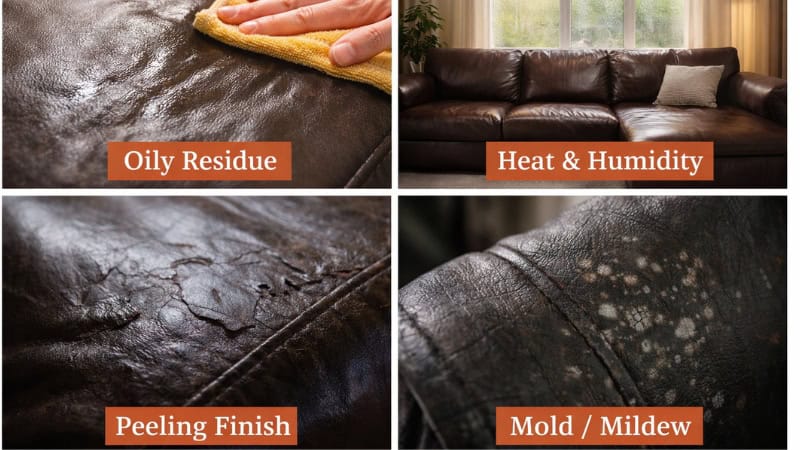
- Residue buildup on the leather surface: One of the leading causes of sticky leather is the gradual accumulation of body oils, sweat, dust, and leftover product from conditioners or cleaners. Many leather care products—especially those containing silicone or wax—create a surface film rather than fully absorb, which eventually turns tacky.
- Improper leather cleaning products: Using household cleaners or non–pH-balanced solutions can disrupt the leather’s natural structure and leave behind chemical residues. These residues not only feel sticky but also attract more dirt, accelerating the problem.
- Heat and humidity impact on leather finish: Environmental exposure plays a major role, particularly in hot and humid climates. Moisture and heat can soften the polyurethane coating on leather, causing it to partially break down and develop a sticky or rubbery texture.
- Leather finish degradation and topcoat failure: Most modern leather is protected by a synthetic finish that ensures durability and uniform appearance. Over time—especially in bonded or lower-quality leather—this topcoat begins to deteriorate, leading to surface breakdown that feels sticky to the touch.
- Mold and mildew formation on leather: In damp or poorly ventilated environments, leather becomes vulnerable to microbial growth. Early-stage mold or mildew may not be immediately visible, but it often presents as a subtle tacky or clammy feeling on the surface.
How to Fix Sticky Leather – Step-by-Step Solutions
Fixing sticky leather requires matching the solution to the root cause rather than applying random treatments. The goal is to remove residue, stabilize the surface, and restore the leather’s protective finish without causing further damage.
Gentle cleaning for sticky leather surfaces
Start by cleaning the leather using a pH-balanced leather cleaner or a mild soap diluted in water. Apply it with a microfiber cloth using light, circular motions to lift off dirt and surface buildup without saturating the material.
Removing sticky residue from leather safely
If the tackiness persists, it often means residue is embedded in the surface layer. A small amount of diluted isopropyl alcohol or a vinegar-water mix can help break down stubborn buildup, but it should always be tested on a hidden area first to avoid discoloration.
Restoring leather finish and texture
Once the surface is clean, applying a high-quality leather conditioner helps rebalance moisture and improve texture. When the polyurethane coating has started to fail, a leather restoration kit or refinishing product may be needed to rebuild the topcoat and eliminate stickiness.
Treating mold or mildew on leather
If humidity or storage conditions caused the issue, disinfecting the surface becomes essential. A light application of vinegar-based solution or a specialized anti-fungal leather cleaner can remove microbial growth, followed by thorough drying in a well-ventilated area.
When leather repair requires professional help
If the stickiness is due to severe finish breakdown, peeling, or long-term degradation, DIY fixes may not be enough. Professional leather restoration services can properly strip and reapply the coating, especially for high-value items like premium furniture or car interiors.

How to Prevent Sticky Leather (Long-Term Care)
Preventing sticky leather is far easier than fixing it after damage occurs. Consistent care and the right environmental conditions help preserve both the leather surface and its protective coating.
- Using proper leather care products consistently: Always choose pH-balanced leather cleaners and avoid silicone-heavy or wax-based conditioners, as they can leave residue. Over-conditioning is just as harmful as neglect, so applying products in moderation is key.
- Controlling humidity and temperature exposure: Leather performs best in stable environments with moderate humidity levels. Keeping it away from excessive heat, direct sunlight, and damp conditions prevents the breakdown of the polyurethane finish.
- Maintaining a regular leather cleaning routine: Routine light cleaning prevents the buildup of oils, sweat, and dust that lead to stickiness over time. A simple wipe-down with a dry or slightly damp microfiber cloth can significantly extend the life and feel of leather surfaces.
Quick Troubleshooting: Why Leather Feels Sticky & How to Fix It
If your leather feels sticky, the cause is usually identifiable with a quick surface check. Matching the symptom to the right fix helps restore the leather faster and prevents further damage.
Sticky leather caused by residue buildup can usually be resolved with a gentle clean using a pH-balanced leather cleaner, followed by light drying. When humidity or heat is the trigger, improving ventilation and allowing the leather to dry naturally often restores its normal texture.
If the stickiness is due to a degrading finish, surface restoration or refinishing may be necessary to rebuild the protective layer. When mold or mildew is present, disinfecting with a safe solution and thoroughly drying the leather are essential to prevent recurrence.
FAQs on Sticky Leather
Why does leather feel sticky even after cleaning?
If leather still feels sticky after cleaning, the issue is often deeper than surface dirt. Residue from previous products or a degrading polyurethane finish can remain embedded, requiring more targeted treatment or light restoration.
Can sticky leather be permanently fixed?
Yes, in most cases, sticky leather can be fixed, especially if the issue is caused by residue or environmental factors. However, if the protective coating has significantly broken down, full restoration or professional refinishing may be needed for a long-term solution.
Is it safe to use alcohol on sticky leather?
Isopropyl alcohol can help remove stubborn residue, but it must be used sparingly and diluted. Overuse can dry out the leather or damage its finish, so always test on a hidden area first.
Why does my leather get sticky in hot weather?
Heat softens the leather’s protective coating, especially polyurethane finishes, making the surface feel tacky. High humidity can worsen this by introducing moisture that destabilizes the coating.
Can mold make leather feel sticky?
Yes, early-stage mold or mildew can cause a slightly tacky or clammy texture before visible growth appears. This usually happens when leather is stored in damp, poorly ventilated conditions.
What is the best way to prevent sticky leather?
Prevention comes down to using proper leather care products, avoiding over-conditioning, and keeping leather in a controlled environment. Regular light cleaning and stable humidity levels help maintain a smooth, non-sticky surface over time.
Restore Smooth Leather: Fix the Problem and Prevent It for Good
Sticky leather is not just a surface inconvenience—it’s an early warning sign of imbalance, buildup, or material breakdown. The key to fixing it lies in identifying the exact cause and applying the correct treatment without overcorrecting.
With proper cleaning methods, controlled environmental conditions, and the right leather care products, most sticky leather issues can be resolved and prevented in the long term.
