
Exotic leathers are not just “luxury leather.” They are structurally different natural materials that react very differently to moisture, chemicals, and friction. This is why cleaning an alligator bag, ostrich wallet, or snakeskin shoe with a regular leather cleaner often leads to discoloration, stiffness, or permanent damage.
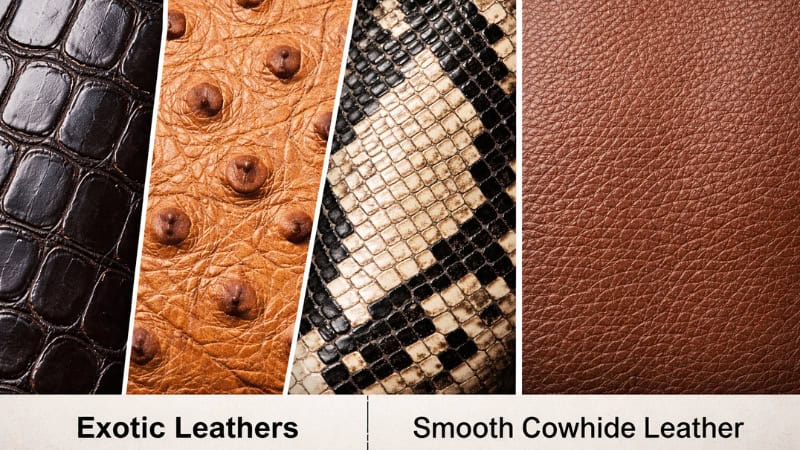
Unlike standard cowhide, exotic leathers retain more of their natural features—scales, quill follicles, mineral beads, and thin membranes. These features make them visually distinctive but also far more sensitive to improper cleaning methods. What works safely on smooth leather can quietly destroy an exotic hide.
This article explains why exotic leathers need different cleaners, how their structure and finishing change the rules of care, and what happens when the wrong products are used. The goal is simple: help you preserve the appearance, value, and longevity of exotic leather goods using correct, evidence-based care principles.
What Makes Exotic Leather Different From Regular Leather?
Exotic leather differs from regular leather at a structural, chemical, and finishing level. These differences explain why generic leather cleaners often fail or cause damage. Understanding these fundamentals is essential to choosing the right cleaning approach.
Natural Structure & Fiber Density
- Irregular grain and surface anatomy: Exotic hides retain natural features such as scales (crocodile, snake), quill follicles (ostrich), or mineral beads (stingray). These are not cosmetic—they are part of the hide’s structure.
- Variable fiber density: Unlike cowhide, which has relatively uniform fibers, exotic leathers contain areas of dense and fragile fibers side by side. This uneven density affects how cleaners absorb and spread.
- Higher vulnerability to stress: Friction, moisture, or aggressive chemicals can cause scale lifting, cracking, or peeling.
Tanning & Finishing Methods Used in Exotic Hides
- Specialized tanning processes: Many exotic leathers are vegetable-tanned or lightly mineral-tanned to preserve natural texture. This makes them less chemically stable than heavily sealed leathers.
- Minimal surface coatings: Luxury exotic leather is often finished with thin protective layers—or none at all—making it more reactive to external products.
- Hand-finishing: Dyeing and finishing are frequently done by hand, increasing uniqueness but reducing tolerance for harsh cleaners.
Sensitivity to Moisture, pH & Chemicals
- High pH sensitivity: Exotic leather reacts quickly to alkaline or acidic products, leading to color shifts or surface breakdown.
- Moisture imbalance risks: Too much water causes swelling; too little causes drying and cracking.
- Chemical intolerance: Alcohols, solvents, waxes, and silicones disrupt natural oils and weaken the hide.
Why Regular Leather Cleaners Can Damage Exotic Leather
Regular leather cleaners are designed for durability, not delicacy. While effective on smooth cowhide, they often cause irreversible harm to exotic leathers due to their formulation and application method.
Chemical Breakdown & Discoloration
- Stripping of natural oils: Many standard cleaners remove oils essential to exotic hides, leading to stiffness and dullness.
- Dye instability: Exotic leather dyes are more vulnerable, and harsh cleaners can cause fading, spotting, or uneven coloration.
- Surface degradation: Repeated use accelerates cracking and scale separation.
Surface vs. Penetration Cleaning Risks
- Over-penetration: Liquid-heavy cleaners soak into thin membranes, causing internal damage rather than surface cleaning.
- Loss of flexibility: Excess moisture or chemicals harden fibers, especially in snakeskin and lizard leather.
- Scale lifting: Crocodilian scales can curl or detach when cleaners penetrate too deeply.
Long-Term Value & Aesthetic Damage
- Permanent texture loss: Once scales lift or quills collapse, they cannot be restored fully.
- Reduced resale value: Damage significantly lowers the value of luxury handbags, shoes, belts, and wallets.
- Shortened lifespan: Improper cleaning accelerates aging and failure of the hide.
Why Exotic Leather Cleaners Are Formulated Differently
Exotic leather cleaners are engineered to clean without disturbing the natural balance of the hide. Their formulations prioritize preservation over aggressive cleaning.
pH-Neutral & Solvent-Free Formulas
- Balanced pH: Maintains dye stability and prevents chemical reactions within the leather.
- No harsh solvents: Eliminates the risk of fiber breakdown or color migration.
- Gentle surfactants: Lift dirt without stripping oils.
Low-Moisture & Residue-Free Cleaning
- Controlled moisture delivery: Reduces swelling and prevents internal damage.
- Fast evaporation: Minimizes drying time and stress on the leather.
- No residue buildup: Prevents stiffening or surface haze.
Ingredient Safety for Rare Hides
- No waxes or silicones: These clog pores and distort natural texture.
- Compatibility with CITES-regulated leathers: Designed to preserve legally protected exotic materials.
- Conditioning without saturation: Maintains flexibility without over-oiling.
Exotic Leather Types & Their Unique Cleaning Needs
Not all exotic leathers behave the same. Each type has specific structural traits that dictate how it should be cleaned.
Crocodile & Alligator Leather
- Prominent scales: Require non-penetrating, surface-level cleaning.
- High oil sensitivity: Over-conditioning causes darkening and softening of scale edges.
- Best approach: Light foam cleaners with microfiber application.
Ostrich Leather
- Quill follicles: Trap dirt and oils easily.
- Soft, porous surface: Absorbs moisture quickly.
- Best approach: Gentle agitation with minimal moisture and specialized brushes.
Snake & Lizard Leather
- Thin membranes: Extremely vulnerable to peeling and tearing.
- Scale direction matters: Improper wiping lifts scales.
- Best approach: Directional cleaning with very low moisture.
Stingray (Shagreen) Leather
- Calcium bead surface: Naturally abrasion-resistant.
- Chemical sensitivity: Reacts poorly to solvents and acids.
- Best approach: Mild, bead-safe cleaners with soft cloths.
How Professionals Clean Exotic Leather Safely
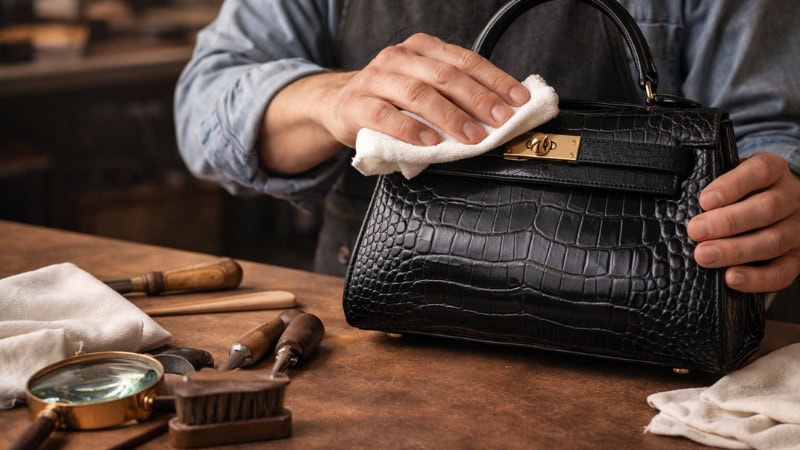
Professional exotic leather care follows strict protocols designed to minimize risk while preserving aesthetics and value.
- Pre-cleaning assessment: Identifies leather type, finish, and existing damage.
- Spot testing: Ensures product compatibility before full application.
- Controlled application: Uses microfiber cloths, sponges, or air-assisted methods.
- Air drying only: No heat or sunlight exposure.
- Targeted conditioning: Restores flexibility without oversaturating fibers.
This approach reflects industry standards used by luxury brands, restorers, and leather artisans.
Common Mistakes People Make When Cleaning Exotic Leather
These mistakes are common and often irreversible:
- Using baby wipes or household cleaners: Contain alcohol and surfactants that strip oils.
- Over-conditioning: Causes dark patches and weakened structure.
- Water soaking: Leads to swelling, curling, and cracking.
- Sun or heat drying: Accelerates moisture loss and fiber damage.
Avoiding these errors is as important as choosing the right cleaner.

How to Choose the Right Cleaner for Exotic Leather
Selecting the correct cleaner is a preventive step, not a repair solution.
Label & Ingredient Checklist
- Clearly states exotic leather safe
- pH-neutral formulation
- No alcohol, silicone, wax, or petroleum
Matching Cleaner to Leather Type
- Crocodilian ≠ snakeskin ≠ ostrich
- Avoid “one-size-fits-all” products
When to Use Professional Services Instead
- High-value, vintage, or heavily soiled items
- Visible cracking, peeling, or dye instability
FAQs About Exotic Leather Cleaning
Why do exotic leathers need special cleaners?
Exotic leathers need special cleaners because their natural structure, fiber density, and finishing methods are far more sensitive than standard leather. Scales, quill follicles, thin membranes, and mineral surfaces react negatively to common detergents, alcohols, and high-moisture formulas. Exotic leather cleaners are specifically designed to clean the surface without stripping natural oils, disturbing dyes, or penetrating too deeply into the hide, which helps preserve both appearance and structural integrity.
Can I use regular leather cleaner on exotic leather?
Using a regular leather cleaner on exotic leather is strongly discouraged. Most standard leather cleaners are formulated for sealed cowhide and contain solvents or surfactants that can dry out, discolor, or weaken exotic hides. Even a single application can cause scale lifting, stiffness, or fading, especially on snake, lizard, or crocodilian leathers. Damage from improper cleaners is often permanent and cannot be fully restored.
Can exotic leather be waterproofed safely?
Exotic leather can be lightly water-resistant, but only when treated with products specifically formulated for exotic hides. Standard waterproof sprays often contain silicones or alcohols that clog pores, alter texture, or cause color darkening. Exotic-safe protectants focus on moisture balance rather than full waterproofing, helping reduce water absorption without sealing the leather or interfering with its natural breathability.
How often should exotic leather be cleaned?
Exotic leather should be cleaned conservatively and only when necessary. For regularly used items such as handbags or shoes, light surface cleaning every few months is usually sufficient. Over-cleaning can be just as harmful as neglect, as excessive product use disrupts the natural oils and weakens the hide over time. Preventive care, such as gentle wiping and proper storage, reduces the need for frequent cleaning.
What happens if exotic leather dries out?
When exotic leather dries out, it loses flexibility and becomes brittle, leading to cracking, peeling, or scale separation. Unlike regular leather, exotic hides have limited tolerance for rehydration once damage occurs. Drying often results from harsh cleaners, heat exposure, or improper storage, and the effects are typically irreversible. Maintaining moisture balance is critical to long-term preservation.
Are exotic leather cleaners worth the investment?
Exotic leather cleaners are worth the investment because they prevent damage that can significantly reduce the value of luxury goods. The cost of a specialized cleaner is minimal compared to the expense of professional restoration or replacement. Using the correct product extends the lifespan of exotic leather and protects the craftsmanship that makes these items valuable.
Is conditioning exotic leather the same as conditioning regular leather?
Conditioning exotic leather is not the same as conditioning regular leather. Exotic hides require lighter, more controlled conditioning to avoid oversaturation and darkening. Heavy oils or wax-based conditioners designed for cowhide can weaken exotic fibers and distort surface features. Exotic-specific conditioners focus on maintaining flexibility without altering texture or color.
When should exotic leather be handled by a professional cleaner?
Professional cleaning is recommended when exotic leather shows signs of deep staining, discoloration, cracking, or scale lifting, or when the item is high-value or vintage. Professionals have the tools, experience, and products needed to assess risk and clean safely. Attempting DIY cleaning in these cases often worsens the damage rather than resolving it.
Final Thoughts: Protecting Exotic Leather Is About Preservation, Not Just Cleaning
Exotic leather represents craftsmanship, rarity, and long-term value. Its care requires respect for its natural structure and limitations. Using specialized cleaners is not an upgrade—it is a necessity.
When cleaned correctly, exotic leather maintains its texture, color, flexibility, and value for decades. When cleaned incorrectly, damage happens quickly and is rarely reversible. The right cleaner protects more than appearance; it preserves the integrity of the leather itself.
