
A leather shoe maintenance checklist is a structured care routine that includes cleaning, conditioning, polishing, waterproofing, proper drying, and correct storage. When followed consistently, it prevents cracking, fading, odor buildup, sole separation, and premature leather breakdown.
Leather—whether full-grain, top-grain, suede, or patent—remains a natural material that reacts to moisture, friction, salt, and temperature shifts. Without routine care, natural oils evaporate, fibers stiffen, and surface damage accelerates.
From a cost perspective, replacing quality leather footwear is significantly more expensive than maintaining it. A simple maintenance schedule extends lifespan by years, preserves structure, and maintains professional appearance.
This guide breaks down leather shoe care into daily, weekly, monthly, and seasonal routines so you can maintain durability, shine, and structural integrity without overcomplicating the process.
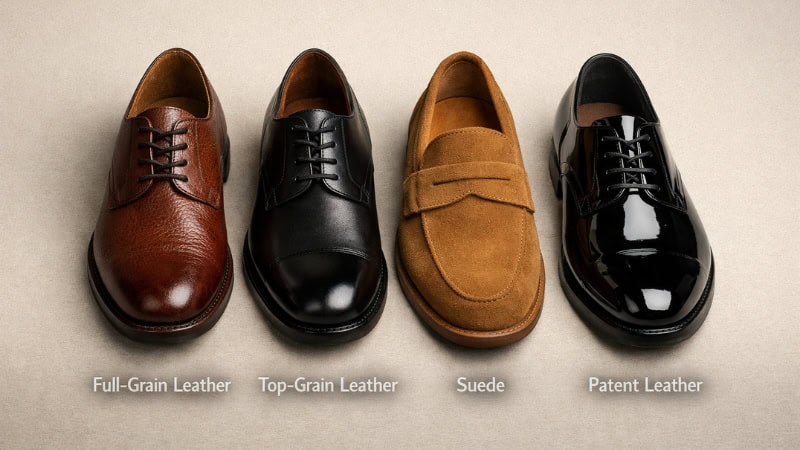
Types of Leather & Why Maintenance Differs
Not all leather reacts the same way to moisture, polish, or conditioner. Understanding the leather type is the first step in applying the correct maintenance checklist.
Full-Grain Leather Care
Full-grain leather retains the outermost layer of the hide, making it the strongest and most breathable type of leather used in dress shoes, boots, and premium footwear. Because it lacks heavy synthetic coating, it absorbs conditioner effectively but also loses moisture faster.
Regular conditioning is essential to prevent surface cracking. Wax polish enhances shine and adds a protective barrier, while cream polish nourishes the fibers. Overexposure to water, however, can cause stiffness if not dried properly.
Top-Grain Leather Maintenance
Top-grain leather has been sanded and finished with a protective coating. It resists stains better than full-grain but still requires conditioning to maintain flexibility.
Because of its finish, it absorbs products more slowly. Lightweight cream conditioners are preferred over heavy oil-based treatments. Polishing enhances appearance but should not be excessive, as buildup can clog the surface layer.
Suede & Nubuck Maintenance Checklist
Suede and nubuck differ significantly from smooth leather. These materials feature raised fibers and require dry cleaning techniques rather than traditional conditioning creams.
Water saturation damages the nap and causes discoloration. Instead of wax or cream polish, use a suede brush and suede eraser to lift dirt. Waterproof spray designed specifically for suede helps protect the porous surface without altering texture.
Unlike smooth leather, suede does not require conditioning. Applying traditional conditioner can flatten fibers and ruin appearance.
Patent Leather Care Routine
Patent leather contains a glossy polyurethane or lacquer coating. Because of this synthetic layer, it does not absorb conditioner or polish like full-grain leather.
Cleaning requires only a damp microfiber cloth or specialized patent leather cleaner. Wax polish should be avoided, as it creates dull buildup. Light buffing restores shine without additional products.
Understanding your leather type prevents product misuse, which is one of the most common causes of premature leather damage.
Daily Leather Shoe Maintenance Checklist
Daily maintenance is about prevention, not deep treatment. Small actions reduce long-term damage and minimize the need for heavy restoration.
Surface Dirt Removal — Protecting Leather Fibers
After each wear, leather shoes collect dust, road debris, and microscopic abrasives. If left overnight, these particles settle into creases and accelerate surface wear.
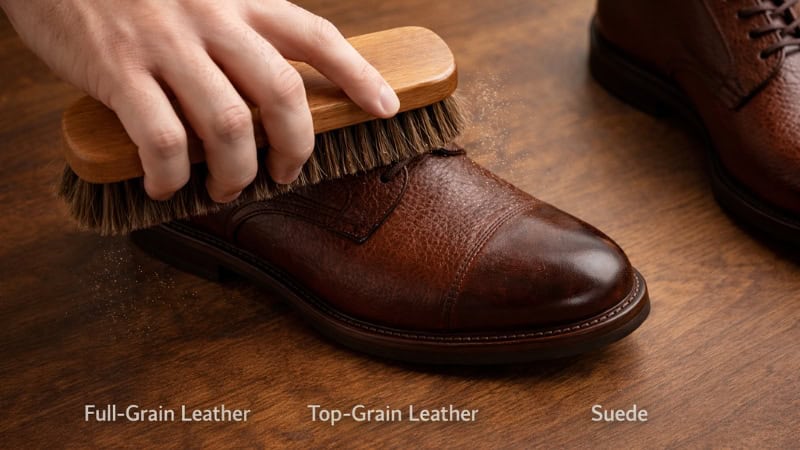
Use a horsehair brush to gently remove dirt. The soft bristles clean without scratching, making it ideal for full-grain and top-grain leather. For suede, use a dedicated suede brush to preserve texture.
Brushing daily reduces oxidation and prepares the surface for future conditioning or polishing.
Moisture Control — Using Cedar Shoe Trees
Leather absorbs moisture from sweat during wear. If not removed, this trapped moisture weakens internal fibers and causes odor buildup.
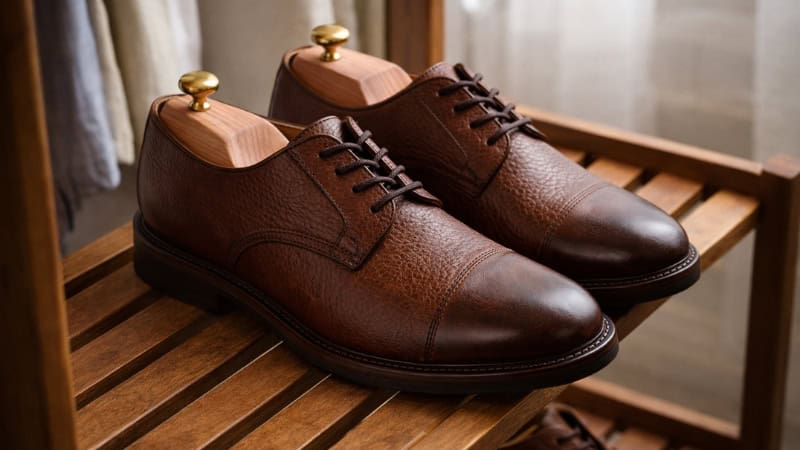
Insert cedar shoe trees immediately after removing your shoes. Cedar wood naturally absorbs moisture, neutralizes odor, and maintains shape by reducing deep creasing across the vamp.
Plastic shoe trees do not offer moisture control, making cedar the preferred option for long-term structural preservation.
Proper Air Drying — Avoiding Heat Damage
Leather must dry naturally. Placing shoes near radiators, heaters, or direct sunlight accelerates oil evaporation and causes cracking.
Allow shoes to air dry at room temperature with shoe trees inserted. If shoes become soaked, stuff them with plain paper to absorb excess moisture before inserting cedar trees.
Daily Leather Shoe Care Summary:
- Brush off surface dirt
- Insert cedar shoe trees
- Let shoes air dry naturally
- Store in ventilated space
These small habits dramatically extend leather lifespan and reduce repair costs.
Weekly Leather Shoe Cleaning & Conditioning Routine
Daily brushing removes surface debris, but embedded dirt, salt particles, sweat residue, and environmental pollutants gradually penetrate leather pores. A weekly routine prevents fiber breakdown and restores flexibility before visible cracking begins.
Deep Cleaning Process — Removing Embedded Dirt Safely
Start by removing laces to access hidden creases and tongue areas. Use a damp microfiber cloth to wipe loose grime. For deeper cleaning, apply a small amount of saddle soap or pH-balanced leather cleaner using a soft cloth or dauber brush.
Work in circular motions without soaking the leather. Excess water weakens structure, so always use minimal moisture.
Saddle soap effectively removes buildup but should not be overused, as frequent heavy cleaning strips natural oils. For routine weekly care, a mild leather cleaner is often sufficient.
Allow shoes to air dry completely before moving to conditioning. Applying conditioner to damp leather traps moisture and prevents proper absorption.
Conditioning Leather — Restoring Natural Oils
Leather is skin. Over time, it loses its natural oils due to friction, air exposure, and temperature changes. Conditioning replenishes these oils, preserving suppleness and preventing cracks along flex points.
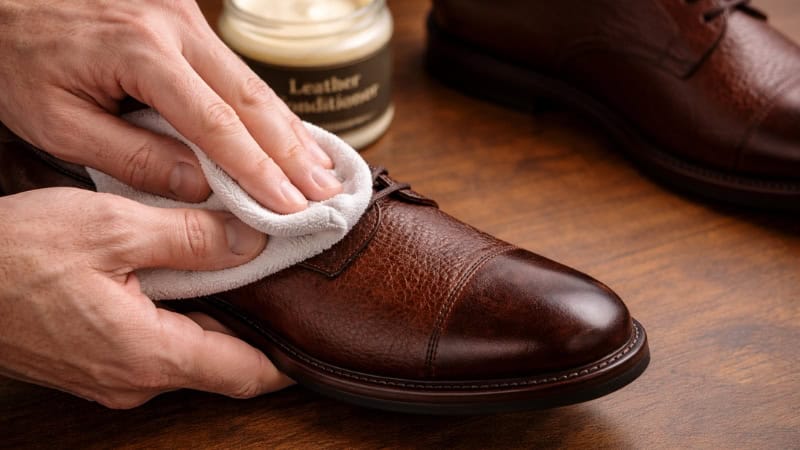
Use a high-quality leather conditioner or leather balm suited for full-grain or top-grain leather. Apply a thin layer with a soft cloth using small circular motions. Less is more — oversaturation clogs pores and causes a sticky finish.
Let the conditioner absorb for 10–20 minutes before buffing gently with a clean cloth. The surface should feel soft, not greasy.
Frequency Insight — How often should you condition leather shoes?
For regularly worn leather shoes, conditioning every 1–2 weeks is sufficient. Over-conditioning can soften structure excessively and weaken shape retention.
Buffing & Absorption — Enhancing Finish
After conditioning, use a horsehair brush to lightly buff the surface. This evens out product distribution and enhances natural sheen.
Buffing also improves airflow across the leather surface, helping oils penetrate evenly. This step is often overlooked, yet it plays a critical role in preventing uneven dark spots.
A consistent weekly cleaning and conditioning routine prevents the most common long-term issues: dryness, cracking, and stiffness.
Monthly Polishing & Protection Checklist
While conditioning nourishes leather internally, polishing protects externally. Polish adds color restoration, surface protection, and enhanced shine — especially important for dress shoes and formal footwear.
Polish Types — Wax vs Cream vs Neutral
Understanding polish types prevents misuse.
Cream polish primarily nourishes and restores color. It contains pigments and light conditioning agents that refresh faded areas without heavy buildup.
Wax polish provides shine and creates a protective barrier against moisture and minor scuffs. It is ideal for toe caps and heel counters where shine matters most.
Neutral polish works for maintaining shine without altering color, especially on lighter or specialty finishes.
For full-grain leather, a combination of cream (for nourishment) followed by wax (for protection) works best. For top-grain leather, lighter applications prevent buildup.
Application Technique — Thin Layers, Even Distribution
Apply polish using a dauber brush or soft cloth. Work in small circular motions, covering one section at a time. Thin layers are critical; heavy application leads to cracking and residue buildup.
Allow the polish to dry for several minutes before buffing. For a higher-gloss finish, repeat with an additional thin layer rather than applying one thick coat.
The toe box can receive extra attention for a refined shine, but avoid excessive wax on flex areas, as it may crease visibly.
Buffing & Shine Development — Professional Finish
Use a horsehair brush to buff vigorously. Friction generates mild heat, helping wax spread evenly and produce a natural shine.
For a mirror shine, apply minimal water with wax in thin layers and buff repeatedly. This technique works best on structured toe caps.
Waterproofing & Environmental Protection
After polishing, consider applying a silicone-based or nano waterproof spray, especially in rainy or snowy climates. Waterproofing protects against water stains and salt damage without sealing pores completely.
Allow the spray to dry fully before wearing the shoes.
Polishing monthly maintains both appearance and structural defense against environmental exposure.
Seasonal Leather Shoe Maintenance – Winter & Summer Care
Leather reacts differently depending on temperature and humidity. Seasonal maintenance prevents climate-specific damage that daily routines cannot address.
Winter Leather Care — Salt, Snow & Moisture Defense
Winter presents the most aggressive conditions for leather footwear. Road salt causes white stains and draws moisture out of leather, leading to brittleness.
If salt stains appear, mix equal parts white vinegar and water. Lightly dab the affected area with a cloth, then wipe clean and allow the shoe to dry naturally. Follow with conditioning to restore lost oils.
Before winter begins, apply waterproofing spray to create a moisture-resistant barrier. Regular brushing becomes even more important during snowy months.
Avoid storing wet shoes in enclosed cabinets; trapped moisture encourages mold growth.
Summer Leather Storage — Heat & Humidity Control
High heat dries leather rapidly, while humidity promotes mildew and odor. Both extremes damage structural integrity.
Store leather shoes in a cool, well-ventilated space away from direct sunlight. Use cedar shoe trees to maintain shape and absorb moisture. For high-humidity regions, silica gel packs or a dehumidifier help regulate internal storage conditions.
Dust bags made of breathable fabric protect shoes from dust while allowing airflow. Avoid airtight plastic containers, as they trap moisture.
Seasonal adjustments ensure leather remains stable year-round.
Proper Storage Checklist for Leather Footwear
Proper storage determines whether leather shoes last three years or ten. Even perfectly cleaned and polished footwear deteriorates quickly if stored incorrectly.
Shape Retention & Structure — The Role of Shoe Trees
Leather naturally creases at flex points. Without internal support, those creases deepen permanently and weaken fiber structure.
Cedar shoe trees maintain the shoe’s original shape by supporting the vamp and toe box. They also absorb residual moisture left inside after wear, preventing internal leather lining from degrading.
Unlike plastic inserts, cedar provides antimicrobial and moisture-wicking benefits. For long-term storage, shoe trees should remain inserted at all times.
Climate Control & Ventilation — Preventing Mold & Dryness
Leather requires balance. Excess humidity encourages mold growth, while excessive dryness causes cracking.
Store shoes in a cool, dry area with consistent airflow. A shoe rack in a ventilated closet is ideal. In humid climates, silica gel packets or a small dehumidifier maintain stable conditions.
Avoid storing leather shoes near windows, heating vents, or damp basements. Direct sunlight fades color and accelerates oil evaporation.
Storage Mistakes to Avoid — Plastic & Airtight Containers
Leather needs to breathe. Airtight plastic boxes trap moisture and create microclimates that encourage mildew.
Instead, use breathable dust bags made of cotton or flannel. These protect from dust accumulation without restricting airflow.
If storing shoes seasonally, clean and condition them before placing them away. Never store dirty leather — stains and salts become permanent over time.
Proper storage is not passive; it is an active preservation strategy.
Leather Shoe Maintenance Tools Checklist – Essential Kit
An effective leather shoe maintenance checklist depends on using the right tools. Poor-quality brushes or unsuitable products can do more harm than neglect.
A complete leather shoe care kit should include:
- Horsehair brush for daily dirt removal and buffing
- Soft microfiber cloths for cleaning and conditioning
- pH-balanced leather cleaner or saddle soap
- Leather conditioner or balm
- Cream polish (color-matched)
- Wax polish for protective shine
- Waterproof spray suited to leather type
- Cedar shoe trees
- Suede brush (if applicable)
Each tool serves a specific purpose within the maintenance cycle.
Horsehair brushes are preferred because synthetic bristles may scratch smooth leather. A dauber brush allows controlled polish application without overloading the surface.
When selecting conditioners or polish, prioritize reputable brands known for leather craftsmanship standards. Quality formulations penetrate evenly and avoid residue buildup.
Investing in proper tools reduces the risk of uneven shine, discoloration, and fiber damage. Maintenance becomes efficient, consistent, and safer for high-quality leather footwear.
Common Leather Shoe Care Mistakes to Avoid
Even with good intentions, improper care techniques can shorten the lifespan of leather shoes dramatically.
Heat Exposure — The Fastest Way to Crack Leather
Using hair dryers, placing shoes near radiators, or drying them under direct sunlight strips natural oils rapidly. Heat accelerates evaporation inside the leather’s fiber matrix, causing stiffness and surface cracks.
Always allow leather shoes to dry naturally at room temperature with shoe trees inserted.
Over-Conditioning — When Too Much Care Becomes Harmful
Conditioner restores oils, but excessive application oversaturates leather. Over-conditioned shoes feel greasy, attract dust, and lose structural firmness.
Apply thin layers only when leather shows signs of dryness. If the surface still feels supple, skip conditioning that week.
Skipping Cleaning Before Polishing — Sealing in Dirt
Applying polish over dirty leather traps debris under wax layers. Over time, this creates uneven shine and surface dullness.
Always clean before conditioning or polishing. Maintenance must follow the correct sequence: clean → condition → polish → protect.
Wearing the Same Pair Daily — No Recovery Time
Leather requires rest. Continuous daily wear prevents moisture from evaporating fully and accelerates breakdown.
Rotate between at least two pairs of leather shoes. Allow each pair 24 hours of recovery with cedar shoe trees inserted.
Using Household Oils — Misguided DIY Solutions
Coconut oil, olive oil, and other kitchen oils are not designed for leather footwear. They can darken leather unevenly, turn rancid, and weaken structure.
Use purpose-formulated leather conditioners designed specifically for footwear.
Avoiding these mistakes preserves both appearance and structural integrity.
When to Visit a Professional Cobbler
Even the most disciplined leather shoe maintenance checklist cannot prevent structural wear forever. Knowing when to seek professional repair is part of responsible footwear care.
If you notice deep cracks that do not improve after conditioning, sole separation, uneven heel wear, or water leaking through stitching, it’s time to consult a cobbler.
High-quality leather shoes constructed with Goodyear welt or Blake stitch methods are designed to be resoled multiple times. Resoling restores traction and extends lifespan significantly compared to replacing the entire shoe.
Professional cobblers can also:
- Replace worn heels
- Re-dye faded leather
- Repair stitching
- Stretch tight areas
- Restore edge dressing
Addressing minor issues early prevents irreversible structural damage. Premium leather footwear is an investment, and professional maintenance preserves that investment long-term.
Quick Printable Leather Shoe Maintenance Checklist
Below is a simplified version of the full maintenance cycle, structured for quick reference.
Daily Care
- Brush off dirt with horsehair brush
- Insert cedar shoe trees
- Air dry naturally
- Store in ventilated area
Weekly Care
- Clean with pH-balanced leather cleaner
- Apply thin layer of leather conditioner
- Buff gently to restore sheen
Monthly Care
- Apply cream polish for color nourishment
- Add wax polish for shine and protection
- Use waterproof spray if exposed to moisture
Seasonal Care
- Remove winter salt stains with vinegar solution
- Increase waterproof protection in snowy climates
- Control humidity in summer storage
Following this structured checklist ensures balanced cleaning, nourishment, protection, and storage without over-treating the leather.
FAQs – People Also Ask
How often should you clean leather shoes?
Leather shoes should be brushed after every wear and cleaned with a leather cleaner once a week if worn regularly. Conditioning every 1–2 weeks prevents dryness, while polishing once a month maintains shine and protection without causing buildup.
Can you use coconut oil on leather shoes?
Coconut oil is not recommended for leather footwear. It can darken leather unevenly, clog pores, and turn rancid over time. Purpose-formulated leather conditioners are designed to nourish fibers safely without damaging structure or finish.
Is saddle soap good for leather shoes?
Saddle soap effectively removes deep dirt and buildup, but it should be used sparingly. Frequent use may strip natural oils. For routine weekly care, a mild pH-balanced leather cleaner is safer for maintaining moisture balance.
How do you prevent leather shoes from cracking?
Prevent cracking by conditioning regularly, avoiding direct heat, rotating shoe wear, and using cedar shoe trees. Cracking occurs when leather loses natural oils and flexibility due to dryness or excessive heat exposure.
What is the best conditioner for full-grain leather?
The best conditioner for full-grain leather is one that restores natural oils without oversaturating the surface. Look for high-quality leather balms or cream conditioners specifically formulated for footwear rather than heavy oil-based treatments.
Consistency Is the Key to Long-Lasting Leather
A leather shoe maintenance checklist works only when followed consistently. Daily brushing, weekly conditioning, monthly polishing, and seasonal adjustments create a complete protection cycle that preserves flexibility, shine, and structural integrity.
Leather footwear is not disposable — it is designed to age beautifully when cared for properly. With the right tools, correct techniques, and periodic professional repair when needed, quality leather shoes can last for many years while maintaining both comfort and appearance.
Commit to the routine, and your leather shoes will reward you with durability, elegance, and long-term value.
