
The fashion and interior design industries are changing rapidly, with consumers paying closer attention to what their products are made of. Materials once considered “good enough” are now being questioned for their ethical and environmental impact. This shift has brought terms like vegan leather and faux leather into everyday conversations.
At first glance, the two may seem identical. Both are marketed as alternatives to animal leather and are widely used in bags, shoes, jackets, and furniture. However, the similarities often end at appearance.
Understanding the differences between vegan leather and faux leather is essential for making informed choices. This guide breaks down how they’re made, how they perform, and what they mean for sustainability and ethics.

What Is Vegan Leather?
Vegan leather is designed to replicate the look and feel of traditional leather without using animal hides. It is often positioned as an ethical and forward-thinking alternative in modern manufacturing.
- Material composition: Vegan leather can be made from plant-based sources such as pineapple leaves, cactus, cork, apple peels, or mushroom mycelium. Some versions also blend bio-based materials with recycled plastics to improve durability.
- Manufacturing approach: The production process focuses on minimizing animal exploitation, though the environmental impact varies depending on whether plastics or natural binders are used.
- Use cases: Vegan leather is popular in fashion accessories, footwear, and luxury goods where sustainability messaging matters.
- Innovation-driven market: Many startups are investing heavily in next-generation vegan leathers that aim to be biodegradable and low-impact.
While vegan leather emphasizes ethics, its true sustainability depends on material sourcing and production methods. This naturally leads to a closer look at faux leather, which is often confused with vegan leather but differs in important ways.
What Is Faux Leather?
Faux leather is a synthetic material created to imitate real leather’s appearance and texture. It has been widely used for decades due to its affordability and versatility.
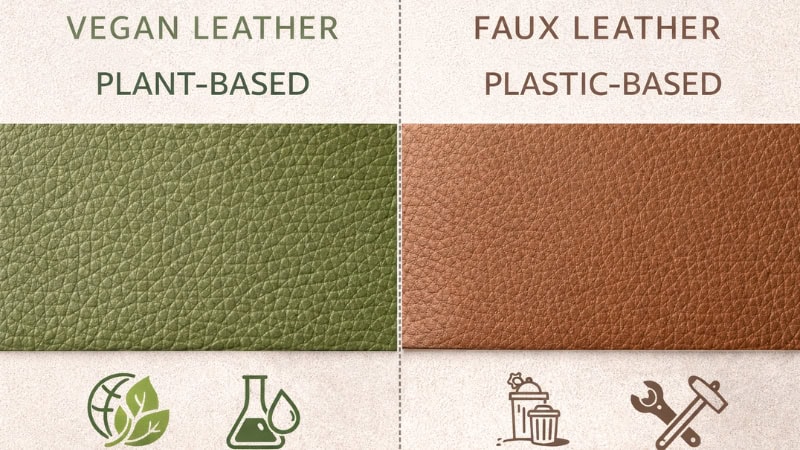
- Primary materials: Faux leather is typically made from polyurethane (PU) or polyvinyl chloride (PVC), both of which are petroleum-based plastics.
- Production process: These plastics are coated onto fabric backings and chemically treated to resemble leather grain and flexibility.
- Cost advantages: Faux leather is generally cheaper to produce, making it a common choice for mass-market fashion and furniture.
- Performance traits: It is water-resistant, easy to clean, and consistent in appearance, though it may crack or peel over time.
Despite being animal-free, faux leather is not always environmentally friendly due to plastic content and chemical processing. Understanding how it compares to vegan leather helps clarify which option aligns better with specific values and needs.
Key Differences Between Vegan Leather and Faux Leather
Although both materials avoid animal leather, their differences are rooted in composition, impact, and long-term performance. These distinctions influence buying decisions across industries.
- Material origin: Vegan leather may use renewable or plant-based resources, while faux leather relies almost entirely on synthetic plastics.
- Environmental footprint: Plant-based vegan leathers can have lower emissions and better biodegradability, whereas faux leather often contributes to microplastic pollution.
- Durability: Faux leather tends to be more water-resistant, while vegan leather varies depending on its organic content.
- Innovation pace: Vegan leather is rapidly evolving with new materials, while faux leather remains relatively unchanged.
These differences show that not all leather alternatives are created equal. To understand the broader implications, it’s important to examine environmental and ethical considerations more closely.
Environmental Impact Comparison
Environmental impact is one of the biggest factors driving interest in leather alternatives. However, the sustainability gap between vegan and faux leather can be complex.
- Carbon emissions: Plant-based vegan leather generally has a lower carbon footprint, especially when agricultural waste is used.
- Biodegradability: Some vegan leathers can biodegrade under the right conditions, while faux leather almost never does.
- Chemical use: Faux leather production often involves toxic chemicals, whereas newer vegan leathers aim to reduce harmful processing.
- Waste management: Faux leather contributes to long-term landfill waste, while vegan leather has potential for circular production models.
While vegan leather often performs better environmentally, it is not automatically sustainable. This leads directly into the ethical questions surrounding both materials.
Ethical Considerations
Ethics play a central role in the appeal of leather alternatives. Consumers increasingly want materials that align with their values.
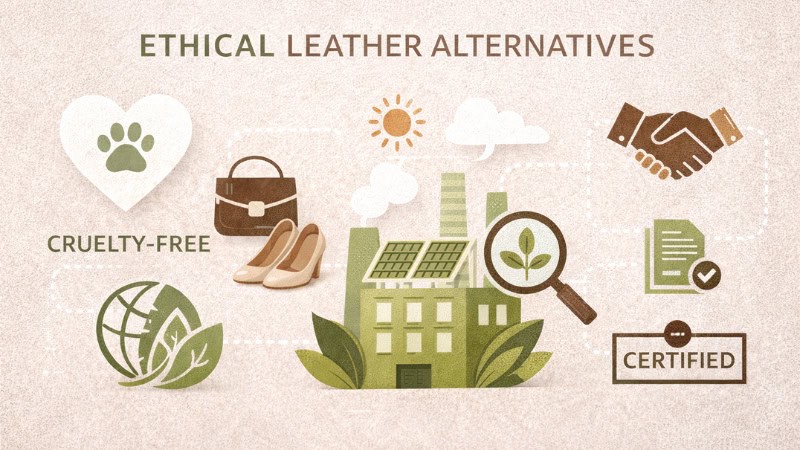
- Animal welfare: Both vegan and faux leather avoid animal cruelty, making them attractive to ethically conscious buyers.
- Labor practices: Ethical outcomes depend heavily on manufacturing transparency, regardless of material type.
- Marketing honesty: Some faux leathers are marketed as “vegan” without addressing environmental harm, which can mislead consumers.
- Supply chain accountability: Vegan leather brands often emphasize traceability and responsible sourcing.
Ethical impact goes beyond animal rights and includes environmental justice and labor conditions. With these factors in mind, evaluating real-world use cases becomes essential.
Which Material Is Better for Different Uses?
Choosing between vegan leather and faux leather often depends on how and where the material will be used. Performance needs can outweigh ideals in certain situations.
- Fashion accessories: Vegan leather is favored for premium branding and sustainability storytelling.
- Footwear: Faux leather offers better water resistance, though advanced vegan leathers are catching up.
- Furniture and upholstery: Faux leather remains common due to durability and cost efficiency.
- Budget vs values: Faux leather suits budget-conscious consumers, while vegan leather appeals to eco-focused buyers.
Understanding these use cases helps balance practicality with principles. To avoid confusion while shopping, knowing how to identify each material is the next crucial step.
FAQs: Vegan Leather vs Faux Leather
Is vegan leather the same as faux leather?
No, they are not the same. Vegan leather is a broader category that can include plant-based materials, while faux leather is specifically plastic-based. The confusion arises because both avoid animal leather, but their environmental impact can differ significantly.
Is vegan leather always environmentally friendly?
Not always. Some vegan leathers still contain plastics, which reduce their sustainability benefits. It depends on the materials and production process used.
Why is faux leather cheaper than vegan leather?
Faux leather is mass-produced using inexpensive plastics. Vegan leather often involves newer technologies and smaller-scale production, which increases costs. Research and development expenses for innovative bio-based materials also contribute to higher pricing.
Does vegan leather last as long as faux leather?
It depends on the type. High-quality vegan leathers can be durable, but some plant-based options may wear faster than synthetic faux leather. Advances in material engineering are steadily improving the lifespan of modern vegan leather products.
Can faux leather be recycled?
Recycling faux leather is difficult due to mixed materials and chemical treatments. Most faux leather ends up in landfills.
Which option is better for sustainability-focused buyers?
Plant-based vegan leather is generally the better choice. However, buyers should research brands to ensure minimal plastic content and ethical sourcing.
Final Stitch: Choosing the Right Leather Alternative
Choosing between vegan leather and faux leather isn’t about finding a perfect material. It’s about understanding trade-offs and aligning them with your priorities.
Vegan leather offers exciting innovation and ethical appeal, especially when made from plant-based sources. Faux leather remains practical and affordable, though it carries environmental drawbacks.
By knowing what’s behind the label, consumers can make smarter, more conscious choices. Small decisions, when multiplied, can shape a more responsible future for fashion and design.
