
Shell cordovan is one of the most prized leathers in luxury footwear, known for its durability, deep luster, and the ability to develop elegant rolls rather than creases. But caring for shell cordovan leather is different from maintaining calfskin or full-grain leather. Because of its dense equine fiber structure and high natural oil content, it requires a minimal, precise approach.
In this Shell Cordovan Leather Care Guide, you’ll learn how to clean shell cordovan shoes, condition them properly, remove scuffs, handle bloom, avoid common mistakes, and preserve their mirror shine for decades. With the right maintenance routine, shell cordovan can last 20+ years while developing a rich patina that improves with age.
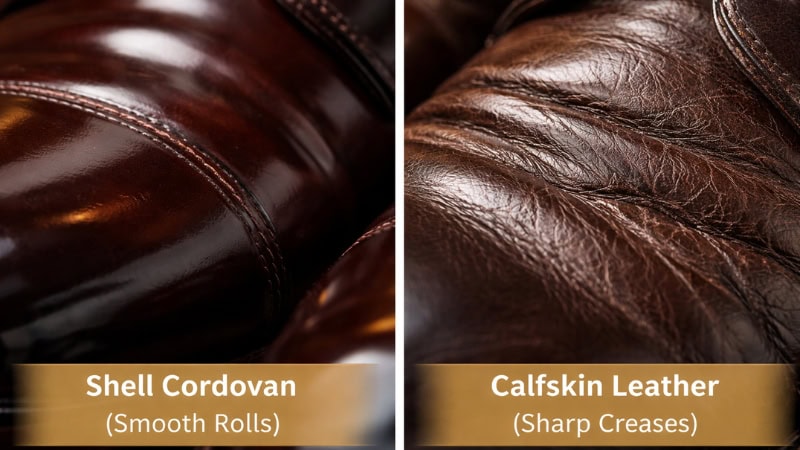
What Is Shell Cordovan Leather?
Shell cordovan is a vegetable-tanned horsehide leather made from a dense fibrous membrane found beneath the hindquarters of a horse. Unlike traditional full-grain leather or calfskin, shell cordovan is not made from the outer skin layer. Instead, it comes from a specific oval-shaped “shell” located under the hide.
This unique fiber structure gives cordovan its defining characteristics:
- It does not crease like calfskin — it forms smooth rolls.
- It has high natural oil and wax content.
- It produces a deep, glossy aniline finish.
- It offers exceptional durability and water resistance.
The tanning process typically takes six months or longer, using traditional vegetable tanning methods. Horween Leather Company in Chicago is one of the most recognized producers of shell cordovan, known for its meticulous multi-step tanning and hand-finishing process.
Unlike chrome-tanned leather, vegetable-tanned shell cordovan ages slowly and develops a rich patina over time. Its dense, non-porous fiber structure is also why shell cordovan requires significantly different maintenance from standard leather care routines.
Understanding these structural differences is the foundation for caring for shell cordovan shoes correctly.
Why Shell Cordovan Requires Special Care
Shell cordovan leather care is unique because the material behaves differently from calfskin, corrected grain leather, or other full-grain leathers.
Here’s why:
1. Dense Fiber Structure
The compact equine membrane resists creasing but traps oils differently. This means it doesn’t absorb conditioners the same way calfskin does.
2. High Natural Oil & Wax Content
Shell cordovan already contains significant oils from the vegetable tanning process. Over-conditioning can clog the surface and dull its natural shine.
3. Bloom Formation
Because of its wax-rich structure, shell cordovan may develop a cloudy haze called bloom. This is not damage—it’s natural wax rising to the surface.
4. Water Spot Sensitivity
While relatively water-resistant, shell cordovan can develop visible water spots if moisture dries unevenly.
5. Minimal Product Philosophy
Unlike traditional leather care routines involving cleaners, creams, and heavy waxes, shell cordovan thrives on simplicity:
Brush more. Condition less.
This approach preserves the leather’s structure, luster, and longevity.
Essential Tools for Shell Cordovan Care
Shell cordovan requires fewer products than most leathers. In fact, overloading it with products is one of the biggest mistakes owners make.
Here are the essentials:
Horsehair Brush: Your primary maintenance tool. Regular brushing redistributes natural oils and restores shine without product buildup.
Cedar Shoe Trees: Maintain shape, prevent excessive rolling, and absorb moisture after wear.
Neutral Cream (Cordovan-Specific Preferred): Use sparingly. Cordovan creams are lighter and designed not to clog pores.
Soft Cotton or Microfiber Cloth: For light buffing and controlled application of product.
Deer Bone or Smooth Spoon: Used to smooth rolls and help redistribute oils in areas of heavy flex.
Edge Dressing (Optional): For maintaining welt and sole edges—not the upper leather.
That’s it.
Most shell cordovan shoes require brushing after each wear and conditioning only once or twice per year. Simplicity protects the leather’s integrity.
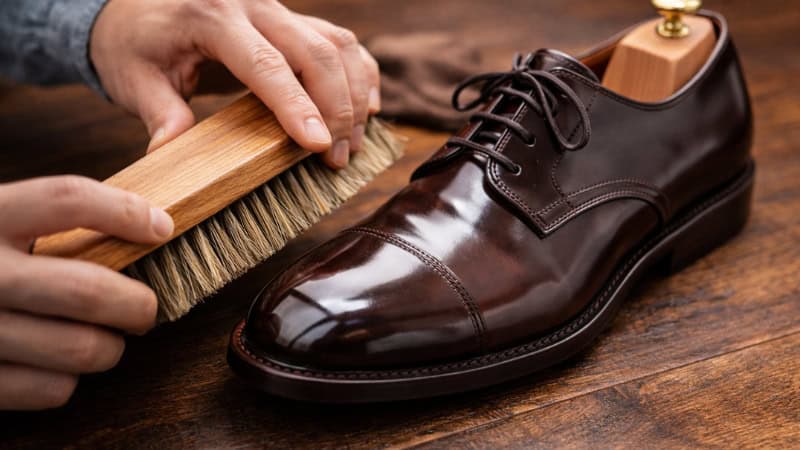
Step-by-Step: How to Clean Shell Cordovan Leather
Cleaning shell cordovan leather does not require harsh cleaners or frequent product application. In most cases, proper brushing is enough to maintain shine and remove surface buildup.
Step 1: Stabilize the Leather with Cedar Shoe Trees
Before cleaning shell cordovan shoes, insert cedar shoe trees. This maintains the shoe’s structure, smooths the surface, and allows even brushing across the upper.
Step 2: Dry Brush to Remove Dust and Reactivate Oils
Using a high-quality horsehair brush, brush the leather vigorously for two to three minutes. This step removes dirt, lifts surface debris, and redistributes the natural oils embedded in the vegetable-tanned shell.
For routine maintenance, brushing alone restores shine and prevents dullness.
Step 3: Remove Water Spots the Correct Way
Shell cordovan is relatively water-resistant but can develop visible water spots if moisture dries unevenly.
To fix water spots:
- Lightly dampen a clean cloth with distilled water.
- Gently wipe the entire upper evenly — not just the stained area.
- Allow the shoes to air-dry naturally with the shoe trees inserted.
Avoid direct heat, as it can damage the dense equine fiber structure.
Step 4: Treat Salt Stains Carefully
For winter salt stains:
- Mix equal parts white vinegar and distilled water.
- Dab lightly on the affected area.
- Wipe evenly across the surface.
- Allow to air dry completely.
This neutralizes salt without stripping essential oils.
Step 5: Finish with a Final Brush
After the leather is completely dry, brush it thoroughly again. This restores gloss and balances oil distribution.
In most cases, shell cordovan cleaning follows a simple formula:
Insert shoe trees → Brush thoroughly → Spot treat only when necessary.
How to Condition Shell Cordovan – Without Overdoing It
Conditioning shell cordovan leather requires restraint. Because shell cordovan contains high natural oil and wax content from the vegetable tanning process, excessive product application can cause buildup and dullness.
When Conditioning Is Actually Necessary
Conditioning shell cordovan only when brushing no longer restores shine, or when the leather feels noticeably dry. For most owners, this means conditioning once or twice per year.
If the leather still shines after brushing, you likely do not need conditioner.
Step 1: Prepare the Surface Properly
Insert cedar shoe trees and brush thoroughly before applying any product. Conditioning over dust or debris traps impurities in the leather.
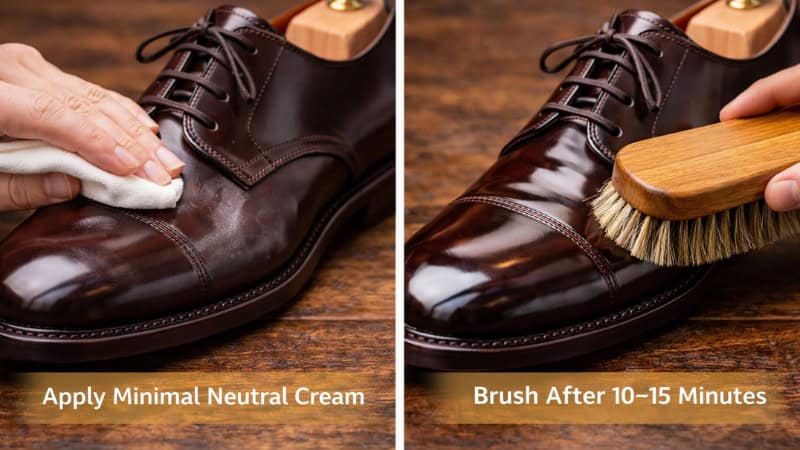
Step 2: Apply Minimal Neutral or Cordovan Cream
Use a small amount of cordovan-specific cream or neutral shoe cream. Apply in thin, even layers using a soft cloth. Avoid heavy wax polishes, as they can block oil migration.
Less product delivers better results.
Step 3: Allow Absorption Time
Let the cream absorb for 10–15 minutes. Do not rush this process or apply multiple layers immediately.
Step 4: Brush to Restore Natural Shine
Finish by brushing vigorously with a horsehair brush. This step redistributes oils and enhances gloss without artificial buildup.
Signs of Over-Conditioning
If the leather feels sticky, appears cloudy, or loses its crisp shine, too much product has been applied. Allow time between wears and brush regularly to rebalance the surface.
In shell cordovan maintenance, minimal intervention preserves flexibility, durability, and the development of long-term patina.
How to Remove Scuffs & Scratches from Shell Cordovan
Most scuffs on shell cordovan are not permanent damage — they are simply displaced oils within the leather.
Quick Answer:
In most cases, scuffs can be removed with vigorous brushing to redistribute the natural oils.
Step 1: Insert Shoe Trees
Stabilize the leather before working on the area.
Step 2: Brush Firmly
Brush the scuffed area briskly for several minutes. This often restores uniform shine.
Step 3: Use a Deer Bone or Spoon (For Deeper Marks)
For visible rolls or heavier scuffs:
- Gently rub the smooth tool along the roll.
- Apply moderate pressure.
- Follow with brushing.
The goal is to smooth fibers and redistribute oils — not scrape the surface.
When to Seek Professional Repair
Consult a cobbler if:
- Deep gouges cut through the leather
- Color loss is severe
- Structural damage appears
In most cases, shell cordovan is highly forgiving and self-healing with proper brushing.
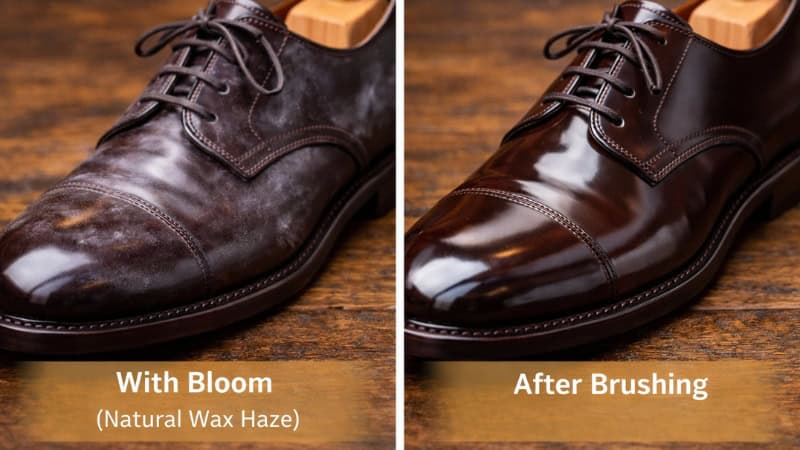
How to Handle Shell Cordovan Bloom
Bloom is a natural phenomenon unique to high-quality shell cordovan leather.
It appears as a cloudy, hazy film on the surface and is often mistaken for damage.
What Is Bloom?
Bloom occurs when natural waxes rise to the surface due to temperature changes or storage conditions. It is common in vegetable-tanned shell cordovan, especially from premium tanneries like Horween.
Is Bloom Bad?
No. Bloom actually indicates:
- High wax content
- Traditional vegetable tanning
- Minimal chemical processing
How to Remove Bloom
- Insert shoe trees.
- Brush vigorously with a horsehair brush.
- Buff with a soft cloth if needed.
No cleaner or conditioner is required.
Bloom removal is one of the easiest aspects of shell cordovan maintenance — and a sign of authentic, high-quality leather.
Common Mistakes to Avoid When Caring for Shell Cordovan
Even premium shell cordovan shoes can lose their luster prematurely if they are not maintained like ordinary calfskin. Because shell cordovan leather has a dense fiber structure and a high natural oil content, traditional leather care practices often do more harm than good.
Mistake #1: Over-Conditioning the Leather
One of the most common errors in shell cordovan maintenance is applying conditioner too frequently. This vegetable-tanned horsehide already contains abundant natural oils. Over-conditioning can clog the surface, create a sticky texture, and dull the leather’s natural gloss. In most cases, conditioning once or twice per year is sufficient.
Mistake #2: Using Heavy Wax Polish for Shine
Shell cordovan mirror shine should come from brushing, not thick wax layers. Excess wax blocks oil redistribution within the leather, reduces flexibility, and can create uneven shine buildup over time.
Mistake #3: Overusing Saddle Soap or Leather Cleaners
While saddle soap works for full-grain leather, it can strip essential oils from shell cordovan. Frequent cleaning with strong products accelerates dryness and disrupts the leather’s balance.
Mistake #4: Drying with Direct Heat
Exposing cordovan shoes to radiators, heaters, or hair dryers damages the dense fiber structure and may cause cracking. Always allow them to air dry naturally with cedar shoe trees inserted.
Mistake #5: Improper Storage Practices
Skipping shoe trees or storing shoes in plastic containers restricts airflow and traps moisture. Shell cordovan requires breathable storage to maintain its durability and develop its patina.
In shell cordovan care, restraint and consistency outperform excessive use of the product.
Long-Term Storage & Maintenance Tips
Proper storage is essential for extending the lifespan of shell cordovan leather shoes beyond 20 years.
Use Cedar Shoe Trees After Every Wear
Cedar absorbs moisture and maintains structure. Insert shoe trees immediately after removing shoes.
Rotate Your Shoes
Allow at least 24–48 hours of rest between wears. This prevents moisture buildup and fiber fatigue.
Store in Breathable Dust Bags
Avoid plastic boxes or sealed containers. Vegetable-tanned leather requires airflow to prevent mold and dryness imbalance.
Control Temperature & Humidity
Ideal storage conditions:
- Cool, dry environment
- Moderate humidity (40–60%)
- Away from direct sunlight
Excess humidity encourages mildew. Excess dryness may accelerate surface dullness.
Brush Before Storing
Light brushing redistributes oils before long-term storage and prevents bloom buildup.
When stored properly, shell cordovan develops a rich patina over time rather than deteriorating.
How Often Should You Care for Shell Cordovan?
One of the most common questions about shell cordovan leather care is how frequently maintenance is required. Unlike calfskin or full-grain leather, shell cordovan thrives on a minimal care routine.
After Every Wear: Brush and Insert Shoe Trees
After removing your shell cordovan shoes, insert cedar shoe trees immediately. Then brush the leather thoroughly for two to three minutes. This simple habit redistributes natural oils, removes dust, prevents dullness, and maintains the signature cordovan shine without adding product.
Monthly Maintenance: Light Inspection and Buffing
If the shoes are worn regularly, perform a quick monthly inspection. Check for water spots, salt stains, or surface haze. In most cases, light brushing or a gentle buff with a soft cloth is all that’s required.
Annual Conditioning: Only When Necessary
Condition shell cordovan just once or twice per year — and only if brushing no longer restores shine. Apply a minimal amount of neutral or cordovan-specific cream in thin layers.
As-Needed Care: Spot Treatment and Bloom Removal
Treat salt stains, scuffs, or bloom only when they appear. Shell cordovan does not require scheduled deep cleaning.
Consistency matters more than frequency. Minimal intervention preserves longevity.
Is Shell Cordovan Worth the Investment?
Shell cordovan shoes are among the most expensive leather footwear options on the market. But are they worth it?
Longevity
With proper maintenance, shell cordovan can last 20 years or more, especially when resoled periodically.
Cost Per Wear
Although initial costs are high, durability significantly lowers the long-term cost per wear compared to standard calfskin.
Patina Development
Vegetable-tanned shell cordovan develops a deep, rich patina that enhances character over time rather than degrading.
Resale Value
Brands like Alden, Carmina, and Viberg retain strong resale value due to demand for Horween shell cordovan.
Structural Benefits
- Rolls instead of creases
- High water resistance
- Dense fiber durability
For buyers seeking longevity, elegance, and minimal maintenance, shell cordovan leather often justifies its premium price.
When properly cared for, it becomes an heirloom material rather than disposable footwear.
Expert Tips from Professional Shoemakers
Shell cordovan leather care follows a philosophy shared by experienced cobblers and luxury footwear makers: minimal intervention produces maximum longevity.
Core Philosophy: “Brush More, Condition Less”
Professional shoemakers consistently emphasize brushing as the foundation of shell cordovan maintenance. Vigorous brushing redistributes natural oils, restores shine, and prevents buildup without altering the leather’s balance.
Product Restraint: Avoid Overloading the Leather
Experts recommend using neutral or cordovan-specific cream sparingly. Heavy wax polishes and frequent conditioning disrupt the natural oil structure of vegetable-tanned horsehide.
Structural Maintenance: Resole Before It’s Too Late
High-quality shell cordovan shoes from brands like Alden or Carmina are built to be resoled. Replacing soles before excessive wear protects the welt and extends lifespan beyond decades.
Long-Term Perspective: Think in Decades, Not Months
Shell cordovan is not disposable footwear. With proper storage, rotation, and minimal product use, it becomes an heirloom material that improves with age.
Professional advice consistently favors patience, restraint, and consistency.
Quick Care Checklist
For quick reference, here is a simplified shell cordovan care routine for long-term durability and mirror-shine maintenance.
After Every Wear
Insert cedar shoe trees, then brush thoroughly for 2 to 3 minutes.
Weekly or Biweekly (If Frequently Worn)
Light inspection and brushing to maintain gloss.
1–2 Times Per Year
Apply a minimal amount of neutral or cordovan cream only if brushing no longer restores shine.
As Needed
- Remove water spots evenly.
- Treat salt stains carefully.
- Brush off bloom.
- Smooth rolls with a deer bone if necessary.
Always Avoid
- Heavy wax buildup.
- Frequent saddle soap use.
- Direct heat drying.
- Plastic storage containers.
Consistency and restraint are the keys to preserving shell cordovan leather.
FAQs About Shell Cordovan Leather Care
What is shell cordovan leather?
Shell cordovan is a vegetable-tanned horsehide leather made from a dense fibrous membrane beneath the horse’s hindquarters. Unlike calfskin, it does not crease; instead, it forms rolls. It is known for its durability, high natural oil content, water resistance, and ability to develop a deep patina over time.
How do you clean shell cordovan shoes?
To clean shell cordovan shoes, insert cedar shoe trees and brush vigorously with a horsehair brush for several minutes. For water spots, lightly wipe the entire upper surface with a damp cloth and air-dry naturally. Avoid saddle soap or harsh cleaners unless absolutely necessary.
How often should you condition shell cordovan?
Shell cordovan should be conditioned only once or twice per year, and only if brushing no longer restores shine. Because it contains high natural oil content from vegetable tanning, over-conditioning can cause buildup and dullness.
Can you use regular shoe polish on shell cordovan?
Yes, but use neutral or cordovan-specific cream polish sparingly. Avoid heavy wax polishes, as thick layers can block oil redistribution and reduce flexibility. Shell cordovan achieves its mirror shine primarily through brushing rather than wax buildup.
Is shell cordovan waterproof?
Shell cordovan is water-resistant but not fully waterproof. Its dense fiber structure repels moisture better than many leathers. However, uneven drying can cause water spots. If wet, allow the shoes to air dry naturally with shoe trees inserted.
What is bloom on shell cordovan?
Bloom is a natural wax haze that appears on shell cordovan leather due to its high wax content. It occurs when waxes rise to the surface during storage or temperature changes. Bloom is harmless and can be removed easily by brushing.
How do you remove scuffs from shell cordovan?
Most scuffs on shell cordovan are displaced oils rather than scratches. Insert shoe trees and brush vigorously to redistribute oils. For deeper marks, gently rub the area with a deer bone or smooth spoon, then brush again.
Does shell cordovan crease?
No, shell cordovan does not crease like calfskin leather. Instead, it forms smooth rolls due to its dense equine fiber membrane. This rolling characteristic is one of its defining structural advantages.
How long does shell cordovan last?
With proper care, shell cordovan shoes can last 20 years or more. Regular brushing, minimal conditioning, proper storage, and timely resoling significantly extend lifespan.
Is shell cordovan worth the price?
Shell cordovan is considered worth the investment for its durability, patina development, and longevity. While expensive up front, its long lifespan and high resale value lower the long-term cost per wear compared to standard leather shoes.
Final Thoughts: Mastering Shell Cordovan Leather Care for Lifelong Durability
Shell cordovan leather stands apart from other materials due to its dense equine-fiber structure, vegetable-tanning process, and natural oil richness. Caring for shell cordovan shoes does not require complex routines or excessive products. Instead, longevity depends on brushing regularly, conditioning sparingly, storing properly, and avoiding common mistakes.
When maintained with patience and restraint, shell cordovan develops a deep patina, elegant rolls, and a lasting mirror shine that improves over decades. With the right care approach, shell cordovan footwear becomes not just durable luxury—but a long-term investment in craftsmanship and timeless style.
