
Leather is a durable and elegant material, but it needs proper care to stay that way. Without the right maintenance routine, leather can dry out, crack, or lose its natural character far sooner than expected. This is where leather care products play a critical role.
Two of the most commonly discussed products are saddle soap and leather conditioner. While both are designed to support leather health, they serve very different purposes and are often misunderstood or misused.
Knowing when and how to use each product can make a noticeable difference in the look, feel, and lifespan of your leather items. This article breaks down saddle soap vs leather conditioner in detail so you can make informed care decisions.
Understanding Leather Care Basics
Leather care revolves around two core actions: cleaning and conditioning. Both are essential, but they address different problems and must be applied at the right time to avoid damage.
- Different leather types require different care: Full-grain and top-grain leather are more resilient but still need moisture replenishment. Suede and nubuck, on the other hand, react poorly to water-based products and need specialized care methods.
- Environmental exposure affects leather health: Dirt, sweat, UV rays, and humidity gradually pull natural oils from leather. Over time, this leads to stiffness, fading, and surface cracks if left untreated.
- Cleaning and conditioning serve distinct roles: Cleaning removes surface contaminants, while conditioning restores oils and flexibility. Using one without the other can lead to either buildup or dryness.
Understanding these fundamentals sets the foundation for comparing saddle soap and leather conditioner more accurately in the next section.
What Is Saddle Soap?
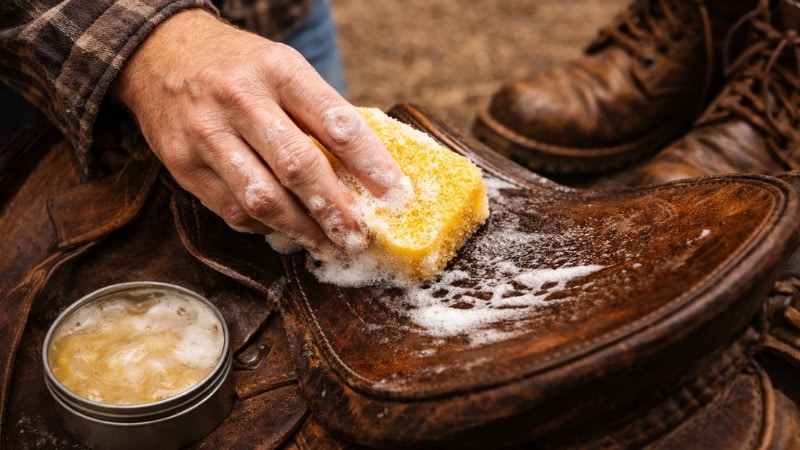
Saddle soap is a traditional leather-cleaning product originally developed for horse saddles and heavy-duty leather gear. Its primary function is to clean rather than deeply nourish leather.
- Composition and purpose: Saddle soap typically contains mild soaps, water, and small amounts of wax. These ingredients work together to lift dirt, salt, and grime embedded in leather pores.
- How it interacts with leather: While cleaning, saddle soap can remove surface oils along with contaminants. This makes it effective for restoration but risky if used too frequently.
- Best use cases: It works well on work boots, saddles, belts, and outdoor leather items that face heavy exposure. Delicate or fashion leather may suffer from repeated use.
Because saddle soap focuses on cleaning rather than hydration, it naturally leads to the need for conditioning afterward, which brings us to leather conditioners.
What Is Leather Conditioner?
Leather conditioner is designed to nourish, soften, and protect leather by replenishing lost oils. Unlike saddle soap, it does not aim to clean deeply soiled surfaces.
- Key ingredients and function: Conditioners often include natural oils, lanolin, beeswax, or synthetic emollients. These penetrate leather fibers to restore flexibility and prevent brittleness.
- Long-term leather benefits: Regular conditioning slows down cracking, maintains color depth, and improves the overall feel of leather. It also creates a light protective barrier against moisture loss.
- Ideal applications: Leather furniture, jackets, handbags, and shoes benefit most from conditioners. These items experience drying more than heavy dirt buildup.
Since conditioners and saddle soap perform different roles, understanding their contrasts is essential for proper leather maintenance.

Saddle Soap vs Leather Conditioner: Key Differences
While both products support leather care, their functions and effects differ significantly. Using the wrong one at the wrong time can shorten leather lifespan.
- Primary purpose: Saddle soap cleans aggressively, while leather conditioner restores moisture. One removes buildup; the other replenishes what’s lost.
- Frequency of use: Saddle soap should be used sparingly, only when leather is visibly dirty. Conditioner can be applied more regularly as part of routine maintenance.
- Risk factors: Overusing saddle soap may dry leather out, whereas excessive conditioning can darken or oversoften it. Balance is critical for optimal results.
These differences clarify why choosing between them depends heavily on leather condition and usage, which we’ll explore next.
When to Use Saddle Soap
Saddle soap should be treated as a corrective tool rather than a routine product. It is most effective when leather needs serious cleaning.
- Heavy dirt and grime buildup: Items exposed to sweat, mud, or salt benefit from saddle soap’s deep-cleaning action.
- Restoring neglected leather: Old or rarely cleaned leather often needs saddle soap before any conditioning can be effective.
- Preparation for conditioning: Cleaning first allows conditioners to absorb evenly instead of sealing in dirt.
Once the leather is clean and dry, conditioning becomes the next logical step to restore balance.
When to Use Leather Conditioner
Leather conditioner fits best into a regular maintenance routine. Its role is preventative rather than corrective.
- Dry or stiff leather: Conditioning restores flexibility and prevents cracking caused by moisture loss.
- Preserving appearance: It enhances natural sheen and keeps leather looking rich and healthy.
- Ongoing protection: Regular use extends the life of leather goods by slowing aging and wear.
Conditioning works best on clean leather, reinforcing the importance of pairing it properly with cleaning methods.
Can You Use Saddle Soap and Leather Conditioner Together?
Yes, and in many cases, you should. Using both correctly creates a balanced leather care routine.
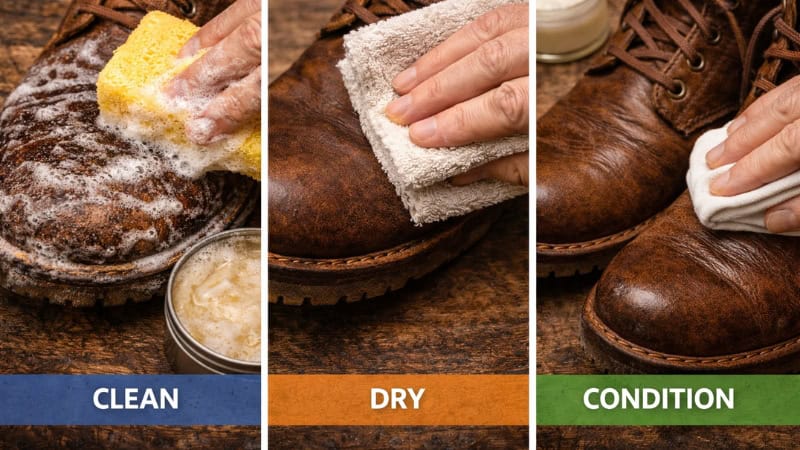
- Step-by-step approach: First, clean leather with saddle soap only if needed. Allow it to dry completely before applying conditioner.
- Why timing matters: Conditioning immediately after cleaning restores oils removed during washing.
- How often to combine them: Most leather only needs saddle soap a few times a year, followed by conditioning every few months.
Using both products strategically ensures leather stays clean without sacrificing softness.
Best Practices for Safe Leather Care
Proper technique is just as important as product choice when caring for leather.
- Always spot test: Test products on a hidden area to check for darkening or texture changes.
- Avoid overuse: Too much product can clog pores or weaken fibers over time.
- Match product to leather type: Smooth leather differs greatly from suede or nubuck in care requirements.
Avoiding common mistakes is the final step toward confident leather maintenance.
Common Mistakes to Avoid
Many leather issues stem from good intentions paired with poor execution.
- Over-cleaning with saddle soap: This strips essential oils and accelerates cracking.
- Skipping conditioning after cleaning: Clean leather without moisture restoration becomes brittle.
- Using household cleaners: These can permanently damage leather finishes.
Understanding these pitfalls makes it easier to care for leather correctly and consistently.
Frequently Asked Questions (FAQs)
Is saddle soap bad for leather?
Saddle soap is not bad for leather when used correctly and sparingly. Problems arise when it is overused or applied to delicate leather types. Because it removes oils along with dirt, it should always be followed by conditioning to restore balance. Used occasionally, it is a safe and effective cleaner.
Can leather conditioner replace saddle soap?
No, leather conditioner cannot replace saddle soap because it does not clean deeply soiled leather. Conditioner is designed to moisturize and protect, not to remove grime or salt buildup. Applying conditioner on dirty leather can seal contaminants into the surface. Cleaning should always come before conditioning when dirt is present.
How often should I condition leather?
Most leather benefits from conditioning every 2–4 months under normal use. Items exposed to heat, sunlight, or frequent use may need conditioning more often. Over-conditioning, however, can oversoften leather or darken it. Monitoring the leather’s feel and appearance helps determine the right schedule.
Does saddle soap condition leather at all?
Some saddle soaps contain waxes that offer very light surface protection. However, they do not penetrate deeply enough to replace a true leather conditioner. Any conditioning effect is minimal and temporary. For long-term leather health, a dedicated conditioner is still necessary.
Can saddle soap darken leather?
Yes, saddle soap can slightly darken leather, especially if too much water or product is used. This darkening is often temporary but can become permanent on certain leathers. Testing on a hidden area is strongly recommended. Allowing leather to dry fully also helps minimize discoloration.
Is leather conditioner safe for all leather types?
No, standard leather conditioners are not suitable for suede or nubuck. These leathers have open fibers that can be damaged or stained by oils and creams. Only use products specifically formulated for those materials. Smooth, finished leather responds best to traditional conditioners.
Saddle Soap vs Leather Conditioner: The Truth Most Leather Owners Get Wrong
Leather care isn’t about choosing one product forever—it’s about using the right tool at the right time. Saddle soap excels at deep cleaning but should be used sparingly and intentionally.
Leather conditioner, on the other hand, is the backbone of long-term maintenance. When used together correctly, these products keep leather clean, flexible, and visually appealing.
Master the balance, and your leather goods will reward you with years of durability and character.
