
Leather furniture develops character over time, but there is a fine line between graceful aging and visible deterioration. Whether you’re dealing with a scratched sofa, a cracked recliner, or a faded sectional that has lost its original richness, understanding how leather upholstery repair works can save you significant money while extending the life of your furniture.
The good news is that most damage does not automatically mean replacement. Many forms of wear—including scratches, minor tears, color loss, and surface cracking—can often be restored using professional techniques or carefully executed DIY methods.
Leather upholstery repair is the process of restoring damaged leather furniture by repairing scratches, cracks, tears, peeling surfaces, burns, fading, and worn areas. Depending on the type and severity of damage, repairs may involve fillers, color restoration, patching, refinishing, or complete panel replacement.
The key to a successful outcome lies in understanding three factors: the type of leather, the nature of the damage, and the appropriate repair method. Throughout this guide, we’ll explore each of these elements in detail, helping you determine whether your furniture can be restored, how much it may cost, and what results you can realistically expect.
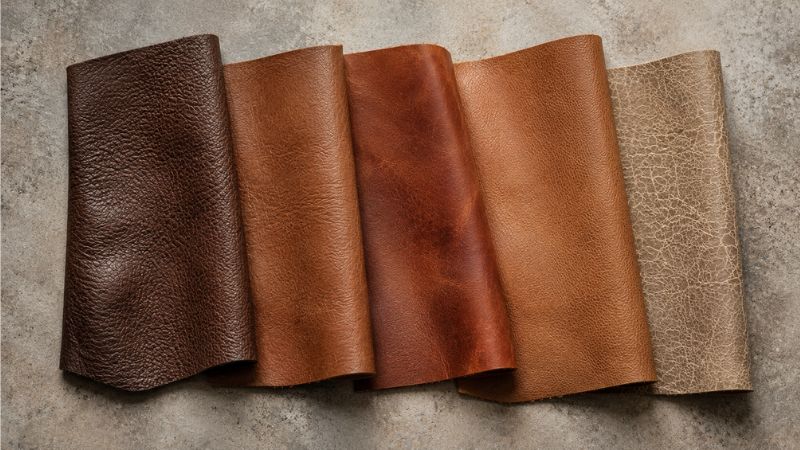
Understanding Leather Upholstery Before Attempting Repairs
Before discussing repair techniques, it is important to understand that not all leather responds the same way to restoration. A repair that works beautifully on one sofa may fail completely on another simply because the material differs.
Types of Leather Used in Upholstery
Full-grain leather is considered the highest-quality upholstery leather. It retains the natural grain surface and develops a desirable patina over time. Because the material remains structurally strong, it is generally highly repairable, especially when damage is addressed early.
Top-grain leather is slightly refined through sanding and finishing processes. It remains durable and responds well to professional restoration techniques such as recoloring and refinishing.
Aniline leather receives minimal surface treatment, allowing its natural beauty to show through. While luxurious, it is more susceptible to staining and fading. Repairs often require specialized color-matching expertise because imperfections are more visible on natural finishes.
Semi-aniline leather offers a balance between appearance and durability. Its light protective coating improves resistance to wear while still preserving a natural look.
Bonded leather presents the greatest challenge. Made from leather fibers combined with synthetic materials and adhesives, it often develops peeling and flaking problems that cannot always be permanently repaired. Temporary restoration is possible, but long-term durability is often limited.
Why Leather Type Determines Repair Success
Many homeowners focus solely on visible damage, but restoration professionals begin by identifying the leather category. The reason is simple: repair outcomes depend heavily on material structure.
A scratch on full-grain leather may disappear through conditioning and refinishing. The same scratch on bonded leather may expose weak substrate material that continues deteriorating despite repair attempts.
Think of leather as a building’s foundation. Surface damage may look similar from above, but what lies underneath determines whether restoration is practical.
Leather Repairability Score
As a general rule:
- Full-grain leather: Excellent repairability
- Top-grain leather: Very good repairability
- Semi-aniline leather: Good repairability
- Aniline leather: Moderate repairability due to color sensitivity
- Bonded leather: Limited repairability
- Faux leather: Variable repairability
Understanding your furniture’s construction provides the foundation for every repair decision that follows.
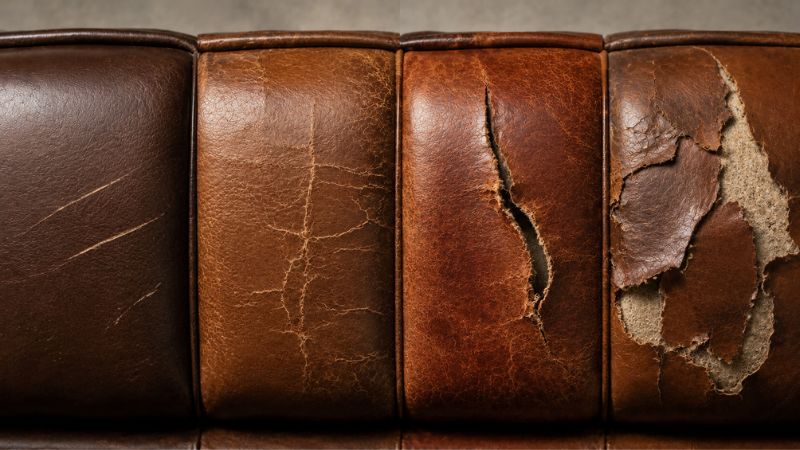
Common Types of Leather Upholstery Damage
Not all damage is created equal. Some issues are purely cosmetic, while others compromise structural integrity. Identifying the severity level helps determine whether a simple touch-up or extensive restoration is required.
Surface Scratches
Light scratches are among the most common problems on leather furniture. They often occur from clothing hardware, pet nails, jewelry, or daily use.
These marks typically affect only the protective finish rather than the leather itself. In many cases, conditioning products or minor refinishing techniques can significantly reduce their appearance.
Deep Scratches and Gouges
Deeper scratches penetrate beyond the finish layer and disrupt the leather fibers. Unlike superficial marks, these defects usually require fillers, sanding, recoloring, and sealing to achieve acceptable results.
Without treatment, deep scratches often become focal points that attract dirt and moisture.
Cracking and Dry Leather
Cracks develop when leather loses its natural oils and flexibility. Exposure to sunlight, low humidity, and inadequate maintenance accelerates this process.
Initially, cracking appears as fine lines. Over time, these lines deepen and spread, eventually weakening the material itself.
Tears and Rips
Structural tears occur when leather experiences excessive stress or impact. Common locations include seat cushions, armrests, and high-use areas.
The challenge with tears is that they rarely remain stable. Continued use often causes the damaged area to expand.
Peeling Leather Finish
Peeling is particularly common with bonded leather and lower-quality coated materials. The surface layer begins separating from the substrate, creating unsightly flakes and exposed backing material.
Unfortunately, peeling differs from ordinary scratches because the finish itself is failing.
Burn Marks
Burns from cigarettes, candles, or heat sources create permanent material loss. Depending on severity, repairs may involve filling, patching, recoloring, or replacing affected sections.
Pet Damage
Dogs and cats can cause a combination of scratches, punctures, tears, and discoloration. Pet-related damage often appears random and widespread, making color matching especially important.
Fading and Discoloration
Ultraviolet light gradually breaks down pigments and finishes. Furniture positioned near windows often develops uneven coloration, leaving certain sections noticeably lighter than others.
The Leather Damage Severity Framework
To simplify repair decisions, damage can be classified into four levels:
Level 1: Cosmetic Damage
Minor scratches, light scuffs, and superficial wear.
Level 2: Surface Structural Damage
Moderate cracking, color loss, and visible abrasion.
Level 3: Deep Structural Damage
Tears, punctures, deep gouges, and severe cracking.
Level 4: Replacement Threshold
Extensive peeling, widespread deterioration, or compromised support structures.
This framework helps homeowners evaluate repair feasibility before investing time or money.
Can Leather Upholstery Really Be Repaired?
Many furniture owners assume damaged leather is beyond saving. In reality, restoration technology has advanced dramatically over the last decade.
Most common forms of damage can be repaired successfully when intervention occurs before deterioration becomes widespread. Scratches, moderate cracking, isolated tears, fading, and discoloration typically respond well to modern restoration methods.
Damage becomes more challenging when the leather itself begins breaking down. Extensive peeling on bonded leather, severe dry rot, and widespread structural failure often limit repair effectiveness.
Damage That Is Usually Repairable
The following problems generally have high restoration success rates:
- Surface scratches
- Moderate cracking
- Localized tears
- Color fading
- Scuff marks
- Burn damage affecting small areas
- Pet scratches
Damage That May Require Replacement
Certain conditions may justify replacement rather than repair:
- Large sections of peeling bonded leather
- Extensive material separation
- Severe dry rot
- Multiple structural failures
- Furniture with damaged internal support systems
Repair vs Replacement Economics
One of the strongest arguments for restoration is cost efficiency.
A professionally restored sofa often costs substantially less than purchasing a comparable replacement. This becomes particularly important for premium leather furniture where original craftsmanship and materials would be expensive to replicate today.
As a general principle, if the frame and majority of the leather remain structurally sound, repair is usually worth considering before replacement.
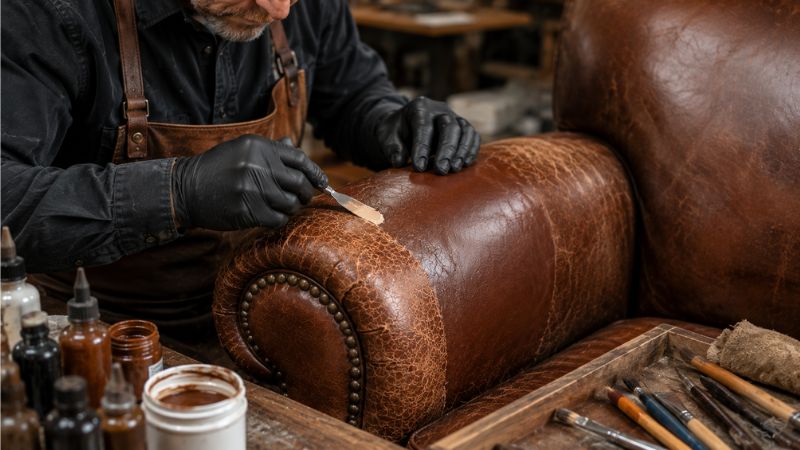
Leather Upholstery Repair Methods Explained
Understanding how repairs are performed helps set realistic expectations. Different forms of damage require different solutions, and professional technicians often combine several techniques within a single project.
Leather Fillers
Fillers are used to rebuild damaged surfaces affected by scratches, cracks, and small gouges.
After cleaning the area, technicians apply specialized compounds designed to mimic leather flexibility. Once cured, the filler is sanded smooth and prepared for recoloring.
The goal is not merely to hide damage but to recreate a stable surface that blends naturally with surrounding material.
Heat-Cured Repairs
Some advanced fillers require heat curing to achieve optimal strength and flexibility.
Controlled heat accelerates bonding while helping the repair integrate with adjacent leather. This method is particularly useful for heavily used seating surfaces where durability is critical.
Leather Patching
When material loss is too extensive for filler alone, patching becomes necessary.
A backing fabric is typically inserted beneath the damaged area to stabilize the repair. New material or specialized compounds then bridge the gap before finishing and recoloring.
Well-executed patches can become surprisingly difficult to detect from normal viewing distances.
Color Restoration
Color restoration addresses fading, discoloration, and repair blending.
Technicians formulate custom pigments to match the existing finish. Multiple thin applications create a more natural appearance than heavy coatings.
This stage often determines whether a repair appears professional or obvious.
Re-Dyeing
In cases of significant fading, partial or full re-dyeing may be required.
Unlike paint, professional leather dyes are designed to maintain flexibility and preserve the material’s texture. Properly applied dye restores richness without creating a plastic appearance.
Professional Refinishing
Refinishing combines cleaning, repair, recoloring, and protective coating application.
This process essentially refreshes the furniture’s visible surface while preserving its underlying structure.
For heavily worn pieces, refinishing often delivers the greatest visual transformation.
Panel Replacement
When damage becomes too severe for surface restoration, replacing an individual leather panel may provide the best solution.
Skilled upholsterers can remove damaged sections and install matching leather while preserving the remainder of the furniture.
Although more expensive than standard repairs, panel replacement is often less costly than complete reupholstery.
Matching Repair Methods to Damage Types
Different damage categories benefit from different approaches:
- Light scratches: Conditioning and refinishing
- Deep scratches: Fillers and recoloring
- Cracks: Flexible fillers and refinishing
- Tears: Backing reinforcement and patching
- Burns: Filling, patching, or panel replacement
- Fading: Color restoration and re-dyeing
- Peeling bonded leather: Surface reconstruction or replacement
Choosing the correct repair method is often the difference between a temporary cosmetic improvement and a long-lasting restoration.
Reply with “Continue Part 2” and I’ll complete the remaining sections (DIY repair, professional process, cost guide, DIY vs professional comparison, longevity, prevention, FAQs, key takeaways, and all image prompts).
Here is Part 2, continuing from the previous section.
DIY Leather Upholstery Repair Step-by-Step
Before reaching for a repair kit, it is important to recognize that successful restoration begins long before any filler or dye touches the surface. The preparation stage often determines whether a repair blends seamlessly or becomes more noticeable than the original damage.
While many homeowners can address minor scratches and small cracks themselves, patience matters more than technical skill. Leather responds best to careful, incremental work rather than aggressive fixes.
Tools and Materials Needed
Most DIY projects require a relatively small collection of materials:
- Leather cleaner
- Microfiber cloths
- Leather filler
- Palette knife
- Fine-grit sandpaper
- Leather dye or colorant
- Leather conditioner
- Protective finish or sealant
- Heat tool (if required by the repair system)
Choosing products specifically designed for furniture leather is essential. Automotive products may appear similar but often use different formulations intended for different wear conditions.
Cleaning and Surface Preparation
Every repair begins with thorough cleaning.
Dirt, oils, and household residues interfere with adhesion and color matching. Even invisible contaminants can cause repair compounds to fail prematurely.
Apply a dedicated leather cleaner using gentle circular motions. Once cleaned, allow the area to dry completely before proceeding.
For heavily worn sections, light sanding may be necessary to smooth raised edges and improve bonding.
Repairing Small Scratches
Minor scratches often require surprisingly little intervention.
Many superficial marks affect only the finish layer rather than the leather itself. In these situations, a quality conditioner may significantly reduce visibility by restoring moisture and improving light reflection.
If scratches remain visible, apply a matching colorant in thin layers rather than attempting full coverage immediately.
Filling Cracks
Cracks require stabilization before cosmetic restoration.
Apply flexible leather filler into the damaged area using a palette knife. Remove excess material and allow proper curing time according to manufacturer instructions.
Once cured, lightly sand the surface until smooth. The objective is to recreate the surrounding contour without creating an obvious repair ridge.
Repairing Small Tears
Small tears present a greater challenge because structural stability becomes a concern.
Most successful repairs involve inserting a backing fabric beneath the damaged area. This reinforcement prevents movement while filler and adhesive restore surface continuity.
Without proper backing support, repaired tears often reopen under pressure.
Color Matching
Color matching is frequently the most difficult aspect of furniture restoration.
Leather rarely maintains a uniform tone across an entire piece. Years of sunlight exposure, cleaning, and use create subtle variations that must be considered.
Rather than attempting full opacity immediately, build color gradually through multiple thin applications. This approach typically produces more natural results.
Conditioning and Finishing
After structural and color repairs are complete, conditioning restores flexibility and helps the repair integrate visually with surrounding leather.
A protective finish adds durability while reducing future wear. Think of this stage as the final protective layer that shields the restoration from daily use.
Common DIY Mistakes
Many failed repairs result from avoidable errors.
Applying excessive filler, skipping cleaning steps, rushing curing times, or attempting large structural repairs without experience often leads to disappointing outcomes.
The most successful DIY projects involve minor to moderate damage where patience and preparation can compensate for limited experience.
Professional Leather Upholstery Repair Process
Professional restoration differs from DIY repair in both methodology and precision. Experienced technicians evaluate furniture as a complete system rather than focusing solely on visible damage.
This broader perspective often produces longer-lasting results.
Inspection and Damage Assessment
Every professional project begins with diagnosis.
Technicians identify leather type, finish characteristics, underlying causes of damage, and potential repair limitations.
This stage is particularly important because symptoms sometimes conceal larger structural issues beneath the surface.
Deep Cleaning and Preparation
Professional cleaning goes beyond routine maintenance.
Specialized products remove embedded contaminants while preserving original finishes. This creates a stable foundation for subsequent repairs.
Structural Repair
Once preparation is complete, technicians address tears, cracks, punctures, and weakened sections.
Advanced repair compounds, reinforcement materials, and specialized tools help recreate both strength and appearance.
The objective is not merely cosmetic improvement but restoration of functional durability.
Precision Color Matching
Professional color restoration often involves custom pigment formulation.
Instead of relying on generic colors, technicians blend pigments to match existing leather tones under various lighting conditions.
This expertise is often what separates professional results from typical DIY outcomes.
Protective Finishing
The final stage involves applying a protective coating that enhances durability while maintaining a natural appearance.
A quality finish protects against abrasion, UV exposure, and future staining without making the furniture appear overly glossy or artificial.
Leather Upholstery Repair Cost Guide
One of the most common questions homeowners ask is whether restoration is financially worthwhile. The answer depends on damage severity, furniture quality, leather type, and local labor rates.
In many cases, repairing premium furniture offers significantly better value than replacement.
Scratch Repair Costs
Minor scratch repair is generally the most affordable service.
Professional treatment typically involves cleaning, blending, and localized recoloring. Costs are often modest because structural repairs are unnecessary.
Crack Repair Costs
Cracked leather requires additional labor and materials.
The process usually includes filling, sanding, recoloring, and sealing. Pricing increases as cracks become deeper and more widespread.
Tear Repair Costs
Tears demand structural reinforcement, making them more expensive than cosmetic repairs.
Costs vary depending on size, location, and accessibility. Seat cushions and high-stress areas often require more extensive work.
Cushion Panel Replacement Costs
When damage becomes too severe for surface restoration, replacing a panel may be necessary.
Because matching leather and upholstery labor are involved, costs rise significantly compared with ordinary repairs.
Full Restoration Costs
Comprehensive restoration projects include cleaning, structural repairs, color renewal, refinishing, and protection.
Although this represents the highest repair investment, it often costs far less than replacing high-quality furniture with an equivalent piece.
Factors That Influence Pricing
Several variables affect restoration costs:
- Leather type
- Damage severity
- Furniture size
- Color matching complexity
- Geographic location
- Accessibility of damaged areas
Obtaining multiple professional assessments often provides the clearest understanding of realistic pricing.
DIY vs Professional Leather Upholstery Repair
Both approaches have merit, but each serves a different purpose.
Understanding where DIY ends and professional restoration begins can prevent wasted time, money, and frustration.
When DIY Makes Sense
DIY repair is most appropriate for:
- Light scratches
- Small scuffs
- Minor cracking
- Routine maintenance
- Localized color touch-ups
These projects generally involve low risk and manageable complexity.
When Professional Repair Is Worth It
Professional intervention becomes increasingly valuable when dealing with:
- Tears
- Large cracks
- Burn damage
- Extensive fading
- Antique furniture
- Premium full-grain leather
Mistakes on expensive furniture can quickly exceed the cost of hiring a specialist from the outset.
Quick Comparison
| Damage Type | DIY Potential | Professional Recommended |
| Light scratches | Excellent | Optional |
| Moderate cracks | Good | Better results |
| Deep cracks | Limited | Yes |
| Tears | Difficult | Strongly recommended |
| Burns | Challenging | Recommended |
| Color restoration | Moderate | Best outcome |
| Full refinishing | Poor | Essential |
The higher the furniture value, the stronger the case for professional restoration.
How Long Does Leather Upholstery Repair Last?
Repair longevity depends on the quality of workmanship, materials used, environmental conditions, and ongoing maintenance.
A properly executed restoration should not be viewed as a temporary cosmetic fix. In many cases, it can provide years of additional service life.
Factors Affecting Durability
Several factors influence how long repairs remain effective:
- Leather quality
- Repair technique
- Daily usage levels
- Sunlight exposure
- Maintenance routines
- Indoor humidity conditions
Higher-quality leather generally supports longer-lasting repairs because the underlying material remains structurally sound.
Typical Lifespan Expectations
Minor scratch repairs often remain effective for many years.
Professional crack and tear repairs commonly last between several years and a decade when properly maintained.
Complete refinishing projects may significantly extend furniture lifespan, especially when combined with regular conditioning and preventative care.
Signs a Repair May Need Attention
Even successful repairs benefit from periodic monitoring.
Early signs of wear, color loss, or renewed cracking should be addressed promptly before deterioration progresses.
As with leather itself, preventive maintenance is usually more effective than reactive intervention.
How to Prevent Future Leather Upholstery Damage
The best repair is the one that never becomes necessary. Proper care dramatically reduces restoration needs while preserving appearance and comfort.
Leather behaves much like skin—it remains healthier when protected from environmental stress and maintained consistently.
Establish a Cleaning Routine
Regular cleaning removes dust, oils, and contaminants that gradually degrade finishes.
Gentle cleaning every few months is typically sufficient for most households. High-use furniture may benefit from more frequent attention.
Condition Periodically
Conditioners help maintain flexibility and reduce the risk of drying and cracking.
However, more is not always better. Excessive conditioning can create residue buildup and attract dirt.
Following manufacturer recommendations typically produces the best results.
Limit Sunlight Exposure
Ultraviolet radiation is one of leather’s most persistent enemies.
Position furniture away from direct sunlight whenever possible. Window treatments and UV-filtering films can provide additional protection.
Protect Against Pets
Pet claws are a leading cause of upholstery damage.
Training, nail maintenance, and protective throws can reduce the likelihood of scratches and punctures.
Manage Indoor Humidity
Extremely dry environments accelerate moisture loss, while excessive humidity encourages other forms of deterioration.
Maintaining stable indoor conditions helps preserve leather flexibility and appearance.
Respond Quickly to Damage
Small problems rarely remain small.
Addressing scratches, stains, and minor cracks promptly often prevents the need for more extensive restoration later.
FAQs on Leather Upholstery Repair Answered
Can cracked leather upholstery be repaired?
Yes. Most cracked leather can be repaired using flexible fillers, color restoration products, and protective finishes. Success depends on crack depth and overall leather condition. Early-stage cracking usually produces the best results because the underlying material remains structurally strong and capable of supporting a durable restoration.
Can peeling leather be fixed?
Peeling can often be improved, but outcomes vary significantly depending on the material. Genuine leather may respond well to refinishing, while bonded leather frequently experiences recurring peeling because the surface coating itself is failing. Severe bonded leather deterioration may ultimately require replacement.
Is bonded leather worth repairing?
Bonded leather can sometimes be repaired for cosmetic improvement, but long-term durability is often limited. Small localized damage may justify restoration, while widespread peeling usually indicates ongoing material failure. In many cases, replacement becomes more cost-effective than repeated repairs.
Can leather color be restored?
Yes. Professional technicians can restore faded leather using custom-matched pigments and specialized finishing systems. Successful color restoration not only improves appearance but also helps protect the underlying material. The best results occur when fading is addressed before significant surface deterioration develops.
How much does leather couch repair cost?
Repair costs vary according to damage type, furniture size, leather quality, and local labor rates. Minor cosmetic repairs are generally affordable, while structural repairs and complete refinishing projects require greater investment. Professional assessments provide the most accurate estimate for specific situations.
What is the best leather repair kit?
The best repair kit depends on the damage being addressed. High-quality kits typically include cleaners, fillers, colorants, applicators, and protective finishes. Choosing a kit designed specifically for furniture leather and matching the repair type usually produces better results than generic solutions.
Does repaired leather look new again?
Many professional restorations achieve remarkable visual improvement, but perfection is not always realistic. The objective is usually to restore appearance, function, and durability while minimizing visible evidence of damage. High-quality repairs often become difficult to notice during normal everyday use.
Can pet scratches be repaired?
Yes. Most pet scratches can be repaired through conditioning, filling, refinishing, and color restoration techniques. The repair approach depends on depth and severity. Surface scratches often respond exceptionally well, while deep claw damage may require more extensive structural restoration.
When should leather upholstery be replaced?
Replacement should be considered when damage becomes widespread, structural deterioration is severe, or restoration costs approach replacement value. Extensive bonded leather peeling, severe dry rot, and major frame issues are common situations where replacement may be more practical than repair.
The Leather Repairability Index (LRI)
One challenge consumers face is determining whether repair is worthwhile before contacting a professional.
The Leather Repairability Index™ offers a simple framework for evaluating damage.
Five factors are scored from one to two points:
- Damage depth
- Damage size
- Leather type
- Color matching difficulty
- Structural integrity
Scoring Interpretation
1–3 Points: Easy DIY Repair
Damage is primarily cosmetic and highly repairable.
4–6 Points: Advanced DIY or Professional Assessment
Repair remains practical but requires greater skill.
7–8 Points: Professional Restoration Recommended
Structural concerns or aesthetic complexity justify expert involvement.
9–10 Points: Consider Replacement
Repair may be possible, but cost-effectiveness and durability become questionable.
This framework provides a useful starting point before committing to a restoration strategy.
Key Takeaways
Leather furniture often looks worse than it truly is. Scratches, cracks, fading, and even moderate tears can frequently be repaired successfully when addressed using appropriate techniques.
The most important factor is identifying the leather type before selecting a repair method. Full-grain and top-grain materials generally respond exceptionally well to restoration, while bonded leather presents greater limitations.
For minor cosmetic issues, DIY solutions may provide excellent results. For structural damage, extensive color restoration, or high-value furniture, professional expertise usually offers the best balance of appearance, durability, and long-term value.
Ultimately, repairing leather upholstery is often more economical and environmentally responsible than replacement. When combined with proper maintenance, a successful restoration can add many years of life to furniture that might otherwise be discarded.
