
Choosing the best leather conditioner isn’t about brand popularity—it’s about how a product performs on real leather, in real conditions, over time. Leather Honey, Lexol, and Bick 4 are three of the most searched and trusted names in leather care, but they behave very differently once applied.
This guide breaks down Leather Honey vs Lexol vs Bick 4 using real-world results, not marketing promises. The focus is on conditioning depth, finish, longevity, darkening, residue, and suitability across common leather types like car seats, boots, furniture, and bags.
If you’re deciding which leather conditioner is actually right for your use case, this comparison is built to answer that fast—clearly, practically, and with zero fluff. The goal: help you protect leather long-term, not just make it look good for a day.
Leather Honey vs Lexol vs Bick 4 — At-a-Glance Comparison
This section gives a quick, extractable comparison for readers who want a fast verdict before diving deeper. Each conditioner targets a different leather care need, and none is universally “best” without context.
Quick verdict
- Leather Honey → Best for very dry, old, or neglected leather that needs deep restoration
- Lexol → Best for routine conditioning and balanced maintenance
- Bick 4 → Best for frequent use when you want zero darkening and no residue
Side-by-Side Snapshot
| Feature | Leather Honey | Lexol | Bick 4 |
| Conditioning strength | Very high (deep penetration) | Medium | Light |
| Leather darkening | Likely on dry leather | Mild | None |
| Residue after drying | Can feel tacky if overused | Minimal | None |
| Drying time | Long (several hours) | Short | Very fast |
| Best use case | Cracked, stiff, neglected leather | Furniture & car seats | Boots, bags, and regular maintenance |
| Ease of use | Moderate | Easy | Very easy |
Why this matters: Many leather damage issues come from using a conditioner that’s too strong or too weak for the leather’s condition. Matching product strength to leather health is key to longevity.

Why Real-World Leather Conditioning Results Matter More Than Marketing Claims
Leather conditioners often look similar on labels, but their real-world behavior varies significantly once absorbed into leather fibers. Marketing focuses on “nourishing” and “protecting,” while actual results depend on formulation weight, penetration depth, and drying behavior.
What real-world testing reveals
- Some conditioners soften quickly but fade within days
- Others restore flexibility deeply but require careful application
- Over-conditioning is a common cause of leather darkening and residue buildup
Users searching Leather Honey vs Lexol vs Bick 4 want confirmation before buying—not brand history or vague benefits. They want to know what works, on what leather, and for how long.
If you’re unsure how often leather should be conditioned or how to prep it properly, this comparison pairs best with a complete leather care guide covering cleaning, testing, and application frequency.
Testing Methodology — How Leather Honey, Lexol, and Bick 4 Were Evaluated
To ensure fair and useful results, all three leather conditioners were tested under the same conditions across common leather types and real-use scenarios. No lab-only tests—only applications that mirror everyday use.
Leather types tested
- Full-grain leather (boots, belts)
- Top-grain leather (sofas, bags)
- Coated automotive leather (car seats)
- Older, partially dried leather vs well-maintained leather
Evaluation criteria
- Absorption speed (how quickly the leather drinks it in)
- Softness restoration after 24 hours
- Surface feel (tacky, oily, or dry-touch)
- Visual change (darkening, shine, uneven patches)
- Longevity after 7 days of normal use
Results reflect repeated use over time, not single-application impressions. This is critical because leather conditioners often show their true behavior after drying and re-use.
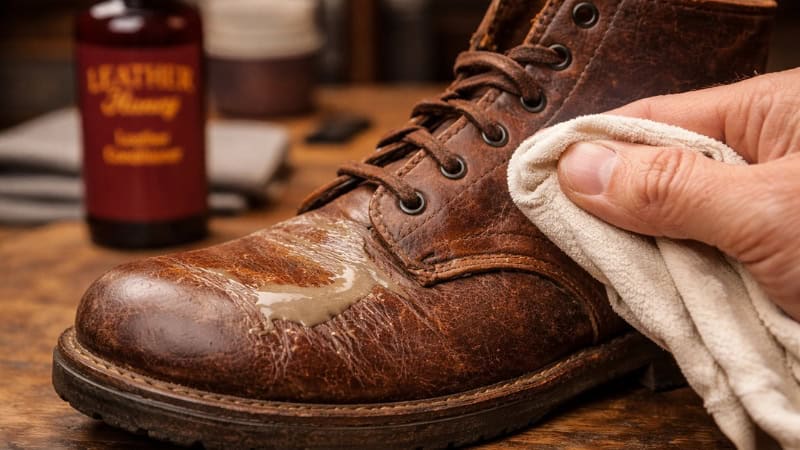
Leather Honey Review — Deep Conditioning Performance on Dry & Neglected Leather
Leather Honey is a heavy-duty leather conditioner designed to penetrate deeply into dry and stiff leather. It’s most effective where leather has lost flexibility due to age, neglect, or environmental exposure.
What Leather Honey does best
- Restores flexibility to cracked or hardened leather
- Penetrates deeply rather than sitting on the surface
- Provides long-lasting conditioning with fewer applications
Real-world behavior
- Absorbs slowly, especially on thick leather
- Darkens dry leather noticeably, especially during the first application
- Requires careful buffing to avoid surface tackiness
Where Leather Honey falls short
- Over-application leads to residue
- Not ideal for already-soft or frequently conditioned leather
- Longer drying time compared to Lexol and Bick 4
Best suited for: Old leather boots, saddles, work gear, vintage furniture, and any leather that feels stiff or brittle.

Lexol Review — Balanced Leather Cleaner & Conditioner for Routine Use
Lexol is designed for consistent leather maintenance, not dramatic restoration. It sits between heavy conditioners like Leather Honey and lightweight options like Bick 4, making it a common choice for furniture, automotive interiors, and everyday leather goods.
How Lexol performs in real-world use
- Moderate penetration: Lexol absorbs evenly without flooding leather fibers. It improves flexibility but doesn’t radically soften severely dry leather.
- Minimal darkening: On most top-grain and coated leathers, color change is subtle to negligible.
- Clean finish: Once buffed, leather feels natural—not slick or waxy.
Where Lexol works best
- Automotive leather seats exposed to heat and friction
- Leather sofas and office chairs needing regular upkeep
- Users who condition on a predictable schedule
Limitations to know
- Not strong enough to revive cracked or brittle leather
- Requires more frequent reapplication than Leather Honey
Lexol leather conditioner is best positioned as a maintenance-first product, not a repair solution.

Bick 4 Review — Lightweight Conditioning Without Darkening Leather
Bick 4 is a non-darkening leather conditioner built for appearance-sensitive leather. It’s frequently used on boots, bags, and lighter-colored leather where color consistency matters more than deep restoration.
Real-world performance highlights
- Zero darkening: Even on light leather, Bick 4 preserves original color.
- No residue: Dries quickly and leaves a dry-touch surface.
- Fast application: Ideal for quick maintenance routines.
Where Bick 4 shines
- Frequently worn leather boots and shoes
- Handbags, wallets, and accessories
- Users who condition leather often and lightly
Where it underperforms
- Limited penetration on very dry or neglected leather
- Softness gains are subtle and short-term
Bick 4 leather conditioner prioritizes maintenance and aesthetics over repair.
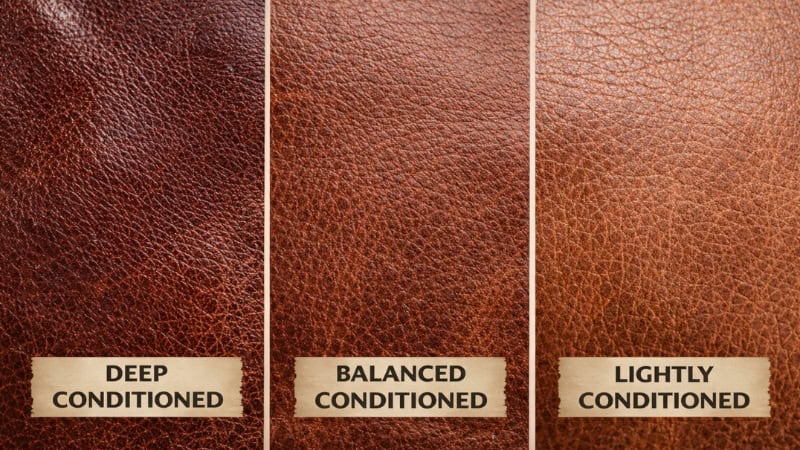
Side-by-Side Results — Conditioning Strength, Finish, and Longevity
This section translates hands-on application into clear outcome differences. While all three products condition leather, their impact varies sharply based on penetration depth, surface behavior, and how long results hold under real use.
Conditioning strength and penetration
- Leather Honey: Penetrates deeply into dry leather fibers, restoring flexibility from within rather than coating the surface.
- Lexol: Absorbs evenly and conditions moderately, supporting leather health without oversaturation.
- Bick 4: Primarily conditions at the surface level, maintaining softness rather than rebuilding it.
Finish, feel, and residue
- Leather Honey: Leaves leather noticeably softer but can feel heavy or tacky if excess product isn’t buffed out.
- Lexol: Dries to a natural, clean finish with no slickness.
- Bick 4: Fully residue-free, leaving a dry, untreated feel.
Longevity of results
- Leather Honey: Conditioning effect lasts weeks due to deep absorption.
- Lexol: Results last moderately and benefit from routine reapplication.
- Bick 4: Shorter lifespan per application; designed for frequent use.
Conditioning depth directly correlates with longevity—but only when leather actually needs it.
Best Leather Conditioner by Use Case
Choosing the best leather conditioner depends more on how the leather is used than on the brand itself. Matching product strength to real-world conditions prevents premature wear and over-conditioning.
Recommended picks by scenario
- Cracked, stiff, or neglected leather: Leather Honey
- Car seats and automotive leather: Lexol
- Boots, shoes, and everyday leather goods: Bick 4
- High-end furniture: Lexol for balance; Bick 4 for lighter finishes
If leather still feels flexible, lighter conditioning often outperforms heavy restoration products.
Common Leather Conditioning Mistakes
Even premium leather conditioners can cause damage if misused. Most leather issues come from product mismatch, not poor quality.
Frequent mistakes to avoid
- Over-conditioning healthy leather: Most common when Leather Honey is applied too often.
- Ignoring coated leather surfaces: Leads to poor absorption and residue.
- Using one conditioner for all leather: Different leather needs different formulas.
Product-specific risk control
- Bick 4: Lowest risk of buildup or darkening.
- Lexol: Safest all-around option for mixed leather surfaces.
Conditioning frequency should be adjusted by feel, not schedule.
Price vs Performance — Which Leather Conditioner Offers the Best Value
Price alone is a poor indicator of value in leather care. The real metric is how much conditioning benefit you get per application cycle, factoring in absorption depth, reapplication frequency, and leather response over time.
Leather Honey: Higher Cost, Lower Application Frequency
Leather Honey typically costs more per bottle, but its deep-penetrating formula means it doesn’t need to be applied often. On dry or neglected leather, one application can last weeks, sometimes months. This makes it cost-efficient for restoration scenarios, where repeated light conditioners would be ineffective.
Lexol: Balanced Cost for Predictable Maintenance
Lexol sits in the mid-range price bracket and delivers consistent results across common leather types. While it requires more frequent use than Leather Honey, its ease of application and reliable performance make it cost-effective for routine furniture and automotive care.
Bick 4: Lower Cost, Higher Usage Frequency
Bick 4 is usually the least expensive upfront, but its lightweight conditioning means it’s applied more often. For users maintaining boots, bags, or lightly worn leather, the lower price offsets the higher usage frequency, making it economical for appearance-focused upkeep.
Value insight: The best value depends on leather condition—restoration favors strength, while maintenance favors efficiency.
Leather Care Expert Verdict — Which One Should You Choose?
There is no single “best” leather conditioner—only the most appropriate one for the leather’s current state and usage pattern. Professionals select conditioners based on need, not brand preference.
When Leather Needs Restoration and Structural Softening
Choose Leather Honey when leather feels stiff, dry, or brittle. Its deep conditioning restores flexibility and slows fiber breakdown, making it the right tool for aging or neglected leather.
When Leather Needs Consistent, Low-Risk Maintenance
Choose Lexol for routine conditioning of furniture, car seats, and frequently used leather surfaces. Its balanced formula supports long-term leather health without the risk of oversaturation.
When Appearance Consistency Is the Priority
Choose Bick 4 when preserving original color and texture matters most. It’s ideal for lighter leathers and frequent use, where visual consistency outweighs deep conditioning.
Expert takeaway: Proper leather care often involves rotating products as leather conditions change over time.
FAQs — Leather Honey vs Lexol vs Bick 4
Does Leather Honey darken leather?
Yes. Leather Honey often darkens dry or untreated leather because it penetrates deeply into the fibers. Darkening usually fades slightly as the leather settles but should be expected.
Is Lexol safe for car leather seats?
Yes. Lexol is widely used on coated automotive leather and is considered safe for routine conditioning without leaving residue or altering texture.
Can Bick 4 restore cracked or stiff leather?
No. Bick 4 is designed for maintenance, not repair. It helps maintain softness but won’t reverse cracking or severe dryness.
Which leather conditioner is best for light-colored leather?
Bick 4 is the safest option for light-colored leather because it conditions without darkening or changing appearance.
How often should leather be conditioned?
Most leather benefits from conditioning every 3–6 months. Heavily used or exposed leather may require more frequent care, while lightly used leather needs less.
Should leather be cleaned before conditioning?
Yes. Cleaning removes dirt and oils that block absorption, allowing the conditioner to work effectively and evenly.
Final Takeaway — Choosing the Right Leather Conditioner for Long-Term Results
Leather Honey, Lexol, and Bick 4 aren’t competing for the same job—they solve different leather care problems. Deep restoration, balanced maintenance, and non-darkening upkeep are distinct needs.
When conditioner strength matches leather condition, leather stays flexible, durable, and visually consistent over time. That alignment—not brand hype—is what delivers real-world results and long-term leather health.
