
Leather is durable, luxurious, and long-lasting—but it is not immune to sunlight.
Over time, UV light silently breaks down leather fibers, causing fading, dryness, and irreversible structural damage.
Whether it’s a leather sofa near a window, a car interior, or a favorite leather bag, prolonged UV exposure accelerates molecular aging. The damage often starts invisibly, long before cracks or discoloration appear.
This guide explains how UV light damages leather, the science behind it, early warning signs, and proven ways to protect leather from sun exposure—using material science, conservation best practices, and real-world experience.
Why this matters: UV damage is cumulative and permanent. Understanding it early is the only way to preserve leather’s appearance, strength, and lifespan.
What Is UV Light and How Does It Interact With Leather?
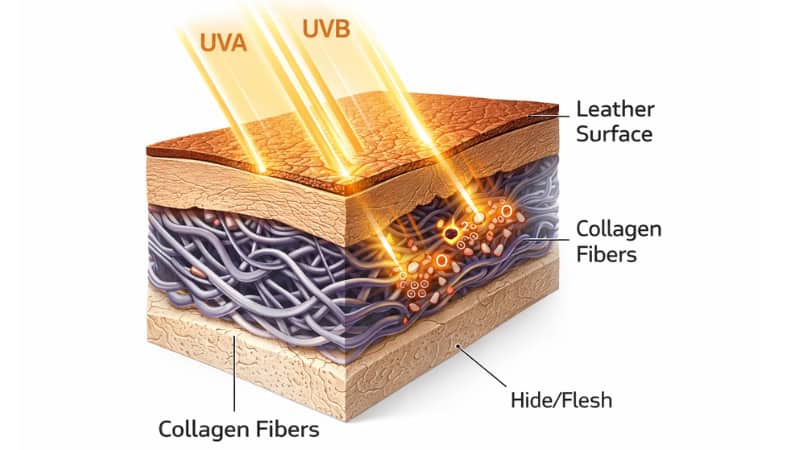
UV light is a form of invisible electromagnetic radiation emitted by the sun. While humans don’t see it, leather absorbs UV energy directly, triggering chemical reactions that weaken its structure. Unlike surface dirt or moisture, UV damage penetrates deep and accumulates over time.
Understanding this interaction explains why leather degrades even indoors and why damage is often irreversible once visible.
Types of UV Rays That Affect Leather
- UVA rays
These rays penetrate deeply and are the primary cause of long-term leather aging. UVA passes through windows and glass, making indoor leather vulnerable. - UVB rays
More intense but less penetrating, UVB contributes to surface damage and pigment breakdown, especially in outdoor exposure. - Why UVA is the main threat
UVA triggers photodegradation, breaking molecular bonds inside leather fibers rather than just affecting the surface.
Leather as an Organic Material
- Leather is made from animal hide rich in collagen proteins
- Collagen fibers rely on moisture, oils, and stable bonds to remain flexible
- UV light disrupts these bonds, initiating oxidative stress and fiber collapse
- This is why leather behaves more like skin or wood than plastic under sunlight
The Science Behind UV Damage to Leather
UV damage alters leather at a material and molecular level, not just on the surface. When leather absorbs UV radiation, it triggers photochemical reactions that permanently weaken its internal structure. This process simultaneously affects collagen fibers, natural oils, and color pigments, accelerating leather aging.
The severity of damage depends on exposure duration, UV intensity, and leather type, but the underlying mechanisms remain consistent across all leather products.
Breakdown of collagen fibers
UV radiation disrupts collagen cross-links that give leather strength and flexibility. As these bonds weaken, leather loses elasticity and becomes structurally fragile, increasing the likelihood of cracking even under light stress.
Oxidation and accelerated aging
UV exposure increases oxidative stress within leather fibers. Oxygen reacts more aggressively with collagen and fats, speeding up aging and causing leather to stiffen faster than it would naturally.
Loss of natural oils and bound moisture
UV heat and radiation cause evaporation of essential oils and moisture that keep leather supple. Once these are lost, leather dries from the inside out, not just on the surface.
Degradation of dyes and tanning agents
UV light breaks down organic dyes and vegetable tanning compounds. This not only causes fading but also reduces the leather’s resistance to future environmental damage.
Visible Signs of UV Damage on Leather (Early vs Advanced)
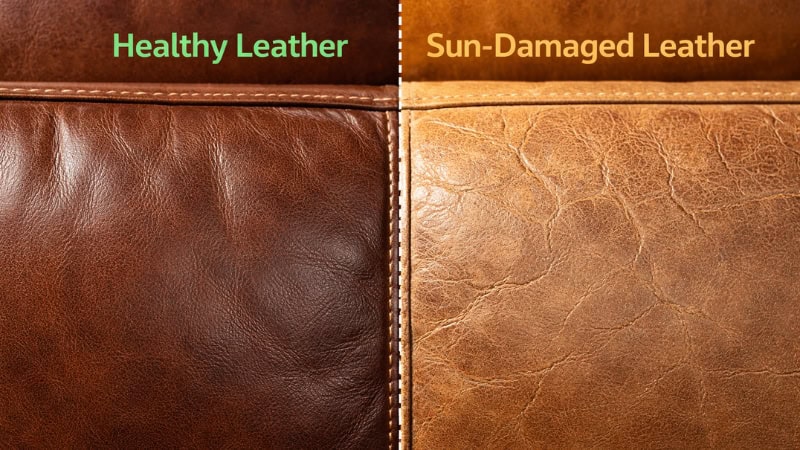
UV damage progresses in stages, often starting invisibly. Early symptoms are subtle and frequently mistaken for normal wear. By the time severe signs appear, the internal fiber network is already compromised.
Understanding the progression helps identify damage before it becomes irreversible.
Uneven fading or discoloration
UV exposure breaks down pigments unevenly, especially on surfaces facing windows or other sources of sunlight. This is often the first visible indicator of photodegradation.
Loss of surface sheen and richness
As oils oxidize and evaporate, leather loses its natural luster. The surface appears dull and lifeless, signaling internal dehydration.
Dry or warm-to-touch texture
Sun-exposed leather often feels warmer and drier than the surrounding areas, indicating moisture loss and heat absorption.
Stiffness and reduced flexibility
Damage to collagen fibers reduces elasticity, making leather feel rigid even after conditioning.
Cracking, peeling, and surface splitting
Advanced UV damage causes fibers to fracture. Cracks typically appear along stress points and expand over time.
Types of Leather Most Affected by UV Exposure
UV sensitivity varies by leather type, finish, and level of surface protection. Leathers with fewer coatings absorb more UV energy, making them especially vulnerable to photodegradation.
This difference explains why some leather products fade or crack far sooner than others under similar conditions.
Aniline leather: Contains no protective pigment layer, allowing UV light to penetrate directly into the fiber structure. It fades and dries faster than any other leather type.
Semi-aniline leather: Offers limited UV resistance due to light pigmentation, but prolonged exposure still damages collagen and dyes.
Pigmented or coated leather: Has a protective surface layer that slows UV penetration. While more resistant, it is not UV-proof and will degrade with sustained exposure.
Automotive and furniture leather: Frequently exposed to continuous sunlight through windows, making cumulative UV damage more severe over time.
How Long-Term Sun Exposure Permanently Damages Leather
Long-term UV exposure causes irreversible structural changes. While surface dryness may appear treatable, UV-damaged collagen cannot be repaired once broken.
This is why leather that looks “restored” often fails structurally later.
Cumulative fiber breakdown: UV damage accumulates over time, even with intermittent exposure. Each exposure weakens fibers incrementally.
Permanent loss of tensile strength: Once collagen cross-links are broken, leather cannot regain its original strength or flexibility.
Reduced lifespan despite maintenance: Conditioners improve feel and appearance but cannot rebuild damaged fibers, limiting long-term durability.
Delayed failure after cosmetic repair: Recolored or softened leather may still crack later because the internal structure remains compromised.

Proven Ways to Protect Leather From UV Light
UV protection relies on prevention rather than correction. The most effective strategies reduce exposure, slow oxidation, and reinforce leather’s natural defenses.
Consistent, low-effort habits significantly extend leather lifespan.
Limit direct sunlight exposure: Position leather furniture away from windows and rotate items regularly. Reducing direct UV contact slows photodegradation at the source.
Use UV-protectant leather conditioners: Products containing UV inhibitors and antioxidants absorb or neutralize radiation, slowing collagen breakdown and pigment fading.
Maintain a stable indoor climate: Proper humidity and temperature reduce moisture loss and prevent heat-assisted UV damage.
Cover or shield unused leather items: Breathable covers and shaded storage prevent unnecessary exposure during non-use periods.
Does Window Glass Block UV Rays Enough to Protect Leather?
Standard window glass blocks most UVB rays but allows significant UVA penetration, which is the primary cause of indoor leather damage. This makes indoor exposure deceptively harmful over time.
Relying on glass alone often results in slow, unnoticed degradation.
UVA rays pass through untreated glass: UVA penetrates windows and continues breaking down collagen and dyes indoors.
UV-filtering films reduce exposure significantly: Specialized window films block a large percentage of UVA, offering meaningful protection for leather interiors.
Indirect sunlight still causes damage: Reflected and diffused light carries enough UV energy to degrade leather over extended periods.
Indoor fading is often misdiagnosed as aging: Many cases of “natural wear” are actually preventable UV damage.
Common Myths About Sunlight and Leather (Debunked)
Misinformation leads to preventable damage. Let’s clear it up.
- “Leather is naturally sun-resistant.” → False
Leather is organic and UV-sensitive. - “Conditioning alone prevents UV damage” → False
Conditioning helps, but does not block UV. - “Only outdoor leather fades” → False
Indoor UVA exposure is a major cause of damage.
Expert Tips for Restoring Sun-Damaged Leather
Restoration depends on damage severity.
- Conditioning can improve flexibility and appearance
- Color restoration may mask fading but not repair fibers
- Cracked leather requires professional intervention
- Severely UV-damaged leather cannot be fully restored
Experience signal: Restoration improves usability—not original strength.
FAQs On UV Damage to Leather
Can UV light crack leather?
Yes. UV radiation weakens collagen fibers inside leather by breaking their molecular bonds. As fibers lose elasticity and strength, the leather becomes brittle and eventually cracks, especially in high-stress areas such as seams and folds.
How fast does sunlight damage leather?
Structural UV damage begins immediately upon exposure, though visible signs like fading or dryness may take weeks or months to appear. Continuous or repeated exposure significantly accelerates deterioration.
Is faded leather permanently damaged?
In most cases, yes. Fading indicates that UV light has broken down dyes and often the underlying fiber structure. While color can sometimes be restored cosmetically, the internal damage is irreversible.
Does indoor sunlight damage leather?
Absolutely. UVA rays pass through standard window glass and slowly degrade leather indoors. This makes furniture, car interiors, and office chairs near windows particularly vulnerable over time.
Do leather conditioners protect against UV light?
Only conditioners that contain UV inhibitors offer meaningful protection. Standard moisturizers improve flexibility and appearance but do not block UV radiation or prevent collagen degradation.
Can sun-damaged leather be fully repaired?
No. While professional treatments can improve texture, softness, and color, they cannot restore damaged collagen fibers. UV damage permanently reduces leather’s original strength and lifespan.
Which leather type is most vulnerable to UV damage?
Aniline and natural leathers are the most UV-sensitive because they lack protective pigment coatings. These leathers absorb UV radiation directly, making them prone to faster fading and drying.
Does tinted or UV-filtering glass fully protect leather?
UV-filtering glass significantly reduces exposure but does not eliminate it entirely. Prolonged or intense sunlight can still cause gradual degradation, necessitating additional protective measures.
Final Verdict: Why UV Protection Is Essential for Leather Longevity
UV light is one of the most destructive yet overlooked threats to leather. It degrades collagen, accelerates oxidation, and permanently weakens structure—often before visible damage appears.
Protecting leather from UV exposure is not optional if longevity, aesthetics, and value matter. With proper placement, UV protection, and maintenance, leather can last decades instead of years.
