
Leather is one of those materials that ages with character—until it doesn’t. Over time, dryness, fading, and everyday wear can strip away the richness that makes leather feel timeless. That’s where reconditioning steps in to help restore what’s been lost.
While conditioning keeps healthy leather supple, reconditioning is a deeper, more restorative process for pieces that have clearly seen better days. It’s the difference between routine care and meaningful repair.
Before diving into the practical steps, it’s helpful to understand exactly how these two approaches differ and why each plays a role in long-term leather care.

Conditioning vs. Reconditioning: What Really Sets Them Apart
Leather care seems simple at first, but the difference between conditioning and reconditioning affects how well your leather ages. A quick wipe of conditioner keeps things smooth, but neglected leather often needs more than a routine refresh. Understanding this difference helps you choose the right approach and avoid doing too little—or too much.
Here’s the breakdown:
- Conditioning is routine maintenance. It replenishes oils, keeps leather flexible, and prevents early dryness. Most well-maintained leather only needs conditioning every few weeks or months.
- Reconditioning is a deeper revival process for leather that’s stiff, cracked, faded, or clearly neglected. It involves deep cleaning, restoring lost moisture, and sometimes repairing surface issues.
- Conditioning works on healthy leather, while reconditioning saves struggling leather from deteriorating further.
- Using the wrong approach—like conditioning severely dry leather—can leave it looking dull and still at risk of cracking.
Now that the difference is clear, let’s look at how to recognize when your leather is crying out for more than basic conditioning.
When Leather Really Needs Reconditioning
Leather rarely jumps from fine to ruined overnight. The clues appear slowly—stiff texture, dull color, or a surface that feels more like cardboard than skin. Paying attention to these early signs can save your favorite pieces from long-term damage. Reconditioning becomes essential when leather shows visible or physical symptoms of distress.
Watch for these indicators:
- Stiffness or rigidity, especially in areas that should normally flex.
- Fine or surface-level cracking, often caused by long-term dryness.
- Dull, chalky, or uneven color where oils have evaporated.
- A rough or flaky feel, meaning the structure has lost moisture.
- Excessive creasing that doesn’t relax even after regular care.
If you notice one or more of these signs, it’s time to go beyond a simple conditioner and return moisture at a deeper level. Before taking action, though, knowing the correct steps will ensure you restore the leather safely and effectively.
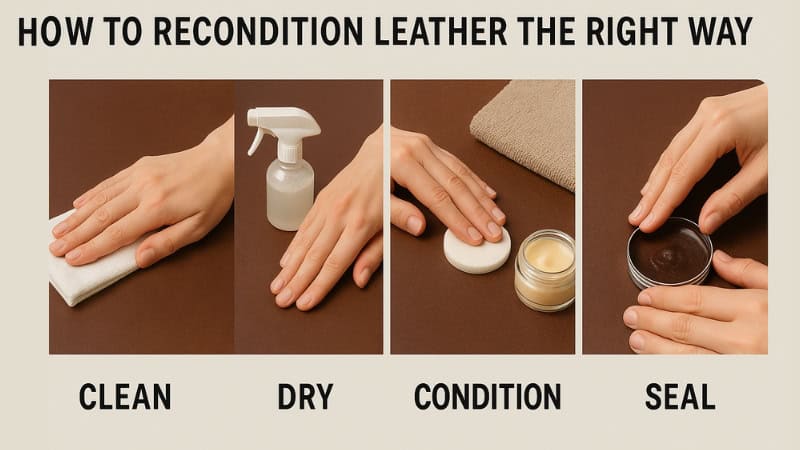
How to Recondition Leather the Right Way
Reconditioning leather isn’t complicated, but it does require patience and a step-by-step approach. The goal is to revive the material slowly so it absorbs moisture evenly without becoming oversaturated. Done properly, reconditioning can make old leather look dramatically better while extending its lifespan.
Recommended Read: How Can You Tell Real Leather from Fake? – The Ultimate Guide
Start with a close inspection
Assess the leather type, texture, and overall condition before applying anything. This helps you determine how dry or damaged the piece is and guides your product choices. A quick inspection also prevents using treatments that might be too strong.
Deep clean using a pH-balanced cleaner
A gentle cleaner removes dirt and oils that block conditioner absorption. Work in small circular motions to lift grime without scratching the surface. Cleaning first ensures every layer of moisture can sink in evenly.
Let the leather dry naturally
After cleaning, allow the leather to air-dry away from heat or sunlight. Forced drying can tighten fibers and worsen dryness. Waiting a bit ensures the leather is ready to absorb moisture properly.
Apply restorative oils or heavy conditioners gradually
Use thin layers of oil or balm, giving each one time to soak in. This prevents oversaturation and allows the leather to rehydrate evenly. Gradual application leads to better flexibility and more natural-looking results.
Address minor cracks or color loss
Use repair balms or color creams to fill shallow cracks and even out faded areas. These products won’t remove deep flaws, but can dramatically improve the overall look. Apply sparingly to avoid dark patches.
Finish with a light conditioner and protective sealant
A final layer of light conditioner smooths the surface and enhances softness. Adding a protective sealant shields the leather from UV rays, moisture loss, and dirt. This step helps preserve your restoration work for longer.
Products Worth Using—and Ones to Avoid
Using the right products can make or break your reconditioning efforts. Some treatments hydrate beautifully, while others clog pores or cause long-term damage. Choosing carefully ensures your leather stays healthy, flexible, and visually appealing after restoration.
What’s safe and effective:
- Lanolin-based conditioners for deep moisture.
- Beeswax balms, which protect and soften.
- Neatsfoot oil, used sparingly, for very dry leather.
- Professional restoration creams are designed for aged or cracked surfaces.
What to avoid completely:
- Household oils like olive or coconut oil—they darken leather unevenly.
- Petroleum-based products which weaken fibers over time.
- Harsh soaps or detergents that strip natural oils.
- Silicone-heavy sprays, which create a shiny film but block pores.
Choosing the right products sets the stage for proper long-term care, which keeps your newly restored leather in great shape moving forward.

Long-Term Leather Care Tips to Keep It Looking Great
Once your leather is restored, keeping it healthy becomes much easier. Consistent care prevents dryness from creeping back and reduces the need for heavy reconditioning. Think of it like moisturizing your skin—you don’t wait for cracks to appear before taking action.
Simple habits that make a big difference:
- Store leather away from heat and sunlight, which speeds up fading and dryness.
- Wipe surfaces regularly to remove grime, sweat, and oils before they settle in.
- Condition every few weeks to months, depending on usage and climate.
- Avoid compressing leather, especially in storage, to maintain its natural shape.
- Rotate wear, especially with leather shoes and bags, to prevent overuse in specific areas.
These habits help your leather stay smooth, hydrated, and vibrant—making the transition into daily care seamless and stress-free.
FAQs About Reconditioning Leather
How often should I recondition leather?
Most leather only needs reconditioning once or twice a year, depending on usage and environment. If the leather is exposed to sun, heat, or heavy wear, you may need to recondition more frequently. Always check for stiffness or discoloration before deciding. Routine conditioning between sessions helps extend the time between deep treatments.
Can I recondition all types of leather the same way?
No—different leathers respond differently. Full-grain and top-grain leather handle oils and balms well, but suede and nubuck require specialized products. Bonded leather has limitations because it contains synthetic binders. Always identify the type before applying any treatment.
Is reconditioning the same as cleaning?
Cleaning removes dirt and buildup, while reconditioning restores moisture and flexibility. Both steps matter, but cleaning comes first so that conditioners can absorb properly. Skipping the cleaning stage often leads to uneven results. Think of cleaning as preparing the surface.
Will reconditioning fix deep cracks?
Reconditioning can soften and improve the appearance of cracks, but it won’t make deep ones disappear completely. Severe damage may require professional repair or recoloring. Still, restoring moisture prevents cracks from worsening. Early intervention yields the best results.
Can I over-condition or over-recondition leather?
Yes—too much conditioner can oversaturate the material, leaving it sticky or weakened. Reconditioning should be done slowly and only when the leather truly needs it. Always apply thin layers and let them absorb. Moderation keeps leather strong and balanced.
Do natural oils work as leather reconditioners?
Some natural oils can work temporarily but often cause long-term issues like dark spots or rancid odors. Leather-specific oils are safer and formulated for proper absorption. Avoid kitchen oils, even if they seem convenient. They usually do more harm than good.
How long does it take to see results after reconditioning?
You’ll see visible improvement—especially in color and softness—within a few hours. Full absorption can take 24–48 hours, depending on dryness. For extremely neglected leather, multiple sessions may be required. Patience delivers the best long-term results.
A Final Word to Keep Your Leather Thriving
Reviving leather doesn’t have to be complicated—you just need the right steps and a little patience. With smart care, even tired leather can bounce back beautifully.
Treat your pieces with consistent attention, and they’ll reward you with years of durability, character, and comfort. Leather may age, but with the right approach, it never truly gets old.
