
What Are Roughout Leather Boots and Why They’re Special
Roughout leather boots are prized for their rugged beauty, durability, and natural resistance to wear and tear. They bring together the toughness of full-grain leather and the soft texture of suede, creating a perfect balance of function and style.
However, without proper protection, the nap can flatten, stains can settle in, and moisture can slowly erode the fibers. By learning how and what to use for protection, you can ensure your boots keep their character and comfort through years of adventures.
Read on.

Understanding Roughout Leather
Roughout leather often gets mistaken for suede, but it’s an entirely different beast. It combines the durability of full-grain leather with the comfort of a textured finish. Understanding what makes it different helps you choose the right cleaning and protection methods.
- Made Inside-Out: Unlike suede, which is split from the hide, roughout is made by turning the full-grain leather inside out to expose the flesh side.
- Stronger Than Suede: Because it’s still full-grain, it maintains its natural strength and resistance to abrasion and moisture.
- Hides Dirt Naturally: Its coarse nap conceals scratches and dirt, keeping the boots looking cleaner longer.
- Water Resistance: The dense fiber structure provides natural moisture resistance, though extra waterproofing extends its lifespan.
- Care Difference: Roughout requires lighter, more breathable treatments — oils or waxes meant for smooth leather can ruin its texture.
Why You Must Protect Roughout Leather Boots
Roughout leather might be tough, but it’s not indestructible. Consistent protection preserves not only the appearance but also the structural integrity of your boots. Think of it as preventive maintenance rather than a fix.
- Prevents Moisture Damage: Applying protectant sprays prevents water from seeping into the fibers, which can lead to stiffness and mold.
- Guards Against Stains: A good protective barrier repels dirt and oil, stopping them from embedding deep into the nap.
- Preserves the Texture: Protection keeps the nap soft, preventing it from flattening or becoming shiny with wear.
- Maintains Natural Color: A protective coating helps prevent uneven fading caused by sunlight or moisture.
- Extends Lifespan: Regular maintenance slows aging, meaning fewer replacements and better long-term value.
Protecting roughout leather isn’t just about looks — it’s about preserving its character and performance for the long haul.
Recommended Read: How to Clean Leather Sandals: An All-Inclusive Guide
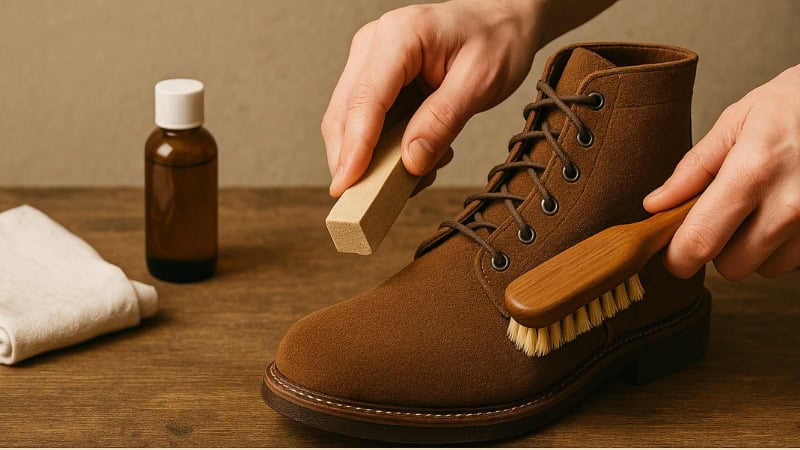
How to Clean Roughout Leather Boots the Right Way
Cleaning is the foundation of proper care. A clean surface allows protective sprays to bond effectively while keeping the nap healthy and breathable. It’s not about scrubbing — it’s about gentle upkeep.
- Start Dry: Always clean your boots when they’re completely dry. Cleaning wet leather can stretch and damage the fibers.
- Brush Away Dirt: Use a soft horsehair or suede brush to remove surface dust and dried mud gently. Work in light, even strokes to lift debris without flattening the nap.
- Handle Stains Gently: For dark spots or scuffs, use a suede eraser or a soft cloth dampened with diluted vinegar. Gently dab — don’t rub — and allow it to air dry fully.
- Avoid Excess Moisture: Never soak your boots in water or use soap. Excess moisture can cause the leather to harden and lose its natural shape.
- Refresh the Nap: Finish by lightly brushing the surface again to restore its soft, fuzzy texture.
Light, regular cleaning prevents deep buildup and keeps your boots ready for any challenge.
What to Use to Protect Roughout Leather Boots
The secret to keeping roughout leather looking great lies in using the right products. Choose breathable, specialized protectants that preserve the leather’s texture instead of sealing it.
- Waterproof Sprays: Use silicone-based or fluoropolymer sprays designed for suede and nubuck. They form a light, invisible barrier that repels water and prevents stains.
- Specialized Protectants: Products like Nikwax, Saphir, or Scotchgard offer protection without altering color or softening the leather excessively.
- Avoid Heavy Conditioners: Traditional leather conditioners or oils will darken and flatten the nap. Always choose those labeled safe for suede or roughout.
- Essential Tools: Keep a soft suede brush, crepe brush, and a clean microfiber cloth on hand for regular care.
- Supportive Accessories: Use boot trees to help maintain shape during cleaning, drying, or storage.
The right protection products act like armor — light, effective, and breathable, ensuring your boots stay tough yet supple.

How to Apply Protection Like a Pro
Applying protection correctly ensures maximum coverage and long-term effectiveness. It’s an easy process, but precision makes all the difference between lasting results and patchy protection.
- Step 1 – Prepare the Boots: Begin by brushing off any dust or dirt to create a clean surface for the spray to bond to.
- Step 2 – Ensure Complete Dryness: Make sure the leather is completely dry to prevent moisture from getting trapped underneath.
- Step 3 – Spray Evenly: Hold the can about 6–8 inches away from the boot and apply light, even passes. Avoid oversaturating one spot.
- Step 4 – Let It Dry Naturally: Allow the boots to air dry for at least 24 hours in a cool, ventilated space away from direct heat or sunlight.
- Step 5 – Reapply Regularly: Refresh the protective coating every few weeks or after heavy exposure to moisture or dirt.
Proper technique helps the product bond uniformly, ensuring your boots remain shielded without losing their breathability.
How to Maintain the Nap and Texture
The nap — that velvety, tactile surface — is what gives roughout leather its iconic look. Maintaining it requires gentle handling and consistent attention, not heavy treatments.
- Brush Frequently: After each wear, use a soft suede or crepe brush to lift the nap and remove light dust. Regular brushing prevents matting.
- Revive with Steam: A brief pass of steam from a kettle or humidifier helps loosen dirt and lift fibers before brushing.
- Be Gentle: Avoid pressing too hard or using stiff bristles, which can leave shiny spots or cause fiber damage.
- Post-Protection Routine: Once your waterproofing spray has fully dried, brush again to restore the natural texture.
- Stay Consistent: A few minutes of brushing after each use keeps the boots clean, soft, and visually appealing.
Maintaining the nap is less about effort and more about frequency — the more often you brush, the longer your boots will look fresh.
Storage and Long-Term Roughout Boot Care
Proper storage is a crucial part of leather boot care. Even when your boots aren’t in use, how you store them determines how well they hold up over time.
- Keep Them Dry: Always store boots in a cool, dry space, away from direct heat or humidity. Excess moisture encourages mold and odor.
- Use Boot Trees: Cedar boot trees absorb moisture and help retain shape, preventing creases in the leather.
- Avoid Plastic Covers: Store your boots in breathable cotton or canvas bags instead of airtight plastic, which traps moisture.
- Light Maintenance Between Uses: Even in storage, boots collect dust. Brush and inspect them every few weeks to maintain freshness.
- Seasonal Preparation: Before storing them long-term, clean thoroughly and reapply a waterproofing layer to create a protective barrier.
Treat storage as part of your care routine — not an afterthought — to keep your boots in peak condition season after seaso
Common Mistakes That Ruin Roughout Leather Boots
Even well-intentioned care can go wrong. Avoiding these common mistakes will ensure your roughout boots stay soft, breathable, and long-lasting.
- Using the Wrong Products: Oils, waxes, and polishes for smooth leather can clog the nap and darken the surface permanently.
- Overusing Water: Excessive soaking or scrubbing weakens leather fibers, leading to stiffness and cracking as it dries.
- Heat Drying: Placing boots near heaters or in direct sunlight causes shrinking, fading, and structural damage.
- Ignoring Regular Care: Skipping brushing or reapplication allows dirt to embed, leading to discoloration and odor buildup.
- Improper Storage: Storing damp boots in sealed containers invites mildew and breaks down the leather.
By sidestepping these pitfalls, you preserve both the function and beauty of your roughout leather boots for the long run.
Make Your Roughout Boots Last Forever
If there’s one takeaway, it’s this – gentle consistency beats aggressive treatment every time. Clean lightly, protect regularly, and brush often — that’s the winning formula. Roughout leather thrives on breathable care, not heavy coatings or quick fixes.
When you give your boots a few minutes of attention after each wear, they’ll reward you with comfort, durability, and style that only gets better with age.
Treat them right, and they’ll walk with you for a lifetime — through workdays, adventures, and everything in between.
