
Leather can last a lifetime—and often several generations—if it is maintained correctly. The reality is not about stopping aging, but controlling how leather ages.
In practical terms, “forever” refers to decades of use, not literal permanence. High-quality leather like full-grain or vegetable-tanned leather, can remain functional and attractive for 20–100+ years with proper care.
Leather does not wear out like synthetic materials. It deteriorates when it dries, cracks, molds, or undergoes environmental damage due to poor maintenance.
This article focuses on preserving leather by managing its structure, moisture, and environment. The goal is simple: extend lifespan by preventing avoidable damage.
What Leather Is Made Of (Why It Ages or Lasts)
Understanding leather at a structural level explains why some pieces last decades while others fail quickly. Longevity is determined by fiber integrity, tanning method, and material quality.
Collagen fiber structure: Leather is made of interwoven collagen fibers, which provide strength and flexibility. These fibers must remain intact and lubricated to prevent brittleness.
Tanning and its impact: Tanning stabilizes the hide and prevents decomposition. Vegetable tanning produces firmer, more durable leather that ages with patina, while chrome tanning creates softer leather that may not last as long under stress.
Leather quality tiers: Full-grain leather retains the complete fiber structure, making it the most durable. Top-grain leather is slightly altered, while bonded leather is made from scraps and has a significantly shorter lifespan.
Why leather deteriorates: Leather does not fail from use alone. It deteriorates when its internal fibers lose oils, absorb excess moisture, or undergo chemical breakdown.
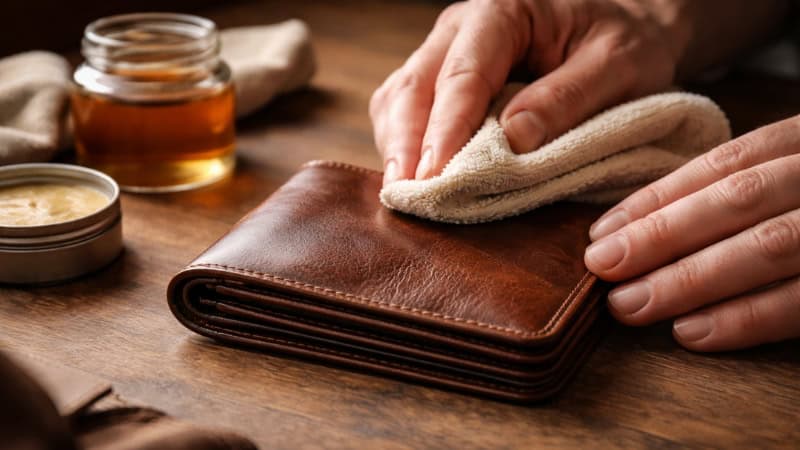
The Only Rule That Matters: Keep Leather Hydrated and Stable
All leather care principles reduce to one idea: maintain hydration while avoiding environmental instability. Longevity depends on balance, not excessive treatment.
Moisture and oil balance: Leather contains natural oils that keep collagen fibers flexible. When these oils evaporate, fibers stiffen and eventually crack.
The danger of excess moisture: Too much moisture weakens the fiber structure and creates conditions for mold and mildew. Leather should never remain damp or saturated.
Environmental stability: Sudden changes in temperature or humidity accelerate deterioration. Leather performs best in consistent conditions.
The three primary enemies: Dryness removes essential oils, moisture introduces biological damage, and UV exposure causes oxidation. Managing these three factors determines how long leather lasts.
How Leather Deteriorates Over Time
Leather degradation follows predictable patterns driven by physical and chemical changes. Recognizing these processes makes prevention straightforward.
Drying and cracking
Loss of natural oils causes collagen fibers to stiffen. Over time, this leads to surface dryness, micro-cracks, and eventually deep structural cracks.
Over-conditioning damage
Applying too many oils or heavy products can clog pores and reduce breathability. This weakens the material instead of strengthening it.
Mold and mildew formation
In humid or poorly ventilated conditions, leather absorbs moisture and supports fungal growth. This causes staining and long-term structural damage.
UV and oxidation
Prolonged sunlight exposure breaks down chemical bonds within leather. This results in fading, drying, and reduced flexibility.
Core mechanism of failure
In all cases, deterioration occurs when the collagen fiber network loses balance. Maintaining that balance is the foundation of long-term preservation.
Step-by-Step Leather Care Routine (The Only System You Need)
Leather lasts longest when care is consistent, simple, and repeatable. This routine focuses on preserving fiber integrity without over-treating the material.
Step 1: Clean without stripping oils
Use a pH-balanced leather cleaner to remove dirt, dust, and surface contaminants. Avoid household soaps, detergents, or alcohol-based products, as they strip natural oils and accelerate drying.
Step 2: Condition to restore flexibility
Apply a light layer of leather conditioner to replenish lost oils. Focus on maintaining softness rather than saturating the material, as over-conditioning can weaken fibers.
Step 3: Protect the surface
Use a leather balm or wax to create a protective barrier against water and environmental exposure. This step helps reduce moisture absorption while maintaining breathability.
Step 4: Store correctly
Keep leather in a cool, dry, and ventilated space. Avoid plastic bags or sealed containers, as they trap moisture and promote mold growth.
How often to repeat
The routine should be applied based on usage and climate, not on a fixed schedule. Regular light care is more effective than infrequent heavy treatment.
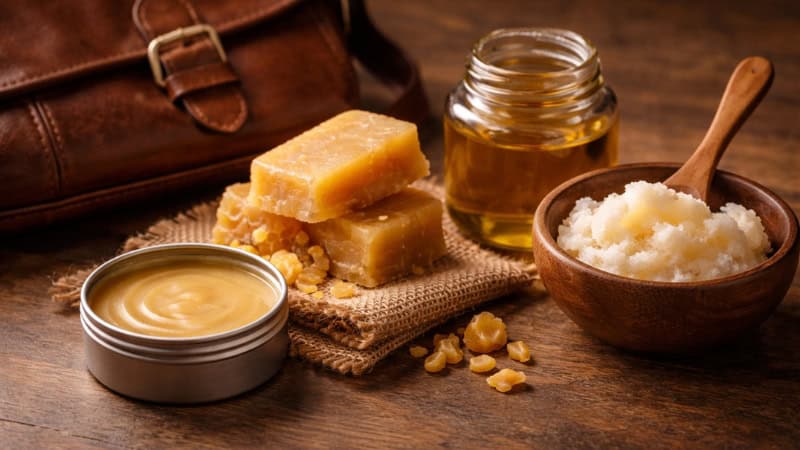
The Best Products and Ingredients for Leather Longevity
Choosing the right products determines whether leather improves with age or degrades prematurely. The goal is to support the material, not overwhelm it.
Natural oils and conditioners: Ingredients like lanolin and neatsfoot oil help restore flexibility by replenishing lost oils. These should be used sparingly to avoid oversaturation.
Waxes and protective agents: Beeswax and carnauba wax provide a protective layer that improves water resistance. They also help seal in moisture without completely blocking airflow.
Conditioners vs oils vs balms: Conditioners are balanced formulas designed for regular maintenance. Oils penetrate deeply but can soften leather excessively if overused, while balms offer both conditioning and protection.
What to avoid completely: Silicone-heavy products create artificial shine but block pores. Petroleum-based products can degrade fibers over time and should not be used for long-term care.
Climate Control: The Hidden Factor Most People Ignore
Environmental conditions have a greater impact on leather lifespan than most care routines. Even well-maintained leather will fail if stored in unstable conditions.
Ideal temperature and humidity: Leather performs best between 15–25°C with relative humidity around 40–60%. These conditions prevent both drying and excess moisture absorption.
Why humidity matters most: Low humidity accelerates oil loss and causes brittleness, while high humidity encourages mold and fiber weakening. Stability is more important than perfection.
Storage best practices: Use breathable dust bags instead of plastic storage. In humid environments, silica gel or dehumidifiers help control moisture levels.
Long-term preservation principle: Leather longevity depends on maintaining a consistent environment. Fluctuations—not just extremes—are what cause the most damage over time.
How Often Should You Care for Leather?
Leather care frequency should be based on exposure, usage, and environment rather than rigid schedules. Over-maintenance can be just as harmful as neglect.
Usage-based care frequency: Daily-use items like shoes or bags require more frequent attention than occasionally used items. Friction, sweat, and exposure accelerate wear.
Climate-based adjustments: Dry climates require more frequent conditioning, while humid climates require more attention to ventilation and mold prevention.
General maintenance guideline: Cleaning every 1–3 months and conditioning every 3–6 months works for most situations. Adjust based on how the leather feels rather than following fixed intervals.
Signs leather needs care: Dull appearance, stiffness, or slight dryness indicate the need for conditioning. Sticky or overly soft leather suggests over-conditioning and requires restraint.
Common Mistakes That Destroy Leather
Most leather damage is not due to age, but incorrect care practices. Avoiding these mistakes is often more important than applying the right products.
- Over-conditioning the leather: Applying too much conditioner saturates the fibers and weakens structure over time. Leather should feel supple, not oily or overly soft.
- Using household cleaning products: Soaps, detergents, and alcohol-based cleaners strip natural oils and accelerate drying. Only pH-balanced leather cleaners should be used.
- Improper storage methods: Storing leather in plastic bags or airtight containers traps moisture. This creates ideal conditions for mold and mildew growth.
- Exposure to sunlight and heat: Direct sunlight and high temperatures cause UV damage and rapid drying. This leads to fading, stiffness, and eventual cracking.
- Ignoring early warning signs: Minor dryness, dullness, or stiffness are early indicators of imbalance. Addressing these early prevents irreversible damage later.
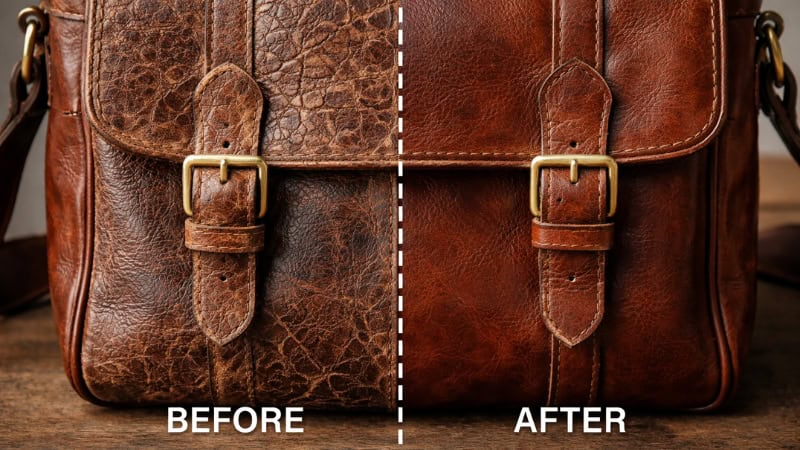
Repair vs Prevention: Extending Lifespan Decades Longer
Leather repair can restore appearance, but it rarely restores full structural integrity. Prevention is significantly more effective than fixing damage after it occurs.
Limits of repair: Surface scratches and minor cracks can often be improved with conditioners or fillers. Deep cracks and fiber damage are usually permanent.
When to intervene: Early-stage dryness or stiffness can be reversed with proper conditioning. Waiting until visible cracking appears reduces recovery potential.
Professional restoration: For high-value leather goods, professional repair services can extend usability. However, results depend on how early the damage is addressed.
Prevention as a strategy: Consistent care, proper storage, and environmental control reduce the need for repair. Long-lasting leather is maintained, not restored.
Different Leather Types Require Different Care
Not all leather behaves the same, and care must match the material type. Applying the wrong method can shorten lifespan instead of extending it.
Full-grain leather: This is the most durable and requires minimal intervention. Regular conditioning and basic cleaning are sufficient for long-term preservation.
Top-grain leather: Slightly processed and less resilient than full-grain. It benefits from more consistent conditioning to maintain flexibility.
Suede and nubuck: These have a textured surface that requires specialized brushes and cleaners. Traditional oils and conditioners should generally be avoided.
Bonded and low-quality leather: Made from leather fragments and adhesives, these materials have limited lifespan. They cannot realistically be preserved for decades.
Realistic Lifespan Expectations
Leather longevity varies depending on quality, usage, and care practices. Understanding realistic expectations helps align maintenance efforts with outcomes.
High-quality leather lifespan: Full-grain leather can last 20–100+ years when properly maintained. Many leather goods become more attractive over time due to patina development.
Moderate-quality leather: Top-grain leather can last for many years but typically does not achieve the same longevity as full-grain under identical conditions.
Low-quality leather limitations: Bonded or heavily processed leather often deteriorates within a few years. Maintenance can slow decline but not prevent it entirely.
Use-case examples: Footwear, bags, and furniture can all last decades when properly cared for. Longevity depends more on maintenance than frequency of use.
Final Principle: Leather Lasts Forever If You Maintain Its Biology
Leather longevity is not about constant intervention, but about maintaining balance. Treating leather as a living material leads to better long-term results.
Leather as preserved skin: Leather retains properties of natural hide, including the need for moisture and protection. It should be maintained, not artificially altered.
The three essential actions: Clean gently, condition appropriately, and store in stable conditions. These actions preserve the internal fiber structure over time.
What determines lifespan: Environmental stability, proper hydration, and avoiding damage are the key factors. Products and routines are only tools to support these.
Final takeaway
Leather does not fail on its own. When properly maintained, it can last for generations and improve with age.
Frequently Asked Questions (Leather Care & Longevity)
Can leather really last forever?
Leather can last for decades or even generations if it is properly maintained. High-quality leather, especially full-grain, does not wear out naturally but deteriorates due to poor care or environmental damage.
What is the best way to preserve leather long-term?
The most effective way to preserve leather is to keep it clean, properly conditioned, and stored in a stable environment. Maintaining moisture balance and avoiding extreme conditions are critical.
How often should leather be conditioned?
Leather should typically be conditioned every 3–6 months, depending on usage and climate. Dry environments may require more frequent conditioning, while humid conditions require less.
What destroys leather the fastest?
The main causes of leather damage are dryness, excess moisture, and prolonged UV exposure. Improper cleaning products and over-conditioning can also accelerate deterioration.
Is it possible to restore cracked leather?
Minor cracks can be improved with conditioners and repair products, but deep cracks are usually permanent. Preventive care is far more effective than restoration.
Can you use household products to clean leather?
Household cleaners like soap or alcohol should be avoided because they strip natural oils. Only pH-balanced leather cleaners are safe for long-term use.
Does water ruin leather?
Small amounts of water are not harmful if dried properly, but prolonged moisture exposure can weaken fibers and lead to mold growth. Leather should never remain damp.
What type of leather lasts the longest?
Full-grain leather lasts the longest because it retains the strongest fiber structure. Lower-quality leathers, such as bonded leather, have significantly shorter lifespans.
The One Principle That Makes Leather Last a Lifetime
Leather can last for decades—or even generations—when its natural structure is preserved through proper care. The goal is not to stop aging, but to control how the material ages over time.
Maintaining balance is what matters most. Leather should stay hydrated without becoming saturated, protected without being sealed off, and stored in conditions that remain stable rather than extreme.
High-quality leather is designed to endure, but its lifespan depends on how it is treated. Consistent, minimal care is more effective than aggressive or irregular maintenance.
When cleaned gently, conditioned appropriately, and protected from environmental damage, leather does not fail on its own. Its longevity is determined by maintenance, not time.
