
Leather is the quiet partner in every ride—it bears pressure, absorbs sweat, and flexes with every cue you give your horse. But like any trusted companion, equestrian leather needs care, not just for longevity, but for safety and performance.
In this guide, I’ll walk you through how to maintain equestrian leather the way we do in real barns—not theory, but practice shaped by long rides, humid tack rooms, and the hard lessons that come from cracked billets at the worst possible moment.
What Is Equestrian Leather?
Equestrian leather isn’t just material—it’s engineered resilience shaped by tradition and biomechanics. Understanding what you’re working with changes how you care for it, much like knowing your horse’s temperament changes how you ride.
Leather Composition & Structure
Most high-quality saddles and bridles are crafted from full-grain leather, where the outermost layer retains its natural fiber structure. This gives it unmatched strength, but also means it reacts deeply to moisture, oils, and environmental stress. Unlike synthetic alternatives, this leather breathes—absorbing sweat during a ride and releasing it slowly afterward.
Top-grain leather, often used in mid-range tack, has been sanded and treated to look uniform. It’s easier to maintain visually, but it lacks the same depth of fiber integrity. As a trainer, I’ve seen top-grain tack hold shine but fail structurally under repeated strain—especially in humid climates like ours.
Tanning Methods & Their Impact
Vegetable-tanned leather is the gold standard in equestrian gear. It develops a rich patina over time, but it’s sensitive—it dries out faster and demands consistent conditioning. Think of it like a seasoned horse: responsive, beautiful, but unforgiving if neglected.
Chrome-tanned leather is more water-resistant and flexible out of the box, but it doesn’t age the same way. It’s often found in budget tack, where ease of use is prioritized over long-term performance.
Why Proper Leather Maintenance Is Critical
Neglecting leather doesn’t just shorten its lifespan—it changes how it performs under you. And in riding, small failures can cascade into real risks.
Structural Integrity & Safety
Leather is made of interwoven fibers that rely on natural oils to stay flexible. When those oils dry out, the fibers stiffen and eventually crack. I’ve handled reins that looked fine on the surface but snapped under tension—because the internal structure had already failed.
Billets, stirrup leathers, and reins are high-stress zones. When leather in these areas loses elasticity, it doesn’t just wear—it becomes dangerous. A compromised billet during a jump isn’t just inconvenient—it’s a fall waiting to happen.
Environmental Stress Factors
In humid climates, leather absorbs moisture from both the air and your horse’s sweat. This creates a breeding ground for mold and weakens the leather’s internal bonds. After long training sessions, I’ve seen tack develop that faint musty smell—that’s the early sign of microbial damage.
On the flip side, dry environments strip leather of its natural oils. Without regular conditioning, the surface begins to stiffen, then crack. It’s a slow decay, but once cracks form, there’s no true recovery—only damage control.
Essential Tools & Products for Leather Care
The right tools don’t just make the job easier—they prevent you from doing harm while trying to help. In leather care, using the wrong product can be worse than doing nothing at all.
Cleaning Tools & Materials
Before any soap touches your tack, you need to remove surface dust and grit. A soft-bristle brush or a slightly damp microfiber cloth works best. Dirt particles act like sandpaper—if you skip this step, you grind them deeper into the leather during cleaning.
Microfiber cloths are ideal because they lift dirt without scratching. I always keep a few dedicated cloths in the tack room—once they’ve been used with soap or conditioner, they’re no longer suitable for dry wiping.
Cleaning & Conditioning Products
A classic like saddle soap remains essential. It cleans while lightly conditioning, making it ideal for regular maintenance. One reliable option many riders trust is Fiebing’s Saddle Soap (Amazon)—it’s balanced, affordable, and doesn’t strip the leather’s natural oils when used correctly.
Conditioners like leather balm or neatsfoot oil replenish lost oils. But here’s where restraint matters—too much oil saturates the leather, weakening its structure. I’ve seen over-oiled stirrup leathers stretch unevenly, throwing off rider balance.
What to Avoid
Household cleaners, detergents, and alcohol-based solutions break down leather fibers. They may give a temporary shine, but underneath, they accelerate deterioration.
Oil isn’t always your friend. Over-conditioning clogs leather pores, preventing it from breathing. The result? A tack that feels greasy, attracts dirt, and loses its structural firmness.
Step-by-Step: How to Clean Equestrian Leather
Cleaning leather properly isn’t about speed—it’s about rhythm. Much like grooming a horse, the process builds over time, each step preparing the surface for the next.
Preparation & Pre-Cleaning
Start by removing all loose dirt using a soft brush or dry cloth. Pay attention to stitching, creases, and under flaps—these areas trap grime that slowly abrades the leather from within.
Lightly dampen your cloth—not soak it. Excess water is one of the most common mistakes I see. Leather should never be saturated; it should be guided, not flooded.
Cleaning Process
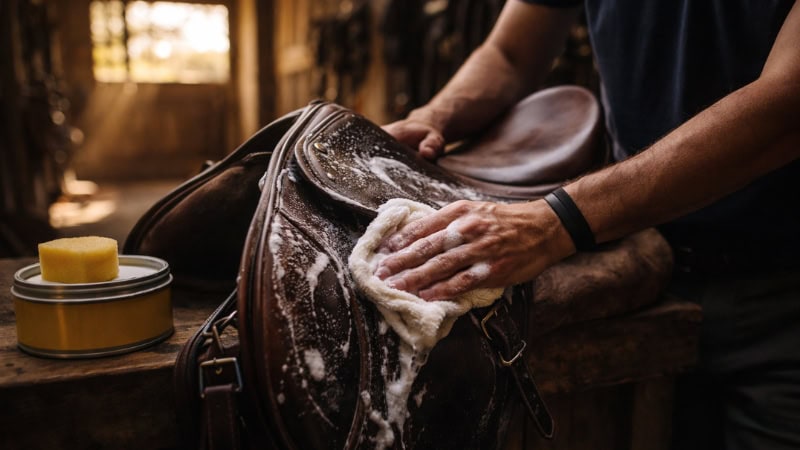
Work the saddle soap into a light lather using circular motions. This isn’t just tradition—it helps lift dirt evenly without stressing the fibers. Focus on high-contact areas like seat panels and reins.
Use smaller motions around stitching and hardware. These are vulnerable zones where dirt accumulates and moisture lingers. Neglect here often leads to early stitching failure.
Drying & Post-Cleaning Care
Let the leather air dry naturally. Never use direct heat or sunlight—it pulls moisture out too quickly, leading to stiffness. I usually hang tack in a shaded, ventilated space where air can circulate freely.
Once dry, run your hand across the surface. It should feel clean but slightly dry—that’s your signal it’s ready for conditioning in the next phase.
Conditioning Leather: Keeping It Soft & Durable
Conditioning is where leather either regains its life—or quietly loses its structure under excess. Done right, it restores flexibility and resilience; done poorly, it turns firm, reliable tack into something overstretched and unreliable.
Understanding Leather Absorption
After cleaning, leather pores open slightly, making it receptive to conditioning. This is the moment when the material is most responsive—like a cooled-down horse ready for recovery care. A small amount of conditioner goes a long way, seeping into the fiber network to restore elasticity.
There’s a fine line between nourishing and drowning leather. When conditioner sits on the surface instead of absorbing, it signals overuse. I’ve handled saddles where excess oil softened the structure so much that the seat lost its support—like riding on a cushion that no longer holds shape.
Application Technique & Frequency
Apply conditioner using a clean cloth in thin, even layers. Work it in slowly—don’t rush this step. The goal is absorption, not shine. Let it sit, then buff lightly to remove any residue.
A reliable option here is Leather Honey Conditioner (Amazon)—it penetrates deeply without leaving a sticky finish, making it especially useful for full-grain saddles that need balanced hydration.
In humid climates, condition less frequently—leather already absorbs ambient moisture. In dry seasons, increase frequency slightly, but always observe how the leather responds. Your tack will tell you what it needs if you pay attention to its texture.
Storage Best Practices (Prevent Damage Long-Term)
How you store your tack between rides often matters more than how you clean it. Leather lives in the in-between moments—resting, drying, and adapting to its environment.
Environmental Control
Leather thrives in stable, moderate humidity. Too much moisture invites mold; too little strips essential oils. In many barns, especially in tropical climates, tack rooms become silent battlegrounds where humidity slowly eats away at leather integrity.
Using a simple dehumidifier or moisture absorbers can make a noticeable difference. I’ve seen entire sets of tack saved from mildew just by improving airflow and reducing dampness.
Avoid storing leather in sealed or overheated spaces. Air circulation is critical—it allows moisture to evaporate naturally. Think of it like cooling down a horse after a ride; you wouldn’t trap heat, and you shouldn’t trap it in leather either.
Proper Storage Setup
Always store saddles on proper racks that support their shape. Hanging or placing them unevenly causes warping over time. Once a saddle tree is affected, no amount of conditioning will fix it.
Use breathable covers—never plastic. Plastic traps moisture, creating a microclimate where mold thrives. A canvas or cotton cover protects from dust while allowing airflow.
Common Mistakes to Avoid
Most leather damage doesn’t come from neglect—it comes from well-intentioned mistakes. Riders try to “care more” and end up doing too much, too fast.
Over-Care & Product Misuse
One of the most common mistakes is over-oiling. Leather becomes overly soft, stretches under load, and loses its structural integrity. I’ve seen stirrup leathers lengthen unevenly after repeated heavy oiling—subtle at first, but enough to affect rider balance.
Household cleaners might seem convenient, but they strip natural oils aggressively. The damage isn’t immediate—it shows up later as brittleness and cracking. By the time you notice, the fibers have already weakened.
Environmental & Handling Errors
Placing wet tack in direct sunlight or near heat sources accelerates drying—but at a cost. Rapid moisture loss causes stiffness and surface cracking. Leather needs gradual drying, just like a horse needs a proper cool-down.
Small signs—like dullness, stiffness, or a faint odor—are often ignored. These are early indicators of dehydration or mold. Addressing them early can prevent irreversible damage.
How Often Should You Clean & Condition Leather?
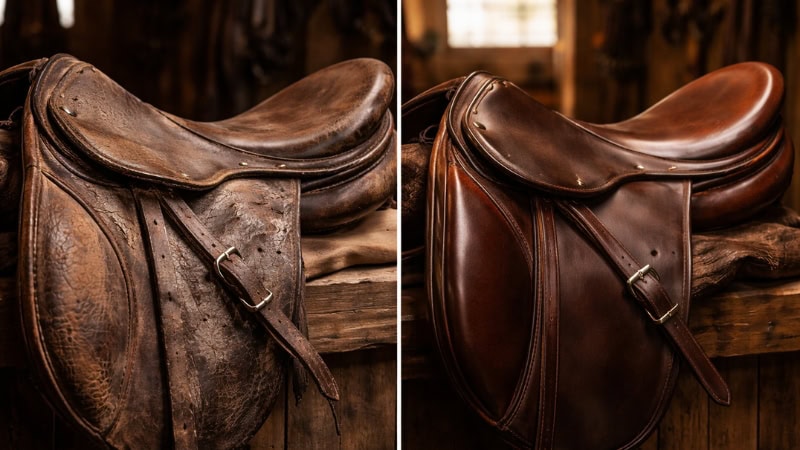
There’s no single schedule that fits every rider. Maintenance frequency depends on how often you ride, the conditions you ride in, and how your leather responds over time.
Usage-Based Maintenance
If you ride daily or train intensively, a light clean after each session becomes essential. Sweat and dirt accumulate quickly, and leaving them untreated accelerates wear. In these cases, a deeper clean once a week keeps the leather balanced.
For riders who use their tack less frequently, cleaning after each ride is still important—but conditioning can be spaced out. The key is consistency, not intensity.
Climate-Driven Adjustments
In humid regions, focus more on cleaning and airflow than conditioning. Excess moisture is already present, so over-conditioning can tip the balance toward mold growth.
In dry environments, conditioning becomes more frequent. Leather loses moisture steadily, so replenishing oils helps maintain flexibility. Still, moderation is critical—observe, don’t assume.
Expert Tips from Professional Equestrians
There’s a difference between maintaining leather and truly understanding it—and that gap is usually bridged by experience. Over the years, working alongside trainers, saddle fitters, and recovery specialists, certain patterns emerge that no manual can fully teach.
Practical Insights from the Field
One habit I picked up from a senior dressage trainer was this: always run your hand over your tack before and after a ride. Not casually—but attentively. Leather speaks through texture. Slight stiffness in the reins or dryness near billet holes often shows up before visible damage.
This tactile awareness becomes second nature. Much like checking a horse’s legs for heat or swelling, it’s a quiet ritual that prevents bigger problems down the line.
Professional saddle fitters often emphasize restraint. The instinct to “fix” leather with more conditioner or oil can backfire. Instead, they observe how the leather reacts over time—adjusting care based on feel, not habit.
I’ve seen high-end saddles maintained for decades with minimal product use—because the rider understood when not to interfere.
Performance & Longevity Mindset
Eventing riders, for example, deal with mud, sweat, and water exposure far more than arena riders. Their tack care is more frequent but also more measured—quick cleans, light conditioning, and constant monitoring.
The key takeaway? Your maintenance routine should reflect your discipline. Leather used in high-intensity training needs a different rhythm than leather used occasionally.
At a professional level, leather isn’t just aesthetic—it’s functional equipment tied directly to safety and performance. Treating it as such changes how you care for it. You don’t just clean it—you maintain it like you would any critical piece of gear.
FAQ: Equestrian Leather Care Questions Answered
Can you use household oils like olive oil on leather?
It’s a common shortcut—but not a safe one. Household oils like olive oil don’t have the right composition for leather. They can oxidize over time, leading to unpleasant odors and uneven breakdown of fibers.
Stick to products designed for leather. They’re formulated to penetrate properly without destabilizing the material.
Why is my saddle cracking even though I clean it?
Cleaning removes dirt—but it also strips some natural oils. If conditioning doesn’t follow, the leather gradually dries out. Cracking is often a delayed response to this imbalance.
Also consider environmental factors. Even well-maintained leather can crack if stored in overly dry or sun-exposed conditions.
How do I remove mold from leather tack?
Mold appears when moisture lingers without airflow. To remove it, wipe the leather with a slightly damp cloth and a small amount of saddle soap, then dry it thoroughly in a ventilated space.
For persistent issues, a product like Leather CPR Cleaner & Conditioner (Amazon) can help—it cleans and conditions while addressing mild mold buildup without being too aggressive.
The real solution, though, is prevention: improve airflow, reduce humidity, and avoid storing damp tack.
Can stiff leather be restored?
Stiff leather can often be revived if the fibers haven’t cracked. Gradual conditioning—applied in light layers over time—can restore flexibility.
But if cracking has already begun, restoration becomes limited. At that point, the goal shifts from recovery to safe usage and eventual replacement.
A Rider’s Approach to Long-Lasting Leather Tack
Leather, when cared for properly, doesn’t just last—it evolves. It softens where it should, holds firm where it must, and carries the imprint of every ride you’ve taken.
Maintaining equestrian leather isn’t about perfection. It’s about attention—small, consistent actions that protect both your investment and your safety. Treat your tack with the same respect you give your horse, and it will serve you with quiet reliability for years to come.
