
Fake leather — also known as faux leather, PU leather, or vegan leather — offers the sleek look of real leather at a fraction of the cost. It’s versatile, cruelty-free, and commonly used in furniture, handbags, shoes, and jackets.
However, like all materials, fake leather collects dust, stains, and body oils over time. Without regular cleaning, it can start to crack or lose its shine.
This guide will show you exactly how to clean fake leather safely — using mild household products and gentle techniques. You’ll also learn how to remove stains, eliminate odors, and maintain the material’s texture so it lasts for years.
Recommended Read: How Can You Tell Real Leather from Fake? – The Ultimate Guide
What Is Fake Leather?
Fake leather is made from synthetic materials designed to mimic the appearance and feel of genuine leather. The most common types are polyurethane (PU), polyvinyl chloride (PVC), and microfiber blends.
- PU Leather: Soft and flexible, often found in jackets and car seats.
- PVC Leather: Tougher and more water-resistant, used in bags and upholstery.
- Microfiber Leather: A breathable and durable high-end synthetic.
- Vegan Leather: Eco-friendly versions made from pineapple leaves, cork, or recycled plastics.
Because fake leather is non-porous, it doesn’t absorb water or conditioner like real leather. This means cleaning it requires a careful balance of moisture and mild cleaning agents.
Before You Start: Preparation
Cleaning faux leather begins with proper preparation. Taking time to gather materials and perform a test prevents accidental damage or discoloration.
- Gather Supplies: You’ll need mild dish soap, warm water, microfiber cloths, and a soft towel. Optional: a small bowl, baby oil, or vinegar for spot cleaning.
- Test First: Always test any cleaning mix on a hidden section. Faux leather can react differently depending on its finish or dye.
- Dust the Surface: Wipe off visible debris with a dry cloth to avoid spreading dirt during cleaning.
- Prepare the Area: Work on a clean, flat surface with good airflow to help your item dry evenly.
This simple preparation sets you up for a safe and effective cleaning process.
Recommended Read: Best Way to Clean Leather: The Ultimate Leather Cleaning Guide

Step-by-Step: How to Clean Fake Leather
Cleaning fake leather isn’t complicated — but it’s about being gentle and precise. Follow these steps carefully to restore shine without damaging the surface.
Step 1: Create a Mild Cleaning Solution
Fill a bowl with warm water and add a few drops of mild liquid soap. Stir gently until you see a few bubbles. Avoid strong detergents or bleach — these can strip the material’s protective coating.
Step 2: Dampen Your Cloth
Dip a soft microfiber cloth into the soapy water, then wring it out well. The cloth should be damp, not wet. Too much water can cause bubbling or separation of layers in synthetic leather.
Step 3: Wipe in Gentle Circles
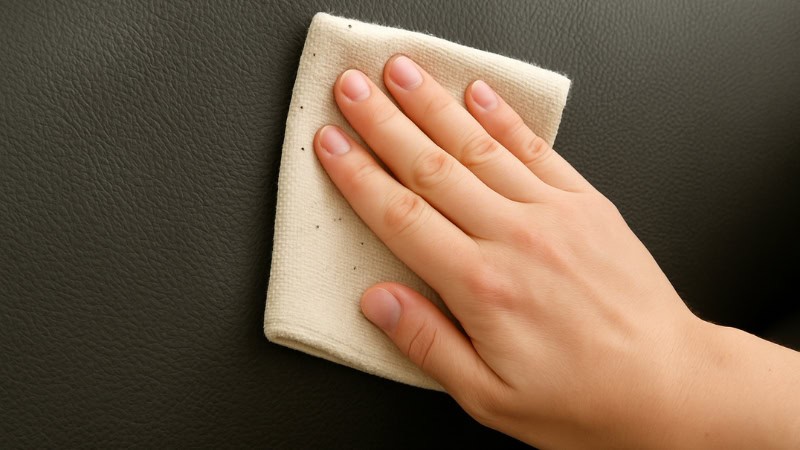
Wipe the surface using slow, circular motions. Focus on one small section at a time. For corners or seams, fold the cloth’s edge to reach into tight areas. This helps lift oil, dirt, and residue without scrubbing.
Step 4: Rinse and Remove Soap Residue
Rinse your cloth in clean water, wring it out, and wipe the surface again to remove leftover soap. Any residue left behind may attract dust or leave streaks.
Step 5: Dry the Surface Thoroughly
Use a dry, soft towel to pat the area dry. Avoid rubbing harshly. Then, allow the item to air dry in a shaded, ventilated space — never use direct sunlight or a hair dryer, which can warp or crack the surface.
Step 6 (Optional): Add Shine and Protection
To finish, apply a small amount of baby oil or faux leather conditioner on a clean cloth. Lightly buff the surface to restore its soft sheen. This helps preserve flexibility and prevents future cracking.
Regular monthly cleaning following these steps keeps your faux leather looking brand-new.
Removing Stubborn Stains
Even with care, stains occasionally appear on fake leather. Knowing the right solution for each type helps you clean them effectively without damage.
- Ink Stains: Dab lightly with rubbing alcohol using a cotton ball. Never rub — it spreads the ink.
- Grease Marks: Apply baking soda or cornstarch. Let sit for 10–15 minutes, then wipe away.
- Dye Transfer: Mix equal parts vinegar and water, gently wipe, and rinse.
- Food or Makeup Stains: Use mild soap and warm water, then rinse thoroughly.
Patience is key — repeat gentle treatments instead of using harsh scrubbing.

How to Deodorize Faux Leather
Faux leather can trap unpleasant odors over time. Fortunately, deodorizing it is simple and chemical-free.
- Baking Soda: Sprinkle across the surface and leave overnight to absorb smells.
- Vinegar Spray: Mix one part white vinegar with two parts water, spray lightly, and air dry.
- Fresh Air: Place in a shaded, breezy area for several hours.
- Avoid Perfumes: Synthetic sprays often leave sticky residue.
These methods keep your faux leather smelling fresh without risk of discoloration or residue buildup.
Maintenance and Protection Tips
Long-term maintenance is what makes faux leather last. Small, consistent efforts will prevent cracks, dullness, and peeling.
- Wipe Weekly: Use a dry or slightly damp cloth to remove dust.
- Avoid Sunlight and Heat: UV rays and high temperatures can dry out and fade the material.
- Store Correctly: Hang jackets, stuff bags with paper, and keep furniture covered when unused.
- Avoid Sharp Objects: Scratches are difficult to repair.
Treating fake leather with care will maintain its texture and soft luster for years.
Common Mistakes to Avoid
It’s easy to damage faux leather by cleaning it too aggressively. Avoid these errors to preserve its finish:
- Using Harsh Cleaners: Never use bleach, ammonia, or acetone directly.
- Over-Wetting: Too much water can weaken adhesives beneath the surface.
- Skipping Drying: Moisture trapped underneath can cause mildew.
- Scrubbing Hard: Abrasive motions can scratch or dull the surface permanently.
Remember — gentle, regular cleaning is far more effective than deep, infrequent scrubbing.
When to Repair or Replace
Even with proper care, faux leather can eventually show signs of wear. Knowing when to repair or replace helps you make smart decisions.
- Peeling and Cracking: Minor damage can be fixed using repair kits or patch adhesives.
- Color Fading: Touch up with vinyl color spray for a refreshed look.
- Severe Damage: When the base layer is exposed, replacement is more cost-effective.
- Upcycle Ideas: Turn old pieces into wallets, decor, or DIY crafts.
Timely action can extend your item’s life and reduce waste.
FAQs – Quick Answers to Cleaning Fake Leather Concerns
1. Can I use regular soap to clean fake leather?
Yes, you can use mild dish soap or hand soap diluted in warm water. Avoid harsh cleaners or detergents with alcohol or bleach, as these can damage the coating. A few drops of gentle soap are enough to lift dirt without stripping shine. Always rinse with a damp cloth afterward to remove any residue.
2. How often should I clean my faux leather furniture or clothing?
For best results, clean faux leather once a month or whenever you notice dust or smudges. Furniture exposed to sunlight or daily use may need light weekly wiping. Regular cleaning prevents buildup and cracking, keeping your faux leather soft and vibrant.
3. What’s the best way to remove ink stains from fake leather?
Use a cotton swab dipped in rubbing alcohol and lightly dab the ink spot — never rub harshly. If alcohol is too strong, try non-acetone nail polish remover instead. Follow by wiping the area with a damp cloth to remove residue. Always test in an unseen area first.
4. Can fake leather peel, and how can I prevent it?
Yes, fake leather can peel when exposed to heat, sunlight, or over-cleaning. To prevent this, clean gently and condition occasionally with baby oil or a faux leather protector. Keep it away from direct heat and humidity to maintain flexibility and strength.
5. What should I avoid when cleaning faux leather?
Avoid bleach, ammonia, acetone, and any abrasive scrubbers. Don’t soak fake leather in water or use hot air to dry it. These habits can warp, crack, or dull the surface. Stick with mild solutions and soft microfiber cloths for safe cleaning.
6. Can I use olive oil or baby oil to make faux leather shiny?
You can use a small amount of baby oil or a synthetic leather conditioner for shine, but avoid olive oil. Natural oils may leave sticky residue or attract dust over time. Apply sparingly with a soft cloth and buff gently to restore a natural sheen.
Wrap Up
Cleaning fake leather is simple, affordable, and rewarding. Using mild soap, gentle cloths, and proper drying ensures that your items stay fresh and durable.
Regular care not only maintains its sleek look but also saves you money over time. By following these easy steps, your faux leather furniture, bags, and jackets can stay soft, stylish, and beautiful for years to come.
