
Choosing the right leather camera strap is more than a style decision—it directly impacts your comfort, shooting efficiency, and even the safety of your gear. Whether you’re carrying a heavy DSLR or a compact mirrorless camera, the strap you use plays a crucial role in your photography experience.
Leather camera straps have become increasingly popular among photographers for their durability, timeless aesthetics, and ability to age beautifully. But not all leather straps are created equal, and selecting the right one requires understanding materials, design, and usability. In this camera strap buying guide, we’ll break down everything you need to know—from types and leather quality to key buying factors—so you can confidently choose the best camera strap for your needs.
What Is a Leather Camera Strap?
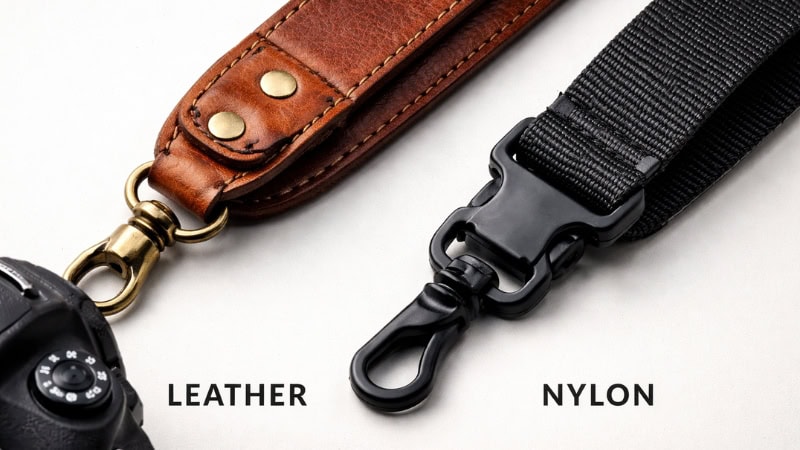
A leather camera strap is a carrying accessory made primarily from natural leather, designed to support and secure cameras such as DSLRs and mirrorless systems. Unlike synthetic options, leather straps emphasize durability, aesthetics, and long-term comfort.
Material distinction and construction: Leather camera straps are typically crafted from full-grain or top-grain leather, which retains the natural texture and strength of animal hide. Over time, these materials develop a unique patina, giving each strap a personalized, aged look that synthetic straps cannot replicate.
Leather vs synthetic alternatives: Compared to nylon or neoprene straps, leather offers a more refined feel and superior longevity. Synthetic straps may provide more padding initially, but they often degrade faster and lack the structural integrity of quality leather. Leather, on the other hand, softens with use while maintaining strength, making it a preferred choice for photographers who value both performance and style.
Functional purpose: Beyond aesthetics, a leather camera strap ensures secure handling, reduces accidental drops, and distributes weight across the neck or shoulder—making it an essential part of professional photography gear.
Types of Leather Camera Straps
Different photography styles demand different strap designs. Understanding the types of leather camera straps helps you align your choice with comfort, accessibility, and shooting workflow.
Neck straps for traditional support
Neck straps are the most common type of leather camera strap, designed to hang the camera around your neck. They are ideal for beginners and photographers who prefer a centered, stable carry position.
These straps distribute weight evenly across the neck, making them suitable for lighter setups and moderate shooting sessions. However, with heavier DSLR cameras and telephoto lenses, prolonged use can create pressure points, especially if the strap is too narrow.
Best suited for: Casual photography, travel use, and standard lenses that require quick access without complex movement.
Shoulder and sling straps for mobility
Shoulder- or leather-sling camera straps are worn across the body, allowing the camera to rest near the hip. This design is particularly favored by professionals who need speed and flexibility.
Inspired by systems like BlackRapid-style straps, sling designs allow a quick-draw motion, enabling photographers to bring the camera to eye level smoothly without removing the strap.
By shifting weight from the neck to the shoulders, these straps improve comfort during long shooting sessions and enhance mobility in dynamic environments such as events or street photography.
Wrist straps for minimal setups
A leather wrist camera strap is a compact option designed for lightweight cameras and minimalist shooting styles.
These straps wrap around the wrist, keeping the camera secure without restricting movement. They are particularly useful in street photography, where discretion and agility are key.
While convenient, wrist straps are not ideal for heavier gear, as they place all the weight on one hand and wrist.
Hand straps for stability and grip
Leather hand straps attach directly to the camera body, providing enhanced grip and control rather than carrying support.
They help stabilize the camera during shooting, especially when using one hand, making them useful for videographers and photographers working in fast-paced environments.
Unlike neck or sling straps, hand straps are best used in combination with other support systems, as they do not offer full carrying functionality.
Types of Leather Used
The quality of leather used in a camera strap significantly influences its durability, comfort, and long-term value. Understanding leather types is essential for making an informed purchase.
Full-grain leather for maximum durability
Full-grain leather is considered the highest quality material for a leather camera strap. It retains the hide’s outermost layer, preserving its natural fibers and imperfections.
This type of leather is অত্যন্ত durable and develops a rich patina over time, enhancing both appearance and character. It resists wear better than other leather types, making it ideal for professional use.
Top-grain leather for refined balance
Top-grain leather is slightly processed to remove surface imperfections, resulting in a smoother and more uniform appearance.
While not as rugged as full-grain leather, it offers a softer feel and a more polished look. This makes it a popular choice for photographers who want a blend of durability and style.
Genuine and bonded leather explained
The term “genuine leather” can be misleading. It often refers to lower-grade leather made from leftover hide layers.
Bonded leather, in particular, is created by combining leather scraps with adhesives. These materials lack durability and tend to wear out quickly, making them less suitable for long-term camera use.
Vegetable-tanned vs chrome-tanned leather
Tanning processes also affect performance and feel.
Uses natural tannins, resulting in firmer leather that ages beautifully and develops a strong patina.
Processed with chemicals, producing softer and more water-resistant leather but with less character over time.
In choosing between these options, photographers should prioritize full-grain or high-quality top-grain leather to ensure long-lasting performance and a premium user experience.
Key Factors to Consider Before Buying
Choosing the best leather camera strap requires balancing comfort, functionality, and long-term value. This section breaks down the critical elements that directly impact usability and performance.
Comfort and padding considerations
When carrying a camera for extended periods, comfort becomes a defining factor. A comfortable camera strap should minimize strain on pressure points such as the neck and shoulders.
Wider leather straps naturally distribute weight more evenly, reducing fatigue during long shoots. While leather may feel stiff initially, it gradually softens with use and conforms to your body over time. Unlike heavily padded synthetic straps, leather provides a more natural, breathable contact surface.
Strap width and length dynamics
The dimensions of a strap directly influence how your camera sits and moves.
A wider strap is better suited to heavier DSLR setups, while a narrower strap works well with compact mirrorless cameras. The adjustable camera strap length lets you customize the positioning—higher for quick access or lower for a relaxed carry.
Photographers who move frequently benefit from slightly longer straps that enable fluid movement without restricting access.
Attachment mechanisms and security
How the strap connects to your camera is crucial for both safety and convenience.
Most leather straps use traditional lug rings, but modern systems may incorporate quick-release camera strap mechanisms, such as Peak Design anchors. Some straps also attach via tripod mounts, providing an alternative load distribution option.
Quick-release systems are ideal for photographers who frequently switch setups, while fixed attachments provide a more secure, minimalist approach.
Weight capacity and compatibility
Not all straps are designed to handle heavy gear.
A high-quality leather strap should comfortably support full-frame cameras paired with telephoto lenses. Checking the weight capacity ensures your gear remains safe during active use.
Lightweight setups offer greater flexibility in strap choice, while heavier configurations require robust construction and reinforced stitching.
Adjustability and flexibility
Adaptability enhances both comfort and usability.
An adjustable strap allows you to switch between carrying styles—tight for stability or loose for accessibility. This is particularly useful in environments where shooting conditions change rapidly.
Aesthetics and personal style
A stylish leather camera strap is not just functional—it’s also a statement.
Leather straps often feature a vintage camera strap aesthetic that complements both modern and classic cameras. The natural aging process adds character, making each strap unique over time.
Price versus long-term value
Cost should be evaluated in relation to durability and performance.
While premium leather straps may have a higher upfront cost, they often outlast cheaper alternatives. An affordable leather camera strap might save money initially, but it may need to be replaced sooner.
Investing in a well-crafted strap ensures reliability, comfort, and a better overall photography experience.
Benefits of Leather Camera Straps
Leather camera straps offer a unique combination of durability, comfort, and timeless design. For many photographers, they represent a long-term investment rather than a disposable accessory.
Durability and long-term performance
One of the primary advantages of a leather camera strap is its exceptional durability. High-quality leather resists wear and tear, maintaining structural integrity even after years of use.
Unlike synthetic materials that degrade or fray, leather becomes more flexible over time while retaining strength. This makes it particularly suitable for photographers who use their gear frequently.
Comfort that improves with use
Leather adapts to the user, offering a personalized level of comfort.
As the strap softens, it conforms to your body shape, reducing discomfort and improving weight distribution. This evolving comfort level is something synthetic straps rarely achieve.
Aesthetic appeal and professional look
Leather straps elevate the visual appeal of photography gear.
The development of a natural patina adds depth and character, making the strap look better with age. This aligns well with photographers who value craftsmanship and premium accessories.
Reliability and gear protection
A strong strap directly contributes to equipment safety.
By providing consistent support and reducing slippage, leather straps help prevent accidental drops—an essential factor in protecting expensive cameras and lenses.
Downsides of Leather Straps
While leather camera straps offer many advantages, they are not without limitations. Understanding these drawbacks helps make a balanced, informed buying decision.
Weight and bulk considerations
Leather is inherently heavier than synthetic materials.
For photographers who prioritize lightweight gear, especially during travel, the added weight of leather may feel restrictive over time.
Maintenance requirements
Leather requires ongoing care to maintain its quality.
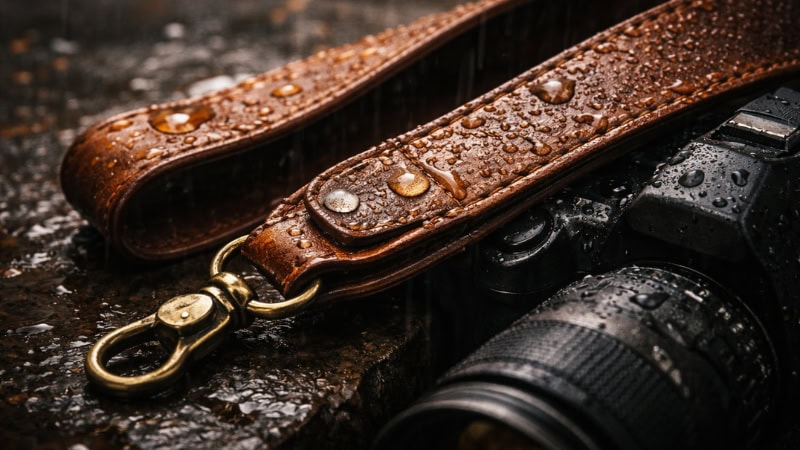
Exposure to moisture, sweat, and extreme conditions can affect the material. Regular conditioning is necessary to prevent cracking and preserve flexibility.
Cost implications
High-quality leather straps tend to be more expensive.
Compared to nylon or neoprene options, leather straps represent a higher initial investment, which may not suit all users—especially beginners.
Weather sensitivity
Environmental factors can influence performance.
Leather is less resistant to water and humidity, making it less ideal for harsh outdoor conditions unless properly treated.
Best Leather Camera Strap Brands
The market offers a wide range of brands specializing in leather camera straps, each with distinct strengths. Understanding these brands helps narrow down options based on quality, design, and usability.
Peak Design for modern innovation
Peak Design is widely recognized for integrating modern functionality with premium materials.
While not exclusively leather-focused, their straps often incorporate leather elements alongside advanced attachment systems like anchor links, making them highly versatile.
ONA Bags for premium craftsmanship
ONA Bags is known for its commitment to high-end materials and handcrafted design.
Their handmade leather camera straps emphasize full-grain leather construction, offering both durability and a refined aesthetic suited for professionals.
HoldFast Gear for professional use
HoldFast Gear specializes in rugged, professional-grade camera straps.
Designed for event and wedding photographers, their straps prioritize strength and ergonomics, often featuring dual-camera harness systems.
Clever Supply Co. for minimalist design
Clever Supply Co. focuses on simplicity and craftsmanship.
Their straps are handmade with attention to detail, appealing to photographers who prefer a minimalist yet premium look.
Tap & Dye for artisanal quality
Tap & Dye is known for handcrafted leather goods with a distinctive character.
Their products often highlight vegetable-tanned leather and traditional techniques, resulting in straps that age beautifully and develop a unique patina.
Selecting from these brands depends on your priorities—whether it’s innovation, craftsmanship, or professional-grade durability.
How to Maintain and Care for Leather Straps
Proper care ensures that your leather camera strap not only lasts longer but also improves in appearance over time. With minimal maintenance, leather can remain durable and visually appealing for years.
Cleaning and surface care
Leather naturally accumulates dust, sweat, and oils from regular use.
Use a soft, dry, or slightly damp cloth to wipe down the strap after use. Avoid soaking the leather, as excessive moisture can weaken its structure. For deeper cleaning, a mild leather-safe cleaner can help remove buildup without damaging the material.
Conditioning for longevity
Leather needs hydration to maintain flexibility.
Applying a quality leather conditioner periodically helps retain moisture and prevents the strap from drying out. This is especially important in dry climates or after prolonged exposure to sunlight.
Protection from environmental damage
External conditions can significantly affect leather performance.
Avoid exposing your strap to rain or high humidity for extended periods. If it gets wet, let it air-dry naturally—never use direct heat. Proper storage in a cool, dry place helps preserve its integrity.
Storage and handling tips
How you store your strap matters.
Keep the strap loosely coiled or hanging to prevent creases. Avoid placing heavy objects on it, as this can deform the leather over time.
Who Should Buy a Leather Camera Strap?
A leather camera strap is not a one-size-fits-all solution—it caters to specific types of photographers based on their priorities and shooting style. Understanding who benefits most helps determine if it’s the right investment.
Professional photographers and heavy users
Professionals who rely on their gear daily often benefit from leather straps.
The long lifespan and strength of leather make it ideal for demanding environments like weddings, events, and commercial shoots.
Hobbyists and style-conscious users
Enthusiasts who value aesthetics and craftsmanship are naturally drawn to leather.
For hobbyists, a leather strap offers both usability and a refined look, enhancing the overall photography experience.
Travel and street photographers
Photographers who prioritize mobility may find leather appealing with the right strap type.
Sling-style leather straps provide comfort and quick access, making them suitable for dynamic shooting scenarios.
FAQs on Leather Camera Strap
Are leather camera straps durable?
Yes, high-quality leather straps—especially those made from full-grain leather—are অত্যন্ত durable. They resist wear and tear better than most synthetic materials and can last for many years with proper care.
Do leather straps damage cameras?
No, leather straps do not damage cameras when properly designed. Most straps use protective connectors or reinforced loops that prevent scratches and ensure secure attachment.
What is the best leather type for camera straps?
Full-grain leather is generally considered the best option due to its strength, longevity, and ability to develop a natural patina. Top-grain leather is also a good alternative for those seeking a smoother finish.
Are leather straps good for heavy cameras?
Yes, provided they are well-constructed and designed to handle higher weight capacities. Wide leather straps with reinforced stitching are particularly suitable for full-frame cameras and heavy lenses.
How long do leather camera straps last?
A high-quality leather camera strap can last anywhere from several years to decades, depending on usage and maintenance. Regular conditioning and proper storage significantly extend its lifespan.
Leather Camera Strap for Comfort, Style & Durability
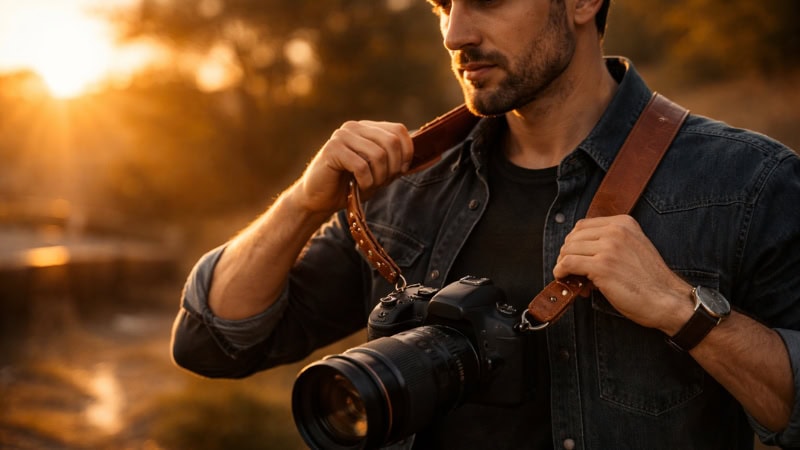
A well-chosen leather camera strap is more than just an accessory—it’s a functional investment that enhances comfort, protects your gear, and elevates your overall photography experience. From understanding leather types to evaluating strap designs and key buying factors, making the right choice requires careful consideration of both your needs and shooting style.
While leather straps come with a higher upfront cost and require some maintenance, their durability, aesthetic appeal, and long-term value make them a worthwhile option for many photographers. Whether you’re a professional handling heavy equipment or a hobbyist seeking a stylish upgrade, the right strap can make a noticeable difference. Ultimately, selecting the best leather camera strap comes down to balancing performance, comfort, and personal preference.