
Buying real leather on a budget is absolutely possible, but only if you know what you are looking at. Many shoppers overpay for branding, while others get tricked by labels like “genuine leather” without understanding what that actually means. The result is the same: wasted money on products that look good for a month and disappoint after regular use.
A smarter approach is to focus on leather type, construction, and seller transparency instead of hype. When you understand grain structure, tanning process, durability, and value, you can find affordable leather that lasts.
This guide shows how to spot real leather, which types offer the best value, and where to buy quality leather goods without overspending.
What “Real Leather” Actually Means
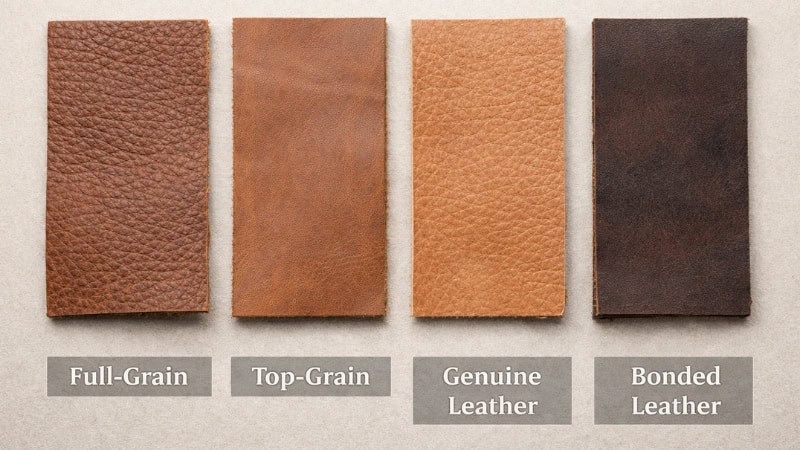
Real leather is a material made from animal hide, usually cowhide, that keeps natural fiber structure, durability, and breathability. The most common categories are full-grain leather, top-grain leather, genuine leather, and bonded leather. Each has a different balance of quality, appearance, lifespan, and price.
That definition matters because “real leather” is broader than most buyers assume. Full-grain leather is the highest quality because it preserves the outermost layer of the hide, including the strongest fibers and natural grain. Top-grain leather is slightly sanded or corrected to achieve a smoother look, yet it still offers very good leather durability and a refined finish. Genuine leather is technically real leather, yet the term is often used for lower-grade products made from leftover hide layers. Bonded leather sits at the bottom, since it blends leather scraps with adhesives and synthetic materials.
This is why the label alone is not enough. Sellers know shoppers associate the word “genuine” with authenticity, even though it does not guarantee strong grain structure, good craftsmanship, or long-term performance. When I evaluate a budget leather product, I care less about marketing words and more about how the leather was cut, finished, and assembled.
If your goal is affordable value, top-grain leather is often the most practical choice. It usually costs less than full-grain leather, looks cleaner, and still outperforms bonded leather or plastic-based alternatives by a wide margin.
Why Buying Real Leather on a Budget Is Possible Today
Many shoppers assume real leather always means luxury pricing, but that idea is outdated. The market now includes factory outlets, direct-to-consumer brands, artisan workshops, secondhand sellers, and online marketplaces. That wider access means you do not have to buy from premium labels to get decent leather craftsmanship.
The bigger issue is confusing low price with low value. Cheap leather is not always bad, but cheaply made leather usually is. A modestly priced cowhide belt with solid stitching and reliable hardware can last for years. A flashy bag made from bonded leather may peel, crack, or separate much sooner than expected. The better question is not whether an item is cheap. It is whether the product gives you a strong cost-per-wear.
That cost-per-wear mindset is what makes budget leather buying work. A top-grain leather wallet bought at the right price often ends up cheaper over three years than replacing two or three synthetic wallets during the same period. The same logic applies to belts, bags, and shoes. Budget buying is not about chasing the lowest price. It is about identifying real leather with enough durability to justify the money you spend.
How to Identify Real Leather: Simple Tests to Spot Genuine Leather
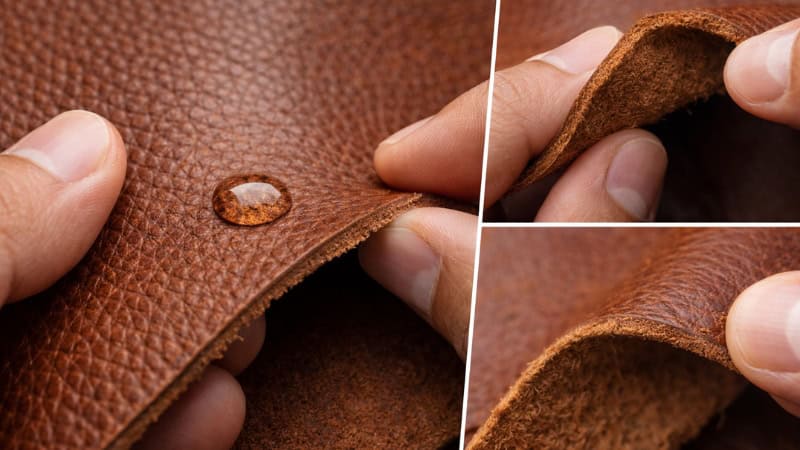
You can identify real leather by checking the grain for natural variation, smelling for an earthy scent, inspecting rough edges and fibrous backing, testing light water absorption, and comparing the price to realistic market standards.
The first thing I check is texture. Real leather rarely looks perfectly uniform. Natural grain usually shows subtle inconsistencies, pores, creases, and small imperfections. Faux leather often looks too smooth, too regular, or stamped with a repeated pattern that feels artificial.
Smell is another strong signal. Real leather has a warm, rich, earthy smell that synthetic materials struggle to copy. PU leather and PVC-based faux leather often smell like plastic, chemicals, or glue. It is not a scientific test on its own, but it is useful when combined with visual inspection.
Edges reveal a lot. If you look closely at the side of a leather belt, bag strap, or wallet edge, real leather often shows a slightly fuzzy or fibrous structure. Faux leather tends to have sealed, plastic-like edges or visible fabric backing. The underside matters too. Authentic leather usually has a suede-like back, while synthetic leather often has a woven cloth backing.
Water absorption can help when done carefully. A tiny drop of water placed on unfinished or lightly finished leather may absorb slowly. Synthetic surfaces usually repel water immediately. This test is less reliable on heavily treated leather, so use it as supporting evidence, not final proof.
Price also tells a story. Real leather can be affordable, but extremely cheap claims should raise suspicion. If a large “full-grain leather” bag is priced like a disposable accessory, something is probably off. Even at entry level, quality leather still comes with material and labor costs.
Best Types of Real Leather to Buy on a Budget (Full-Grain vs Top-Grain)
The best leather type on a budget is top-grain leather because it gives you a strong balance of affordability, durability, appearance, and everyday practicality.
Full-grain leather is excellent, but it is not always the smartest buy for a budget-conscious shopper. It retains the hide’s full-grain structure, develops a beautiful patina, and lasts a long time. But it also commands a premium. If you are shopping for a first wallet, belt, tote, or casual bag, paying extra for full-grain leather may not produce the best value.
Top-grain leather is usually the sweet spot. It is still real leather, still durable, and often more polished. Because the surface is lightly corrected, it tends to look cleaner and more consistent. For many buyers, especially those purchasing leather accessories rather than heirloom items, top-grain leather offers the best mix of performance and price.
Genuine leather can be acceptable in some cases, but only if the craftsmanship is solid and the price is honest. I would rather buy a well-constructed top-grain leather wallet from a lesser-known maker than a heavily branded genuine leather product with weak stitching and thin panels.
Bonded leather is the type I would avoid for most purchases. It may look decent at first, but it lacks the fiber strength and longevity that make leather worth buying in the first place.
Where to Buy Affordable Real Leather (Trusted Sources and Deals)
Where you shop often matters just as much as what you buy. The best budget leather deals usually come from places where marketing overhead is low, inventory moves quickly, or brand prestige is not the main price driver.
Thrift stores and secondhand marketplaces are excellent for patient buyers. Real leather ages well, so used leather belts, jackets, bags, and briefcases can still have years of life left in them. In fact, secondhand full-grain leather sometimes offers better value than new bonded leather at the same price. Older cowhide pieces may even have better grain structure than some modern mass-market items. The key is to inspect the edges, lining, stitching quality, and hardware before buying.
Factory outlets can also be useful, especially for brands that produce consistent leather goods. Outlet stock is not always identical to mainline stock, but you can still find top-grain leather products at reduced prices if you ignore logos and examine materials closely. Clearance sales after seasonal transitions are particularly effective for bags, boots, and jackets.
Local artisans and leather craftsmen are underrated sources of value. Smaller workshops often focus on material quality and construction rather than expensive packaging or influencer marketing. A direct purchase from a maker can get you vegetable-tanned leather or chrome-tanned leather goods at a fairer price than buying through a fashion retailer.
Online marketplaces require more caution, but they can work. The best listings include close-up photos of grain, edges, interior backing, stitching, and hardware, along with precise material descriptions. When a seller hides details behind vague phrases like “premium leather feel,” I move on quickly.
Best Budget Leather Products to Start With
If you are new to buying leather, start with smaller products where quality is easier to judge, and the financial risk is lower. A leather wallet is often the best first purchase because you can inspect thickness, stitching, edge finishing, and grain structure without needing advanced knowledge. A well-made wallet also serves a daily purpose, making its value easier to measure.
Leather belts are another smart entry point. Real leather belts reveal authenticity quickly because the cut edges, buckle attachment, underside texture, and flexibility are easy to inspect. If a belt feels like stiff plastic or shows obvious laminate layers, it is usually not worth the money.
Bags and shoes can offer great long-term value, but they require more scrutiny. With leather bags, you need to assess lining quality, zipper strength, handle attachment, and overall leather craftsmanship. With shoes, leather quality matters, but construction matters just as much. On a tight budget, it is often wiser to start with a wallet or belt before moving on to larger purchases.
Red Flags That Signal Fake or Low-Quality Leather
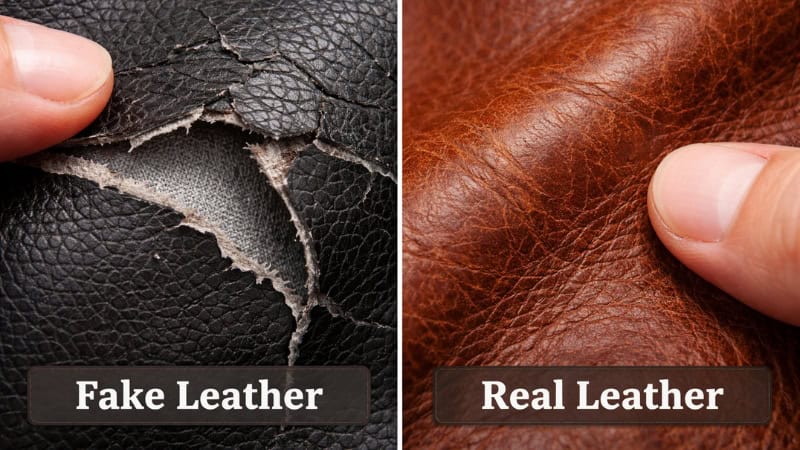
Low-quality leather usually gives itself away once you know what to notice. The first warning sign is a surface that looks unnaturally perfect. Real leather has variation. If every inch of the material looks identical, glossy, and machine-stamped, it may be synthetic or heavily corrected to the point where the leather quality is poor.
Another common red flag is vague labeling. Terms such as “man-made leather,” “leather touch,” or “premium material” often hide the absence of real hide. Even the phrase “genuine leather” should be treated cautiously unless the seller also explains the leather type, tanning process, and construction details.
Peeling is another concern. Good leather wears in, while many faux or bonded materials wear out. If you see flaking, bubbling, or cracking on the surface, that product is unlikely to age well. Weak stitching, light hardware, thin backing, and excessive glue smell usually point to rushed manufacturing rather than lasting craftsmanship.
Real Leather vs Faux Leather on a Budget: Which Is Better?
Real leather usually costs more upfront, but faux leather often costs more over time because it wears out faster and needs to be replaced sooner.
| Feature | Real Leather | Faux Leather |
| Material | Animal hide, such as cowhide or lambskin | Synthetic material such as PU or PVC |
| Durability | High with proper care | Low to moderate |
| Breathability | Better airflow and comfort | Poor breathability |
| Aging | Develops patina and character | Often cracks, peels, or stiffens |
| Long-term value | Strong cost-per-wear | Often, a weaker long-term value |
That does not mean faux leather never makes sense. For trend-driven fashion, occasional use, or very tight budgets, it can serve a short-term purpose. But if your goal is durability, long-term appearance, and actual value, real leather is usually the smarter choice. A modest top-grain leather item often ages more gracefully than a synthetic one, which can look tired after one season.
How to Make Budget Leather Last Longer (Maximize Value)
Buying smart is only half the equation. The other half is making sure your leather lasts long enough to justify the purchase. Even affordable leather can perform well when properly cared for. Leather is a natural material, and that means it responds to moisture, heat, friction, and neglect.
The biggest mistake people make is storing leather badly. Bags get crushed, belts stay damp, shoes sit near direct heat, and wallets remain overloaded until the stitching begins to strain. Good leather durability depends on simple habits. Keep products dry, let them breathe, and avoid prolonged exposure to the sun. Use a conditioner occasionally, especially if the leather feels dry or stiff. Conditioners help maintain flexibility and prevent cracking, especially on chrome-tanned leather that is frequently used.
Cleaning matters too. Dust and surface grime should be wiped off gently with a soft cloth. Harsh cleaners often do more harm than good. I would rather maintain a slightly worn real leather item with basic care than replace a fake one every year, since it cannot be restored.
Expert Tips for Buying Leather on a Budget
This is the one area where a short list helps because buying strategy matters as much as leather knowledge.
- Buy off-season when possible. Leather jackets, boots, and bags are often cheaper outside peak demand periods.
- Prioritize craftsmanship over branding. Strong stitching, good edge finishing, and solid hardware matter more than a famous logo.
- Ask what kind of leather it is. A seller who cannot explain full-grain, top-grain, or bonded leather is harder to trust.
- Focus on everyday products first. Wallets and belts usually deliver better value than trend-heavy fashion items.
- Compare photos carefully online. Look for grain detail, raw edges, interior backing, and close shots of seams.
- Avoid buying based on the word “genuine” alone. It confirms authenticity, not quality.
The real edge comes from patience. The best leather deals usually go to buyers who inspect carefully, skip the hype, and wait for the right product rather than rushing into the first attractive listing.
Frequently Asked Questions
Is genuine leather real leather?
Yes, genuine leather is real leather, but it is often a lower-grade category than full-grain leather or top-grain leather. The term confirms that animal hide was used, yet it does not guarantee superior durability, grain structure, or overall leather craftsmanship.
What is the cheapest real leather type?
Genuine leather is usually the most affordable, widely available real leather category, though prices vary by product and construction. Top-grain leather often gives better value because it lasts longer and looks better, even if the initial price is slightly higher.
How can I tell if leather is fake?
Check the grain for repeated patterns, smell for plastic or chemical odors, inspect the edges for synthetic sealing, and look at the underside for fabric backing. Real leather usually shows natural variation, fibrous edges, and a more organic texture.
Is bonded leather worth buying?
Bonded leather is rarely the best choice if you want longevity. It contains leather scraps mixed with adhesives and synthetic material, so it does not have the same strength, aging quality, or durability as top-grain leather, full-grain leather, or well-made genuine leather.
Can you get good leather under $50?
Yes, especially in wallets, belts, cardholders, and secondhand leather goods. For under $50, top-grain leather and honest, genuine leather products are possible if you avoid brand premiums, inspect construction carefully, and shop at outlets, with artisans, or trusted resale markets.
Smart Leather Buying Checklist: Get Real Quality Without Overspending
Buying real leather on a budget is less about luck and more about knowing how leather works. When you understand the difference between full-grain, top-grain, genuine leather, and bonded leather, you stop shopping based on labels and start shopping based on value.
The smartest buyers focus on grain structure, stitching, hardware, durability, and seller transparency. They also know where to look, from thrift stores to artisan workshops and outlet deals.
In most cases, a well-made top-grain leather item offers the best balance of quality and affordability. Buy slowly, inspect carefully, and let cost-per-wear guide every purchase.