
Choosing the right drying or cleaning cloth can make a noticeable difference in how well a surface is cleaned and protected. Whether you’re drying a freshly washed car, polishing glass, or handling delicate surfaces, the material of the cloth plays a key role in performance. Two of the most commonly used options are chamois leather and microfiber towels.
Both materials are widely used in car detailing, household cleaning, and professional maintenance, but they function differently. Chamois leather is a traditional natural material known for its smooth texture and exceptional water absorption, while microfiber is a modern synthetic fabric designed to trap dirt and moisture efficiently.
In this guide, we’ll compare chamois leather vs microfiber in terms of absorbency, durability, maintenance, and best uses to help you choose the right option.
What Is Chamois Leather?
Chamois leather has been used for decades in cleaning and automotive care because of its unique absorbent properties. Understanding its material, advantages, and limitations helps determine where it performs best.
Definition and Material
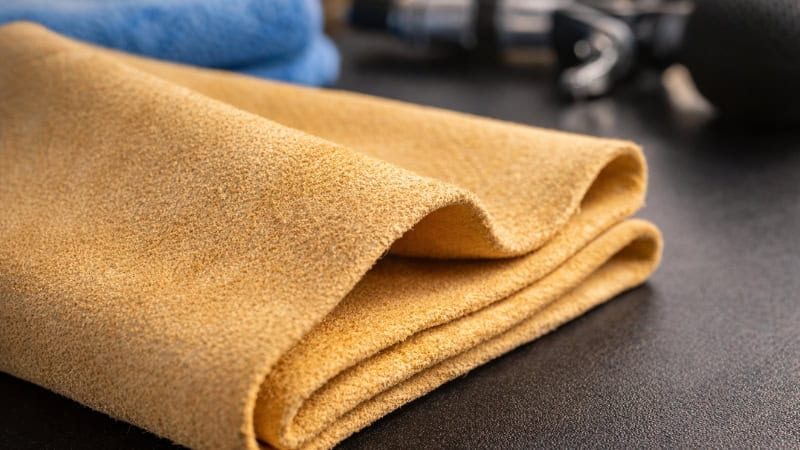
Chamois leather is a soft, absorbent type of leather traditionally made from sheepskin and treated with oils during a tanning process. Unlike regular leather, chamois is designed to remain flexible and highly absorbent, which makes it ideal for drying and polishing surfaces.
This material has been used for decades in automotive care, window cleaning, and delicate surface maintenance. Its smooth and lint-free texture allows it to glide across surfaces without leaving fibers behind, making it particularly useful when a streak-free finish is required.
Pros of Chamois Leather
One of the biggest advantages of chamois leather is its exceptional water absorption capacity. It can soak up a large amount of water quickly, which is why it has long been favored for drying cars after washing.
The material also provides a smooth and streak-free finish, making it effective for glass, mirrors, and polished surfaces. Because the texture is soft and non-abrasive, it can safely be used on sensitive surfaces such as automotive paint, chrome, and windows when handled properly.
Another benefit is its lint-free nature, which helps prevent residue or fibers from being left behind during cleaning.
Cons of Chamois Leather
Despite its advantages, chamois leather requires more careful maintenance compared to synthetic cleaning cloths. If it is allowed to dry completely without proper care, the material can become stiff and lose its flexibility.
Chamois also needs to be rinsed frequently during use, since it does not trap dirt particles as effectively as microfiber. Dirt left in the cloth may potentially cause surface scratches if not removed.
Additionally, genuine chamois leather is often more expensive than standard cleaning towels, and its lifespan depends heavily on proper storage and regular conditioning.
What Is Microfiber?
Microfiber is a modern cleaning material designed to capture dirt, moisture, and oils efficiently. Its structure and composition make it one of the most widely used fabrics in both automotive and household cleaning.
Definition and Composition
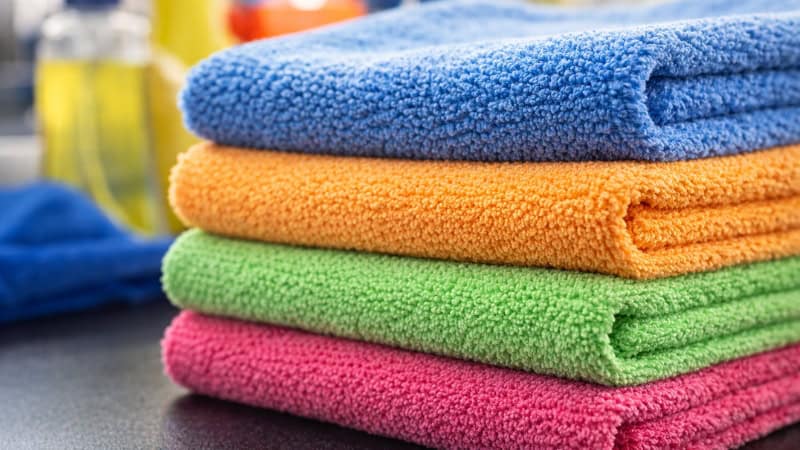
Microfiber is a synthetic fabric made from extremely fine fibers, typically a blend of polyester and polyamide (nylon). Each fiber is significantly thinner than a human hair, which allows microfiber cloths to reach tiny surface crevices and capture particles that traditional fabrics may miss.
During manufacturing, the fibers are split to create millions of microscopic strands. These strands increase the cloth’s surface area, allowing it to absorb liquids efficiently and trap dust, oils, and dirt. Because of this structure, microfiber has become widely used in car detailing, household cleaning, electronics care, and glass polishing.
Pros of Microfiber
Microfiber cloths are known for their excellent dirt-trapping ability. The split fibers act like tiny hooks that lift and hold dust, debris, and oils instead of simply pushing them across the surface.
Another advantage is durability and convenience. Microfiber towels can typically be machine-washed and reused many times without losing effectiveness, making them a practical option for both professional and everyday cleaning tasks.
They are also versatile, suitable for everything from car detailing and polishing to household cleaning, electronics maintenance, and glass wiping.
Cons of Microfiber
While microfiber offers many benefits, its performance can vary depending on fabric quality, fiber blend, and GSM (grams per square meter). Lower-quality microfiber towels may shed lint or lose absorbency more quickly.
Additionally, microfiber does not always hold as much water as fully saturated chamois leather, which can require multiple passes to dry large surfaces.
Improper washing—such as using fabric softeners or high heat—can also damage the fibers and reduce the cloth’s cleaning effectiveness over time.
Chamois Leather vs Microfiber: Key Differences
When comparing chamois leather and microfiber, the main differences come down to material composition, cleaning, absorbency, durability, and maintenance.
Chamois leather is a natural material, traditionally made from treated sheepskin. It is best known for its extreme absorbency and smooth surface, which allow it to quickly remove large amounts of water while leaving minimal streaks. However, it mainly absorbs water rather than trapping dirt.
Microfiber, on the other hand, is a synthetic fabric made from polyester and polyamide fibers. Its microscopic split fibers allow it to capture dirt, dust, oils, and moisture simultaneously, making it effective for both cleaning and drying.
Another key difference is maintenance. Chamois leather requires careful rinsing, controlled drying, and proper storage to prevent stiffness. Microfiber towels are generally machine-washable and easier to maintain, making them more convenient for frequent use.
Durability also differs, as microfiber towels can typically withstand many wash cycles, while chamois leather may wear out faster if not properly maintained.
Comparison Table Explanation
The differences between chamois leather and microfiber become clearer when you look at the materials side by side.
| Feature | Chamois Leather | Microfiber |
| Material | Natural leather | Synthetic fibers |
| Absorbency | Very high | High |
| Dirt trapping | Low | Excellent |
| Durability | Moderate | High |
| Maintenance | Requires careful care | Easy to wash |
| Cost | Higher | Usually affordable |
From this comparison, it’s clear that chamois excels at absorbing large amounts of water quickly, which is why it has traditionally been used for drying vehicles.
Microfiber, however, offers greater versatility and better dirt capture, making it suitable for a wider range of cleaning tasks. For many users, the choice ultimately depends on whether the priority is maximum water absorption or multi-purpose cleaning performance.
Which Is Better for Car Drying?
When drying a freshly washed vehicle, both chamois leather and microfiber towels can perform well, but they approach the task differently.
Chamois leather has long been favored for traditional car drying because of its ability to absorb large amounts of water quickly. When laid flat on a wet surface and gently pulled across the paint, it can remove a significant amount of moisture in a single pass. This efficiency helps speed up the drying process, especially for larger surfaces such as hoods and roofs.
However, chamois leather does not trap dirt particles effectively. If any dust or debris remains on the vehicle’s surface, the cloth may push those particles across the paint. For this reason, it’s important that the vehicle is thoroughly rinsed before drying with chamois.
Microfiber towels are widely used in modern car detailing because they combine absorbency with dirt-trapping capabilities. The split fibers lift small particles away from the paint surface rather than dragging them across it. This can help reduce the risk of swirl marks or micro-scratches, particularly on sensitive clear coat finishes.
Another advantage of microfiber drying towels is their plush structure, which allows them to absorb water while remaining gentle on automotive paint.
Many professional detailers prefer large microfiber drying towels because they offer a balance of water absorption, paint safety, and ease of maintenance. However, chamois leather can still be effective for fast water removal when used carefully on a properly cleaned surface.
Ultimately, both materials can work well for drying cars, but microfiber tends to offer greater safety and versatility for modern detailing practices.
Best Uses for Chamois Leather
Chamois leather is valued for its high absorbency and smooth texture, making it effective for specific drying and finishing tasks. Below are some of the most common situations where chamois leather performs best.
1. Drying Freshly Washed Vehicles
Chamois leather is widely used for drying cars after washing because it can absorb a large amount of water quickly. When gently pulled across wet surfaces, it removes moisture efficiently and helps prevent water spots from forming on automotive paint, chrome, and glass.
2. Cleaning Glass and Mirrors
Because chamois leather is lint-free and smooth, it works well for cleaning windows, mirrors, and other reflective surfaces. It helps create a streak-free finish, which is particularly useful when polishing glass panels or car windshields.
3. Removing Water from Smooth Surfaces
Chamois is ideal for wiping moisture from smooth surfaces such as tiles, stainless steel, and polished metal. Its soft texture allows it to glide across surfaces without leaving fibers or residue behind.
4. Final Surface Drying and Finishing
After rinsing or cleaning, chamois leather can be used for final surface drying to remove leftover droplets. This helps prevent mineral deposits or water marks, especially on painted or glossy surfaces.
Best Uses for Microfiber Towels
Microfiber towels are extremely versatile and can be used in many different cleaning scenarios. Their fiber structure makes them effective for both delicate surfaces and everyday cleaning tasks.
Car Detailing and Polishing
Microfiber towels are widely used in automotive detailing because their split fibers help lift dirt, dust, and residue from surfaces without scratching paint. They are commonly used for buffing wax, applying quick detailers, and polishing clear coats. The soft texture and dirt-trapping structure reduce the risk of swirl marks, which is important when maintaining automotive paint protection.
Interior and Dashboard Cleaning
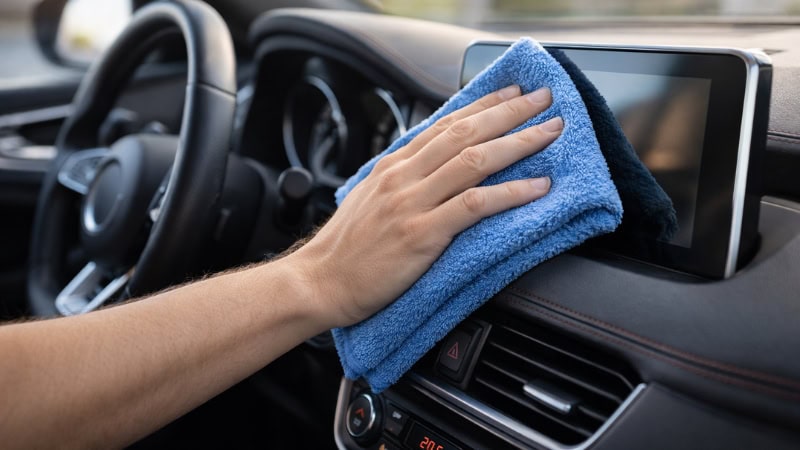
Inside a vehicle, microfiber cloths are effective for cleaning dashboard surfaces, plastic trims, touchscreens, and leather seats. Their ability to capture dust and oils helps remove fingerprints and residue from frequently touched areas without leaving streaks or lint.
Household Cleaning and Dusting
Microfiber is also widely used for general household cleaning tasks. It can trap dust and debris from furniture, countertops, appliances, and electronics more effectively than traditional cotton cloths. Because the fibers attract dust particles, microfiber works well for both dry dusting and damp cleaning.
Glass and Electronics Cleaning
For glass surfaces, mirrors, and electronic screens, microfiber towels provide a streak-free finish while safely removing smudges and fingerprints. The fine fibers gently clean delicate surfaces without scratching them.
Maintenance and Care Tips
Proper maintenance helps extend the lifespan and performance of both chamois leather and microfiber towels. Each material requires slightly different care to maintain its absorbency and effectiveness.
Caring for Chamois Leather
- Rinse Thoroughly After Each Use
Always rinse chamois leather with clean water after drying a surface. This helps remove dirt, soap residue, and debris that could damage the material or scratch surfaces during the next use. - Avoid Harsh Chemicals and Detergents
Strong detergents and chemicals can strip away the natural oils that keep chamois leather soft and flexible. It’s best to use plain water or a mild soap specifically designed for leather care. - Store the Chamois Slightly Damp
Chamois leather should not be stored completely dry. Keeping it slightly damp helps maintain its softness and prevents the material from becoming stiff or brittle. - Soak if It Becomes Stiff
If the chamois dries out and hardens, soaking it in lukewarm water for a few minutes can help restore its flexibility before use.
Washing Microfiber Towels
- Use Mild Detergent When Washing
Wash microfiber towels using a gentle detergent that does not contain fabric softeners or heavy additives. This helps preserve the structure of the split fibers. - Avoid Fabric Softener
Fabric softeners coat microfiber strands, reducing their ability to trap dirt and absorb moisture. - Wash Separately from Cotton Fabrics
Microfiber towels should be washed separately from cotton items to prevent lint from attaching to the fibers. - Dry on Low Heat or Air Dry
High heat can damage microfiber fibers. Drying towels on low heat or air drying helps maintain their performance and extend their lifespan.
When to Choose Chamois vs Microfiber
Choosing between chamois leather and microfiber depends on the type of task and the level of convenience you prefer. Considering their strengths can help you decide which material is better suited for your needs.
Choose Chamois Leather for Maximum Water Absorption
Chamois leather is a good option when the main goal is quickly absorbing large amounts of water, such as drying a freshly washed car. Its smooth surface allows it to glide across paint and glass while soaking up moisture efficiently. For users who prefer traditional car drying methods, chamois can be highly effective.
Choose Microfiber for Multi-Purpose Cleaning
Microfiber towels are better suited for versatile cleaning tasks. Because the split fibers trap dirt, oils, and dust, they are ideal for car detailing, interior cleaning, household surfaces, and electronics care. Their ability to clean and dry at the same time makes them useful in many situations.
Consider Maintenance, Cost, and Convenience
Another factor when choosing between these materials is ease of maintenance and long-term cost. Microfiber towels are typically machine washable and durable, making them convenient for regular use. Chamois leather requires more careful handling and storage, which may be less convenient for users who prefer simple maintenance routines.
Frequently Asked Questions
Is chamois better than microfiber for drying cars?
Chamois leather is very effective for absorbing large amounts of water quickly, which makes it useful for drying freshly washed cars. However, microfiber drying towels are often preferred in modern car detailing because they can absorb water while also trapping dirt particles, helping reduce the risk of scratches or swirl marks on automotive paint.
Can microfiber scratch car paint?
High-quality microfiber towels are generally safe for car paint because the soft split fibers lift dirt away from the surface instead of dragging it across the clear coat. However, scratches can occur if the towel is dirty, low-quality, or used on a surface that still contains debris. Proper washing and maintenance help prevent this issue.
How long does chamois leather last?
The lifespan of chamois leather depends largely on how well it is maintained. When rinsed regularly, stored properly, and kept slightly damp between uses, a chamois can last for a long time. However, if it is allowed to dry out repeatedly or exposed to harsh detergents, it may become stiff and wear out faster.
Are synthetic chamois the same as microfiber?
Synthetic chamois and microfiber are different materials, even though they may appear similar. Synthetic chamois are usually made from polyvinyl alcohol (PVA) or similar materials designed to mimic the absorbency of natural chamois. Microfiber, on the other hand, uses split polyester and polyamide fibers that trap dirt and moisture during cleaning.
Final Verdict: Chamois Leather or Microfiber?
Both chamois leather and microfiber towels offer unique advantages depending on how they are used. Chamois leather is well known for its excellent water absorption and smooth drying performance, which makes it effective for removing large amounts of water from freshly washed vehicles or glass surfaces.
Microfiber towels, however, provide greater versatility and cleaning efficiency. Their split fibers help trap dirt, dust, and oils while still absorbing moisture, making them suitable for car detailing, household cleaning, and many other tasks.
For users who want a multi-purpose and easy-to-maintain cleaning cloth, microfiber is often the more practical choice, while chamois remains useful for traditional drying applications.