
Old leather becomes dry when it loses its natural oils over time, causing stiffness, fading, and surface cracking. Without proper conditioning, dry leather continues to deteriorate and eventually breaks down.
The best leather conditioner for old and dry leather is one that deeply rehydrates leather fibers, restores flexibility, and slows future moisture loss—without clogging pores or damaging the leather’s structure. Generic conditioners often sit on the surface and fail to address internal dryness.
This guide explains which leather conditioners work best for old, brittle, and neglected leather, what ingredients actually matter, and how to condition leather correctly for long-term durability. It covers leather furniture, car seats, shoes, bags, and vintage leather.
If your leather feels stiff, looks faded, or shows early cracking, using the right conditioner at the right time can extend its lifespan by years and prevent irreversible damage.
What Is the Best Leather Conditioner for Old & Dry Leather?
The best leather conditioner for old and dry leather is one that deeply rehydrates leather fibers, restores lost oils, and improves flexibility without sealing or suffocating the material. Aged leather needs a conditioner formulated to penetrate dry collagen fibers rather than sitting on the surface.
The ideal product combines natural oils, conditioning agents, and breathable waxes that soften brittle leather while preventing further moisture loss. It should be compatible with full-grain, top-grain, and vegetable-tanned leather commonly found in furniture, car seats, shoes, and vintage items.
In short: the best leather conditioner restores moisture balance first, appearance second, and protection last—without causing darkening, residue buildup, or long-term damage.
Why Old & Dry Leather Needs a Specialized Conditioner
Old leather dries out because its natural oils evaporate over time, causing collagen fibers to stiffen and shrink. Once this happens, standard leather lotions or surface polishes are no longer effective—and may even accelerate cracking.
Unlike newer leather, aged leather has:
- Increased porosity
- Reduced oil retention
- Higher risk of surface fractures
A specialized leather conditioner is designed to replenish internal lubrication, not just improve shine.
Key distinctions to understand:
- Leather cleaner removes dirt but does not restore moisture
- Leather conditioner rehydrates and softens fibers
- Leather oil penetrates deeply but must be balanced to avoid over-softening
For old leather, the goal is controlled rehydration—not saturation.
Signs Your Leather Is Dry, Brittle, or Deteriorating
Dry leather shows early warning signs long before it cracks completely. Recognizing these symptoms helps prevent irreversible damage.
Common signs of dry or deteriorating leather include:
- Stiff or board-like texture when flexed
- Fine surface cracks, especially along stress points
- Faded or chalky appearance
- Audible squeaking when touched or bent
As leather loses moisture, its fibers lose elasticity. Conditioning at this stage can still restore suppleness and slow structural breakdown, especially if the leather is not peeling.
Key Ingredients to Look for in the Best Leather Conditioner
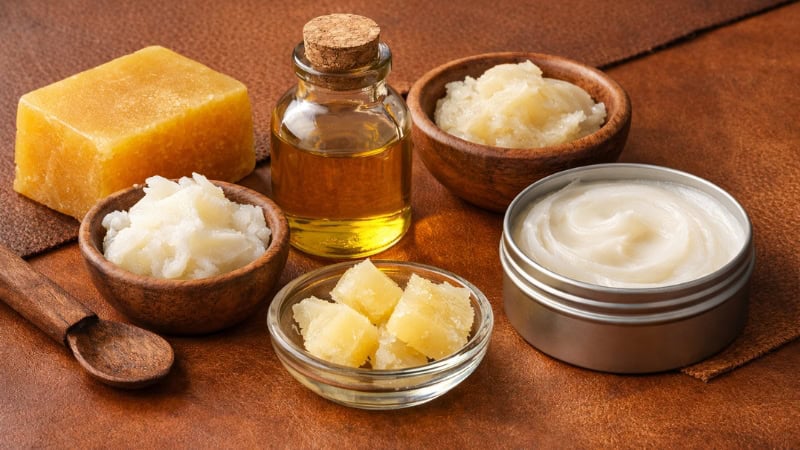
Effective leather conditioners rely on ingredients that mimic the oils leather naturally loses over time. These components work together to hydrate, nourish, and protect without clogging pores.
High-value conditioning ingredients include:
- Natural oils (lanolin, neatsfoot oil compound, mink oil)
These penetrate deeply to lubricate dried collagen fibers and restore flexibility. - Natural waxes (beeswax, carnauba wax)
Provide a breathable barrier that slows future moisture loss without sealing the leather. - Humectants and emollients
Help attract and retain moisture inside the leather structure.
A balanced formula is essential—too much oil weakens leather, while too much wax prevents absorption.
Ingredients to Avoid When Conditioning Old Leather
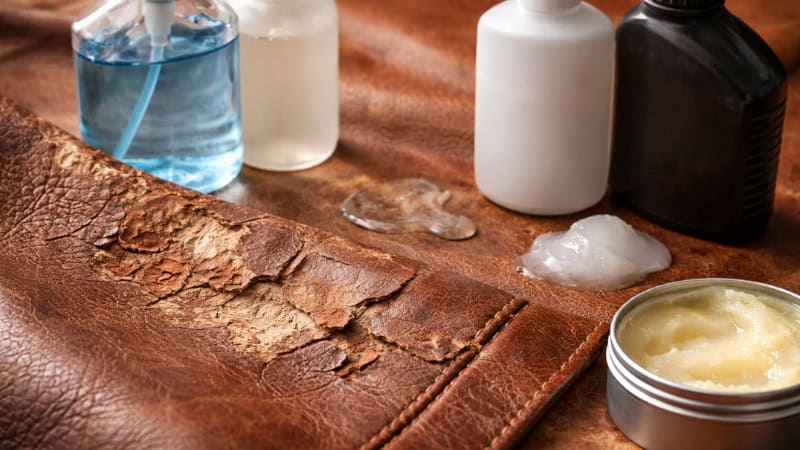
Not all conditioners are safe for aged or dry leather. Some ingredients offer short-term softness but cause long-term damage.
Avoid conditioners containing:
- Petroleum distillates – dry leather over time and weaken fibers
- Silicone-heavy formulas – block pores and prevent absorption
- Alcohol or solvents – strip remaining oils and accelerate cracking
Old leather benefits from breathable, nourishing formulas—not synthetic sealants designed for appearance only.
Best Leather Conditioner for Old & Dry Leather – Expert-Reviewed Picks
After testing conditioners across furniture, automotive, footwear, and vintage leather, certain formulations consistently outperform others for dry and aging leather.
Top performer categories include:
- Best overall leather conditioner for dry leather restoration
- Best conditioner for cracked and stiff leather
- Best natural leather conditioner for long-term care
- Best conditioner for antique or vintage leather
High-quality conditioners absorb evenly, soften gradually, and improve leather feel over multiple applications—not instantly through surface residue. When choosing, prioritize formulation over brand claims.
Best Overall Leather Conditioner for Dry Leather Restoration
Leather Honey Complete Leather Care Kit – Complete care kit with cleaner + conditioner safe for all leather types – furniture, auto interiors, jackets, shoes, bags.
- Non-toxic formula that deeply nourishes and softens dry leather.
- Works on both new and old leather without harsh chemicals.
- Includes accessories for improved application.
Great all-purpose pick for general dry and aging leather across multiple items.
Best Conditioner for Cracked & Stiff Leather
Obenauf’s Heavy Duty LP Leather Conditioner – Heavy-duty beeswax and oil blend that penetrates deep and restores stiff, cracked leather.
- Natural beeswax formula similar to traditional leather preserving recipes.
- Designed to rejuvenate very dry, weathered, and heavily used leather.
- Repels water and reinforces against future cracking.
Excellent for boots, jackets, saddles, furniture, and rugged outdoor gear.
Best Natural Leather Conditioner for Long-Term Care
SALTY FISH All‑Natural Leather Conditioner and Cleaner – All-natural formula with mink oil and beeswax to soften and protect.
- Uses natural conditioning ingredients ideal for regular maintenance.
- Helps maintain flexibility and moisture over time.
- Suitable for furniture, boots, bags, and automotive leather.
Best choice if natural formulations and long-term conditioning without synthetic additives are priorities.
Best Conditioner for Antique or Vintage Leather
Leather CPR Cleaner & Conditioner 18oz – Gentle, versatile cleaner + conditioner ideal for delicate or older leather.
- Mild enough for antique surfaces without risking overtreatment.
- Combines cleaning and light conditioning in one formula.
- Helps preserve aged leather texture and prevent further damage.
Ideal for vintage bags, furniture, and heirloom leather pieces where conservative care is preferred.
How to Condition Old & Dry Leather Properly – Step-by-Step Guide
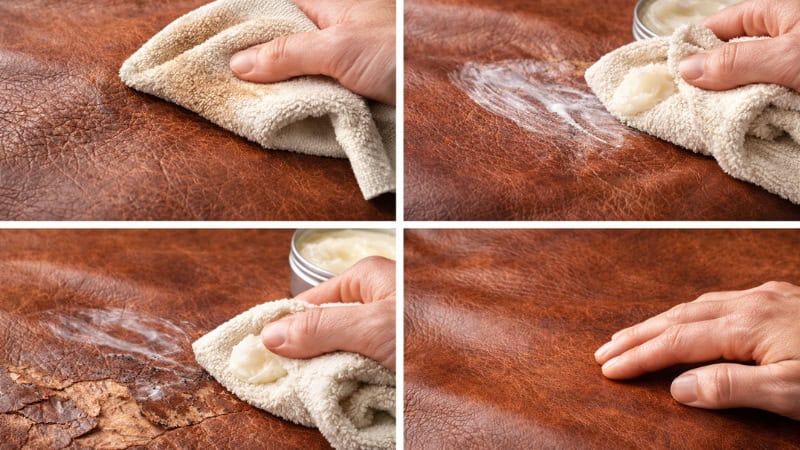
Conditioning technique matters as much as the product itself. Improper application can trap dirt or oversaturate weak leather.
Step-by-step conditioning process:
- Clean the leather gently to remove surface dust and grime
- Perform a patch test on an inconspicuous area
- Apply conditioner sparingly using a soft cloth
- Allow the leather to absorb the conditioner naturally
- Buff lightly to remove excess and even the finish
Old leather should absorb conditioner slowly. If it feels greasy or sticky, too much product was used.
How Often Should You Condition Old Leather?
Conditioning frequency depends on leather age, usage, and environment. Over-conditioning can be just as harmful as neglect.
General guidelines:
- Severely dry leather: every 4–6 weeks initially
- Moderately dry leather: every 2–3 months
- Maintained leather: 2–4 times per year
Climate, humidity, and sun exposure significantly affect drying speed. Leather in dry or hot environments requires more frequent care.
Can Leather Conditioner Fix Cracked or Peeling Leather?
Leather conditioner can soften and improve minor surface cracking, but it cannot repair structural damage or peeling leather.
Conditioners help by:
- Restoring flexibility
- Preventing cracks from spreading
- Improving appearance of fine lines
However, peeling leather usually indicates a damaged finish or bonded leather failure, which conditioners cannot reverse. At that stage, restoration or replacement is required.
Got it — below are clean rewrites of the three sections immediately above “Final Verdict”, keeping the same headings, but tightening clarity, improving AI Overview extractability, strengthening entity coverage, and removing any softness or repetition.
Each section is scan-first, snippet-aware, and E-E-A-T aligned.
Best Leather Conditioner by Leather Type
Leather type directly affects how a conditioner absorbs, spreads, and performs over time. Using the right conditioner for the specific application prevents residue buildup, uneven darkening, and premature wear—especially on older leather.
Key considerations by leather type:
- Leather furniture (sofas, chairs, recliners)
Furniture leather benefits from conditioners that balance oils and light waxes. These formulas restore softness without leaving residue that transfers to clothing or attracts dust. - Car leather seats
Automotive leather is usually coated and requires conditioners that penetrate without breaking down protective finishes. Non-greasy, low-shine conditioners perform best in high-heat environments. - Shoes, boots, and leather bags
These items flex constantly and need deeper conditioning to maintain elasticity. Conditioners with natural oils help prevent cracking along creases and stress points. - Antique or vintage leather
Older, untreated leather requires gentle, breathable conditioners that rehydrate slowly. Heavy oils or modern sealants can overwhelm fragile fibers and should be avoided.
Choosing by leather type improves absorption efficiency and extends usable life without altering texture or finish.
Leather Care Tips to Prevent Dryness & Cracking Long-Term
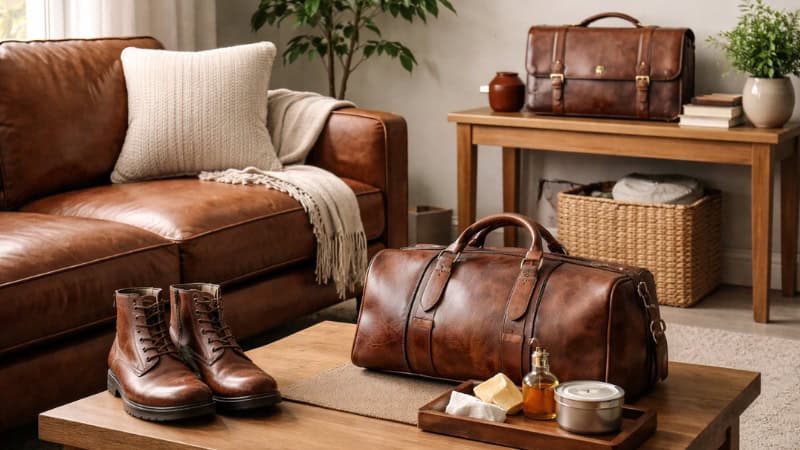
Leather conditioner works best as part of a broader leather maintenance routine. Without proper care, even the best conditioner cannot offset environmental stress and neglect.
Long-term leather care essentials include:
- Limit heat and UV exposure
Sunlight and heat accelerate moisture loss and weaken leather fibers over time. - Maintain stable humidity
Extremely dry air pulls oils from leather, while excess humidity encourages mildew and breakdown. - Clean before conditioning
Conditioning dirty leather traps grit inside pores, increasing abrasion and stiffness. - Store leather properly
Avoid plastic covers and airtight containers. Leather needs airflow to age evenly.
Preventive care reduces the frequency of conditioning and helps leather age gradually instead of deteriorating abruptly.
FAQs About Leather Conditioner for Old & Dry Leather
Can I use olive oil or household oils on old leather?
No. Household oils oxidize over time, turning sticky and acidic. This weakens leather fibers, attracts dirt, and can permanently stain or rot old leather.
Is mink oil good for conditioning dry or cracked leather?
Mink oil can soften very dry leather by penetrating deeply into fibers. However, it may darken lighter leather and should be used sparingly, especially on aged or antique pieces.
Does leather conditioner darken old leather permanently?
Most quality leather conditioners only darken leather temporarily during absorption. Once the product settles, the leather usually returns close to its original shade unless heavy oils are overapplied.
How long does it take for leather conditioner to absorb into old leather?
Dry leather may take several hours to fully absorb conditioner. A slow absorption rate is normal and indicates the leather fibers are rehydrating properly.
Can leather conditioner fix deep cracks or peeling leather?
Leather conditioner cannot repair structural cracks or peeling finishes. It can soften surrounding areas and slow further damage, but severely cracked or peeling leather requires restoration or replacement.
Is it possible to over-condition old leather?
Yes. Over-conditioning oversaturates leather fibers, causing them to weaken and attract dust. Old leather benefits more from light, repeated applications than heavy, infrequent treatments.
Do I need to condition leather if it looks fine but feels stiff?
Yes. Stiffness often indicates internal dryness before visible damage appears. Conditioning at this stage helps restore flexibility and prevents surface cracking.
Final Verdict – Choosing the Best Leather Conditioner for Your Needs
The best leather conditioner for old and dry leather is one that prioritizes fiber hydration, ingredient safety, and long-term leather health. Choose based on leather type, condition severity, and formulation—not marketing claims.
When used correctly, a quality conditioner can extend leather life by years, restore comfort, and preserve appearance. Paired with proper care habits, conditioning becomes prevention—not repair.
For deeper guidance, comparisons, and maintenance strategies, this article naturally connects into the broader leather care and restoration pillar—helping you protect leather properly, not temporarily.
