
Leather gaiters are one of those pieces of gear you don’t think about—until the terrain starts pushing back. Then, suddenly, every thorn, rock, and stray piece of debris feels personal.
They wrap around your lower legs like quiet armor. Not flashy, not trendy—just brutally effective when conditions turn rough.
If you’ve ever had to stop mid-trail to shake gravel out of your boots, or felt that sharp sting from unseen brush, you already know the problem. Leather gaiters exist to eliminate those interruptions.
But here’s the catch—not all gaiters are worth your time. Some are overbuilt, some underperform, and some simply don’t match the terrain you’re stepping into.
This guide breaks it all down. From real-world benefits to choosing the right pair, you’ll learn exactly when leather gaiters make sense—and when they don’t.
What Are Leather Gaiters? (And Why People Still Use Them)
You don’t notice gaiters—until the trail bites back. Then suddenly, that strip of leather around your lower leg feels like the difference between control and chaos.
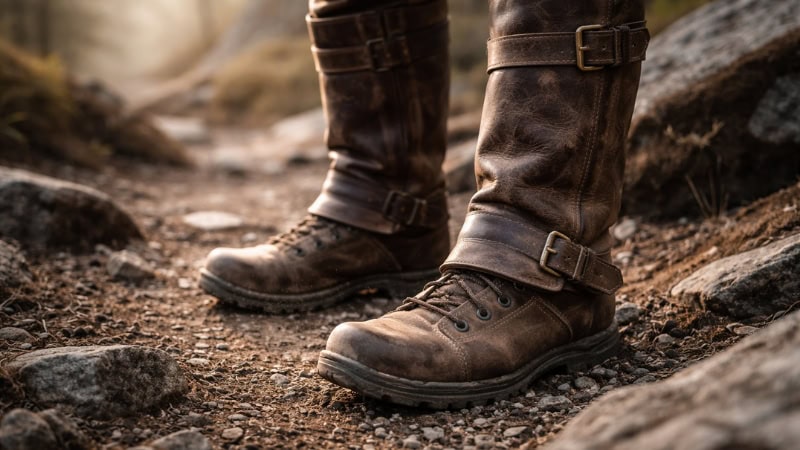
Leather gaiters are protective coverings worn over your boots and lower legs, typically extending from the ankle to just below the knee. Their primary job is simple but critical: act as a barrier between your body and the unpredictable terrain—mud, thorns, rocks, even fangs in certain regions.
From a rider’s perspective, especially when you’re maneuvering through tight brush or uneven terrain, your lower legs take constant abuse. Gaiters absorb that punishment. They shield your ankles from scraping branches, stop debris from sneaking into your boots, and add a rugged layer that doesn’t tear at the first sign of friction.
Synthetic gaiters may dominate lightweight hiking, but leather has a stubborn legacy. It doesn’t just resist wear—it adapts to it. Over time, it molds, toughens, and becomes part of your gear ecosystem. In recovery training scenarios, where repeated exposure to rough surfaces is common, leather gaiters outperform synthetics in longevity and consistent protection.
Key Benefits of Leather Gaiters
When conditions turn aggressive, your gear either steps up—or steps aside. Leather gaiters are built for the former, especially when durability isn’t negotiable.
Durability & Abrasion Resistance: Leather doesn’t flinch. Against sharp rocks, thorny undergrowth, or constant friction from movement, it holds its structure. Unlike nylon, which can fray or tear under repeated stress, leather gaiters age like a seasoned rider—scarred but stronger.
Protection in Harsh Terrain: There’s a psychological comfort that comes with knowing your lower legs are armored. Whether you’re crossing snake-prone trails or pushing through dense brush, leather gaiters act as a defensive shell. They don’t just block—they absorb impact.
Long-Term Value Over Time: From a recovery trainer’s lens, consistency matters. Gear that fails midway disrupts rhythm and safety. Leather gaiters may cost more upfront, but they repay that investment through years of reliable use. You’re not replacing them every season—they stay with you.
Balanced Breathability vs Protection: While not as breathable as mesh-based synthetics, leather gaiters strike a balance. They allow minimal airflow while maintaining a solid barrier against moisture and debris. In cooler or rugged conditions, this trade-off works in your favor.
Types of Leather Gaiters
Not all gaiters are cut from the same hide—literally. Choosing the right type depends on how aggressive your environment gets and how much protection you actually need.
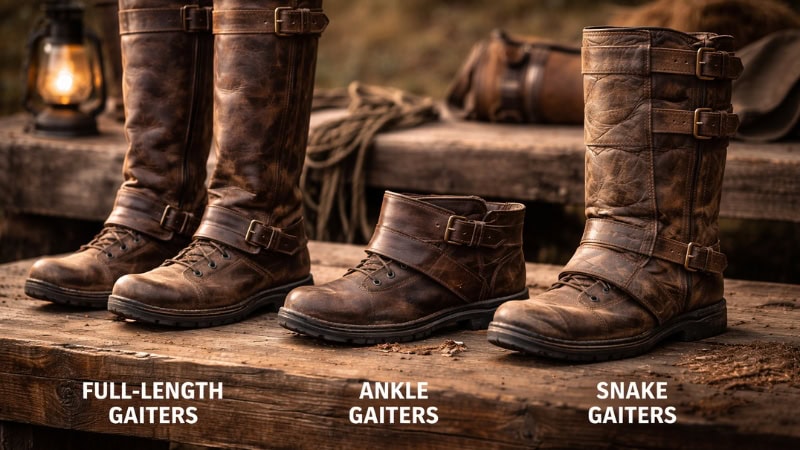
Full-Length Leather Gaiters
These are the heavy hitters. Extending from the ankle to just below the knee, full-length gaiters are built for maximum coverage. They’re the kind you reach for when the trail looks like it might fight back.
They’re commonly used in hunting, off-trail hiking, and ranch work. The extended coverage protects against thorns, mud splashes, and even minor impacts. For riders navigating unpredictable terrain, these gaiters act like shin guards with attitude.
Ankle Leather Gaiters
Shorter, lighter, and less intrusive—ankle gaiters focus on keeping debris out rather than shielding the entire lower leg. They wrap around the boot’s opening, sealing the gap where dirt loves to sneak in.
These are ideal for controlled environments or lighter trails. If your concern is sand, gravel, or loose soil entering your boots during movement drills or recovery walks, ankle gaiters do the job without adding bulk.
Snake Leather Gaiters
This is where things get serious. Snake gaiters are reinforced, often thicker, and specifically designed to reduce the risk of snake bites penetrating through to the skin.
They’re commonly used in regions where venomous snakes are part of the terrain. From experience, when you’re moving through tall grass or rocky paths where visibility is low, these gaiters provide a level of confidence that’s hard to quantify—but easy to appreciate.
Work Leather Gaiters
Built for industrial and heavy-duty use, work gaiters are often used in welding, logging, and farming. They prioritize resistance against sparks, heat, and mechanical wear.
For recovery trainers working in rugged outdoor setups or individuals handling equipment in rough environments, these gaiters double as protective gear that doesn’t compromise mobility.
Leather Gaiters vs Synthetic Gaiters
This isn’t just a material debate—it’s a question of priorities. Are you optimizing for weight, or are you preparing for impact?
Durability vs Weight Trade-Off: Leather gaiters are heavier—no way around it. But that weight translates into resilience. Synthetic gaiters, often made from nylon or Gore-Tex fabrics, are lighter and more flexible, but they can wear out faster under harsh conditions.
Weather Resistance & Adaptability: Synthetic gaiters shine in wet conditions, especially those with waterproof membranes. They repel water efficiently and dry faster. Leather, on the other hand, requires treatment—waxing or conditioning—to achieve a similar level of resistance.
But here’s the nuance: leather doesn’t just repel—it endures. In muddy, abrasive environments, it maintains integrity longer than most synthetics.
Comfort & Fit Over Time: Leather gaiters break in. They mold to your leg and boot shape, creating a more personalized fit. Synthetic gaiters maintain their original structure but don’t adapt the same way.
From a rider’s standpoint, that broken-in leather feel becomes second nature—like a well-worn saddle.
Verdict: Which One Wins?
If your environment is unpredictable, harsh, and demanding, leather gaiters are the way to go. If you’re focused on lightweight travel and occasional use, synthetics make more sense.
It’s not about which is better—it’s about which one survives your terrain.
Common Uses of Leather Gaiters
You don’t wear leather gaiters for style points—you wear them because something out there is trying to slow you down. And in the field, hesitation costs more than gear ever will.
Hiking & Trekking Protection
On uneven trails, especially where loose gravel and sharp brush dominate, leather gaiters act like a defensive perimeter. They keep your stride clean—no pebbles sneaking into your boots mid-step, no thorns catching your ankles when you’re already focused on balance.
From a recovery trainer’s angle, uninterrupted movement matters. Every stop to shake out debris breaks rhythm, and rhythm is everything when you’re rebuilding control.
Hunting & Stealth Movement
In hunting environments, silence and protection go hand in hand. Leather gaiters don’t rustle like some synthetics, and they provide a quiet shield against underbrush.
More importantly, they guard against unexpected encounters—snake-prone zones, hidden branches, or sharp terrain. When you’re moving slowly and deliberately, the last thing you want is a sudden sting at your ankle pulling you out of the moment.
Farming & Ranch Work Durability
Daily exposure to mud, tools, livestock, and rough ground demands gear that doesn’t complain. Leather gaiters step into this role naturally.
They protect against kicks, scrapes, and prolonged wear. For someone constantly on their feet, they become less of an accessory and more of a second skin—taking the hits so your body doesn’t have to.
Welding & Industrial Protection
In industrial settings, especially welding, sparks and molten splatter are real threats. Leather gaiters serve as a fire-resistant barrier, shielding your lower legs from burns and heat.
This is where leather’s natural resistance becomes more than durability—it becomes safety. And unlike synthetic materials, it won’t melt under pressure.
How to Choose the Right Leather Gaiters
Choosing gaiters isn’t about picking the toughest-looking pair—it’s about matching protection with purpose. The wrong fit or material can turn even premium gear into a liability.
Fit & Sizing Precision
A shifting gaiter is a failing gaiter. It should wrap snugly around your boot and lower leg without cutting off circulation.
From experience, the sweet spot is secure but flexible. You want it tight enough to block debris, but loose enough to move naturally with your stride. Adjustable straps and buckles play a big role here.
Leather Quality: Full-Grain vs Split
Not all leather is created equal. Full-grain leather is the top tier—thicker, tougher, and more wear-resistant. It’s what you want if your terrain is unforgiving.
Split leather, while more affordable, sacrifices some durability. It works for lighter use but won’t hold up as well under repeated stress. Think of it as the difference between a seasoned rider and a rookie—both can perform, but only one endures.
Closure System & Security
Zippers, buckles, or lace-up systems—each has its personality. Zippers are quick and convenient, but can fail under dirt and pressure. Buckles and straps are slower but more reliable in harsh conditions.
If you’re constantly on the move, especially in recovery drills or fieldwork, reliability beats speed every time.
Weight & Comfort Balance
Heavier gaiters offer more protection, but they can fatigue you over long distances. Lighter ones improve mobility but may compromise durability.
It’s a balancing act. For intense environments, lean toward protection. For extended wear with moderate risk, prioritize comfort.
Climate & Terrain Compatibility
Leather performs differently depending on the environment. In dry, rugged terrains, it excels. In consistently wet conditions, it needs maintenance—waxing, conditioning—to stay effective.
Choosing without considering your environment is like riding blindfolded. You might get through—but not without damage.
Best Leather Gaiters – Top Picks
When it comes to gear, theory only takes you so far. Real value shows up in the field—when the terrain pushes back and your equipment either holds or folds.
Kenetrek Leather Hunting Gaiters
Key Specifications:
- Full-grain leather construction
- Adjustable buckle system
- Reinforced stitching
- Mid-calf height
Why it’s impressive
Built like a tank but moves like it understands terrain. These gaiters are designed for hunters who spend hours in rough environments, and they show it. The leather is thick, the fit is secure, and once broken in, they feel like a natural extension of your boots.
Downside: Heavier than most options; requires break-in time
Bottom Line: Best for hunters and rugged terrain explorers
Outdoor Research Crocodile Gaiters (Leather Hybrid)
Key Specifications:
- Leather lower section + Gore-Tex upper
- Waterproof design
- Front zipper closure
- Boot lace hook
Why it’s impressive
This hybrid design gives you the best of both worlds—durability where it matters and flexibility where you need movement. Ideal for mixed conditions, especially when the terrain shifts between wet and abrasive.
Downside: Not fully leather; premium price point
Bottom Line: Best for hikers needing versatility
Frelaxy Leather Hiking Gaiters
Key Specifications:
- Lightweight leather blend
- Adjustable straps
- Water-resistant coating
- Compact design
Why it’s impressive
A budget-friendly option that doesn’t completely cut corners. It offers decent protection for casual hikers or light trail work, especially if you’re not constantly battling aggressive terrain.
Downside: Less durable under heavy stress
Bottom Line: Best for beginners and light use
Pike Trail Leather Gaiters
Key Specifications:
- Reinforced leather panels
- Anti-slip straps
- Breathable design
- Midweight construction
Why it’s impressive
These gaiters strike a balance—durable enough for regular use, but not so heavy that they slow you down. They’re well-suited for those who move between controlled and rugged environments.
Downside: Not ideal for extreme conditions
Bottom Line: Best for balanced performance
How to Wear Leather Gaiters Properly
Wearing gaiters isn’t complicated—but doing it wrong quietly ruins their purpose. It’s like tightening a saddle just enough to look right, but not enough to hold under pressure.
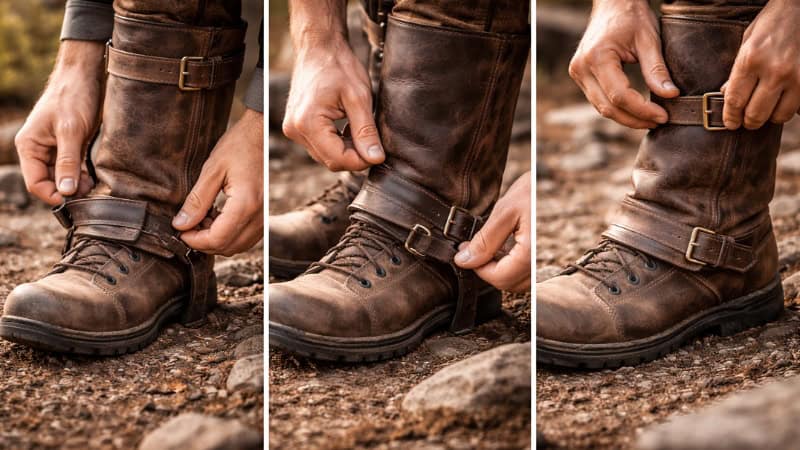
Boot Integration & Positioning: Start by placing the gaiter over your boot, ensuring the lower edge aligns with the upper edge of the boot. The strap should run under the sole to anchor the gaiter in place.
This underfoot connection is crucial—it prevents upward shifting when you walk, especially on uneven terrain.
Securing the Fit: Fasten the closure system—whether zipper, buckle, or laces—starting from the bottom and working your way up. This ensures an even, snug fit.
Make sure the gaiter wraps cleanly around your leg, with no gaps. Loose sections invite debris; overly tight sections restrict movement.
Layering with Pants: Your pants should typically go over the gaiter’s top edge, creating a seamless barrier. This setup prevents dirt and moisture from entering from above.
In recovery scenarios or long treks, this small detail makes a noticeable difference. It keeps your movement fluid and distraction-free—exactly how it should be.
How to Clean and Maintain Leather Gaiters
Leather doesn’t fail suddenly—it deteriorates quietly when ignored. Treat it right, and it’ll stand beside you for years; neglect it, and even the toughest pair starts cracking under pressure.
Post-Use Cleaning Routine
After a long day in mud, dust, or brush, your gaiters carry the story of the terrain with them. Don’t let that story settle in permanently.
Start by brushing off loose dirt with a soft brush. If mud has dried and hardened, dampen it slightly before removal—never scrape aggressively, as that can scar the leather surface. A light wipe with a damp cloth finishes the job without soaking the material.
Drying Without Damage
Leather and heat don’t get along. After cleaning, let your gaiters air-dry naturally in a shaded, well-ventilated area.
Avoid direct sunlight and artificial heat sources, such as heaters or dryers. They may speed things up, but they also pull moisture out of the leather unevenly—leading to stiffness and cracks. Think of it like overtraining a muscle without recovery—it looks fine until it suddenly isn’t.
Conditioning for Longevity
Leather needs nourishment to stay flexible. Applying a quality conditioner every few uses keeps it supple and resistant to cracking.
Leather Honey is a trusted option that penetrates deep without leaving a greasy finish. Conditioning not only restores flexibility but also enhances the gaiter’s natural resistance to wear.
Waterproofing & Protection
While leather isn’t naturally waterproof, it can be treated to resist moisture effectively. Wax-based treatments create a protective barrier that repels water and prevents saturation.
Nikwax offers specialized waterproofing solutions that work well with leather gear. Regular application ensures your gaiters don’t become waterlogged during wet conditions.
Storage & Mold Prevention
When not in use, store your gaiters in a cool, dry place. Avoid sealing them in plastic bags—leather needs to breathe.
If stored damp, mold can develop, weakening the material over time. A simple rule: never store them in worse condition than you found them.
Common Mistakes to Avoid
Most gear failures don’t come from extreme conditions—they come from small, repeated mistakes. Leather gaiters are no exception.
Improper Fit & Loose Wearing: A poorly fitted gaiter is like a loose grip on handlebars—it might hold for a while, but it won’t save you when things get rough.
If the gaiter shifts or gaps form, debris will get in. Worse, constant movement causes friction points that wear down both the gaiter and your comfort.
Over-Tightening the Straps: Going too tight feels secure at first, but it restricts movement and can strain the material over time.
Leather needs room to flex. Over-tightening creates pressure points that accelerate wear and reduce comfort during long use.
Skipping Maintenance: This is the silent killer. Dirt buildup, lack of conditioning, and exposure to moisture without care slowly degrade the leather.
From a recovery standpoint, consistency is everything. The same applies to your gear—regular maintenance keeps performance steady and predictable.
Using the Wrong Gaiter for the Terrain: Not all gaiters are built for all environments. Using lightweight leather gaiters in extreme conditions—or heavy-duty ones for casual use—creates imbalance.
Match the gear to the environment. Otherwise, you’re either underprotected or overburdened—both of which cost you in the long run.
FAQs
Are leather gaiters waterproof?
Not naturally. Leather is water-resistant to a degree, but it requires treatment—like wax or specialized coatings—to become properly waterproof. With regular maintenance, it can handle wet conditions effectively.
Do gaiters protect against snake bites?
Some do. Specifically designed snake gaiters use thicker, reinforced materials to reduce the risk of fangs penetrating through. Standard leather gaiters offer some protection, but they’re not a guaranteed defense.
Can you use leather gaiters in summer?
Yes, but with limitations. Leather retains heat more than synthetic materials, so it can feel warm in hot climates. However, in dry and rugged summer conditions, the protection often outweighs the discomfort.
How long do leather gaiters last?
With proper care, high-quality leather gaiters can last several years—even with regular use. Their lifespan depends heavily on maintenance and the terrain’s intensity.
Are gaiters necessary for hiking?
Not always. For well-maintained trails, they’re optional. But in rough, muddy, or debris-heavy environments, gaiters significantly improve comfort and protection—making them a valuable addition to your gear setup.
Are Leather Gaiters Worth It?
Leather gaiters aren’t for everyone—and that’s exactly why they matter. They’re built for people who expect more from their gear than just convenience.
If your environment is rugged, unpredictable, and demanding, leather gaiters prove their worth quickly. They don’t just protect—they endure. Over time, they become less of a purchase and more of a partnership.
For casual users or lightweight hikers, they might feel like overkill. But for those who push into rough terrain—where every step tests your setup—they’re not just worth it.
They’re insurance.