
Leather has been around for centuries, yet many shoppers still struggle to choose between its various grades. Among all the options, two types dominate the conversation – top grain leather and full grain leather.
Understanding the difference is the first step toward making smarter, long-lasting choices.
Full grain and top grain both come from the same hide, but the way they’re finished leads to drastically different outcomes. One prioritizes authenticity and durability, while the other favors refinement and balance.
As we dig deeper, you’ll see how these distinctions unfold across quality, appearance, and long-term performance—setting you up for the sections ahead.
What Is Full Grain Leather?
Full grain leather is widely considered the premium standard. It’s the strongest and most natural form of leather because its surface remains untouched. Before comparing it to top grain, it’s important to understand what makes it unique.
Key Characteristics
- Unaltered Surface: The grain layer is left intact without sanding or buffing.
- Natural Imperfections: Scars, wrinkles, and texture variations remain visible.
- Maximum Strength: Dense fibers offer exceptional durability.
- Aging & Patina: Darkens and develops a rich, glowing sheen over time.
Common Uses
- Premium boots and shoes
- High-end bags and travel gear
- Luxury belts and accessories
- Heritage-style furniture
Full grain’s authenticity and longevity create a powerful benchmark—one that top grain responds to in its own way as we continue forward.
What Is Top Grain Leather?
Top grain leather is the second-highest grade and is prized for its clean, sophisticated appearance. It begins the same way as full grain but undergoes controlled refinement. Understanding these changes helps explain its growing popularity.
Key Characteristics
- Light Sanding: Removes scars and blemishes for a smooth surface.
- Uniform Texture: Offers visual consistency ideal for modern aesthetics.
- Flexible Feel: Thinner and softer compared to full grain.
- Protective Coating: Enhances stain and scratch resistance.
Common Uses
- Handbags and wallets
- Jackets and fashion accessories
- Upholstery and furniture
- Everyday-use leather goods
These qualities give top grain a broader stylistic appeal, preparing us to compare both materials directly in the next section.
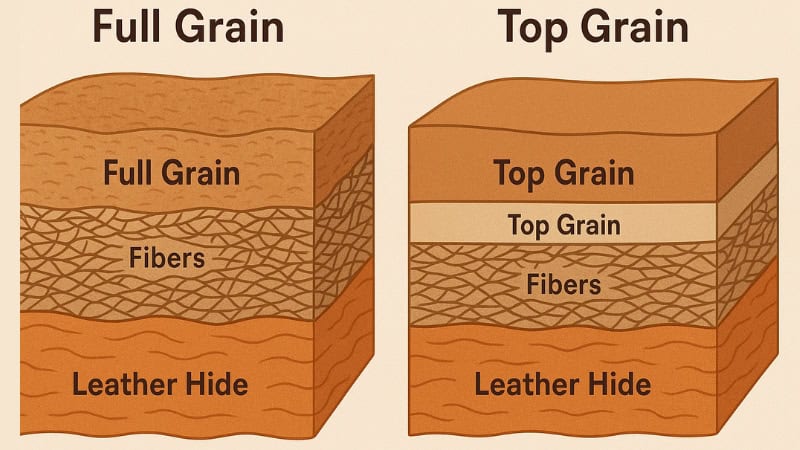
Top Grain vs Full Grain: Key Differences
Although both leather types originate from the same top layer of the hide, their finishing processes lead to dramatically different behaviors over time. Understanding these contrasts is key to identifying which leather matches your expectations for durability, appearance, and aging.
This comparison breaks down the most important distinctions shoppers should know.
Strength & Durability
- Full Grain: Because it retains the original grain structure, full grain leather holds tightly packed fibers that make it exceptionally tough. It resists stretching, tearing, and wearing down even under heavy, daily use. This strength is why it’s often found in premium boots, saddlery, and outdoor gear.
- Top Grain: Sanding the surface weakens the fiber structure slightly by removing the densest top layer. While still very durable, top grain isn’t quite as rugged as full grain. It’s ideal for items that require both strength and flexibility, as well as aesthetic uniformity.
Appearance
- Full Grain: Every natural mark remains visible—scars, grain variations, and texture inconsistencies. This gives products a raw, organic look that feels authentic and premium. People who appreciate character and uniqueness tend to prefer this natural beauty.
- Top Grain: The corrected surface produces a smooth, flawless appearance that appeals to modern tastes. Its uniformity makes it a go-to choice for luxury fashion items, refined furniture, and minimalistic designs where consistency matters.
Aging
- Full Grain: Ages in a highly expressive way, absorbing oils and sunlight to develop a rich patina. This deepened coloration and sheen transform the item over time, making it more beautiful and personal with every use.
- Top Grain: Its protective coating prevents deep patina development. While it doesn’t “evolve” as dramatically, it maintains its original finish longer, making it appealing for people who prefer stability over change in appearance.
Price
- Full Grain: Costs more because only the best hides with minimal defects qualify. Its durability and patina potential also add long-term value, making it an investment material.
- Top Grain: More accessible in price since corrected hides can still be used. It offers a balance between quality and affordability, especially for style-driven purchases.
Understanding these expanded differences helps you evaluate not just how each leather looks, but also how it behaves, ages, and performs—setting the stage for choosing the one that fits your lifestyle best.
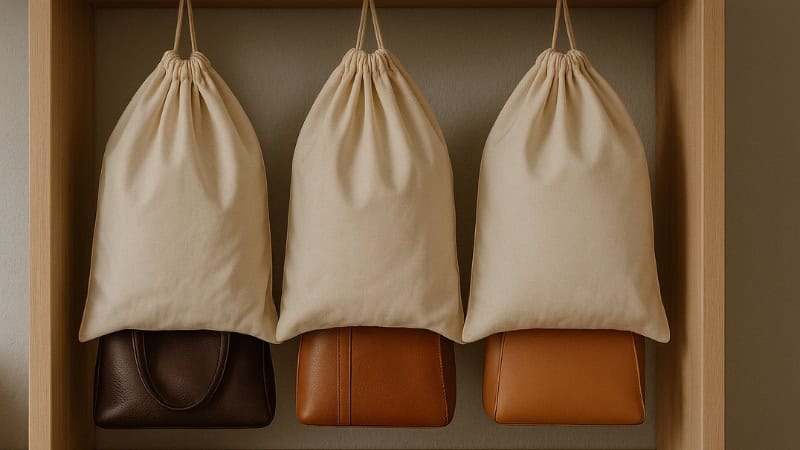
Which Leather Should You Choose?
Choosing between full grain and top grain leather comes down to your priorities—durability, aesthetics, price, and long-term expectations. Each type shines in different situations, so the “best” choice depends entirely on how and where you’ll use the item.
These expanded points will help you make a confident, thoughtful decision.
Choose Full Grain If You Want:
- Maximum Longevity: Full grain can last decades with proper care, often outliving the items themselves. If you want leather that becomes more resilient with age, this is the closest you’ll get to heirloom durability.
- Natural Markings: Every piece tells a story through its unique scars and grain patterns. If you appreciate authenticity and individuality, full grain’s natural surface delivers unmatched character.
- Aging with Character: The patina process is slow and beautiful—deepening tones, smoothing textures, and creating a warm glow over the years. If you want leather that improves with time, full-grain leather fits perfectly.
- Heirloom-Quality Goods: Ideal for wallets, belts, bags, and boots you intend to use daily and possibly pass down. The material withstands stress, making it suitable for hard-wearing personal staples.
Choose Top Grain If You Prefer:
- Clean, Uniform Appearance: If visual consistency matters to you, top grain’s smoothness offers a sleek aesthetic that never looks overly rugged or rustic.
- Softness and Flexibility: Since the leather is slightly thinner and treated, it breaks in quickly and feels comfortable right away—perfect for jackets and fashion accessories.
- Lower Cost Without Sacrificing Quality: You still get genuine leather durability at a more approachable price. This makes top grain ideal for buyers balancing quality with budget.
- Modern, Lightweight Goods: Its refined finish suits contemporary designs, streamlined bags, and polished home décor
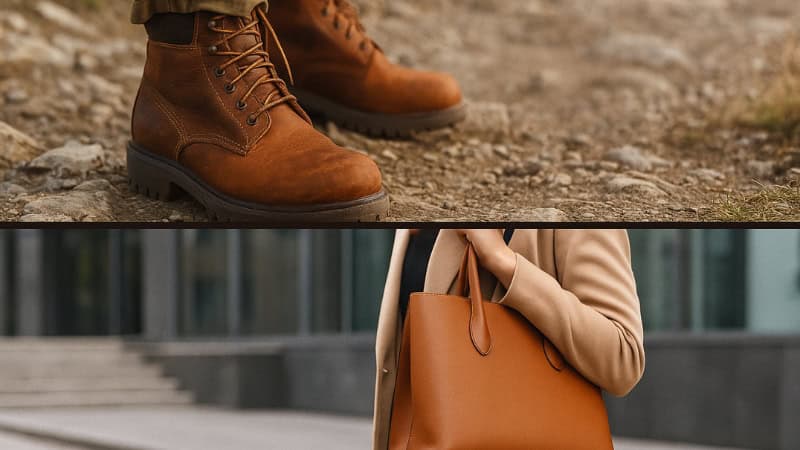
Lifestyle Considerations
- Heavy, everyday use: Choose full grain for its toughness and ability to age gracefully.
- Style-first purchases: Top grain provides the sleek, elegant look modern buyers love.
- Budget-conscious decisions: Top grain delivers quality and aesthetics without the premium price tag.
- Collectors or enthusiasts: Full grain offers long-term beauty that leather lovers deeply appreciate.
With a clear understanding of your priorities and how each leather performs, you’re now prepared to choose with confidence and move forward into caring for your investment.
FAQs – Frequently Asked Questions
1. Is full-grain leather better than top grain?
Full grain is considered better for durability, authenticity, and long-term aging thanks to its unaltered surface. It gains character through use, which many people value highly. Top grain, however, is better for those who prioritize uniform appearance. Both are excellent, but suited to different audiences.
2. Why is full grain more expensive?
It requires higher-quality hides with fewer defects, making them rarer and more valuable. The minimal processing adds to production cost. Full grain also offers decades of durability, which raises its overall worth. You’re paying for performance and natural beauty.
3. Does top grain leather crack or peel?
Top grain doesn’t peel like artificial leather but can crack if neglected. Its protective coating helps prevent surface damage. Conditioning keeps the fibers flexible and healthy. Over time, the finish may soften, giving it a more natural look.
4. How do I identify full-grain leather?
Look for slight imperfections, variations in color, and a natural texture. The hide should feel substantial, not overly smooth or plasticky. Product labels often specify the leather grade. A combination of touch and visual cues usually gives it away.
5. Which leather is best for furniture?
Top grain is a popular furniture choice because of its smooth finish and resistance to stains. It gives interiors a sleek, cohesive look. Full grain can also be used, but it leans more rustic and rugged. Your decor style typically determines the better option.
6. Does full-grain leather get softer?
Yes, full-grain softens beautifully with regular use. Natural oils from your hands and the environment help break it in. This softening enhances comfort and character. The result is a truly personalized feel over time.
7. Is top grain leather real leather?
Absolutely—top grain comes from the same hide as full grain. The difference lies only in the surface correction process. It remains strong, durable, and genuine. It’s simply tailored for a cleaner aesthetic.
Final Take: Choose the Leather That Matches Your Life
Choosing between full grain and top grain becomes easier once you understand their strengths. Full grain offers unmatched durability and evolves with age into something richer and more personal.
Top grain brings modern elegance, softness, and practical resistance to everyday wear—all at a friendlier price.
Both are excellent choices, and the best one is the leather that aligns with your lifestyle, budget, and personal taste. Now you’re ready to shop with clarity and confidence.
