
Leather has long been valued for its durability, comfort, and timeless appeal. From jackets and bags to furniture and footwear, it plays a central role in both fashion and function. Yet not all leather is created equal, and the source of the hide makes a noticeable difference.
Sheep leather and cow leather are two of the most commonly used types, each bringing distinct qualities to the table. While one is known for softness and luxury, the other stands out for strength and long-term durability.
Choosing between them can feel confusing without clear guidance. This article breaks down their differences in a practical, easy-to-understand way, helping you decide which leather truly fits your needs as we move into a closer comparison.
What Is Sheep Leather?
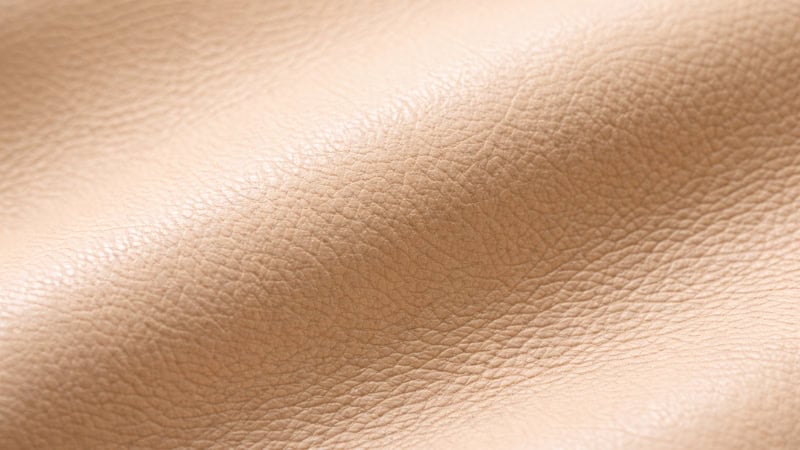
Sheep leather comes from the hide of sheep and lambs and is widely appreciated for its softness and refined feel. It is commonly associated with luxury fashion items and lightweight leather goods.
- Naturally soft and supple: Sheep leather has fine fibers, which give it a smooth, almost buttery texture that feels gentle against the skin. This makes it ideal for clothing and accessories worn close to the body.
- Thin yet flexible structure: Compared to other leathers, sheep leather is thinner, allowing for greater flexibility without stiffness. This quality enhances comfort but slightly reduces ruggedness.
- Common varieties: Lambskin is the most popular type, known for its premium look, while shearling includes wool attached for insulation.
- Typical applications: You’ll often find sheep leather in jackets, gloves, wallets, and interior linings where softness matters more than toughness.
Understanding sheep leather’s delicate nature helps set expectations, which naturally leads us to explore cow leather as a sturdier alternative.
What Is Cow Leather?
Cow leather is one of the most widely used leathers in the world due to its strength and versatility. It is favored for products that need to endure frequent use and heavier wear.
- Thick and durable hide: Cow leather fibers are dense and strong, making the material resistant to tearing and abrasion. This durability makes it suitable for long-term use.
- Structured appearance: Compared to sheep leather, cow leather holds its shape better, giving products a more defined and robust look.
- Multiple grades available: Full-grain, top-grain, and corrected-grain cow leather offer different balances of durability, aesthetics, and cost.
- Wide range of uses: Cow leather is commonly used for bags, belts, shoes, furniture, and upholstery where strength is essential.
With a clear sense of what each leather is, it’s time to compare how they actually feel in everyday use.
Texture and Feel Comparison
The tactile experience of leather plays a major role in how it’s perceived and used. Sheep and cow leather differ significantly in this area.
- Softness: Sheep leather feels noticeably softer and smoother, often associated with luxury and comfort. Cow leather feels firmer and more substantial to the touch.
- Grain appearance: Sheep leather has a finer, more uniform grain, while cow leather displays a more pronounced natural texture.
- Comfort factor: For wearable items like jackets or gloves, sheep leather offers immediate comfort, whereas cow leather may require a break-in period.
- Luxury perception: Sheep leather is often seen as more elegant, while cow leather conveys durability and practicality.
Texture sets expectations, but durability is what determines how long leather truly lasts.

Durability and Strength
Durability is a deciding factor for many buyers, especially for everyday or heavy-use items. This is where cow leather tends to shine.
- Wear resistance: Cow leather withstands scratches, pressure, and repeated use better than sheep leather.
- Longevity: With proper care, cow leather products can last decades, making them a long-term investment.
- Stretching behavior: Sheep leather is more prone to stretching and losing shape over time, particularly in high-stress areas.
- Usage suitability: Cow leather suits rugged applications, while sheep leather works best for lighter, occasional use.
Durability often goes hand in hand with thickness and weight, which we’ll explore next.
Weight and Thickness
The physical weight of leather affects comfort, portability, and design choices. Sheep and cow leather differ noticeably here.
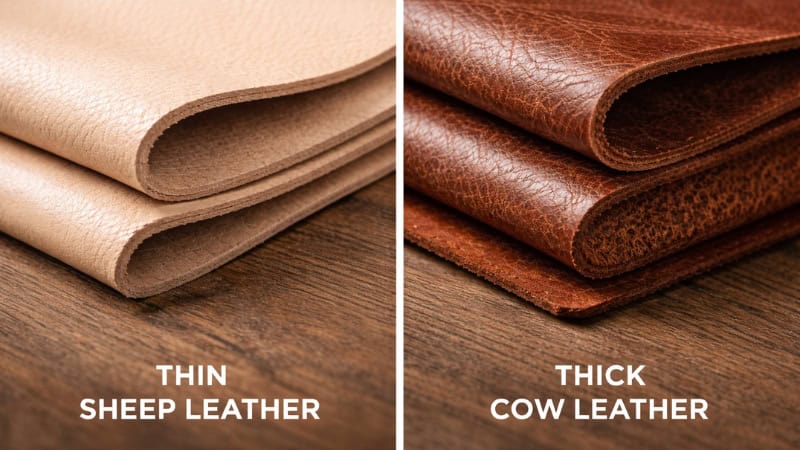
- Sheep leather: Lightweight and thin, making it ideal for garments and accessories that need flexibility and ease of movement.
- Cow leather: Heavier and thicker, offering structure and resilience but adding noticeable weight.
- Design impact: Lighter leather allows for sleek silhouettes, while thicker leather supports rigid designs.
- User preference: Comfort-oriented users often prefer sheep leather, while durability-focused buyers choose cow leather.
Weight influences comfort, but breathability plays an equally important role in everyday usability.
Breathability and Comfort
Comfort isn’t just about softness—it also depends on how leather interacts with heat and moisture.
- Air circulation: Sheep leather is more breathable due to its fine fiber structure, making it suitable for clothing.
- Moisture handling: It absorbs moisture well but can be sensitive to excess humidity.
- Temperature adaptability: Sheep leather feels comfortable in moderate climates, while cow leather performs better across varied conditions.
- Extended wear: For long periods of use, sheep leather feels less restrictive, especially in apparel.
Comfort leads naturally to questions about upkeep and long-term maintenance.
Maintenance and Care
Proper care can significantly extend the life of any leather product, but maintenance needs vary by type.
- Cleaning: Sheep leather requires gentle cleaning products to avoid damage. Cow leather is more forgiving and easier to clean.
- Scratch resistance: Cow leather resists scratches better, while sheep leather shows marks more easily.
- Aging process: Cow leather develops a rich patina over time, while sheep leather maintains a smoother appearance.
- Repairability: Thicker cow leather is easier to repair and restore.
Maintenance often ties into cost, which brings us to pricing differences.
Price and Availability
Price plays a major role in purchasing decisions, and leather type directly influences cost.
- Sheep leather pricing: Typically more expensive due to its softness and luxury appeal.
- Cow leather pricing: Widely available and offered across a broad price range.
- Value for money: Cow leather often delivers better long-term value for everyday items.
- Market availability: Cow leather products are easier to find in varied designs and sizes.
Beyond price, ethical and environmental considerations also matter to many buyers.
Sustainability and Ethical Considerations
Leather production raises important questions about environmental impact and ethics.
- Byproduct sourcing: Both leathers are byproducts of the meat industry, reducing material waste.
- Longevity factor: Cow leather’s durability may reduce replacement frequency, lowering long-term environmental impact.
- Tanning processes: Environmental impact depends more on tanning methods than on animal type.
- Ethical sourcing: Responsible brands prioritize transparency and humane practices.
With all factors considered, a quick summary helps clarify strengths and weaknesses.
Pros and Cons Summary
Understanding trade-offs makes decision-making easier.
Sheep Leather
- Pros: Extremely soft, lightweight, luxurious feel.
- Cons: Less durable, higher maintenance needs.
Cow Leather
- Pros: Strong, long-lasting, versatile
These contrasts naturally lead to choosing the right leather for specific uses.
Best Uses: Which Should You Choose?
Choosing between sheep and cow leather depends largely on how you plan to use it.
- Fashion apparel: Sheep leather excels in jackets, gloves, and luxury wear.
- Accessories: Cow leather suits bags, belts, and wallets needing durability.
- Furniture: Cow leather is better for sofas and chairs due to wear resistance.
- Lifestyle needs: Comfort-focused users may prefer sheep leather, while practical users lean toward cow leather.
For quick reference, a comparison table helps consolidate these points.
Sheep Leather vs Cow Leather: Quick Comparison
A direct comparison highlights how these two leathers differ in performance, feel, and practicality. Rather than one being “better,” each excels in specific areas.
- Softness: Sheep leather is noticeably softer and smoother, while cow leather feels firmer and more robust.
- Durability: Cow leather clearly outperforms sheep leather in resistance to wear, scratches, and long-term use.
- Weight: Sheep leather is lightweight and easy to wear; cow leather is heavier but more protective.
- Appearance: Sheep leather offers a refined, luxury finish, whereas cow leather delivers a bold, rugged aesthetic.
- Maintenance: Cow leather is easier to clean and maintain; sheep leather demands more careful upkeep.
- Best use cases: Sheep leather suits fashion apparel and premium accessories, while cow leather is ideal for daily-use items and furniture.
With these pointed differences in mind, choosing the right leather becomes a matter of matching material performance to your specific needs.
FAQs
Is sheep leather real leather?
Yes, sheep leather is 100% genuine leather made from sheep hide. It is commonly used in luxury fashion and high-end accessories.
Which leather is better for jackets?
Sheep leather is preferred for jackets due to its softness and lightweight feel. Cow leather is also used but feels heavier and more structured. The choice often depends on whether comfort or durability is the priority.
Does sheep leather last as long as cow leather?
Sheep leather is less durable and may wear out faster with heavy use. Cow leather typically lasts much longer under similar conditions. This makes cow leather better suited for items exposed to daily stress.
Is cow leather harder to maintain?
Cow leather is generally easier to maintain because it resists scratches and stains better. Sheep leather requires gentler care to preserve its surface. Regular conditioning helps extend the life of both types.
Which leather is more expensive?
Sheep leather is often more expensive due to its luxurious texture. Cow leather offers more budget-friendly options across quality levels. Pricing also varies based on tanning methods and finishing.
Can sheep leather be used for bags?
Yes, but it’s better suited for small or occasional-use bags. Cow leather is a stronger choice for everyday or heavy-load bags. Using sheep leather bags carefully helps maintain their shape and finish.
Final Verdict: Soft Luxury or Lasting Strength?
Choosing between sheep leather and cow leather ultimately comes down to purpose and preference. Sheep leather offers unmatched softness and elegance, making it perfect for fashion-forward and comfort-driven items.
Cow leather, on the other hand, delivers strength, reliability, and long-term value. By understanding how each leather performs in real-world use, you can confidently invest in the option that best matches your lifestyle and expectations.
