
Choosing between PU leather and genuine leather has become increasingly common as both materials appear across fashion, furniture, and accessories. At first glance, they can look quite similar, which often leads to confusion for buyers trying to make an informed decision.
However, the differences go far beyond appearance. From durability and comfort to cost and environmental impact, each material offers unique advantages and drawbacks.
This article breaks down PU leather vs leather in detail, helping you understand how they’re made, how they perform over time, and which option best suits your needs.
What Is Genuine Leather?
Genuine leather is a natural material made from animal hides, valued for its durability and timeless appeal. It has been used for centuries across clothing, footwear, and upholstery due to its strength and comfort.
- Natural origin
Genuine leather is derived from animal hides, most commonly cowhide, which are processed and tanned to prevent decay. This natural composition gives leather its unique grain patterns and breathable structure. - Manufacturing process
The tanning process can involve vegetable-based or chemical treatments, enhancing durability while preserving flexibility. Higher-quality tanning results in leather that ages gracefully instead of deteriorating. - Types of genuine leather
Full-grain and top-grain leather are considered premium, while split and bonded leather are more affordable but less durable. The type greatly affects performance, feel, and price.
Because leather quality varies by type and processing, understanding alternatives like PU leather is the next logical step.

What Is PU Leather?
PU leather, short for polyurethane leather, is a synthetic material designed to mimic the look of real leather. It is widely used as a cost-effective and animal-free alternative.
- Synthetic composition
PU leather is made by applying a polyurethane coating to a fabric base, often polyester or cotton. This creates a smooth, leather-like surface without using animal hide. - Manufacturing advantages
The production process allows for consistent texture, color, and finish, making PU leather easier to standardize at scale. It also avoids many of the natural imperfections found in real leather. - Common applications
PU leather is popular in fashion accessories, budget furniture, and vegan products. Its affordability makes it accessible, especially for trend-driven or short-term use items.
To better evaluate both options, it helps to compare their key characteristics side by side.
Key Differences Between PU Leather and Genuine Leather
Although PU leather and genuine leather can look alike, their performance and longevity differ significantly. Understanding these distinctions helps prevent mismatched expectations.
- Material composition
Genuine leather is natural and porous, while PU leather is fully synthetic. This fundamental difference affects breathability, aging, and environmental impact. - Appearance and aging
Real leather develops a patina over time, enhancing its character. PU leather maintains a uniform appearance but may peel or crack as it ages. - Durability and lifespan
Genuine leather can last decades with proper care, whereas PU leather typically has a shorter lifespan. Frequent use accelerates wear in synthetic materials. - Maintenance needs
Leather requires conditioning to prevent drying, while PU leather only needs basic cleaning. However, PU leather cannot be restored once damaged.
These differences naturally lead to a closer look at the strengths and weaknesses of each material.
Pros and Cons
Genuine Leather
Genuine leather is often seen as a premium material, but it comes with responsibilities alongside its benefits.
- Pros
It is highly durable, breathable, and comfortable over long periods of use. Leather also improves aesthetically as it ages, adding long-term value.
- Cons
The cost is higher compared to synthetic alternatives, and regular maintenance is required. Ethical concerns regarding animal use may also be a factor for some buyers.
For those seeking a lower-cost or animal-free option, PU leather offers a different set of trade-offs.
PU Leather
PU leather appeals to budget-conscious and vegan consumers, but it is not without limitations.
- Pros
It is affordable, easy to clean, and resistant to stains and moisture. PU leather also offers consistent design options and avoids animal-based materials.
- Cons
It lacks breathability and comfort over long use and tends to deteriorate faster. Once peeling or cracking begins, repair is rarely possible.
With both materials clearly defined, deciding between them depends on personal priorities and use cases.
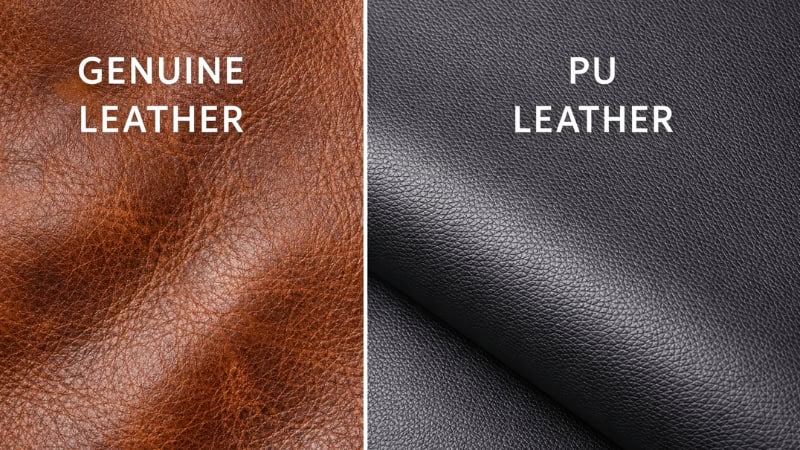
PU Leather vs Leather: Side-by-Side Comparison Table
To make the differences easier to understand at a glance, the table below compares PU leather and genuine leather across the most important factors buyers consider. This quick comparison helps readers evaluate both materials without needing to reread detailed explanations.
| Feature | PU Leather | Genuine Leather |
| Material Source | Synthetic polyurethane coating | Natural animal hide |
| Appearance | Uniform and consistent | Natural grain with variations |
| Aging | Peels or cracks over time | Develops a rich patina |
| Durability | Moderate, short-to-medium lifespan | High, can last decades |
| Breathability | Low | High |
| Comfort | Less comfortable for long use | Softens and improves with use |
| Maintenance | Easy cleaning, no conditioning | Requires conditioning and care |
| Repairability | Difficult or impossible | Can often be repaired |
| Cost | Budget-friendly | More expensive |
| Environmental Impact | Plastic-based, non-biodegradable | Biodegradable but resource-intensive |
| Best For | Trend-based, short-term use | Long-term investment items |
With this comparison in mind, it becomes easier to evaluate the specific advantages and drawbacks of each material individually, which we’ll explore next.
Which One Should You Choose?
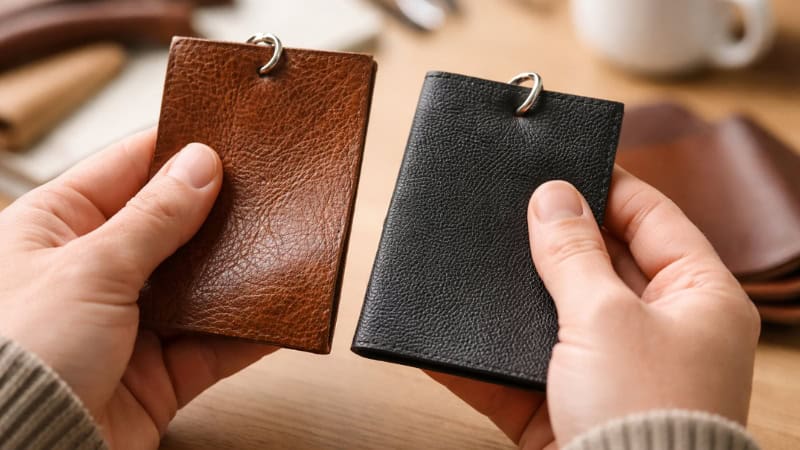
The right choice between PU leather and genuine leather depends on how and where the product will be used. There is no one-size-fits-all answer.
- For long-term investment
Genuine leather is ideal for items like jackets, shoes, and furniture meant to last years or decades. - For affordability and trends
PU leather works well for fashion-forward pieces or items that may be replaced frequently. - For ethical considerations
Vegan consumers often prefer PU leather, though environmental impact should still be considered.
Once you’ve chosen, it’s also helpful to clear up some common misconceptions.
Common Myths About PU Leather and Genuine Leather
Misunderstandings around these materials often lead to unrealistic expectations.
- “PU leather is the same as real leather”
While it may look similar, the materials behave very differently over time. - “All genuine leather is high quality”
Leather quality varies widely depending on type and processing. - “Synthetic leather is always eco-friendly”
PU leather avoids animal use but is not biodegradable and involves plastics.
To address lingering doubts, the following FAQs cover the most common questions buyers ask.
Frequently Asked Questions – FAQs
Is PU leather real leather?
No, PU leather is entirely synthetic and does not come from animal hide. It is designed to resemble leather in appearance only.
Does genuine leather last longer than PU leather?
Yes, genuine leather typically lasts much longer with proper care. PU leather has a limited lifespan and may peel or crack over time.
Is PU leather waterproof?
PU leather is more water-resistant than genuine leather. However, prolonged exposure to moisture can still cause damage to its surface.
Which is better for furniture, PU leather or real leather?
Genuine leather is better for long-term furniture use due to durability and comfort. PU leather suits budget furniture or low-use areas.
Is genuine leather bad for the environment?
Leather production has environmental impacts related to tanning and livestock. However, its long lifespan can offset frequent replacements.
Does PU leather crack in cold weather?
Yes, PU leather can stiffen and crack in colder temperatures. Genuine leather remains more flexible under similar conditions.
Which material is better for daily-use bags?
Genuine leather is better for daily use because it withstands wear and improves with age. PU leather may degrade faster with constant handling.
Final Verdict: Choosing What Truly Fits Your Lifestyle
When it comes to PU leather vs leather, the better option depends on your priorities rather than trends. Genuine leather stands out for durability, comfort, and long-term value, making it ideal for investment pieces. PU leather, on the other hand, offers affordability and accessibility, especially for short-term or ethical preferences.
Understanding how each material performs helps you buy smarter and avoid disappointment. By aligning your choice with usage, budget, and values, you ensure satisfaction long after the purchase is made.