
Leatherworking is a craft where precision, material knowledge, and proper technique determine the final quality of the product. Professional leather artisans rely on refined tools, durable materials, and disciplined workflows to produce functional, long-lasting items. Whether crafting wallets, belts, bags, or saddlery, every step—from selecting the right leather to finishing the edges—affects durability and aesthetics.
Understanding the fundamentals used by experienced leatherworkers can significantly improve craftsmanship. This guide explores professional leatherworking tips, including selecting the right leather types, using essential tools correctly, and applying cutting and stitching techniques that professionals rely on. By mastering these principles, craftsmen can produce leather goods that maintain structural integrity, visual appeal, and longevity.
Understanding Leather Types and Their Professional Uses
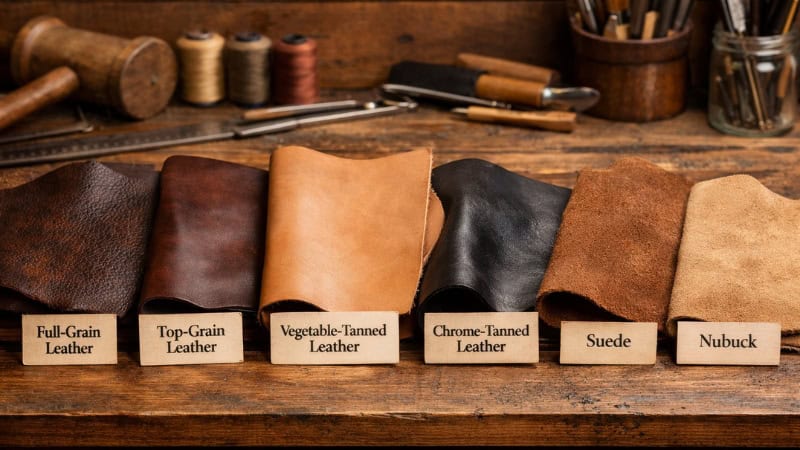
Before starting any leatherworking project, professionals evaluate the type, grade, and tanning process of the leather. Different leathers behave differently during cutting, stitching, burnishing, and conditioning. Selecting the correct leather ensures durability, ease of work, and a better finished product.
Full-grain leather is widely considered the highest quality because it retains the hide’s natural grain layer. This makes it extremely durable and ideal for premium items such as belts, briefcases, and saddlery. Professionals prefer full-grain leather for projects that require longevity and structural strength.
Top-grain leather is lightly sanded to remove imperfections, creating a smoother, more uniform surface. It is commonly used in handbags, fashion accessories, and upholstery because of its refined appearance.
Vegetable-tanned leather is highly valued in traditional leatherworking. The natural tanning process makes it firm, moldable, and perfect for tooling, carving, and hand-stitched goods such as wallets and holsters.
Chrome-tanned leather, on the other hand, is softer and more flexible. It is often used for garments, soft bags, and upholstery where flexibility matters more than rigidity.
Materials like suede and nubuck offer a textured finish but require additional care and maintenance. Professional leatherworkers carefully match the leather type to the intended product to ensure durability and aesthetic consistency.
Essential Professional Leatherworking Tools
Professional leatherworking relies heavily on specialized tools that deliver accuracy and consistency. While beginners often start with basic equipment, experienced artisans rely on refined tools that improve efficiency and craftsmanship.
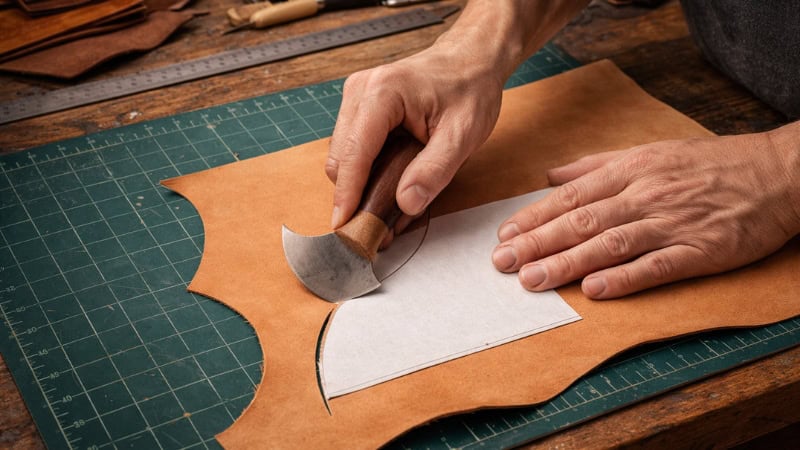
A head knife is one of the most versatile cutting tools in leatherworking. Its curved blade allows smooth, controlled cuts when shaping leather patterns. Many professionals use it for trimming edges and cutting complex curves.
The skiving knife is used to thin leather edges before folding or stitching. Proper skiving helps reduce seam bulk and improves the final appearance of products like wallets and cardholders.
For stitching preparation, leatherworkers commonly use pricking irons or diamond stitching chisels. These tools mark or punch spaced holes evenly, ensuring consistent stitch alignment throughout the project.
A stitching groover is used to carve a shallow groove along the stitch line. This technique protects the thread from abrasion and improves the durability of hand-stitched leather goods.
Edge finishing tools are equally important. An edge beveler removes sharp corners from cut edges, while a burnishing tool smooths and polishes the edges to create a professional finish.
Many artisans also rely on a stitching pony, a clamp that holds leather pieces securely during hand stitching. Combined with a wooden or poly mallet, these tools help maintain control and precision during detailed work.
Maintaining sharp blades and properly calibrated tools is essential for consistent professional results.
Precision Cutting Techniques Used by Professionals
Accurate cutting is one of the most important foundations of professional leatherworking. Poor cutting leads to uneven edges, misaligned stitching, and wasted material. Experienced leatherworkers focus on grain direction, pattern accuracy, and controlled knife movement to achieve clean, precise cuts.
Leather Grain Orientation
Professional leatherworkers pay close attention to the natural grain direction of the hide before cutting. Leather stretches more across the grain than along it, which can affect the shape and durability of finished items like belts or straps. Aligning patterns with the grain ensures structural strength and reduces distortion during use.
Pattern Tracing and Template Use
Professionals rarely cut leather freehand for structured items. Instead, they rely on acrylic templates, cardboard patterns, or metal guides to trace precise shapes. This approach ensures uniform dimensions across multiple pieces and improves efficiency when producing items such as wallets or bags in batches.
Head Knife Cutting Control
The head knife is favored for its curved blade, which allows fluid cutting motions. Skilled leatherworkers apply steady pressure as they rock the blade through the leather. This method produces smooth edges and minimizes jagged cuts that would later require excessive sanding or trimming.
Preventing Stretch and Edge Distortion
Leather can shift or stretch during cutting if it is not properly secured. Professionals often place the hide on a non-slip cutting mat and apply controlled pressure with the knife rather than pulling the leather. This helps maintain clean edges and consistent pattern dimensions.
Professional Stitching Methods for Durable Leather Goods
Stitching determines the strength and longevity of leather goods. Professional leatherworkers prioritize stitch consistency, thread durability, and proper hole spacing to ensure that seams remain secure under stress.
Saddle Stitching Technique
The saddle stitch is widely regarded as the strongest hand-stitching method in leathercraft. It uses two needles and a single length of waxed thread that passes through each hole from opposite directions. If one stitch breaks, the remaining stitches remain intact, making it more durable than most machine stitches.
Diamond Stitching Chisels for Hole Spacing
Professionals use diamond-shaped stitching chisels or pricking irons to create evenly spaced holes before stitching. These tools ensure consistent spacing and angled holes, producing the characteristic slanted stitch pattern commonly seen in high-quality leather goods.
Thread Selection and Waxing
High-quality threads, such as waxed linen or polyester, are preferred in professional leatherworking. Waxing the thread improves grip, reduces fraying, and helps stitches lock securely within the leather fibers.
Maintaining Even Stitch Tension
Consistent tension is essential for creating straight, balanced stitch lines. Experienced leatherworkers pull each stitch with equal pressure while keeping the thread aligned within the groove. This technique prevents loose seams and ensures a clean professional appearance.
Edge Finishing Techniques for a Professional Look
Edges play a major role in the visual quality of leather goods. Rough or unfinished edges immediately reveal poor craftsmanship, while smooth, polished edges signal professional work. Skilled leatherworkers use beveling, burnishing, and protective finishes to refine edges.
Edge Beveling Process
After cutting leather pieces, professionals use an edge beveler to remove sharp corners. This slight rounding improves comfort, prevents edge fraying, and prepares the leather for the burnishing process.
Burnishing for Smooth Edges
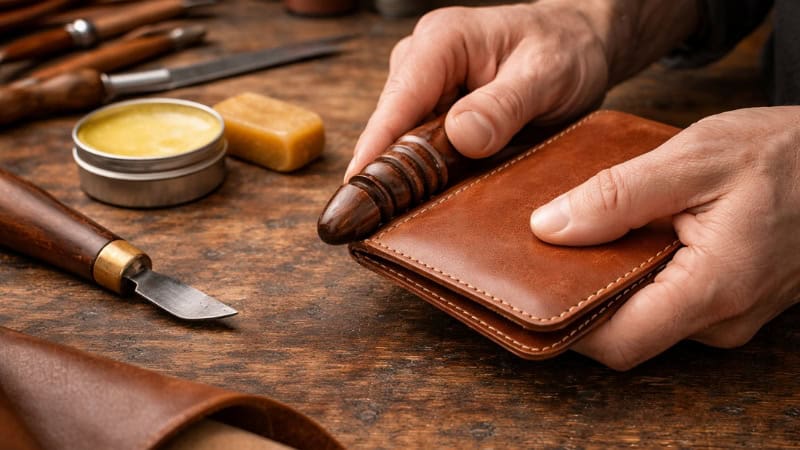
Burnishing compresses and polishes the leather fibers along the edge. Leatherworkers typically use wooden burnishers, canvas cloth, or motorized tools combined with moisture or gum tragacanth. The friction smooths the fibers, producing a sleek, glossy edge.
Recommended Read: Can You Use Beeswax on Leather?
Natural Edge Sealing with Beeswax
Beeswax is commonly applied after burnishing to seal and protect the edge. The wax adds a subtle sheen while helping prevent moisture penetration and fiber separation over time.
Edge Paint Finishing
For luxury leather goods, professionals sometimes use specialized edge paint rather than natural burnishing. Edge paint creates a smooth, uniform coating that enhances durability and produces a polished appearance often seen in designer bags and accessories.
Leather Conditioning and Long-Term Maintenance
Proper maintenance ensures that leather goods retain their strength, flexibility, and appearance over time. Even the highest-quality leather—such as full-grain or vegetable-tanned leather—can dry out or crack if not properly cared for. Professional leatherworkers understand that conditioning and storage are just as important as the crafting process itself.
Routine Leather Conditioning
Leather gradually loses natural oils as it ages. Applying leather conditioner periodically helps restore moisture and maintain flexibility. Professionals commonly use products such as leather balm, mink oil, or neatsfoot oil, depending on the leather type.
Cleaning Without Damaging Fibers
Dust, dirt, and moisture can weaken leather fibers. Professionals typically clean leather using a soft cloth or specialized leather cleaner rather than harsh chemicals that may strip natural oils.
Controlled Storage Conditions
Leather should be stored in a cool, dry environment away from direct sunlight. Excessive heat can dry out leather, while humidity can encourage mold growth.
Moisture and Oil Balance
Over-conditioning leather can make it overly soft and weaken its structure. Professional craftsmen apply conditioners sparingly and allow the leather time to absorb the treatment naturally.
Common Leatherworking Mistakes Professionals Avoid
Even experienced craftsmen remain mindful of mistakes that can compromise the quality of leather goods. Professionals follow disciplined practices to avoid common errors that affect durability, appearance, and structural integrity.
- Cutting against the grain, which can weaken structural components like straps and belts
- Using dull blades leads to rough edges and inaccurate cuts
- Over-oiling leather, which softens the fibers and reduces durability
- Uneven stitch spacing, resulting in weak seams and inconsistent aesthetics
- Skipping edge finishing, leaving rough edges prone to fraying
- Using incorrect adhesives, which may fail under stress or moisture
- Ignoring leather thickness during design, creating bulky seams, and poor folds
- Rushing the stitching process, which often causes tension imbalance and crooked stitch lines
Workflow Tips Used by Professional Leatherworkers
Professional leatherworkers maintain organized workflows to improve efficiency and maintain high-quality standards. A structured work process helps reduce material waste, ensures consistency, and improves overall craftsmanship.
- Plan patterns carefully before cutting, ensuring efficient use of the leather hide
- Create reusable templates for commonly produced items like wallets or belts
- Batch similar tasks together, such as cutting multiple pieces before stitching
- Maintain a well-organized workspace, keeping tools easily accessible
- Regularly sharpen knives and blades to maintain cutting precision
- Inspect components before assembly, identifying flaws early in the process
- Test stitches and finishes on scrap leather before applying them to final pieces
- Allow proper drying time for adhesives, conditioners, and finishes
FAQs on Professional Leatherworking
What type of leather is best for professional leatherworking?
Full-grain leather is widely considered the best option for professional leatherworking because it retains the hide’s natural grain. This makes it more durable, breathable, and wear-resistant. Vegetable-tanned leather is also preferred for projects that require tooling, carving, and molding.
What tools are essential for leatherworking beginners and professionals?
Essential leatherworking tools include a head knife, a skiving knife, stitching chisels, a stitching groover, an edge beveler, a burnishing tool, a mallet, and a stitching pony. These tools allow craftsmen to cut leather accurately, create consistent stitching holes, and produce clean, professional edges.
Why is saddle stitching preferred in leatherworking?
Saddle stitching is preferred because it creates stronger seams than machine stitching. The technique uses two needles passing through the same hole from opposite directions, forming a secure stitch. Even if one thread breaks, the rest of the seam remains intact.
How do professionals achieve smooth leather edges?
Professionals achieve smooth edges by beveling, burnishing, and sealing the leather. First, an edge beveler removes sharp corners. Then the edge is burnished using moisture, gum tragacanth, or friction. Finally, beeswax or edge paint may be applied for protection and a polished appearance.
How often should leather be conditioned?
Leather should typically be conditioned every 3–6 months, depending on usage and environmental conditions. Conditioning with leather balm, mink oil, or neatsfoot oil helps restore moisture, prevent cracking, and maintain flexibility.
What common mistakes should beginners avoid in leatherworking?
Beginners should avoid using dull cutting tools, over-oiling leather, cutting against the grain, and rushing the stitching process. Skipping edge finishing and ignoring leather thickness during design can also lead to poor durability and appearance.
Is hand stitching better than machine stitching for leather?
Hand stitching is often stronger and more durable for high-quality leather goods. Techniques like saddle stitching provide better seam integrity compared to most machine stitches. However, machines can be more efficient for large-scale production.
Improve Your Leatherworking Skills Like a Professional
Professional leatherworking is built on a combination of material knowledge, precise technique, and consistent craftsmanship. From selecting the right leather type to applying accurate cutting and stitching methods, every step influences the final durability and appearance of the product. Skilled leatherworkers also understand the importance of proper edge finishing, conditioning, and workflow discipline.
By following professional leatherworking tips—such as using high-quality tools, maintaining consistent stitching, and avoiding common mistakes—craftsmen can significantly improve the quality of their work. With patience, attention to detail, and regular practice, leatherworkers can create products that are both aesthetically refined and built to last for many years.
