
Leather half chaps don’t usually steal the spotlight—but in the saddle, they quietly shape everything. From the way your leg rests against the horse to how confidently you hold your position through transitions, they influence more than most riders initially realize.
In the realm of equestrianism, where subtle cues hold more weight than force, even a minor enhancement in grip or comfort can significantly alter your ride. Leather half chaps step into that space—bridging the gap between casual paddock boots and full riding boots with surprising effectiveness.
Based on my experience working with riders, particularly those rebuilding strength or correcting lower-leg instability, this piece of gear often serves as a pivotal moment. It’s not just about protection; it’s about connection, consistency, and that almost unspoken dialogue between rider and horse.
This guide offers a comprehensive guide to leather half chaps, covering everything from selection and fitting to maintenance and in-depth understanding.
What Are Leather Half Chaps?
When riders first move beyond basic schooling, they often encounter gear that quietly transforms their connection with the horse. Leather half chaps are one of those understated essentials—simple in form, but deeply functional in the saddle.
Leather half chaps are protective leg coverings worn from the ankle to just below the knee, designed to be paired with paddock boots. Think of them as a bridge between casual riding wear and full riding boots—they deliver many of the same benefits without the rigidity or cost of tall boots.
Based on my experience with riders recovering from lower-leg instability, half chaps function almost like a second skin. They stabilize contact points while still allowing the rider to feel the horse’s movement beneath them—something bulky gear often dulls.
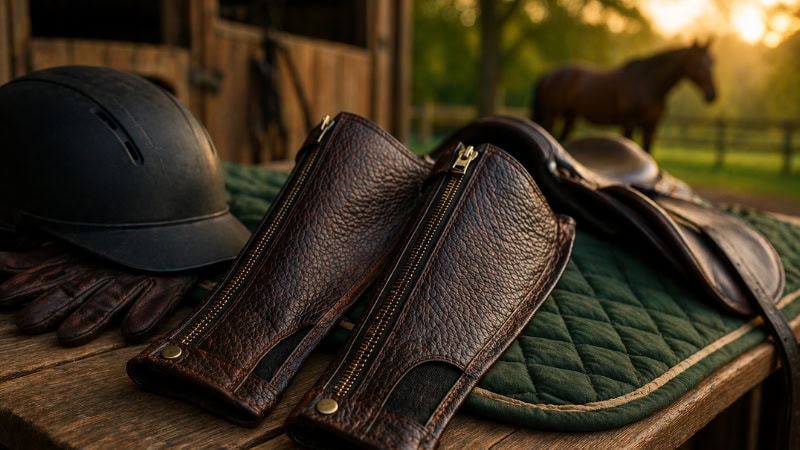
Most leather half chaps are crafted from supple materials like full-grain leather or suede, wrapping snugly around the calf. They typically feature a full-length zipper, elastic panels, and reinforced inner calf zones for durability.
This design isn’t accidental. When you’re riding a horse, every micro-movement of your leg communicates intention. Half chaps refine that communication, reducing friction while enhancing subtle cues.
Benefits of Leather Half Chaps
Once you’ve ridden a few sessions in well-fitted half chaps, going back feels like trying to write with numb fingers. They don’t just protect—they refine your entire riding experience.
Grip & Stability Enhancement
One of the most immediate benefits is improved grip. Leather naturally increases friction between your leg and the saddle, helping you maintain a secure, balanced seat.
For riders in disciplines such as dressage, where precision is paramount, this added stability can make the difference between a clean transition and a muddled cue. I’ve seen riders regain confidence simply by upgrading their lower-leg contact.
Protection from Wear & Fatigue
Repeated riding without proper leg protection often leads to chafing, bruising, and muscle fatigue. Half chaps act as a buffer, absorbing friction from stirrup leathers and saddle flaps.
From a recovery standpoint, this is critical. Riders rehabilitating ankle or calf strain benefit from reduced external stress, allowing muscles to engage efficiently without unnecessary irritation.
Cost-Effective Versatility
Compared to full tall riding boots, leather half-chaps offer a more accessible entry point. Yet, they still perform exceptionally well in disciplines like show jumping and everyday training.
They’re the kind of gear that grows with you—equally at home in a beginner’s lesson or an experienced rider’s daily schooling routine.
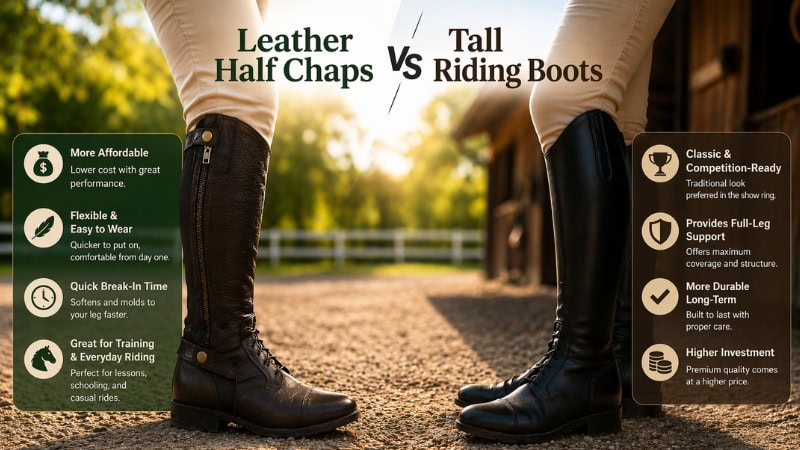
Leather Half Chaps vs Tall Riding Boots
Choosing between half chaps and tall boots isn’t just about style—it’s about how you want to move, feel, and communicate in the saddle. Each option carries its rhythm.
Comfort & Break-In Experience
Leather half chaps are noticeably more forgiving from day one. Unlike tall boots, which often require weeks of breaking in, half chaps mold quickly to your leg.
For riders I’ve coached post-injury, this flexibility is invaluable. It allows gradual adaptation without forcing the leg into a rigid structure too soon.
Performance & Discipline Use
Formal competitions often favor tall boots, particularly tall riding boots, due to their polished appearance and structured support. However, half chaps excel in training environments where comfort and adaptability matter more than presentation.
They offer a closer, more responsive feel—like switching from a stiff dress shoe to a well-worn glove.
Cost & Practicality Comparison
Half chaps are generally more budget-friendly and easier to maintain. They pair with paddock boots, making replacements less costly over time.
Tall boots, while durable, represent a larger upfront investment. For many riders, half chaps serve as a practical stepping stone before committing to high-end footwear.
Types of Leather Used
Not all leather behaves the same in the saddle. The type you choose influences everything—from grip to longevity to how your leg feels after a long ride.
Full-Grain Leather: Durability Meets Precision
Full-grain leather is considered the highest quality. It’s dense, resilient, and develops a rich patina over time.
From a trainer’s lens, this material provides consistent contact. It doesn’t stretch unpredictably, which helps maintain alignment—especially important for riders refining their lower-leg position.
Suede Leather: Soft Grip & Immediate Comfort
Suede offers a softer, more tactile experience. It grips the saddle almost instinctively, making it a favorite among beginners and riders seeking extra security.
However, suede requires more attentive care. It’s like riding on velvet—beautiful and responsive, but less forgiving in harsh conditions.
How to Choose the Right Leather Half Chaps
Choosing the right pair of leather half chaps isn’t just a shopping decision—it’s a fitting ritual. When done right, it feels like your leg has found its natural extension in the saddle.
Fit Comes First: The Rider’s Foundation
The most critical factor is how the chap hugs your leg. A proper fit should feel snug without restricting movement, almost like a firm handshake around your calf. Riders often underestimate how much poor fit can disrupt balance and cue delivery.
Pay close attention to your calf circumference. Measure at the widest part of your calf while wearing your usual riding breeches. Height matters too—the chap should sit just below the knee without pinching when you bend.
Material & Flexibility Balance
Different leathers respond differently under pressure. Full-grain leather offers structure, while softer options adapt quickly. If you’re rebuilding strength after time off, a slightly more flexible chap can reduce fatigue during longer sessions.
Elastic panels are not just a comfort feature—they act like shock absorbers, adjusting to subtle muscle expansion as you ride.
Zipper Quality & Construction Details
A weak zipper is the silent failure point of many chaps. Look for sturdy, well-stitched zippers—preferably with protective flaps that prevent dust and sweat from wearing them down.
From experience, nothing breaks a riding rhythm faster than gear that shifts or loosens mid-session. Reliable construction keeps your focus where it belongs: on the horse.
A Contextual Product Suggestion
If you’re exploring dependable entry-to-mid-range options, the Ariat Close Contour Half Chaps on Amazon are a strong pick. They balance structure and comfort well, especially for riders transitioning from casual riding to more disciplined training.
Sizing & Fit Guide
Sizing half chaps isn’t about guessing—it’s about reading your body like a map. When the fit is right, your leg feels supported, not contained.
Measuring for Accuracy
Start by measuring your calf at its widest point while seated, ensuring your muscles are relaxed. Then measure the height from the floor to the bend of your knee.
These two numbers determine everything. A mismatch here can lead to chaps that either sag like loose fabric or compress like armor—neither of which supports effective riding.
Understanding the “Snug but Not Strangled” Fit
A well-fitted chap should feel tight when you first zip it up. That’s intentional. Leather naturally stretches and molds over time, adapting to your leg’s shape.
As a recovery trainer, I often remind riders: discomfort is a signal, but pressure isn’t always pain. The right amount of compression can actually enhance proprioception—your body’s awareness of position and movement.
Care & Maintenance Tips
Leather half chaps, much like a well-trained horse, respond to consistent care. Neglect them, and they stiffen; maintain them, and they age with grace.
Cleaning Routine for Longevity: After each ride, wipe down your chaps to remove sweat, dust, and arena debris. These elements quietly degrade leather fibers over time.
Apply a quality conditioner like leather conditioner every few weeks to keep the material supple. Dry leather loses its responsiveness—something you’ll feel immediately in the saddle.
Storage & Environmental Awareness: Where you store your chaps matters more than most riders realize. Avoid damp tack rooms or direct sunlight, both of which can warp and crack leather.
Think of leather as living material—it breathes, reacts, and remembers. Treat it accordingly.
Quick Care Tips
- Wipe after every ride to remove sweat and dirt
- Condition regularly to prevent stiffness
- Avoid folding; hang them to maintain shape
- Keep away from heat sources and moisture
Common Mistakes to Avoid
Even experienced riders make subtle mistakes with half chaps—mistakes that quietly affect performance and comfort. Awareness here can save both money and frustration.
Where Riders Go Wrong: One of the most common issues I see is riders choosing aesthetics over fit. A sleek-looking chap means nothing if it compromises your leg position.
Another frequent mistake is ignoring discipline-specific needs. A chap suitable for casual riding may not hold up under the demands of jumping or intensive flatwork.
Mistakes to Watch For
- Choosing the wrong size (too loose or overly tight)
- Ignoring zipper quality and stitching
- Buying based on looks instead of function
- Skipping regular maintenance
- Using one type of chap for all riding disciplines
Each of these errors creates small inefficiencies—like static in a signal. Over time, they add up, affecting not just comfort but also your connection with the horse itself.
Best Leather Half Chaps – Top Picks for Riders
Finding the right pair of leather half chaps can feel like choosing a training partner—you want reliability, comfort, and something that grows with you. The right pick doesn’t just sit on your leg; it becomes part of your riding language.
Performance-Oriented Mid-Range Choice
The Ariat Close Contour Half Chaps are widely trusted for a reason. They strike a balance between structure and flexibility, making them ideal for riders transitioning into more disciplined work.
From a trainer’s perspective, they offer consistent contact without feeling restrictive. The leather softens gradually, allowing your leg to settle into a natural, stable position over time.
Premium Feel & Fit Refinement
If you’re looking for something more refined, Tredstep half chaps are known for their contoured fit and high-quality finish. They tend to fit the calf more precisely, which is particularly advantageous for riders concentrating on precision-heavy disciplines.
There’s a certain elegance to how they move—less like gear, more like an extension of posture and intent.
Beginner-Friendly Versatility
For newer riders or those returning after a break, softer leather options provide immediate comfort and confidence. These models prioritize grip and ease of wear, helping riders focus less on adjustment and more on rhythm.
A well-chosen beginner pair can feel like training wheels—but the kind you never quite want to take off.
FAQs About Leather Half Chaps
Are leather half chaps worth it?
Absolutely. They offer a practical balance between comfort, protection, and cost. For most riders, they deliver nearly the same functional benefits as tall boots without the long break-in period.
Can beginners use half chaps?
Yes—and in many cases, they should. Half chaps provide grip and stability early on, helping beginners develop a more secure lower leg without overwhelming them with stiff equipment.
How long do leather half chaps typically last?
With proper care, a good pair can last several years. Durability depends on usage frequency, leather quality, and maintenance habits. Riders who clean and condition regularly often notice their chaps aging gracefully rather than wearing out quickly.
How tight should half chaps be?
They should feel snug—almost tight—when new. Over time, the leather stretches slightly, molding to your leg. A loose fit from the start often leads to slipping and reduced control.
Do half chaps replace tall boots?
In training, often yes. In formal competition settings, however, tall riding boots are usually preferred for their traditional appearance and structure.
Do leather half chaps improve riding posture?
Yes, indirectly but meaningfully. By enhancing grip and stabilizing your lower leg, they reduce unnecessary movement, allowing your hips and upper body to align more naturally. Over time, this process creates a more balanced and effective riding posture.
Can you wear leather half chaps in all weather conditions?
You can, but performance varies. Leather handles moderate conditions well, but excessive rain or heat can affect flexibility and longevity. In humid or wet environments, consistent care becomes essential to prevent stiffness or damage.
Final Thoughts: Where Comfort Meets Connection
Leather half chaps aren’t just about gear—they’re about feel. The kind of feel that sharpens your cues, steadies your leg, and lets you move in sync rather than in effort.
When chosen thoughtfully and cared for consistently, they become more than protection. They become part of your riding language—quiet, reliable, and always working in the background to support every stride.
