
Vintage leather is often described as timeless, durable, and investment-worthy. But does it actually hold value — or is that just marketing nostalgia?
The answer depends on material quality, brand heritage, condition, and long-term demand. Not all vintage leather appreciates. But high-grade full-grain leather from reputable makers can retain — and sometimes increase — its value over time.
In 2026, rising interest in sustainable fashion, the circular economy, and heritage craftsmanship has renewed attention on vintage leather goods. Buyers are no longer asking only about style. They are asking about lifespan, resale potential, and material integrity.
This guide examines whether vintage leather is truly worth the investment — financially, functionally, and environmentally.
Let’s start with clarity.

What Is Vintage Leather? – Definition & Key Characteristics
Vintage leather refers to leather goods that are at least 20 years old and made from high-quality hides such as full-grain or vegetable-tanned leather. Unlike modern mass-produced leather, vintage pieces often show natural patina, dense fiber structure, and craftsmanship techniques that are less common today.
Not all old leather qualifies as valuable vintage leather.
Vintage vs. Antique vs. Pre-Owned Leather
Understanding terminology prevents overpaying:
- Vintage leather (20+ years old): Often from a previous era of manufacturing, typically with aging characteristics and collectible appeal.
- Antique leather (100+ years old): Rare and usually tied to furniture or historical artifacts.
- Pre-owned leather: Recently used but not necessarily aged or collectible.
🔎 Featured Snippet Summary:
Vintage leather is leather goods at least 20 years old, typically made from full-grain or vegetable-tanned leather, valued for durability, craftsmanship, and natural patina development over time.
Types of Leather Commonly Found in Vintage Pieces
The type of leather determines long-term investment potential.
- Full-Grain Leather
The highest-quality leather. It retains the entire grain layer, making it extremely durable and capable of developing rich patina. - Vegetable-Tanned Leather
Tanned using plant-based tannins. Ages slowly, darkens naturally, and becomes more supple with use. - Bridle Leather
Wax-treated, dense leather originally used for equestrian gear. Known for strength and long-term resilience. - Aniline Leather
Dyed but not heavily coated. Maintains natural texture but requires careful maintenance.
Lower-grade materials like bonded leather or corrected grain leather rarely hold value long term.
Why Vintage Leather Holds Value Over Time
Vintage leather retains — and sometimes increases — its value because of material durability, aesthetic evolution, craftsmanship integrity, and supply scarcity. Unlike synthetic materials, high-quality full-grain leather improves visually and structurally when properly maintained.
Here’s what drives long-term value.
1. Durability of Full-Grain & Vegetable-Tanned Leather
Full-grain leather contains tightly packed collagen fibers, making it structurally stronger than corrected or bonded leather. Vegetable-tanned leather, in particular, ages slowly and strengthens with use.
- High tensile strength
- Resistance to tearing and delamination
- Lifespan of 30–100+ years with care
- Maintains structural integrity over decades
Unlike PU or faux leather, which cracks and peels, vintage full-grain leather softens while retaining shape.
Investment Insight: Durability lowers lifetime replacement cost — a key driver in long-term value retention.
2. Patina Development Increases Aesthetic & Market Value
Patina is the natural sheen and tonal deepening that develops through oxidation, UV exposure, and handling. It signals authenticity and age — two qualities collectors prioritize.
- Creates unique coloration patterns
- Enhances depth and richness of tone
- Cannot be artificially replicated convincingly
- Increases desirability in resale markets
Luxury resale platforms often price well-patinated leather higher than unused pieces because visual maturity signals authenticity.
3. Superior Craftsmanship & Construction Techniques
Many vintage leather goods were built using traditional methods that prioritized longevity over cost efficiency. Manufacturing standards have shifted over the decades, often reducing material thickness and manual finishing.
Common hallmarks of high-value vintage craftsmanship:
- Saddle stitching (hand-stitched seams): Stronger than machine lockstitch; if one stitch breaks, the seam holds.
- Thick-cut full-grain hides: Greater structural support and slower wear.
- Solid brass or nickel hardware: Resistant to corrosion compared to plated alloys.
- Edge burnishing instead of painted edges: More durable over time.
Brands known for construction integrity include:
- Hermès
- Vintage Coach (pre-1994 models)
- Filson
- Saddleback Leather
Authority Signal: Construction quality directly impacts longevity, which directly influences resale value and collector trust.
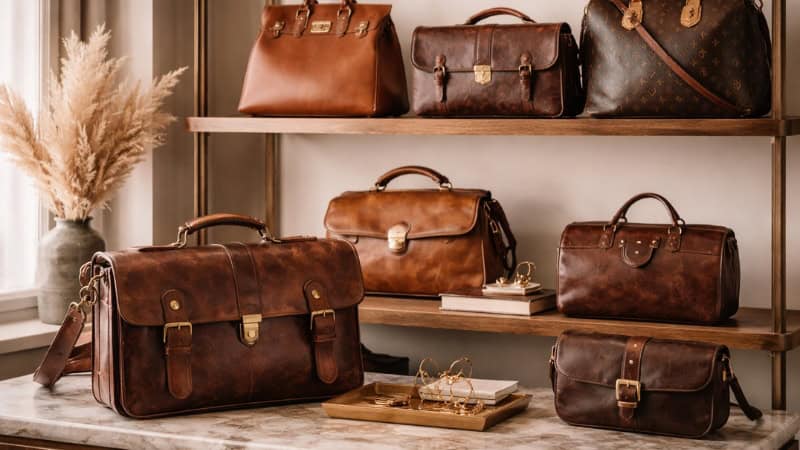
4. Scarcity, Discontinued Models & Collector Demand
Vintage leather benefits from limited supply. Once a production era ends, materials, patterns, and construction methods may never be replicated.
Value increases when:
- A model is discontinued
- Tanning processes change (e.g., older vegetable-tanned formulas)
- Brand manufacturing standards shift
- Collector communities grow
Scarcity economics apply: fixed supply + rising demand = price stability or appreciation.
Resale marketplaces such as The RealReal, Vestiaire Collective, and eBay demonstrate consistent demand for heritage leather goods in good condition.
Market Reality: Vintage leather holds value not just because it is old — but because it is no longer reproducible at the same quality standard.
Bottom Line:
Vintage leather retains value through a combination of material science (fiber density), aesthetic evolution (patina), construction integrity (craftsmanship), and market dynamics (scarcity + brand equity).
Does Vintage Leather Appreciate in Value?
Yes — but selectively. Vintage leather appreciates when material quality, brand equity, scarcity, and condition intersect. Without those factors, it simply ages — and aging alone does not create value.
Appreciation is strongest in categories where collector demand meets proven durability. Luxury handbags, heritage briefcases, aviation jackets, and limited-production leather goods tend to show measurable resale growth. These pieces combine full-grain leather construction, brand recognition, and documented authenticity.
For example, pre-1994 vintage Coach bags made with thick glove-tanned leather have shown consistent resale strength. Similarly, Hermès leather goods and select designer jackets often outperform inflation when preserved well.
However, appreciation is not universal.
Bonded leather furniture, corrected-grain fast-fashion jackets, and poorly stored leather pieces typically depreciate. Surface cracking, hardware corrosion, and amateur repairs reduce resale value significantly.
What drives appreciation:
- Full-grain or vegetable-tanned leather
- Recognized heritage or luxury brand
- Limited or discontinued models
- Strong structural condition
- Verified authenticity
What limits appreciation:
- Low-grade leather (bonded, split leather)
- Trend-based fashion cycles
- Structural damage or dry rot
- Over-restoration altering originality
Investment Reality: Vintage leather appreciates when it is rare, structurally sound, and tied to enduring brand demand — not simply because it is old.
How to Evaluate Vintage Leather Before Buying
Evaluating vintage leather requires balancing sensory inspection with structural assessment. Age adds character — but it can also conceal irreversible damage.
Check Leather Quality
Start with the leather itself. High-quality vintage leather feels dense yet flexible. When gently bent, it should crease naturally without cracking. The grain should show irregular, organic patterns — uniform plastic-like texture often signals corrected or synthetic material.
Inspect Stitching & Hardware
Next, assess structural integrity. Seams should lie flat and tight. Hand-stitched saddle seams are particularly durable and desirable. Hardware — especially brass or solid nickel — should show natural wear, not flaking plating.
Condition determines resale viability. Look closely for:
- Dry rot (crumbly interior or powdery fibers)
- Deep cracking along stress points
- Warping due to improper storage
- Mold odor from high humidity exposure
These issues dramatically affect long-term value.
Authentication for Designer Leather
Authentication becomes critical for designer leather goods. Serial numbers, date codes, brand stamping depth, and stitching patterns should align with documented brand standards. When in doubt, professional authentication services protect against costly mistakes.
Buyer Principle: Cosmetic wear can add character. Structural weakness subtracts value.
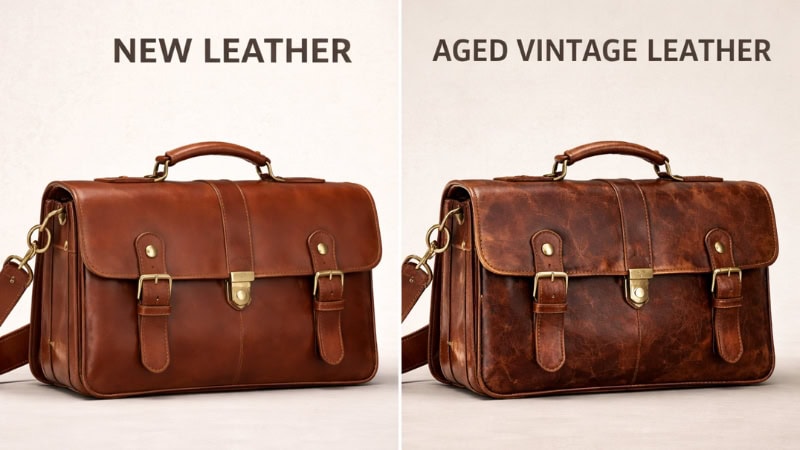
Vintage Leather vs New Leather: Which Is the Better Investment?
Vintage leather is generally a stronger long-term investment when quality and brand are verified. However, new leather may offer warranty protection and modern finishing.
| Factor | Vintage Leather | New Leather |
| Durability | Proven lifespan | Varies widely |
| Patina | Already developed | Requires time |
| Sustainability | Supports circular economy | Higher production impact |
| Depreciation | Stable in luxury | Immediate drop |
If your goal is resale or long-term use, vintage often wins.
If your goal is trend-driven fashion, new leather may be more suitable.
How to Maintain Vintage Leather to Protect Your Investment
Proper maintenance directly influences whether vintage leather appreciates or deteriorates. Leather is organic; it responds to moisture, temperature, and handling.
Cleaning & Conditioning
Conditioning should be deliberate, not excessive. A high-quality lanolin-based or beeswax-based conditioner applied every 6–12 months helps maintain suppleness and prevent drying. Over-conditioning can oversoften the structure and reduce shape retention, particularly in bags.
Cleaning should remain gentle. A damp microfiber cloth removes surface dust. Harsh chemical cleaners or silicone-heavy products accelerate breakdown of natural fibers.
Proper Storage
Storage conditions matter more than most buyers realize. Leather should be kept in breathable dust bags in environments with 40–55% humidity. Plastic covers trap moisture and encourage mold growth. Direct sunlight causes uneven fading and brittleness.
Pro Restoration
When structural issues arise — such as seam failure or hardware loosening — consult a leather specialist. Professional restoration can preserve value, but aggressive refinishing that alters original patina may reduce collector appeal.
Preservation Rule: Maintain structure and authenticity. Avoid cosmetic overcorrection.
Is Vintage Leather a Good Investment for You?
Vintage leather is not a universal investment strategy — it aligns best with specific buyer profiles.
If you value long-term durability, sustainability, and craftsmanship, vintage leather offers practical and financial upside. The cost-per-wear often becomes significantly lower than replacing lower-quality leather goods every few years.
It also appeals to buyers interested in the circular economy. Purchasing vintage leather reduces demand for new tanning processes, lowers carbon footprint, and extends material lifecycle — an increasingly important factor in sustainable fashion.
However, vintage leather requires engagement. It demands periodic conditioning, careful storage, and informed purchasing decisions. If you prefer maintenance-free products or frequently change styles, it may not align with your habits.
Consider vintage leather a strong investment if:
- You prioritize full-grain or vegetable-tanned materials
- You research brand heritage and resale trends
- You intend to keep the item long-term
- You understand authentication risks in luxury markets
It may not be suitable if:
- You follow short-term fashion trends
- You are unwilling to maintain organic materials
- You expect guaranteed financial returns
Decision Framework: Vintage leather performs best as a durability-first, value-retention asset — not a speculative short-term flip.
When chosen carefully, vintage leather combines craftsmanship, sustainability, and potential appreciation into a tangible, usable investment.
FAQs About Investing in Vintage Leather
Is vintage leather better than new leather?
Vintage leather can be better than new leather when it is made from full-grain or vegetable-tanned hides. Older manufacturing standards often used thicker cuts and stronger stitching techniques. However, modern premium leather from reputable brands can match this quality if properly sourced.
Can leather last 100 years?
Yes, high-quality full-grain vegetable-tanned leather can last 50 to 100 years or more with consistent conditioning and controlled storage. Longevity depends heavily on environmental exposure and maintenance practices.
What makes leather valuable?
Leather value is determined by grain quality, tanning method, craftsmanship, brand reputation, rarity, and condition. Full-grain leather with strong structural integrity and recognized brand equity commands the highest resale demand.
Is vintage leather sustainable?
Vintage leather supports sustainability by extending product lifecycle and reducing demand for new raw material production. Buying pre-owned leather contributes to the circular economy and lowers overall environmental impact.
Does leather lose value over time?
Low-quality or poorly maintained leather typically depreciates quickly. In contrast, structurally sound heritage leather goods from established brands can retain or appreciate in value depending on market demand.
Final Verdict: Is Vintage Leather Worth It in 2026?
Vintage leather is worth the investment when quality, authenticity, and condition align. Age alone does not create value — material integrity does.
Full-grain leather, traditional craftsmanship, and limited production models create scarcity and long-term durability. These factors support resale stability and long-term usability.
However, vintage leather is not passive ownership. It requires informed buying, proper maintenance, and realistic expectations about market demand.
For buyers who value durability, sustainability, and heritage craftsmanship, vintage leather remains one of the few fashion materials that can combine practical function with potential value retention.
When chosen carefully, it is not just old leather — it is enduring material capital.
