
If you’re asking whether Saddleback Leather is worth the price, the short answer is: yes—for the right buyer, but not for everyone. The value comes from durability, craftsmanship, and long-term ownership rather than short-term convenience or affordability.
Saddleback Leather Co. products justify their premium price through full-grain leather, overbuilt construction, and a 100-year warranty. However, if you prioritize lightweight design, modern aesthetics, or lower upfront cost, better alternatives exist.
Think in terms of cost per decade, not cost per purchase. A Saddleback briefcase or backpack is built to last 20–40 years, which fundamentally changes how its price should be evaluated.
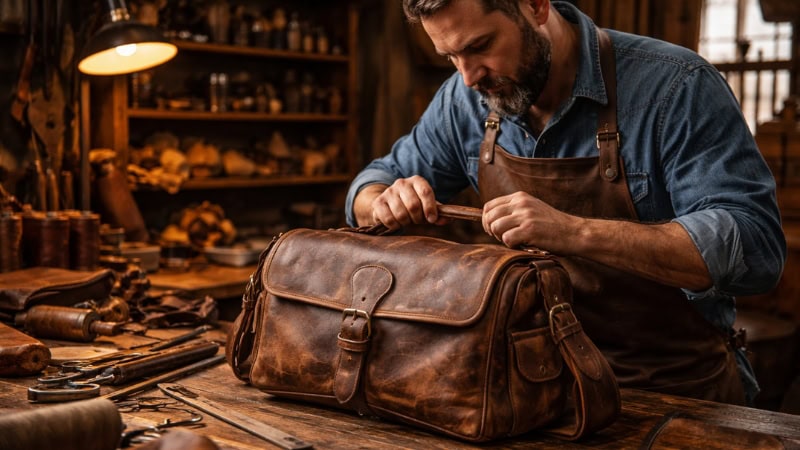
What Is Saddleback Leather? – Brand Context
Saddleback Leather Co. is not just another leather brand—it is built around a durability-first philosophy. Understanding the brand’s origin and positioning is key to evaluating whether its pricing makes sense.
Brand origin and identity: Founded by Dave Munson, Saddleback Leather Co. operates out of Fort Worth, Texas, with production primarily in Mexico. The brand’s messaging—famously summarized as “They’ll fight over it when you’re dead”—centers on longevity and heirloom-quality goods.
Product philosophy: Saddleback focuses on rugged, overbuilt leather goods made from full-grain leather, often sourced from buffalo hides. Instead of chasing trends, the company emphasizes timeless design, minimal breakable parts, and extreme durability.
Within the leather goods market, Saddleback sits at the intersection of luxury and utility. It competes less with fashion brands and more with durability-focused names like Filson, while still appealing to professionals seeking a premium look.
Why Saddleback Is So Expensive
The high price of Saddleback products is not arbitrary—it reflects material choices, construction methods, and a long-term warranty model. To judge whether it’s worth it, you need to understand exactly where the money goes.
Material: Saddleback uses full-grain leather, the highest grade available, which retains the hide’s natural surface. Unlike corrected or top-grain leather, full-grain develops a patina over time, increasing both character and longevity.
Construction: The company intentionally avoids weak points, such as fragile zippers or excessive stitching. Instead, it relies on thick cuts of leather, rivets, and marine-grade polyester thread to create bags that can withstand decades of use.
Manufacturing and build philosophy: Production takes place in carefully controlled workshops in Mexico, where the focus is on consistency rather than mass automation. Each product is designed with the assumption that it will be used heavily, not occasionally.
Warranty: Saddleback’s 100-year warranty is built into the price. This “buy it once” model shifts the cost structure from repeated purchases to a single long-term investment, which is a major reason for the upfront premium.
Product Quality Breakdown – Real Value Analysis
To determine whether Saddleback is truly worth the price, you have to go beyond marketing and examine real-world performance. This comes down to durability, aging, usability, and how the product holds up over decades—not months.
Durability in long-term use
Saddleback bags are intentionally overbuilt, using thick full-grain leather that resists tearing, cracking, and structural failure. Many owners report using the same Saddleback briefcase or backpack for 10–20+ years with minimal degradation, a rarity in the leather goods category.
Aging and patina development
One of the defining traits of Saddleback leather is how it ages. The “Crazy Horse” full-grain leather develops a patina over time, meaning scratches, marks, and wear blend into a richer, more personalized finish rather than looking damaged.
Weight and usability trade-off
The same thick leather that ensures durability also makes Saddleback products noticeably heavy. This is one of the most common complaints, especially for daily commuters or travelers who prioritize lightweight carry.
Repairability and lifespan extension
Because of its simple construction—fewer moving parts, minimal fabric, and robust stitching—Saddleback products are relatively easy to repair. Combined with the lifetime warranty, this significantly extends usable lifespan and reinforces the brand’s long-term value proposition.
Saddleback Leather Pros and Cons
Saddleback Leather stands out for a very specific type of buyer, but that also means it comes with clear trade-offs. Looking at both sides in a structured way makes the decision much easier.
Pros:
- Exceptional durability due to thick full-grain leather and overbuilt construction
- Develops a rich patina over time, improving appearance with age
- 100-year warranty that reinforces long-term value
- Timeless, rugged design that doesn’t go out of style
- Minimal breakable parts, making it highly reliable over decades
Cons:
- High upfront cost compared to most leather bag brands
- Noticeably heavy, especially for daily commuting or travel
- Limited modern features like padded compartments or lightweight materials
- Rugged aesthetic may not suit professional or minimalist preferences
- Break-in period can feel stiff and less comfortable initially
Bottom line of the trade-off: Saddleback maximizes longevity and toughness, but that comes at the expense of weight, flexibility, and immediate comfort.
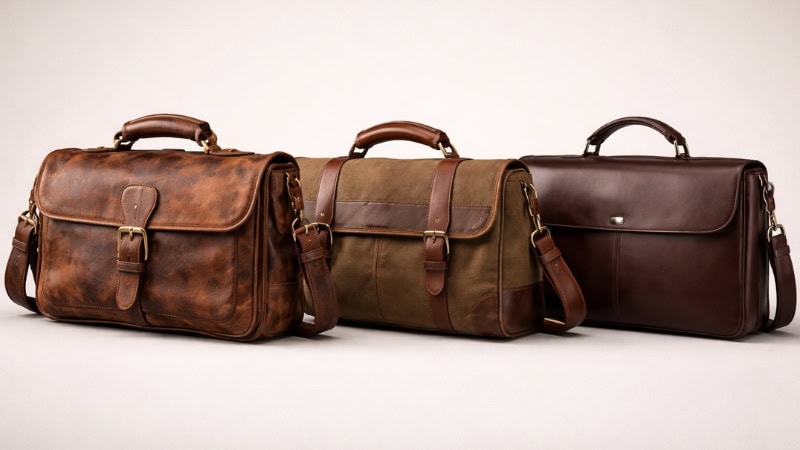
Saddleback vs Competitors – Critical Comparison
Comparing Saddleback to other premium leather and heritage brands is essential to understanding its true value. The differences are less about quality and more about priorities—durability, aesthetics, or versatility.
Saddleback vs Filson (rugged durability vs heritage versatility): Filson is known for combining leather with rugged canvas, resulting in lighter and more flexible bags. Saddleback, by contrast, leans heavily into full-leather construction, making it more durable but also heavier and less adaptable.
Saddleback vs Carl Friedrik (rugged vs modern luxury): Carl Friedrik focuses on minimalist, refined designs suited for modern professionals. Saddleback prioritizes toughness and longevity, which can feel less polished but far more resilient over time.
Saddleback vs Satchel & Page (overbuilt vs refined craftsmanship): Satchel & Page offers high-quality leather goods with a more balanced approach between durability and elegance. Saddleback pushes durability to the extreme, often sacrificing lightness and sleekness in the process.
Positioning takeaway: Saddleback is not necessarily “better” than its competitors—it is simply more extreme in its philosophy. It is the right choice for durability-first buyers, while others may prefer brands that balance performance with comfort or aesthetics.
Who Should Buy Saddleback – Use Case Fit
Saddleback is not designed for everyone, and that’s exactly why it works so well for a specific type of user. The key to deciding if it’s worth the price is understanding whether your usage aligns with its durability-first philosophy.
Ideal buyers (long-term mindset): Saddleback makes the most sense for people who want a single bag that lasts for decades. Professionals, frequent travelers, and EDC (Everyday Carry) enthusiasts who value reliability over convenience will benefit the most from its build quality.
Durability-focused users: If your bag goes through rough handling—daily commutes, heavy loads, or outdoor use—Saddleback’s overbuilt construction becomes a major advantage. It’s particularly suited for users who don’t want to worry about wear and tear.
Who should avoid it: Buyers who prefer lightweight bags, modern organizational features, or frequently changing styles may find Saddleback limiting. If you treat bags as fashion items rather than long-term tools, the investment is harder to justify.
Fit summary: Saddleback is worth it when your priority is longevity and resilience, not versatility or trend alignment.
Real Owner Feedback & Reputation
Beyond brand claims, real-world user feedback provides a clearer picture of Saddleback’s value. Long-term reviews tend to highlight consistent patterns in both praise and criticism.
Positive sentiment trends: Across platforms like Reddit (especially r/BuyItForLife) and YouTube reviews, users frequently emphasize durability and longevity. Many owners report years of use with minimal damage, reinforcing the brand’s core promise.
Common complaints: The most repeated downside is weight, followed by initial stiffness during the break-in period. Some users also mention that the rugged aesthetic feels too bulky or old-school for modern office environments.
Long-term satisfaction: Satisfaction tends to increase over time. As the leather develops patina and the bag proves its durability, owners often feel the initial cost was justified.
Reputation takeaway: Saddleback has built a reputation less on first impressions and more on long-term performance, which aligns strongly with its pricing model.
Is Saddleback Actually Worth the Price? – Final Verdict
After evaluating materials, construction, comparisons, and user feedback, the answer comes down to how you define value. Saddleback is less about affordability and more about long-term return on investment.
Cost-per-use perspective: When spread over 20–30 years, the cost of a Saddleback bag becomes relatively low compared to repeatedly replacing cheaper alternatives. This makes it financially reasonable for long-term users.
Who it’s worth it for: If you want a bag that you can rely on for decades, with minimal maintenance and strong warranty backing, Saddleback is a solid investment. It delivers exactly what it promises—durability and longevity.
Who it’s not for: If you prefer lightweight carry, modern aesthetics, or frequently switching bags, the value proposition weakens significantly. In that case, more versatile or affordable brands may offer better utility.
Final call: Saddleback is worth the price if you think in decades, not years.
FAQs About Saddleback Leather
Is Saddleback full-grain leather?
Yes, Saddleback Leather Co. uses full-grain leather, which is the highest quality grade available. It retains the hide’s natural surface, making it more durable and capable of developing a rich patina over time.
How long do Saddleback bags last?
Saddleback bags are designed to last decades, often 20–40 years or more, with regular use. The brand’s 100-year warranty reflects this long-term durability and repairability.
Where is Saddleback Leather made?
Saddleback products are primarily manufactured in Mexico, with the company headquartered in Fort Worth, Texas. The focus is on controlled craftsmanship rather than mass production.
Is Saddleback better than Filson?
It depends on your priorities. Saddleback offers thicker leather and greater durability, while Filson provides lighter, more versatile bags with a mix of materials, including canvas and leather.
Why are Saddleback bags so heavy?
The weight comes from the use of thick, full-grain leather and reinforced construction. This added weight is a trade-off for increased durability and long-term performance.
Does Saddleback leather improve with age?
Yes, Saddleback’s full-grain leather develops a patina over time. Scratches and marks blend into the surface, giving the bag a more refined, personalized look rather than a worn-out appearance.
Final Takeaway
Saddleback Leather Co. sits in a unique position within the leather goods market—built not for trends, but for longevity. Its pricing only makes sense when viewed through the lens of durability, cost per use, and lifetime ownership.
If your goal is to buy once and use a bag for decades, Saddleback is one of the strongest options available. If your priorities lean toward lightweight design, flexibility, or evolving style, the premium may not feel justified.
