
Refreshing a leather sofa starts with understanding what makes leather age in the first place. Over time, daily use, sunlight, and dust can dull its natural sheen. A proper refresh brings back its softness, richness, and luxurious look.
Your leather couch isn’t just furniture—it’s a long-term investment. When you clean, condition, and protect the leather correctly, you extend its lifespan by years. Whether your sofa looks dry, faded, or slightly cracked, simple at-home steps can restore it beautifully.
Before diving into the cleaning process, it helps to know what your leather needs. Different leather types respond differently to cleaners and conditioners. And once you understand those basics, revitalizing your sofa becomes an easy, enjoyable routine.
These fundamentals prepare you perfectly for the next step—identifying your leather type, which makes every cleaning and conditioning method far more effective.
Understanding Your Leather Type
Knowing your leather type is the foundation of refreshing a leather sofa. Each leather—aniline, semi-aniline, corrected grain, or faux leather—reacts differently to cleaners, conditioners, and moisture. When you identify what you’re working with, you prevent damage and choose the right products from the start.
Aniline leather is the most natural and luxurious, but it also stains easily and needs gentle care. Semi-aniline leather has a protective coating, making it more durable for everyday use. Corrected-grain leather is treated for uniformity and can handle regular cleaning without worry. If you have faux leather, you’ll want to focus more on surface care than deep conditioning, since it isn’t real hide.
- Check the manufacturer tag under the cushions or frame for leather classification.
- Examine the texture: aniline feels soft and untreated; corrected grain looks more uniform.
- Test absorbency carefully: aniline absorbs a drop of water quickly, while coated leather repels it.
Understanding these characteristics ensures you choose the right leather cleaner, conditioner, and protection techniques. With this clarity in hand, you’re ready for the next step—gathering the right tools and materials before you begin refreshing your sofa.
Recommended Read: The Ultimate Leatherworking Tools List for Everyone
Gather Your Tools and Materials
Having the right tools makes refreshing a leather sofa faster, safer, and far more effective. Using proper supplies ensures you clean without scratching, drying, or discoloring the leather. Before you begin, gather everything so the process feels smooth and stress-free.
- Microfiber cloths – Soft, non-abrasive, and perfect for lifting dust.
- Vacuum with brush attachment – Removes crumbs and debris from seams.
- Leather cleaner or a DIY mild soap solution – Essential for removing dirt buildup.
- Leather conditioner or nourishing cream – Restores moisture and prevents cracking.
- Soft-bristled brush – Great for light agitation on stubborn spots.
- Distilled water – Avoids mineral residue when making DIY cleaner.
- Optional: leather repair kit, recoloring balm, or protector spray.
Each item plays a role in deep cleaning, conditioning, repairing, and protecting the leather’s natural finish. With your supplies ready, the entire refreshing process becomes more organized and effective. Now that you’re fully equipped, let’s move into preparing the sofa for cleaning.

Preparing the Sofa
Proper preparation helps you refresh a leather sofa without missing hidden dirt or damaging delicate areas. A quick setup ensures the cleaning process is more efficient and thorough. When your sofa is prepped correctly, both cleaning and conditioning work much better.
- Remove cushions (if detachable) to expose dust-prone creases.
- Vacuum slowly using a soft brush head to avoid scratching the surface.
- Inspect for stains, cracks, and scuffs so you know exactly what needs attention.
- Wipe away loose dust using a dry microfiber cloth before applying any cleaner.
- Test cleaners in a small hidden spot to ensure color safety—especially for aniline leather.
These small prep steps create a clean, safe surface for the upcoming deep-cleaning stage. With your sofa now free of dirt and fully inspected, you’re ready to move into one of the most important phases—cleaning the leather safely and effectively.
Cleaning the Leather
Cleaning is the core step in refreshing a leather sofa because it removes buildup that dulls the finish. Dirt, body oils, and grime accumulate over time and prevent conditioners from absorbing well. A gentle, methodical clean brings instant life back to your leather.

Using a Store-Bought Leather Cleaner
- Apply a small amount to a microfiber cloth, not directly to the sofa.
- Work in gentle circular motions, focusing on one small area at a time.
- Wipe any residue immediately with a clean, dry cloth.
DIY Soap Solution
- Mix a few drops of mild liquid soap with distilled water.
- Lightly dampen a cloth—avoid soaking.
- Clean small sections and dry right after.
General Cleaning Technique
- Avoid harsh scrubbing or excess moisture.
- Keep strokes even for a uniform finish.
- Pay extra attention to hand-rest and head-rest areas.
Once the surface is clean and refreshed, you can move on to handling deeper issues. Next, we’ll look at specific problems like stains and cracks, and how to treat them safely.
Addressing Specific Problems
Treating stains and cracks is essential for fully restoring a leather sofa’s appearance. While general cleaning helps, targeted repair gives your couch that true makeover effect. Different issues require different approaches, so knowing what to use is key.
Removing Stains
- Ink stains: Use a cotton swab dipped in rubbing alcohol—but sparingly.
- Grease marks: Blot with a dry cloth; avoid water to prevent spreading.
- Water stains: Lightly buff with a dry cloth and allow to air dry.
Recommended Read: How to Fix Faux Leather Peeling in 7 Simple Steps
Treating Cracks or Peeling
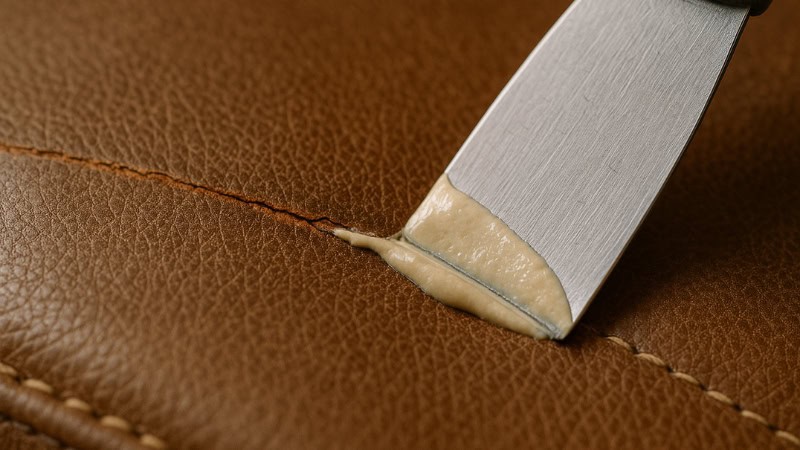
- Use a leather filler for shallow cracks, applying it in thin layers.
- A recoloring balm helps blend faded or patchy areas.
- Deep cracks or peeling bonded leather may require professional repair.
These targeted fixes help your refreshed leather sofa look smoother, newer, and more even. Once the problem spots are handled, you’re ready for the next crucial step—conditioning the leather for long-lasting softness and shine.
Recommended Read: How to Condition Leather the Right Way
Conditioning the Leather
Conditioning restores essential moisture, prevents cracking, and enhances your sofa’s natural sheen. After cleaning, the leather is more absorbent, making this the perfect time to rehydrate it. A well-conditioned sofa feels soft, supple, and luxurious.
- Apply a small amount of leather conditioner to a microfiber cloth.
- Rub in gentle circular motions, allowing it to penetrate the surface.
- Let the sofa absorb the conditioner for several hours or overnight.
- Avoid over-conditioning—too much product can leave a sticky finish.
- Buff lightly with a dry cloth for a clean, natural glow.
This step protects your sofa from future wear and environmental damage. With the leather now nourished, you can choose to enhance it further using optional restoration techniques—leading us into the optional enhancements stage.
Optional Enhancements
Extra finishing touches can take your refreshed leather sofa from “better” to “beautifully restored.” These enhancements help improve color, shine, and long-term protection.
- Leather protector spray: Shields against spills and UV fade.
- Color-restoring balm: Revives faded or uneven areas.
- Light polishing: Adds a subtle shine if you prefer a more polished look.
- Matte finish cream: Ideal for natural-looking, non-glossy leather.
These optional steps give your sofa a professional-level finish and add long-term resilience. Now that your sofa is refreshed and protected, let’s talk about long-term care habits to keep it looking great.
Long-Term Care and Maintenance Tips
Maintaining your leather sofa regularly keeps it looking refreshed for years. Small weekly and monthly habits make a huge difference in preventing dullness, dryness, and discoloration.
- Weekly: Dust with a microfiber cloth to prevent buildup.
- Monthly: Lightly clean high-contact areas like armrests and headrests.
- Avoid sunlight: Direct heat and UV rays cause fading and cracks.
- Use throws or covers in high-use areas for extra protection.
- Trim pets’ nails to avoid accidental scratches.
These habits protect your sofa’s finish and extend the life of your refresh. And if you notice deeper issues that home care can’t fix, you may need professional restoration, which we’ll cover next.
When to Consider Professional Restoration
Some leather issues require professional expertise to avoid worsening the damage. While DIY leather care works for general maintenance, professionals handle deeper structural and cosmetic issues.
- Deep cracks or widespread peeling
- Severe discoloration beyond surface fading
- Sagging cushions or weakened frames
- Water damage or mold
- Extensive scratches on aniline leather
FAQs
1. How often should I refresh a leather sofa?
Every 6–12 months is ideal depending on usage. High-traffic homes may need more frequent care. Regular dusting and monthly wiping help maintain its appearance. Conditioning twice a year prevents drying and cracking.
2. Can I use household cleaners on leather?
Most household cleaners are too harsh for leather. They can strip natural oils, causing dryness and fading. Always use a leather-specific cleaner or a mild soap and distilled water mix. Spot-test any product first.
3. What’s the best way to remove ink from leather?
Ink is tricky, especially on aniline leather. Use rubbing alcohol sparingly and only on the exact spot. Dab, don’t rub, to avoid spreading. If the stain remains, consider a leather specialist.
4. Why does my leather sofa look dull even after cleaning?
Dullness usually means the leather is dry. After cleaning, always apply a conditioner to restore moisture. Buff gently to activate the natural sheen. If it still looks dull, it may need recoloring balm.
5. Can I use olive oil or home oils to condition leather?
No—oils can darken leather permanently and create sticky residue. They also attract dust. Always stick to a professional-grade leather conditioner. It nourishes without damaging the finish.
6. Is it normal for leather to crack over time?
Yes, especially if the leather dries out or sits in sunlight. Regular conditioning prevents most cracking. Small cracks can be repaired at home using filler. Severe cracking needs professional treatment.
7. How long does a refreshed leather sofa stay looking new?
With weekly dusting and biannual conditioning, your refresh can last months. Avoiding heat and sunlight extends that lifespan. Using a leather protector adds even more durability.
A Fresh Finish That Lasts
Refreshing a leather sofa is easier than most people think—and incredibly rewarding. With simple cleaning, conditioning, and protective steps, your sofa regains its natural luxury and softness.
A little regular care goes a long way. Keep up with light maintenance, avoid harsh sunlight, and use quality leather products to preserve your refresh. With consistent attention, your leather sofa will stay beautiful, comfortable, and inviting for many years.
