
Luxury outerwear is more than insulation. It is identity stitched into form.
Among exotic materials, the ostrich leather jacket stands apart for its unmistakable quill texture, supple hand-feel, and enduring strength.
Unlike conventional hides, ostrich skin contains natural oils that enhance flexibility while resisting premature wear.
That rare balance of softness and resilience has positioned it within high-end fashion houses and bespoke ateliers.
Whether shaped into a bold biker silhouette or a refined tailored piece, ostrich leather transforms a jacket from simple clothing into a statement of distinction.
What Makes Ostrich Leather Unique?
Understanding the value of this material begins with its biology. Ostrich leather is derived from the hide of the world’s largest bird, primarily farm-raised in South Africa and select regions of Europe. Its structure differs significantly from cowhide or lambskin, resulting in distinct performance and aesthetics.
The Signature Quill Follicle Pattern
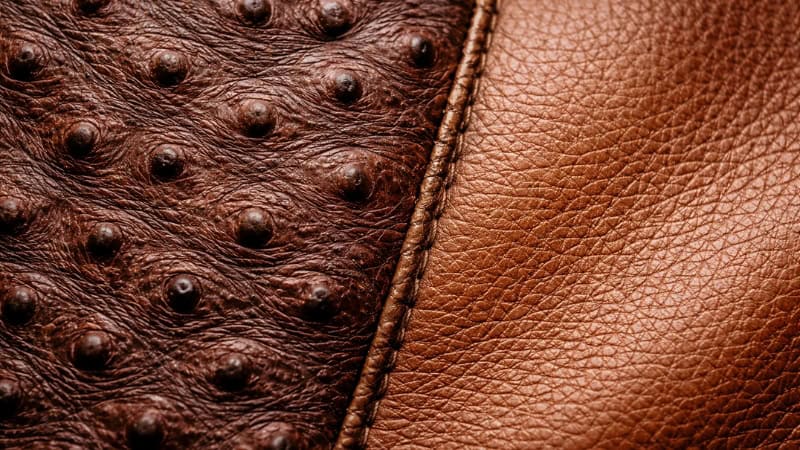
The raised “polka dot” markings seen on premium pieces are quill follicles — the points where feathers once grew. These natural bumps are not embossed; they are organic features formed during the bird’s development.
Full quill sections, typically taken from the central back area, are the most prized because the follicles are evenly distributed and symmetrical. This pattern gives every jacket a unique fingerprint. No two panels are identical, which enhances exclusivity and resale appeal.
For collectors and luxury buyers, the visual texture alone justifies the investment.
Exceptional Softness and Flexibility
One of the most remarkable qualities of ostrich leather is its buttery suppleness. The hide contains a higher concentration of natural oils compared to many other leathers. As a result, it feels broken-in from the first wear.
Unlike stiff cowhide that may require weeks of conditioning, an ostrich leather jacket molds to the body quickly. It bends easily at the elbows and shoulders without forming harsh creases. This elasticity makes it especially suitable for structured garments like biker jackets or tailored blazers where movement matters.
Comfort, in this case, is not a compromise — it is built into the fiber structure.
Strength, Density & Longevity
Softness does not imply fragility. Ostrich hide is known for its tensile strength due to its dense fiber network. It resists cracking better than many traditional leathers, even when exposed to fluctuating temperatures.
Over time, instead of deteriorating, it develops a rich patina — a subtle deepening of tone that enhances character. When properly maintained, a well-crafted jacket can last decades.
This durability explains why exotic leather outerwear is often viewed not as seasonal fashion but as generational craftsmanship.
Types of Ostrich Leather Used in Jackets
Not all ostrich leather is identical. Variations in cut, finish, and area of the hide create distinct visual and tactile results.
Full Quill Ostrich
The most luxurious option. Taken from the central back portion, it features evenly spaced follicles and balanced texture. Jackets made from full quill leather command premium prices due to limited yield per bird. Ideal for statement pieces and high-end collections.
Semi-Quill Ostrich
Sourced from areas with fewer follicle markings, this version offers a subtler texture. It maintains softness and durability while presenting a more understated appearance. Suitable for minimalist designs or buyers who prefer refined luxury over bold detailing.
Ostrich Leg Leather
Easily recognized by its scale-like pattern, ostrich leg leather resembles reptilian textures but remains more flexible. It is often used for panels, sleeves, or accent detailing in jackets. The linear scaling creates a visually striking contrast against smoother sections.
Smooth Ostrich Leather
Processed to minimize visible follicles, this finish highlights the material’s softness and natural grain. It delivers the performance benefits of ostrich hide while maintaining a sleek aesthetic. Perfect for tailored or business-casual silhouettes.
Popular Styles of Ostrich Leather Jackets
While the material itself commands attention, design determines how it integrates into a wardrobe. Because ostrich leather balances structure and flexibility, it adapts beautifully across silhouettes.
Biker Jackets
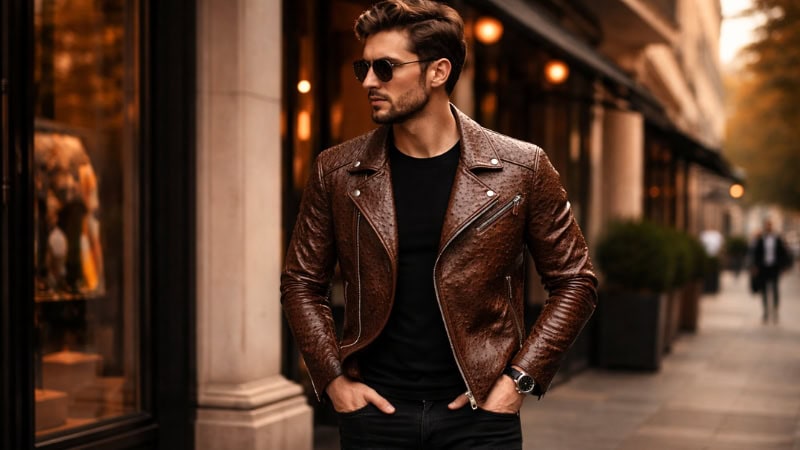
The asymmetrical zip biker in ostrich leather creates a powerful contrast — rugged form meets refined texture. The natural quill pattern softens the aggression typically associated with motorcycle styles, elevating it from streetwear to luxury statement.
Hardware details such as brushed nickel zippers or matte black snaps complement the hide’s depth. When tailored correctly, the jacket retains edge without appearing costume-like.
For those seeking authority in their aesthetic, this variation delivers presence.
Bomber Jackets
Bomber silhouettes highlight the material’s fluidity. Ribbed cuffs and waistbands frame the body, while the supple hide drapes rather than stiffens.
In full quill versions, the follicle pattern becomes the focal point. In smoother finishes, the emphasis shifts to color saturation — deep cognac, midnight navy, charcoal.
The result is relaxed sophistication. A bomber in ostrich leather feels effortless yet unmistakably premium.
Blazer-Style Jackets
Tailored cuts demonstrate the material’s adaptability. Structured shoulders, clean lapels, and refined button placements transform exotic leather into something boardroom-appropriate.
Unlike traditional suit jackets, these pieces offer subtle texture under natural light. The tactile detail invites attention without demanding it.
For professionals who want distinction without flamboyance, this silhouette bridges luxury and restraint.
Western & Statement Designs
Western-inspired cuts, fringe accents, or panel-stitched constructions amplify the exotic character of the hide. Designers sometimes combine ostrich with suede or calfskin to create layered dimension.
These pieces lean into individuality. They are not everyday basics — they are wardrobe centerpieces.
And that is precisely the appeal.
Benefits of Owning an Ostrich Leather Jacket
Luxury purchases are rarely impulsive. They are justified through longevity, exclusivity, and emotional return.
Aesthetic Distinction
The quill pattern is immediately recognizable to those familiar with high-end leather goods. It signals rarity without logos. In an era saturated with branding, texture becomes the identifier.
Subtle yet unmistakable.
Long-Term Value
Because ostrich leather resists cracking and maintains suppleness over time, it ages with grace. Unlike trend-driven garments, it does not expire stylistically.
Many collectors consider exotic leather outerwear a long-term asset — particularly when crafted by reputable ateliers with transparent sourcing.
Lightweight Strength
Despite its durability, the hide remains relatively light compared to thick bovine leather. This makes extended wear comfortable. It does not burden the shoulders or restrict movement.
Strength without bulk is a rare combination.
Climate Adaptability
The breathable fiber structure allows moderate airflow, making it suitable across multiple seasons. Layered properly, it transitions from cool evenings to mild winters with ease.
Versatility enhances cost-per-wear value.
Exclusivity Factor
Only a limited portion of each ostrich hide yields full quill sections. That scarcity contributes to its premium positioning.
Ownership feels intentional — not mass produced.
How to Style an Ostrich Leather Jacket
Styling determines whether the jacket becomes overpowering or harmonious. Balance is key.
Casual Pairing
Dark denim, minimal sneakers or leather boots, and a neutral tee allow the jacket’s texture to remain central. Avoid overly busy patterns beneath it. Simplicity strengthens impact.
Business Casual
Layer over a fine-gauge knit or crisp button-down. Slim trousers and loafers or Chelsea boots maintain polish. Stick to muted color palettes when wearing full quill to avoid visual competition.
Evening & Elevated Looks
Pair with monochrome outfits — black on black or tonal browns. Under soft lighting, the follicles catch subtle highlights, adding quiet drama.
It performs best when the rest of the ensemble supports rather than challenges it.
Seasonal Layering
In colder climates, combine with cashmere scarves or wool trousers. During transitional weather, wear it open over lightweight knits.
The key principle remains consistent: let the texture speak.
How to Care for an Ostrich Leather Jacket
Owning an ostrich leather jacket is not merely about wearing it. It is about preserving its integrity.
Unlike synthetic outerwear, exotic leather is a natural material. It breathes. It reacts. It evolves. Proper maintenance ensures that evolution is graceful rather than damaging.
Cleaning Guidelines
Surface dust should be removed using a soft, dry microfiber cloth. Avoid aggressive rubbing. The quill follicles create subtle raised areas where debris can settle, so wipe gently in circular motions.
If deeper cleaning becomes necessary, use a leather cleaner specifically formulated for exotic hides. Standard cowhide products may contain chemicals too harsh for the natural oil balance of ostrich skin.
Water saturation is never advisable. Excess moisture can weaken the fiber matrix and cause uneven drying patterns.
When in doubt, consult a leather specialist familiar with exotic materials. Experience matters here.
Conditioning & Hydration
Although ostrich leather contains natural oils, environmental exposure gradually reduces moisture levels. Conditioning once or twice a year helps maintain flexibility.
Use a neutral, pH-balanced conditioner designed for delicate hides. Apply sparingly. Over-conditioning can clog pores and dull the texture.
Allow the jacket to rest after treatment. Let the material absorb nourishment slowly — rushing the process defeats the purpose.
Think preservation, not polishing.
Storage Best Practices
Structure determines longevity.
Store the jacket on a broad, padded hanger to support shoulder alignment. Thin wire hangers distort shape over time.
Keep it in a breathable garment bag — never plastic. Air circulation prevents trapped humidity, which can lead to mildew.
Temperature stability also plays a role. Avoid prolonged exposure to direct sunlight or heat sources. Exotic leather thrives in moderate, controlled environments.
What to Avoid
Do not fold it tightly. Do not compress it under heavy clothing. And never attempt DIY stain removal with household chemicals.
Improper care can cause irreversible damage, especially on full quill surfaces where texture amplifies imperfections.
Respect the material, and it will reward you with decades of wear.
Price Range & Buying Guide
An ostrich leather jacket occupies the upper tier of the luxury outerwear market. Pricing reflects rarity, craftsmanship, and grading.
Understanding the factors behind cost prevents overpayment — and disappointment.
Average Price Expectations
Entry-level semi-quill designs typically begin around $1,200–$1,800 depending on construction quality. Full quill jackets from reputable makers often range between $2,500 and $5,000 or more.
Bespoke pieces crafted by established ateliers may exceed that range significantly, particularly when hand-cut panels are used to ensure symmetry.
Lower prices should raise questions, not excitement.
What Influences Cost
Several variables affect valuation:
- Grade of hide (full quill vs. partial sections)
- Origin of tanning (South African tanneries are globally recognized leaders)
- Construction method (machine-stitched vs. hand-finished seams)
- Hardware quality and lining materials
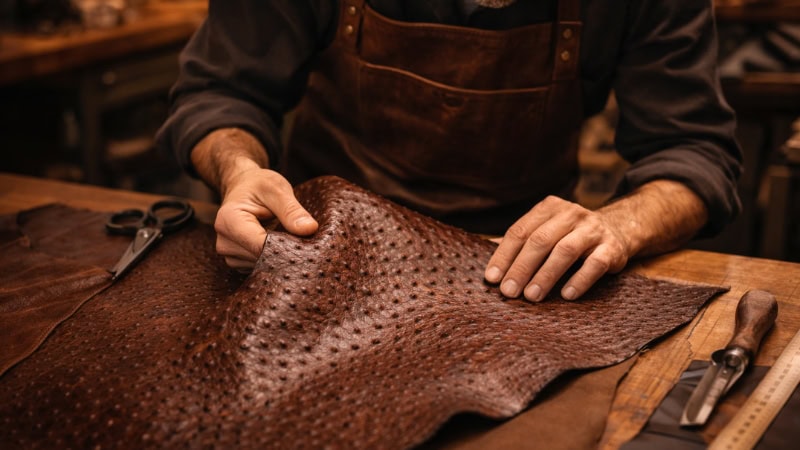
Precision panel matching — aligning follicle patterns across seams — requires skill and increases production time. That detail alone can elevate a garment from ordinary to exceptional.
Craftsmanship leaves clues.
Identifying Genuine Ostrich Leather
Authentic ostrich hide displays irregular follicle spacing. If the pattern appears overly symmetrical or mechanically consistent, it may be embossed cowhide.
Examine the underside. True exotic leather will reveal natural fiber variation rather than synthetic backing.
Texture depth also matters. Real quill follicles have dimension you can feel — not just see.
When purchasing online, request macro images and sourcing transparency. Reputable sellers provide both without hesitation.
Where to Buy
Prioritize specialized leather retailers, heritage brands, or bespoke tailors with documented experience handling exotic hides.
Trust is part of the investment.
Ethical & Sustainability Considerations
Modern consumers are increasingly concerned about sourcing — and rightly so.
Ostrich leather is primarily a by-product of the ostrich meat industry, particularly in South Africa where regulated farming practices are well established. This integrated model reduces waste compared to standalone hide harvesting.
Reputable suppliers adhere to international standards governing animal welfare and environmental impact. Certifications and traceability documentation add credibility.
Ethical production does not diminish luxury; it strengthens it.
When craftsmanship aligns with responsible sourcing, ownership carries confidence rather than compromise.
Frequently Asked Questions About Ostrich Leather Jackets
Is an ostrich leather jacket durable?
Yes — exceptionally so. Despite its soft hand-feel, ostrich hide has a dense fiber structure that resists cracking better than many conventional leathers. With proper care, it can last decades. The natural oil content helps maintain flexibility, reducing the likelihood of stiffness over time. Durability, in this case, coexists with comfort.
Why is full quill ostrich leather more expensive?
Full quill sections come from a limited area on the ostrich’s back where follicles are evenly distributed. Because only a small portion of each hide qualifies, supply is restricted. Additionally, aligning the quill pattern across panels requires skilled craftsmanship. Scarcity combined with labor intensity elevates its market value.
Does ostrich leather crack easily?
Not under normal conditions. Compared to many bovine leathers, ostrich hide retains moisture more effectively due to its natural oil composition. However, neglect — such as prolonged heat exposure or lack of conditioning — can compromise any leather. Responsible maintenance prevents premature wear.
How can you tell if an ostrich leather jacket is genuine?
Authentic ostrich leather shows natural irregularity in follicle spacing. The texture should feel dimensional, not printed or embossed. The underside reveals fibrous variation rather than synthetic fabric backing. When in doubt, request close-up imagery and documentation regarding sourcing.
Is ostrich leather ethical?
Most ostrich leather is a by-product of regulated farming industries, particularly in South Africa. Established farms operate under animal welfare and export compliance standards. Purchasing from transparent brands that disclose sourcing practices supports responsible production.
Is an ostrich leather jacket worth the investment?
For those seeking longevity, rarity, and tactile distinction, yes. It is not fast fashion. It is a material chosen for permanence — something that matures rather than deteriorates.
Why an Ostrich Leather Jacket Is a Timeless Luxury Investment
An ostrich leather jacket is more than outerwear. It reflects craftsmanship, biological uniqueness, and enduring design.
From its distinctive quill texture to its remarkable resilience, every detail contributes to lasting value.
When sourced responsibly and maintained correctly, it becomes a generational piece rather than a passing indulgence.
For those who appreciate material integrity and quiet distinction, few garments offer the same harmony of strength, refinement, and exclusivity.
