
Leather is built to last—but it’s not indestructible. Over time, even high-quality leather furniture, car seats, jackets, and handbags develop scratches, cracks, fading, stains, or even tears. When that damage appears, most people face the same question: Can this be repaired, or do I need to replace it?
The good news is that most leather damage is repairable—often at a fraction of the cost of replacement. The key is understanding the type of leather you’re dealing with, the extent of the damage, and the correct repair method. Professional leather repair technicians use specialized fillers, color-matching systems, bonding compounds, and protective finishes designed specifically for flexible surfaces. When done correctly, repairs blend seamlessly and restore both appearance and durability.
In this guide, we’ll break down seven of the most common leather repair scenarios, explain what causes each type of damage, and show how professionals fix them. You’ll also learn when a DIY solution might work—and when expert repair is the smarter investment.
Before diving into specific problems, though, there’s one critical step many people skip: identifying the type of leather.
Before You Repair: Identify the Type of Leather
Not all leather is created equal. Using the wrong repair method—or even the wrong cleaning product—can make damage worse. Professionals always begin by identifying the leather type.
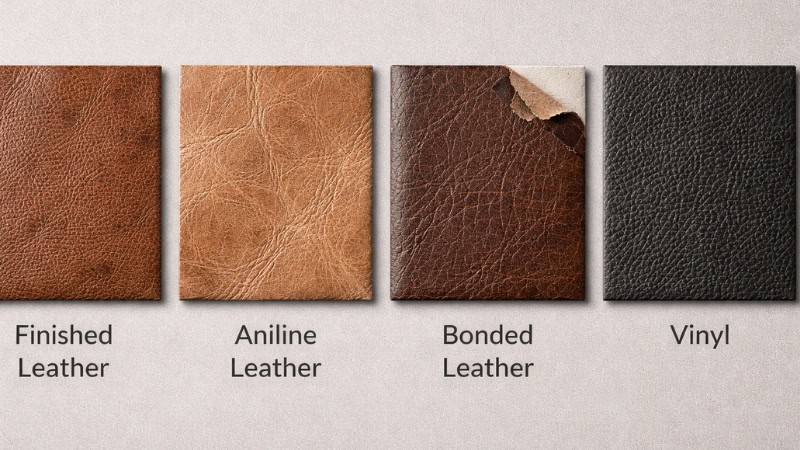
Finished / Pigmented Leather
This is the most common type used in sofas and car interiors. It has a protective topcoat with added pigment, making it more resistant to stains and wear. Because of that surface coating, repairs often involve working on the top layer rather than the hide itself. Color blending and refinishing are usually straightforward for trained technicians.
Aniline / Semi-Aniline Leather
Aniline leather is dyed but not heavily pigmented, allowing the natural grain and markings to show through. It’s softer and more luxurious—but also more vulnerable to staining and fading. Repairs require more delicate cleaning methods and precise dye matching to preserve its natural look.
Bonded Leather
Bonded leather is made from leather scraps fused together with polyurethane. It’s more affordable but far less durable. Peeling and flaking are common as the synthetic surface layer deteriorates. Some bonded leather can be refinished, but extensive breakdown often limits long-term restoration.
Vinyl vs. Real Leather
Many people mistake vinyl for leather. Vinyl repairs use different compounds and adhesives. A quick professional test—often checking texture, backing material, or absorption—prevents incorrect treatment.
Why Identification Matters
Each leather type reacts differently to fillers, dyes, heat, and solvents. Correct identification ensures repairs bond properly, flex naturally, and last.
Now, let’s look at the most common leather repair problems—and how professionals solve them.
The 7 Most Common Leather Repair Scenarios
1. Surface Scratches & Scuffs
Minor scratches and scuffs are among the most common issues with leather. Pets, keys, belt buckles, and everyday friction can leave visible marks—especially on frequently used furniture or vehicle seats.
For light surface scratches on finished leather, professionals often start with a deep clean using a leather-safe degreaser. Minor abrasions can sometimes be blended using controlled heat or a light reconditioning product that re-levels the surface.
For deeper scratches that penetrate the pigment layer, the repair process becomes more detailed. Technicians apply a thin layer of flexible filler to smooth the surface, lightly sand between coats, and then apply custom-matched leather dye. The final step is sealing the repair with a protective clear topcoat to restore durability and sheen.
DIY repair kits can work for very shallow scuffs. However, color matching is where most DIY attempts fall short. Professionals use blending techniques to feather the repair into surrounding areas, preventing obvious patch marks.
When handled correctly, scratch repairs can become nearly invisible.
2. Cracked Leather
Cracked leather usually develops due to dryness, aging, UV exposure, or lack of conditioning. As natural oils diminish, the surface stiffens, and small cracks begin to form—especially in high-stress areas like seat cushions or armrests.
Professional repair begins with thorough cleaning to remove dirt and body oils that prevent bonding. Next, a flexible leather filler is applied in thin layers to fill and smooth cracks. Each layer is gently sanded to maintain a natural texture.
Once the surface is even, technicians apply custom-matched pigment. Unlike household paint or generic dyes, professional leather pigments remain flexible to move with the material. Finally, a clear protective finish seals the surface and restores the desired sheen level—matte, satin, or gloss.
If cracking is shallow and caught early, restoration can significantly extend the leather’s lifespan. However, if cracks penetrate deeply into weakened leather fibers, structural integrity may be compromised.
Regular conditioning and UV protection are essential to prevent cracking from returning.
3. Peeling or Flaking Leather
Peeling leather is often associated with bonded leather or worn protective coatings. In many cases, it’s not the hide itself failing—but the synthetic top layer separating from the base material.
The first step professionals take is assessing whether the peeling layer can be stabilized. Loose, failing material must be carefully removed to prevent continued flaking. Attempting to glue peeling sections back down rarely works long-term.
Next, the exposed surface is cleaned and leveled. Flexible repair compounds are applied to rebuild the damaged area. Once smooth, technicians reapply color using spray equipment for uniform coverage. Finally, a new protective topcoat is applied to prevent future breakdown.
For bonded leather with widespread peeling, full panel refinishing may be required. In some severe cases, replacement panels are more cost-effective than repair.
Many DIY kits claim to permanently fix peeling leather, but without proper surface prep and industrial-grade coatings, the peeling often returns.
Honest assessment is key: some surfaces can be restored beautifully, while others may have reached the end of their lifespan.
4. Tears, Rips & Holes
Tears and punctures may look catastrophic—but they’re often repairable.
Professionals begin by inserting a sub-patch beneath the damaged area. This backing material stabilizes the tear and prevents it from spreading. A specialized adhesive bonds the leather edges to the patch underneath.
Next comes layered reconstruction. Flexible filler is applied gradually to recreate the surface level. Once cured, technicians replicate the surrounding texture using grain pads or impression tools. Texture matching is critical to achieving an invisible repair.
Finally, color-matched dye is applied and sealed with a protective finish.
Small tears can often be repaired seamlessly. Larger rips, especially along seams, require reinforcement to ensure durability.
Repair costs vary by size and location, but they’re typically far less than replacing an entire sofa panel or a car seat cover.
5. Stains – Oil, Ink, Dye Transfer
Leather stains require careful treatment because aggressive cleaners can strip pigment or cause discoloration.
Oil stains penetrate the leather’s surface and may require the use of controlled degreasing agents. Ink stains demand precise solvent use to break down dye particles without spreading them further. Dye transfer—common from denim—often affects light-colored leather and requires gentle lifting agents.
Professionals test cleaners in inconspicuous areas first. If pigment loss occurs during stain removal, the area is re-dyed and sealed to restore consistency.
DIY stain-removal attempts often worsen damage, especially when household cleaners are used. Bleach, alcohol, and abrasive scrubbing can permanently alter leather’s finish.
Quick professional intervention significantly improves success rates.
6. Sun Fading & Discoloration
Prolonged UV exposure causes leather pigment to fade and dry out. This is common in car interiors and furniture near windows.
Professional restoration involves cleaning and lightly prepping the surface before applying new color-matched pigment. Because fading usually affects large areas, technicians often refinish entire panels to maintain a uniform appearance.
After recoloring, a UV-resistant protective topcoat is applied to help prevent future fading.
Spot-repairing sun damage rarely blends well, so full-panel refinishing produces better results.
7. Seam Damage & Loose Stitching
The thread weakens over time due to friction, body oils, and UV exposure. Loose seams compromise both appearance and structural integrity.
Professional repair may involve industrial sewing equipment designed for thick leather. Matching thread thickness and color ensures a cohesive look. In high-stress areas, reinforcement backing may be added beneath seams to prevent future tearing.
Unlike cosmetic surface repairs, seam damage is structural. Addressing it early prevents larger tears from developing.
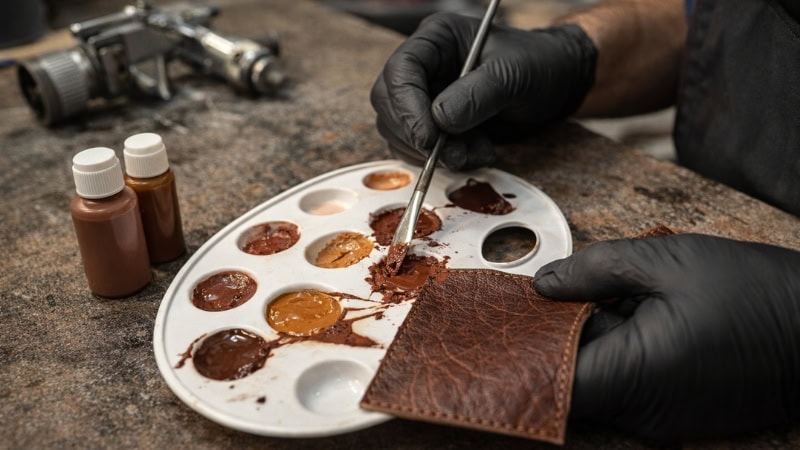
How Professionals Match Leather Color Perfectly
Color matching is one of the most technical aspects of leather repair.
Professionals rarely rely on pre-mixed colors. Instead, they blend pigments to match the existing leather under calibrated lighting conditions. Because leather appearance shifts under natural versus artificial light, technicians often test color in multiple environments before final application.
Spray equipment allows for thin, even layers that blend gradually into surrounding areas. This feathering technique prevents harsh repair lines. Sponge or brush applications, common in DIY kits, often leave visible texture differences.
Technicians also adjust sheen levels using specific topcoats—matte, satin, or gloss—to replicate the original finish. Even a perfectly matched color can look wrong if the sheen differs.
Before completing a repair, professionals test durability and flexibility to ensure the finish won’t crack or peel.
True color matching combines science, experience, and controlled application methods.
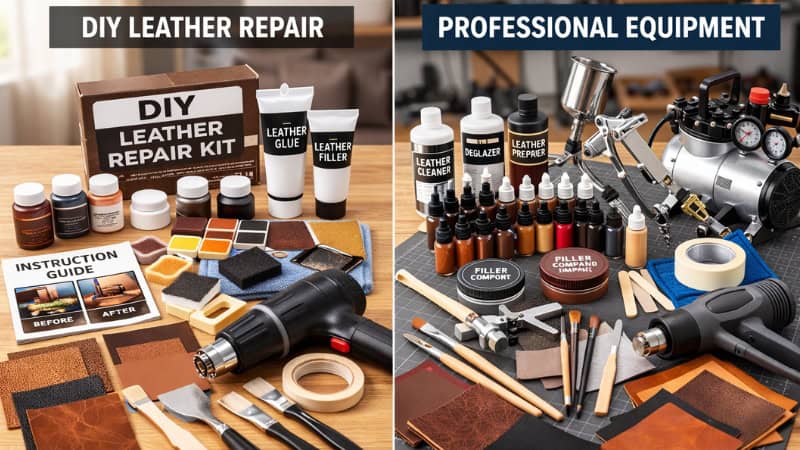
DIY Kits vs Professional Leather Repair
DIY kits can be useful for very minor issues—light scuffs, small surface scratches, or tiny cracks. They’re cost-effective and accessible.
However, larger damage, peeling surfaces, tears, or significant color fading usually require professional tools and expertise. Incorrect surface preparation, poor color blending, or inflexible filler compounds often result in short-lived outcomes.
Professional repair may cost more upfront, but it typically lasts years rather than months. Experts also assess structural integrity and the underlying causes of damage, reducing the risk of recurrence.
For high-value items—luxury furniture, designer handbags, or car interiors—professional repair protects long-term value.
The rule of thumb: cosmetic touch-ups may be DIY-friendly, but structural or large-area damage is best left to professionals.
How to Prevent Future Leather Damage
Preventative care dramatically extends leather’s lifespan.
Condition leather every 6–12 months using manufacturer-approved products. Avoid harsh cleaners and excessive moisture. Keep furniture out of direct sunlight, or use UV-blocking window treatments.
Clean spills promptly using pH-balanced leather cleaners. Avoid alcohol-based wipes or household detergents.
Maintaining stable indoor humidity prevents drying and cracking. In vehicles, using sunshades reduces UV exposure.
Routine care costs far less than repair, and significantly delays aging.
FAQs & Quick Answers to Repair Scenarios
Can cracked leather really be repaired?
Yes, in most cases, cracked leather can be successfully repaired—especially if the cracks are limited to the surface layer. Professionals use flexible fillers to rebuild the damaged areas and apply custom-matched pigment to restore uniform color. The key factor is whether the underlying leather fibers remain structurally sound. If cracks are deep and the leather has become brittle throughout, reinforcement may be required. Early intervention significantly improves both appearance and longevity.
Is peeling leather fixable?
Peeling leather can often be restored, but the outcome depends on the material. Finished and pigmented leather with topcoat failure responds well to refinishing. Bonded leather, however, is more challenging because the synthetic layer may continue deteriorating over time. A professional can stabilize and refinish moderately affected areas, but widespread peeling may make replacement more practical. An honest assessment is essential before investing in repair.
How long does professional leather repair last?
High-quality professional repairs can last several years when properly maintained. Longevity depends on usage level, exposure to sunlight, and routine conditioning. Automotive interiors and frequently used seating may wear more quickly, but protective topcoats significantly extend durability. Many repairs outlast expectations when properly cared for.
How much does leather repair cost?
Costs vary based on damage severity, item size, and labor complexity. Minor scratch repairs are typically inexpensive, while large tears or full-panel refinishing require more time and materials. In nearly all cases, professional repair costs substantially less than replacing high-quality leather furniture or vehicle upholstery.
Is it cheaper to repair or replace leather furniture?
Repair is almost always more cost-effective, particularly for premium furniture. Replacement involves material, labor, and delivery costs that often exceed repair pricing. Additionally, repairing a well-made piece preserves its original structure and comfort.
Final Thoughts: Repair Before You Replace
Leather damage doesn’t automatically mean replacement. From scratches and cracks to tears and fading, most common issues can be professionally repaired with impressive results.
Understanding the type of leather and the extent of damage is the first step toward choosing the right solution. While minor scuffs may respond to DIY care, structural damage and large-scale peeling require professional expertise for lasting results.
With proper maintenance and timely repair, leather furniture, car interiors, and accessories can maintain their appearance and function for many years.
Before replacing a damaged piece, consider having it evaluated. You may be surprised at what skilled leather repair can restore.
