
When comparing Saddleback Leather vs Buffalo Jackson, you’re essentially choosing between two very different philosophies in leather craftsmanship. One prioritizes extreme durability and lifetime use, while the other blends heritage aesthetics with everyday practicality.
This guide breaks down both brands in detail—so you can confidently decide which one deserves your money in 2026.
Saddleback Leather vs Buffalo Jackson: Which Is Better?
Saddleback Leather is better for durability and long-term investment, thanks to its thick full-grain leather and 100-year warranty.
Buffalo Jackson is better for everyday use and style, offering lighter, more versatile bags at a more accessible price point.
Brand Overview
Understanding the origins, philosophy, and positioning of each brand helps clarify why their products feel so different in real-world use.
Saddleback Leather Company
Brand Philosophy & Identity: Saddleback Leather Company, founded by Dave Munson, has built its reputation around a bold promise: products so durable “they’ll fight over it when you’re dead.” This isn’t just marketing—it reflects a design philosophy centered on extreme longevity, minimal failure points, and rugged functionality.
Material-First Craftsmanship Approach: Saddleback’s identity is deeply tied to its use of thick full-grain leather, often vegetable-tanned and intentionally left uncorrected to preserve natural imperfections. The brand avoids synthetic linings and breakable components, reinforcing its commitment to durability over convenience.
Target Audience & Use Case: This brand primarily appeals to buyers who value long-term investment over short-term style—frequent travelers, outdoorsmen, and professionals who need gear that can withstand decades of wear.
Buffalo Jackson Trading Co.
Brand Positioning & Lifestyle Appeal: Buffalo Jackson Trading Co. positions itself as a lifestyle-driven leather brand, combining vintage-inspired design with modern usability. Instead of focusing solely on ruggedness, it emphasizes a balance between aesthetics, comfort, and accessibility.
Material Versatility & Product Design: Unlike Saddleback, Buffalo Jackson uses a mix of full-grain leather, top-grain leather, and waxed canvas, resulting in lighter, more flexible products. This makes their bags more approachable for everyday urban use while still maintaining a premium feel.
Target Audience & Everyday Functionality: Buffalo Jackson caters to professionals, commuters, and style-conscious buyers who want a heritage look without the weight and stiffness of heavy-duty leather goods.
Leather Quality & Materials Comparison
The type of leather and tanning process directly influence durability, aging, and overall feel—making this one of the most critical comparison factors.
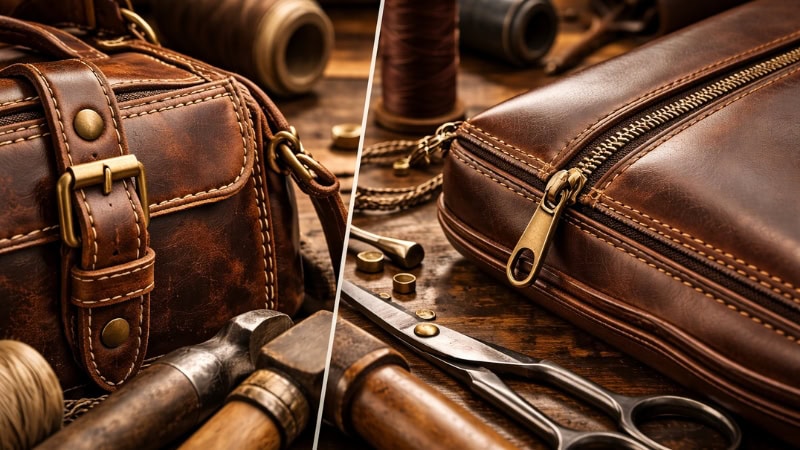
Full-Grain vs Top-Grain Leather Differences: One of the biggest distinctions in the Saddleback Leather vs Buffalo Jackson comparison lies in the materials used. Saddleback exclusively uses full-grain leather, the highest-quality cut that retains the hide’s natural surface and strength. Buffalo Jackson, on the other hand, uses a mix of full-grain and top-grain leather, depending on the product line.
Leather Thickness & Durability Impact: Saddleback’s leather is noticeably thicker and heavier, often exceeding what most casual users expect from a leather bag. This thickness contributes to exceptional durability but also results in a longer break-in period. Buffalo Jackson opts for lighter leather, prioritizing comfort and immediate usability over extreme toughness.
Tanning Methods & Aging Characteristics: Saddleback frequently uses vegetable-tanned leather, which develops a deep, rich patina over time. Buffalo Jackson often uses oil-tanned or crazy horse leather, offering a softer feel and quicker visual aging, though typically less structural rigidity.
Patina Development & Long-Term Appearance: Over time, Saddleback products tend to develop a rugged, high-contrast patina that reflects years of use. Buffalo Jackson products age more evenly and subtly, appealing to users who prefer a consistent, vintage aesthetic without dramatic wear patterns.
Build Quality & Craftsmanship
Beyond materials, construction methods determine how well a leather bag holds up under stress and over the years of use.
Overbuilt Construction Philosophy (Saddleback): Saddleback Leather is known for its over-engineering, with thick stitching, reinforced stress points, and minimal moving parts. The brand often avoids zippers where possible, opting for buckles and solid hardware to reduce failure risks.
Thread, Stitching & Structural Integrity: A defining feature of Saddleback products is the use of marine-grade polyester thread, designed to resist rot and wear over decades. Stitch density is high, and seams are intentionally reinforced to handle heavy loads without tearing.
Balanced Craftsmanship (Buffalo Jackson): Buffalo Jackson takes a more balanced approach to craftsmanship, combining durability with design flexibility. While the stitching and materials are still high quality, the focus is less on extreme longevity and more on usability and comfort.
Hardware, Flexibility & Daily Wear: Buffalo Jackson incorporates modern features such as zippers, lighter hardware, and flexible panels. This makes their bags easier to use daily but introduces more potential wear points compared to Saddleback’s minimalist construction.
Design & Aesthetic Appeal
Style plays a major role in purchasing decisions, especially for leather goods that double as fashion statements.
Rugged Utility Design (Saddleback Leather): Saddleback’s design language is unapologetically rugged. Bags are often bulky, structured, and built with function-first aesthetics that prioritize durability over sleekness.
Vintage-Inspired Style (Buffalo Jackson): Buffalo Jackson leans heavily into a modern vintage aesthetic, blending classic leather tones with contemporary silhouettes. This makes their products more versatile in professional and casual settings.
Weight, Comfort & Everyday Practicality: Saddleback bags tend to be heavier due to their thick leather and reinforced build, which can be a drawback for daily commuting. Buffalo Jackson products are lighter and more ergonomic, making them better suited for everyday carry.
Visual Aging & Style Evolution: While Saddleback products evolve into a rugged, worn-in look over time, Buffalo Jackson maintains a more polished vintage appearance, even after extended use. This difference often comes down to personal style preference rather than quality.
Product Range Comparison
The breadth and diversity of products offered by each brand can significantly influence your buying decision, especially if you’re looking for specific use cases.
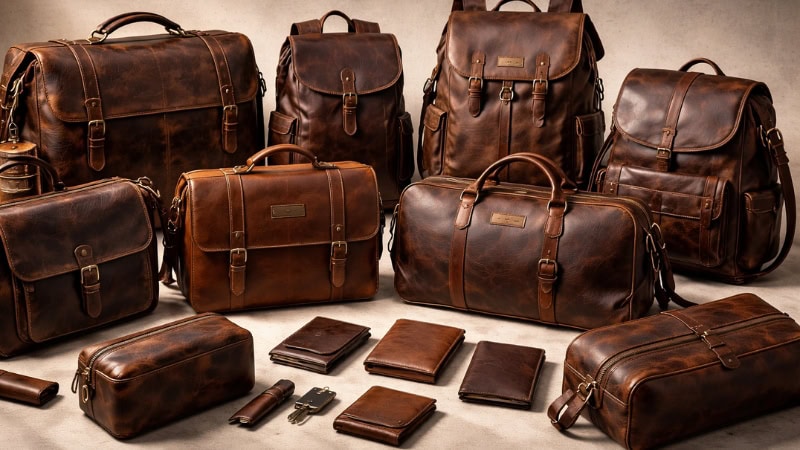
Core Product Categories & Availability: In the Saddleback Leather vs Buffalo Jackson comparison, the product range reveals a clear philosophical difference. Saddleback focuses on a tight, curated lineup of leather goods—primarily briefcases, duffle bags, backpacks, messenger bags, and wallets—each designed with a standardized, durable blueprint.
Variety vs Specialization Approach: Buffalo Jackson offers a much broader catalog, including not only leather briefcases and backpacks but also weekender bags, laptop sleeves, travel accessories, and waxed canvas hybrids. This wider selection makes it easier for buyers to find something tailored to specific needs or style preferences.
Customization & Design Diversity: Saddleback products are relatively uniform in design, with limited variations in color and structure. Buffalo Jackson, by contrast, emphasizes design diversity, offering multiple finishes, textures, and hybrid materials that cater to different aesthetic tastes.
Use Case Flexibility & Lifestyle Fit: If you’re looking for a highly specialized, long-term investment piece, Saddleback’s focused lineup delivers consistency. But if you want flexibility—whether for commuting, travel, or casual use—Buffalo Jackson’s wider range provides more adaptable options.
Pricing & Value for Money
Price alone doesn’t define value—understanding cost relative to durability, usability, and longevity is key to making the right investment.
Premium Pricing Structure (Saddleback Leather): Saddleback Leather products sit firmly in the premium category, with prices reflecting their heavy-duty construction and full-grain leather quality. At first glance, the cost may seem high, but the brand positions its products as lifetime investments, backed by durability and long-term usability.
Mid-Range Accessibility (Buffalo Jackson): Buffalo Jackson operates in a more accessible price range, offering leather goods that balance quality with affordability. While still premium compared to mass-market brands, their pricing makes them appealing to buyers who want heritage-style leather without a steep upfront investment.
Cost-Per-Use Value Perspective: From a cost-per-year or cost-per-use standpoint, Saddleback often justifies its price through longevity. A single bag used for decades can outweigh multiple replacements. Buffalo Jackson, however, delivers strong value for users who prioritize style, comfort, and moderate durability over extreme lifespan.
Perceived Value vs Practical Value: Ultimately, value depends on your priorities. Saddleback offers maximum durability and minimal replacement risk, while Buffalo Jackson provides immediate usability and aesthetic versatility, making both brands valuable in different contexts.
Warranty, Returns & Customer Service
Warranty policies and customer support are critical trust signals, especially when investing in premium leather goods.
Saddleback’s 100-Year Warranty Promise
One of the strongest trust signals in this comparison is Saddleback’s famous 100-year warranty. This bold guarantee reflects the brand’s confidence in its materials and craftsmanship, reinforcing its reputation for long-term reliability.
Customer Trust & Brand Accountability
Saddleback’s warranty isn’t just symbolic—it actively builds trust by assuring customers that defects or failures will be addressed, even decades later. This level of accountability is rare in the leather goods industry.
Buffalo Jackson Warranty & Return Policy
Buffalo Jackson offers a more standard warranty and return policy, typically focused on manufacturing defects within a reasonable timeframe. While not as extreme as Saddleback’s promise, it still provides a solid level of customer protection.
Support Experience & Brand Relationship
Both brands maintain positive reputations for customer service, but Saddleback’s long-term guarantee creates a stronger emotional and financial assurance. Buffalo Jackson, meanwhile, focuses on accessible service and smooth purchasing experiences, aligning with its broader audience.
Saddleback Leather vs Buffalo Jackson: Quick Comparison
| Feature | Saddleback Leather | Buffalo Jackson |
| Best For | Long-term durability, rugged use | Everyday use, style & comfort |
| Leather Type | 100% full-grain leather | Full-grain + top-grain leather |
| Build Quality | Overbuilt, heavy-duty construction | Balanced, lightweight construction |
| Durability | Extremely high (decades of use) | Moderate to high (daily use) |
| Weight | Heavy and thick | Lighter and more flexible |
| Design Style | Rugged, utilitarian | Vintage, modern lifestyle |
| Break-in Period | Long (stiff at first) | Short (comfortable जल्दी) |
| Product Variety | Limited, standardized designs | Wide range of styles and materials |
| Pricing | Premium (high upfront cost) | Mid-range premium (more affordable) |
| Warranty | 100-year warranty | Standard warranty |
| Patina Development | Deep, rugged patina over time | Subtle, even aging |
| Best Use Case | Travel, heavy-duty work, long-term investment | Office, commuting, casual travel |
Pros and Cons
Breaking down the strengths and weaknesses of each brand helps clarify which one aligns better with your expectations and lifestyle.
Saddleback Leather
Pros:
- Exceptional durability with full-grain leather construction
Built using thick, high-quality full-grain leather, Saddleback products are designed to last for decades under heavy use. - 100-year warranty for long-term peace of mind
The brand’s industry-leading warranty reinforces trust and positions it as a true lifetime investment. - Overbuilt craftsmanship with minimal failure points
Reinforced stitching, heavy-duty hardware, and fewer moving parts reduce the likelihood of damage over time. - Ages beautifully with rich patina development
Vegetable-tanned leather develops a rugged, high-contrast patina that improves with age. - Ideal for heavy-duty travel and rugged use
Perfect for users who need gear that can handle tough environments and frequent use.
Cons:
- Heavy and bulky design
The thick leather and reinforced build can make bags less comfortable for everyday carry. - Higher upfront cost compared to competitors
Premium pricing may not be suitable for budget-conscious buyers. - Long break-in period
The stiffness of the leather requires time before becoming fully comfortable. - Limited design variety and modern features
Focus on durability means fewer style options and less design flexibility.
Buffalo Jackson
Pros:
- Stylish, vintage-inspired design with modern appeal
Blends heritage aesthetics with contemporary usability, making it suitable for professional settings. - Lighter and more comfortable for daily use
Softer leather and thoughtful design make it easier to carry for long periods. - More affordable pricing within the premium segment
Offers a strong balance between quality and accessibility. - Wider product range and design variety
Includes multiple styles, materials, and configurations to suit different needs. - Shorter break-in period with immediate usability
Bags feel comfortable and functional right out of the box.
Cons:
- Less durable under heavy long-term use
Not built for extreme conditions like Saddleback products. - Mixed leather quality (full-grain and top-grain)
Some products may not offer the same longevity as full-grain-only construction. - More potential wear points due to modern features
Zippers and lighter hardware may wear out faster over time. - Patina develops less dramatically
Aging is more subtle, which may not appeal to users seeking a rugged look.
Who Should Buy Saddleback vs Buffalo Jackson?
Choosing the right brand depends less on which is “better” and more on how you plan to use your leather goods.
Best for Long-Term Investment & Heavy Use (Saddleback Leather): If you need a bag that can withstand years—if not decades—of heavy use, Saddleback Leather is the clear choice. It’s ideal for travelers, field professionals, and anyone who values maximum durability, minimal maintenance, and long-term reliability.
Best for Everyday Carry & Style (Buffalo Jackson): Buffalo Jackson is better suited for users who want a stylish, lightweight leather bag for daily use. Whether you’re commuting, working in an office, or traveling occasionally, its designs offer a balance of comfort and aesthetics.
Professional vs Lifestyle Use Cases: Saddleback appeals more to users who prioritize function over form, while Buffalo Jackson aligns with those who want their leather goods to complement a modern, professional lifestyle.
Decision Simplicity Based on Needs: If your priority is longevity and toughness, Saddleback wins. If you want versatility, comfort, and visual appeal, Buffalo Jackson is the more practical option.
Real User Reviews & Reputation
Customer feedback provides valuable insight into how these brands perform beyond marketing claims.
Saddleback Leather Customer Sentiment: Saddleback consistently receives praise for its durability, craftsmanship, and warranty support. Many long-term users highlight how their bags age beautifully and remain structurally intact even after years of use.
Common Criticism of Saddleback Products: The most frequent complaints revolve around weight, stiffness, and break-in time. Some users also find the bulky design less suitable for modern professional environments.
Buffalo Jackson Customer Feedback Trends: Buffalo Jackson is widely appreciated for its aesthetic appeal, comfort, and affordability. Customers often mention how quickly the bags become usable without a long break-in period.
Areas Where Buffalo Jackson Falls Short: Some users note that Buffalo Jackson products may not hold up as well under heavy, long-term use compared to more rugged brands like Saddleback. However, for most everyday scenarios, performance remains satisfactory.
FAQs around Saddleback & Buffalo Jackson
Is Saddleback Leather really worth the price?
Yes, if you prioritize durability and long-term value. Saddleback products are designed to last decades, making the higher upfront cost worthwhile for many buyers.
Does Buffalo Jackson use real leather?
Yes, Buffalo Jackson uses genuine leather, including full-grain and top-grain leather. Some products also incorporate waxed canvas for added versatility.
Which brand lasts longer?
Saddleback Leather generally lasts longer due to its thicker leather and overbuilt construction. Buffalo Jackson is durable but better suited for moderate, everyday use.
Which is better for everyday use?
Buffalo Jackson is typically better for daily use thanks to its lighter weight and more ergonomic designs. Saddleback may feel heavy for extended daily carry.
Is full-grain leather better than top-grain leather?
Yes, full-grain leather is generally considered superior because it retains the natural grain and strength of the hide. It’s more durable and develops a richer patina over time compared to top-grain leather.
Which brand offers better value for money?
It depends on your needs. Saddleback offers better long-term value due to its durability, while Buffalo Jackson provides better short- to mid-term value with lower upfront costs and greater versatility.
Final Verdict
Both brands deliver strong value—but for very different types of buyers.
When comparing Saddleback Leather vs Buffalo Jackson, there isn’t a one-size-fits-all winner. Instead, the better choice depends entirely on what you prioritize.
If you want a lifetime leather bag built for extreme durability, Saddleback Leather is hard to beat. But if you prefer a lighter, more stylish, and versatile option for everyday use, Buffalo Jackson offers a more practical and accessible solution.
In the end, this comparison isn’t about which brand is objectively better—it’s about which one fits your lifestyle.