
Choosing between Birkenstock nubuck vs oiled leather isn’t just about color or style. It directly affects durability, maintenance, comfort, and how your sandals age over time.
At first glance, the materials look similar. Both are real leather. Both mold to your feet. Both pair with Birkenstock’s signature cork-latex footbed.
But they behave very differently.
One offers a softer, matte finish with a lighter feel. The other delivers rugged character, stronger weather resistance, and a rich patina that develops over years.
If you’re deciding between models like the Arizona, Boston, Milano, or Gizeh, this guide breaks down everything you need to know — from break-in time to long-term durability — so you can choose confidently.
What Is Birkenstock Nubuck Leather?
Birkenstock nubuck is a form of top-grain leather that has been lightly sanded on the outer surface. This sanding creates a soft, velvety texture with a matte appearance.
Unlike suede, which is made from the inner split of the hide, nubuck comes from the stronger outer grain layer. That means it retains more structural integrity while still offering a smooth, brushed finish.
Visually, nubuck looks refined and uniform. The color tends to appear soft and slightly muted, making it popular for minimalist and modern styles. You’ll commonly see nubuck used in Birkenstock Arizona and Boston models where a clean aesthetic is preferred.
Key Characteristics of Nubuck
- Soft, slightly fuzzy surface
- Matte finish
- Lightweight feel
- Flexible upper with moderate structure
Advantages
Nubuck typically requires less break-in time compared to thicker leathers. It feels comfortable earlier and adapts well to everyday casual wear. Many people prefer it in warm, dry climates because of its breathable surface texture.
Limitations
Because the outer grain has been sanded, nubuck is more vulnerable to water spots, stains, and scuffs. It benefits from a protective spray and regular brushing to maintain its appearance. Over time, it does not develop a heavy patina like oiled leather.
What Is Birkenstock Oiled Leather?
Birkenstock oiled leather is made from full-grain leather, the strongest and most durable layer of the hide. It is treated with oils and waxes during finishing, which enhances resilience and creates a rich, slightly glossy appearance.
Unlike nubuck’s uniform look, oiled leather highlights natural markings and color variation. This is known as the pull-up effect — when the leather lightens slightly as it bends or stretches, then returns to its original shade.
The result is a material that feels substantial, rugged, and built to age.
Key Characteristics of Oiled Leather
- Smooth but waxy surface
- Thicker, denser structure
- Visible natural grain markings
- Develops patina over time
Advantages
Oiled leather is generally more durable and more resistant to moisture than nubuck. Minor scratches can often be rubbed out with your finger because the oils redistribute across the surface.
Over months and years, the leather develops a distinct patina — deepening in tone and character. For many wearers, this aging process is a major appeal.
Limitations
Oiled leather can feel stiffer initially and may require a longer break-in period. It is also slightly heavier. In very hot climates, the thicker structure may feel warmer compared to nubuck.
Birkenstock Nubuck vs Oiled Leather: Side-by-Side Comparison
Here’s a direct comparison of how the two materials differ:
| Feature | Nubuck | Oiled Leather |
| Leather Type | Top-grain (sanded) | Full-grain (oiled & waxed) |
| Texture | Soft, velvety | Smooth, waxy |
| Appearance | Matte, uniform | Rich, natural variation |
| Durability | Moderate | High |
| Water Resistance | Low–Moderate | Moderate–High |
| Break-In Time | Shorter | Longer |
| Patina Development | Minimal | Strong |
In short, nubuck prioritizes softness and a cleaner aesthetic, while oiled leather prioritizes durability and long-term aging.
If you prefer a lightweight feel and minimal texture variation, nubuck is often the better choice. If you want sandals that gain character over time and handle tougher wear, oiled leather typically performs better.
Both work with Birkenstock’s cork-latex footbed, but the upper material significantly influences how the sandal feels and ages.
Durability: Which One Lasts Longer?
When comparing Birkenstock nubuck vs oiled leather, durability is often the deciding factor for long-term buyers.
The main difference comes down to grain structure. Nubuck is made from top-grain leather that has been sanded to create a soft texture. While still strong, the sanding process slightly reduces the outer layer’s natural toughness.
Oiled leather, on the other hand, uses full-grain leather — the most durable part of the hide. It retains the complete fiber structure, making it denser and more resistant to wear.
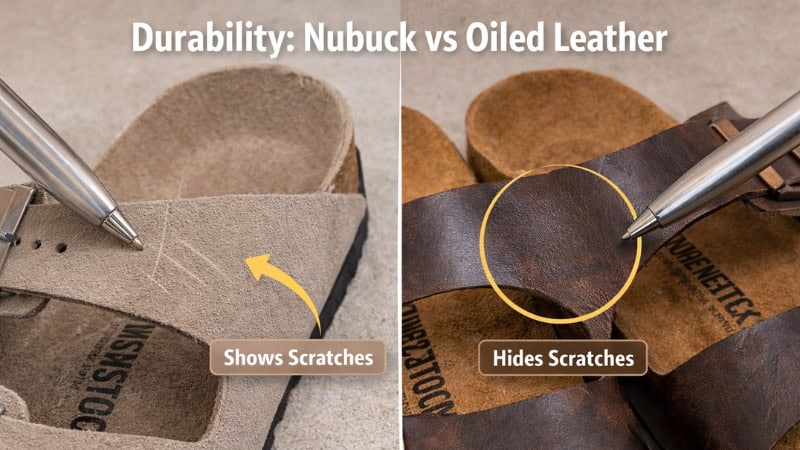
Resistance to Scratches & Scuffs
Nubuck tends to show scuffs more visibly. Because of its brushed surface, scratches can appear lighter in color and require brushing or specialized cleaning blocks to reduce their appearance.
Oiled leather handles abrasion better. Minor scratches often blend back in as the oils redistribute across the surface. This makes it especially appealing for everyday wear, travel, or outdoor use.
Water & Climate Exposure
Neither material is fully waterproof. However, oiled leather generally performs better in light rain or humid conditions due to its oil treatment. Nubuck absorbs moisture more quickly and can show water spots if untreated.
Long-Term Aging
Over time, nubuck maintains a relatively consistent look but may appear worn if not maintained properly.
Oiled leather develops a patina — a deepening of color and natural sheen that many people associate with premium leather goods. For long-term investment wear, oiled leather typically outperforms nubuck in structural longevity and visual aging.
Comfort & Break-In Period
Comfort in Birkenstock sandals comes from two elements: the cork-latex footbed and the leather upper. While the footbed molds to your arch over time, the upper material determines how the sandal feels in the first few weeks.
Nubuck Comfort Profile
Nubuck is generally softer from day one. Because the surface has been lightly sanded, it feels more flexible and less rigid against the top of the foot.
For people sensitive to stiff leather or prone to pressure discomfort, nubuck often feels easier during the initial wear period. The break-in process tends to be shorter and more forgiving.
Oiled Leather Comfort Profile
Oiled leather starts firmer. The thicker full-grain structure means it may take longer to soften and conform to foot movement.
However, once broken in, many wearers describe oiled leather as exceptionally supportive and secure. The material holds its shape well and provides a structured feel that pairs effectively with Birkenstock’s contoured arch support.
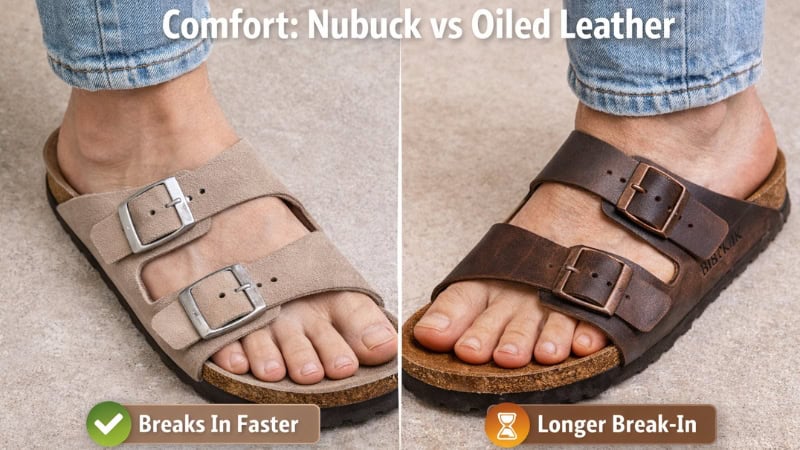
Which Breaks In Faster?
Nubuck usually adapts faster. Oiled leather rewards patience with longer-term resilience and stability.
For everyday casual wear with minimal adjustment time, nubuck has the edge. For durability-focused buyers willing to allow a longer break-in, oiled leather often proves more satisfying over time.
Appearance & Style Differences
Aesthetic preference plays a major role in choosing between nubuck and oiled leather.
Nubuck: Clean & Modern
Nubuck has a matte, velvety finish that gives Birkenstock sandals a softer and more understated appearance. Colors appear slightly muted and uniform, which complements minimalist outfits.
It pairs well with:
- Linen trousers
- Casual summer dresses
- Neutral wardrobe palettes
- Lightweight seasonal styling
Because it lacks heavy shine or texture variation, nubuck tends to look more refined and contemporary.
Oiled Leather: Rugged & Timeless
Oiled leather offers a richer, more textured look. Natural grain markings are visible, and the leather develops subtle tonal shifts over time.
This makes it ideal for:
- Denim and casual fall outfits
- Layered transitional-season styling
- Travel wardrobes
- Vintage-inspired looks
The patina that develops with wear adds depth and character. Many people specifically choose oiled leather because it ages visibly, telling a story through use.
In short, nubuck emphasizes clean simplicity, while oiled leather leans into rugged authenticity. Your choice often depends as much on personal style as on performance needs.
Maintenance & Cleaning Requirements
When comparing Birkenstock nubuck vs oiled leather, maintenance is where their differences become very practical.
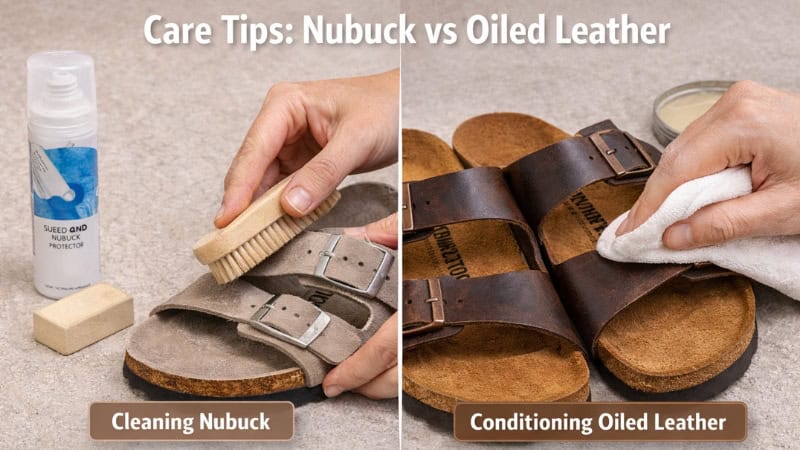
How to Care for Nubuck
Because nubuck has a brushed, slightly porous surface, it requires gentle and consistent care.
Basic maintenance includes:
- Using a nubuck brush to lift dirt and restore texture
- Applying a suede/nubuck protector spray before first wear
- Using a nubuck eraser block for small stains
- Avoiding heavy water exposure
Water can darken nubuck unevenly, and oil stains can be difficult to remove. Regular brushing helps prevent the fibers from flattening and keeps the surface looking fresh.
Importantly, avoid using traditional leather conditioners on nubuck — they can darken and permanently alter the finish.
How to Care for Oiled Leather
Oiled leather is lower maintenance in everyday wear. Its oil-infused surface naturally resists minor moisture and scuffs.
Care typically involves:
- Wiping with a damp cloth to remove dirt
- Applying leather conditioner or balm occasionally
- Letting the leather air dry naturally if wet
Minor scratches often fade as the oils redistribute. Over-conditioning should be avoided, but periodic nourishment helps prevent drying or cracking over years of use.
Which Is Easier to Maintain?
For low-effort upkeep, oiled leather is generally easier. Nubuck demands more preventative care but rewards careful owners with a clean, soft finish.
Weather & Climate Performance
Climate can significantly influence your material choice.
Rain & Humidity
Oiled leather performs better in light rain and humid conditions. The oil treatment helps repel small amounts of moisture and reduces the likelihood of visible water spots.
Nubuck absorbs water more quickly and may show dark patches if exposed without protection.
Hot & Dry Climates
In warm, dry environments, nubuck often feels lighter and more breathable. Its softer surface texture may feel less dense against the foot during extended summer wear.
Oiled leather, being thicker, can feel warmer but remains structurally strong in dry heat.
Travel & Outdoor Use
For travel, walking-heavy days, or unpredictable weather, oiled leather offers more resilience. For strictly casual summer wear in dry conditions, nubuck performs well.
Neither material is fully waterproof, but environment and usage patterns should guide your decision.
Who Should Choose Nubuck?
Nubuck is ideal for buyers who prioritize softness and a refined aesthetic.
It works well for:
- First-time Birkenstock wearers
- People who want a shorter break-in period
- Warm, dry climate residents
- Minimalist or modern style preferences
- Lightweight everyday wear
If you prefer sandals that feel comfortable quickly and maintain a consistent, matte appearance, nubuck is a strong choice.
It’s particularly appealing for indoor work environments, casual outings, and summer-focused wardrobes. However, it does require proactive care to maintain its appearance.
For style-driven wearers who are comfortable with routine maintenance, nubuck offers a clean and versatile look.
Who Should Choose Oiled Leather?
Oiled leather suits buyers focused on longevity and durability.
It’s ideal for:
- Long-term investment shoppers
- Frequent travelers
- People who walk extensively
- Cooler or mixed-weather climates
- Those who appreciate leather patina
If you like footwear that develops character over time, oiled leather delivers a distinctive aging process.
It handles minor scuffs better and requires less surface-specific cleaning compared to nubuck. Although the break-in period may be longer, many wearers find the structured feel more supportive over time.
For outdoor use, heavier rotation wear, and lower daily maintenance demands, oiled leather is often the more practical option.
Frequently Asked Questions
Is oiled leather better than nubuck?
Oiled leather is generally more durable and more resistant to light moisture than nubuck. However, “better” depends on your priorities. If you value long-term aging and lower daily maintenance, oiled leather may be the stronger choice. If you prefer a softer feel and a matte finish, nubuck may suit you better.
Which is more waterproof: nubuck or oiled leather?
Oiled leather is more water-resistant due to its oil and wax treatment. Nubuck absorbs moisture more easily and can show water spots unless treated with a protective spray. Neither material is fully waterproof.
Does nubuck last as long as oiled leather?
Nubuck can last many years with proper care, but full-grain oiled leather typically offers greater long-term durability because it retains the hide’s complete fiber structure.
Does oiled leather crack over time?
Oiled leather is less likely to crack if conditioned occasionally. Like any natural leather, neglect and excessive drying can cause stiffness, but proper care prevents most issues.
Which material is easier to maintain?
Oiled leather is usually easier to maintain. Nubuck requires more preventative care and specialized cleaning tools.
Final Verdict: Birkenstock Nubuck vs Oiled Leather
When comparing Birkenstock nubuck vs oiled leather, the right choice depends on how you plan to wear them.
Choose nubuck if you want a softer feel, shorter break-in period, and a clean, matte aesthetic for warm-weather use.
Choose oiled leather if durability, weather resistance, and long-term patina matter more to you.
Both materials pair with Birkenstock’s supportive cork-latex footbed and can last for years with proper care. Ultimately, your climate, lifestyle, and style preference should guide the decision — not just appearance alone.
