
The best leather is full-grain leather, because it retains the strongest natural fibers, lasts the longest, and improves with age. It is widely used in premium wallets, shoes, bags, and furniture due to its durability and ability to develop a rich patina over time.
Not all leather is created equal. Terms like full-grain, top-grain, and genuine leather are often misunderstood, and price alone does not determine quality. The true difference lies in how the leather is cut, treated, and tanned—and what part of the hide is used.
This guide breaks down what leather is the best using clear quality rankings, real-world use cases, and expert evaluation criteria. It explains leather types, animal sources, tanning methods, and how to identify high-quality leather at a glance.
Whether you are buying a leather wallet, jacket, boots, or furniture, this article helps you make a confident decision. Each section is structured to answer common questions directly, support comparison-based searches, and provide buyer-focused clarity—so you know exactly which leather is best and why.
How Leather Quality Is Determined
Leather quality is determined by how intact the natural hide remains after processing. The less the leather is altered, the stronger, more durable, and longer-lasting it will be. High-quality leather preserves the hide’s natural fiber structure rather than correcting flaws through heavy sanding or coatings.
Several technical and material factors define leather quality, not marketing labels or price tags. Understanding these factors helps buyers quickly separate premium leather from low-grade alternatives.
Key factors that define leather quality:
- Grain integrity: Leather that retains the full natural grain is stronger and more breathable. Sanding or embossing weakens fibers and reduces longevity.
- Fiber density: Dense, tightly packed fibers indicate strength and resistance to tearing or stretching.
- Tanning method: Vegetable tanning produces firmer, longer-lasting leather, while chrome tanning prioritizes softness and speed.
- Surface treatment: Minimal finishes allow leather to age naturally; heavy coatings hide flaws but crack over time.
- Aging potential (patina): High-quality leather darkens and gains character instead of peeling or flaking.
Expert insight: Natural imperfections—like scars or pores—are signs of authentic, high-grade leather, not defects.

Types of Leather Ranked from Best to Worst
Leather types are ranked based on durability, fiber strength, aging behavior, and level of processing. The closer the leather remains to the original hide, the higher its quality and lifespan. This ranking reflects industry standards used by leatherworkers and manufacturers.
1. Full-Grain Leather (Best Overall)
Full-grain leather uses the top layer of the hide with the natural grain intact. It is the strongest and most durable leather available and develops a rich patina over time.
- Resists wear and moisture
- Ages beautifully instead of deteriorating
- Used in premium footwear, belts, and bags
2. Top-Grain Leather
Top-grain leather is lightly sanded to remove imperfections, creating a smoother appearance. It is slightly less durable but more uniform.
- Softer and more flexible
- Common in furniture and handbags
- Less patina development than full-grain
3. Genuine Leather
Genuine leather comes from lower hide layers and is heavily processed.
- Shorter lifespan
- Often coated or painted
- Budget-focused products
4. Bonded Leather (Lowest Quality)
Bonded leather is made from leather scraps and adhesives and is not durable.
Best Leather by Use Case
The best leather depends on how the product will be used. Durability, flexibility, thickness, and aging behavior matter more than aesthetics alone. Matching the leather type to the use case ensures better performance and value.
Best Leather for Wallets
Full-grain cowhide or vegetable-tanned leather is ideal because it resists cracking and forms a compact patina over years of daily use.
Best Leather for Shoes
Full-grain calfskin or shell cordovan offers durability, breathability, and shape retention, making them ideal for high-quality footwear.
Best Leather for Jackets
Lambskin is best for softness and comfort, while cowhide is better for rugged, long-lasting jackets.
Best Leather for Furniture
Top-grain or aniline leather balances softness, appearance, and resistance to wear in high-contact areas.
Buyer tip: Always prioritize full-grain leather for items exposed to friction, bending, or daily handling.
Best Leather by Animal Source
The animal source directly affects leather texture, thickness, and durability. Different hides serve different purposes depending on fiber structure and natural oils.
Cowhide Leather
Cowhide is the most versatile and widely used leather. It offers excellent durability, thickness options, and affordability.
- Ideal for belts, bags, shoes, and furniture
- High abrasion resistance
Calfskin Leather
Calfskin has a finer grain and smoother texture than cowhide.
- Premium footwear and luxury goods
- Softer yet durable
Goat Leather
Goat leather is lightweight but tough due to dense fibers.
- Excellent for travel goods and gloves
- Naturally water-resistant
Lambskin Leather
Lambskin is prized for softness and flexibility.
- Luxury jackets and fashion items
- Less abrasion resistance

Vegetable-Tanned vs Chrome-Tanned Leather
Tanning determines how leather behaves over time. Vegetable-tanned and chrome-tanned leather differ significantly in durability, aging, and sustainability.
Vegetable-tanned leather uses plant-based tannins and traditional methods.
Chrome-tanned leather uses chemical salts for speed and softness.
Key differences:
- Durability: Vegetable-tanned leather is firmer and stronger.
- Patina: Vegetable-tanned leather develops a rich patina; chrome-tanned does not.
- Sustainability: Vegetable tanning is more eco-friendly.
- Flexibility: Chrome-tanned leather is softer and more pliable initially.
Best overall: Vegetable-tanned leather for longevity and natural aging.
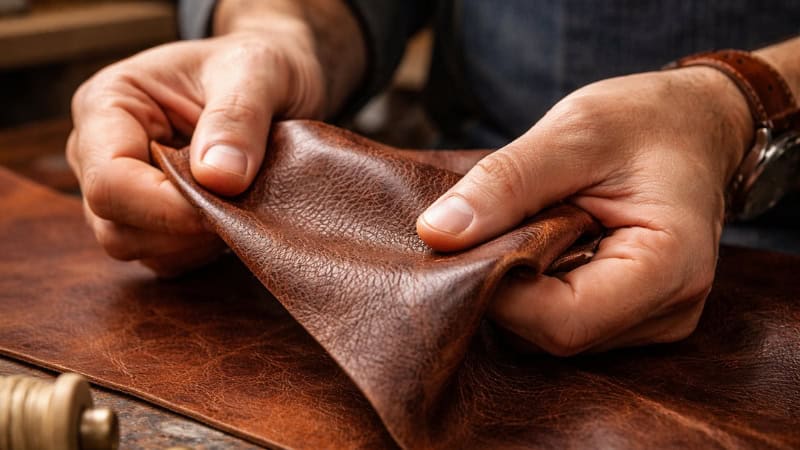
How to Identify High-Quality Leather (Expert Checklist)
High-quality leather can be identified through visual, tactile, and sensory checks. These indicators help buyers avoid synthetic coatings and low-grade hides.
Expert checklist:
- Visible natural grain and pores
- Slight imperfections or variations
- Rich leather scent, not chemical odor
- Firm yet flexible texture
- Thick edges that do not crumble
High-quality leather absorbs moisture briefly rather than repelling it completely, indicating breathability. Over time, it darkens and smooths instead of peeling.
Rule of thumb: If the leather looks too perfect and plastic-like, it is likely heavily processed.
Is Expensive Leather Always Better?
Expensive leather is not automatically better leather. Price often reflects branding, labor, and marketing rather than material quality. Some affordable full-grain leather products outperform expensive corrected leather items.
What truly matters:
- Grain type (full-grain vs corrected)
- Tanning method
- Stitching and construction
- Thickness and edge finishing
A moderately priced full-grain leather wallet will last longer than a luxury-branded bonded leather alternative.
Buyer insight: Always evaluate leather specifications, not brand prestige alone.
Common Myths About Leather Quality
Many misconceptions confuse buyers and lead to poor purchasing decisions. Understanding these myths helps avoid low-quality products.
- Myth: Genuine leather means high quality. Reality: Genuine leather is a lower-grade category.
- Myth: Smoother leather is better. Reality: Overly smooth leather is often sanded or coated.
- Myth: Vegan leather is more durable. Reality: Synthetic leather cracks and peels faster than real leather.
Truth: Natural grain and minimal processing define superior leather.
Sustainability & Ethical Leather Choices
High-quality leather aligns with sustainability when sourced responsibly. Leather is often a by-product of the meat industry, making durable leather a long-lasting, low-waste material.
Sustainable leather indicators:
- Vegetable tanning processes
- Traceable sourcing
- Long product lifespan
- Minimal chemical coatings
Buying durable leather reduces replacement cycles, lowering environmental impact compared to disposable alternatives.
Expert view: Longevity is the most sustainable feature leather can offer.
Expanded FAQs About the Best Leather
What leather lasts the longest?
Full-grain leather lasts the longest because its natural grain and fiber structure remain intact, allowing it to resist cracking, tearing, and surface breakdown for decades. With proper care, full-grain leather products can easily outlast their owners.
What is the softest leather?
Lambskin leather is the softest natural leather due to its fine grain and high natural oil content. This softness makes it ideal for luxury jackets and fashion items, though it sacrifices some durability compared to cowhide.
Is real leather better than faux leather?
Yes, real leather is significantly better than faux leather because it is more durable, breathable, and capable of aging gracefully. Faux leather is plastic-based and typically peels, cracks, or hardens within a few years.
Is full-grain leather better than top-grain leather?
Yes, full-grain leather is better than top-grain leather because it retains the strongest outer fibers of the hide. Top-grain leather is more uniform in appearance but slightly less durable due to surface sanding.
What leather is best for everyday use?
Full-grain cowhide leather is best for everyday use because it balances durability, flexibility, and resistance to wear. It performs well in wallets, belts, shoes, and bags that face daily friction.
Is vegetable-tanned leather better than chrome-tanned leather?
Vegetable-tanned leather is better for longevity, natural aging, and sustainability, while chrome-tanned leather is softer and more color-consistent. Buyers prioritizing durability and patina should choose vegetable-tanned leather.
What leather is best for luxury goods?
Full-grain calfskin and shell cordovan are considered the best leathers for luxury goods due to their fine grain, durability, and premium aging characteristics. These leathers are commonly used by high-end footwear and accessories brands.
Is thicker leather always better?
Thicker leather is not always better, as quality depends more on grain integrity and fiber density than thickness alone. Well-tanned, medium-thickness full-grain leather often outperforms thicker, heavily processed leather.
Expert Verdict — What Leather Is Truly the Best?
Full-grain, vegetable-tanned leather made from cowhide or calfskin is the best leather overall. It offers unmatched durability, natural aging, breathability, and long-term value.
For buyers seeking leather that lasts decades, improves with use, and reflects true craftsmanship, full-grain leather remains the undisputed standard.
